
The Newcastle / JMP Medicine course
What you actually study, and where you will be
Newcastle / JMP's BMedSc/MD is a 5-year (undergraduate entry) course taught through problem-based learning and case-based learning, with patient contact from Year 1 and placements in the Hunter, New England, Manning and Central Coast regions (2027 entry). The Joint Medical Program (JMP) is a five-year course run by the University of Newcastle and the University of New England. You start at Callaghan, Gosford or Armidale, where years 1 and 2 are taught through problem-based learning, with placements from your first semester. Year 3 brings case-based learning and long placements in general practice and hospitals, and years 4 and 5 are full-time placements, mostly at clinical schools from Gosford and Newcastle to Taree, Tamworth and Armidale.
- Degree
- BMedSc/MD
- Length
- 5 years (undergraduate entry)
- Teaching
- Problem-based learning + Case-based learning
- Clinical contact
- Year 1
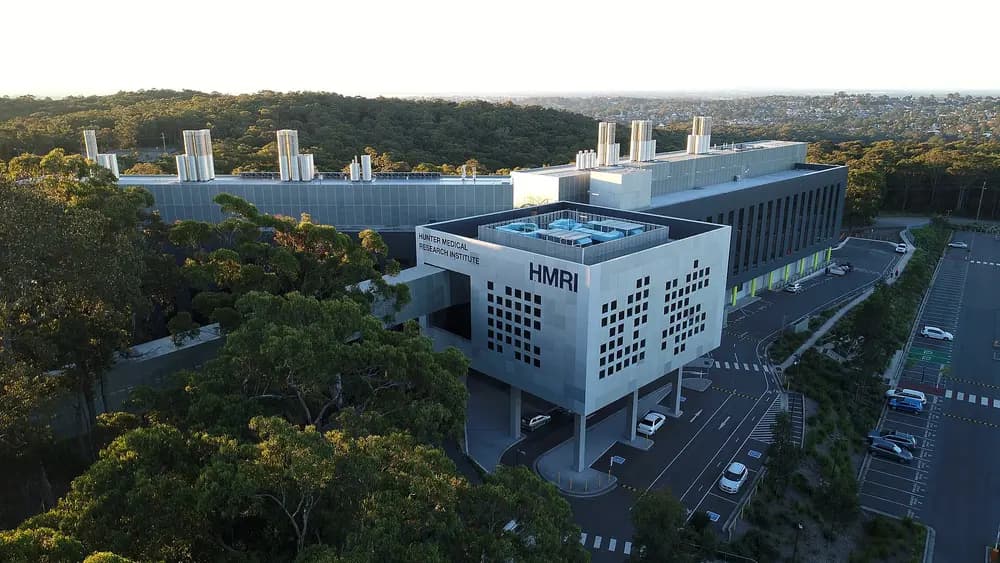
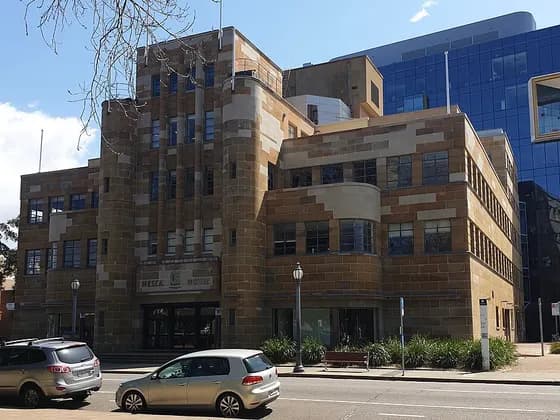

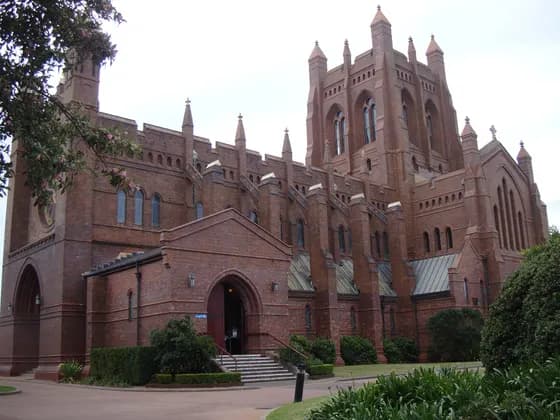
Photo: HMRIAustralia · CC BY-SA 4.0 · cropped
Photo: Janet AG51 · CC BY-SA 4.0 · Photo: Michelle Corcoran · CC BY-SA 4.0 · Photo: JohnArmagh · CC BY-SA 3.0
The Newcastle / JMP medicine course at a glance (2027 entry)
The Joint Medical Program (JMP) is a five-year, undergraduate-entry medical course run by the University of Newcastle (UON) and the University of New England (UNE). Both universities teach the same curriculum. Two Local Health Districts are partners: Hunter New England and Central Coast. A Local Health District is the NSW Health body that runs a region's public hospitals and community health services.
You earn two degrees in sequence: the Bachelor of Medical Science (BMedSc) in years 1 to 3, then the Doctor of Medicine (MD) in years 4 and 5. In Australia an MD like this is a master's-level degree, classed at Level 9 of the Australian Qualifications Framework as a Master's Degree (Extended), not a research doctorate. Both are awarded together on one certificate after year 5. The course is accredited by the Australian Medical Council (AMC), the body that accredits medical courses in Australia.
Where you start depends on which university enrols you, which follows the preferences on your JMP application but is not guaranteed. UON students begin at the Callaghan campus in Newcastle, apart from 32 a year who spend their first three years at the Central Coast Clinical School at Gosford Hospital. UNE students begin in Armidale. From year 3 most of your learning happens at clinical schools, hospital-based teaching centres with their own academic staff.
For most students, years 1 and 2 are campus-based and built on problem-based learning (PBL), where a small group works through a patient case and researches what it needs to know. Some UNE students instead take the course mostly online through the Regional Health Professional Pathway (RHPP), described under teaching. Year 3 brings long placements in general practice and hospitals, and case-based learning (CBL) built on common presentations in those settings. Years 4 and 5 are full-time placements. Final year is designed as a pre-internship year. Internship is the first year of supervised work after graduating, also called PGY1.
One stated aim of the program is to help ease the shortage of doctors in rural, regional and remote communities. Rural and remote health, and Aboriginal and Torres Strait Islander health, are curriculum themes that run through the course. You can state a preference for a Rural Stream year at a rural clinical school. In final year some students take a Longitudinal Integrated Clerkship (LIC), living in one small town and following patients through their care rather than moving through short hospital rotations.
| Degree | Bachelor of Medical Science and Doctor of Medicine (BMedSc/MD) |
|---|---|
| Course length | 5 years full time: BMedSc in years 1–3, MD in years 4–5 |
| Study mode | On campus; UNE's RHPP (from 2026) is mostly online with Armidale intensives |
| Starting campus | Callaghan (Newcastle), Gosford (Central Coast) or Armidale (UNE) |
| Teaching style | Problem-based learning in years 1–2, case-based learning in year 3 |
| First patient contact | Year 1, semester 1: hospitals and nursing homes; general practice from year 2 |
| Clinical schools | Urban: Hunter, Central Coast, Maitland; rural: Manning, Peel, Tablelands |
| Rural option | Rural Stream year at a rural school; some take a final-year rural LIC |
| Placement hours | 1,362 in the BMedSc and 2,618 in the MD |
| Research | Group project designed in year 3, carried out in year 4 |
What makes Newcastle / JMP medicine different
Two universities, three starting campuses, one curriculum
UON and UNE teach the same course, and you can start in Newcastle, on the Central Coast or in Armidale. The Central Coast group is based in the clinical school building at Gosford Hospital for its first three years. Whichever campus you start at, the later years draw on a network of clinical schools shared by both universities.
PBL cases built around one extended family
In years 1 and 2, the PBL cases follow members of an extended family and their community through health, illness and health care. Each case involves changes in one or more body systems, and it gives context to the lectures, anatomy labs and clinical skills sessions around it.
A two-year Pathway in a special interest
In year 4 you are allocated to a Pathway such as Indigenous Health, Global Health, Rural Health, Laboratory Medicine or Health Professional Education. You spend a six-week rotation studying it in depth and plan a placement with your supervisors. In year 5 you carry out that placement, which can be interstate or overseas.
Rural training: a Rural Stream year or a town-based LIC
Rural Stream students spend one of their final two years at a rural clinical school in Taree, Tamworth or Armidale, each with its own education centre and simulation facilities. In final year, UNE also runs an LIC in country towns such as Inverell and Narrabri, where for 18 to 19 weeks you learn mainly alongside local GPs.
A final year spent working inside hospital teams
Year 5 is a pre-internship year. Your clinical school embeds you with junior doctors in longitudinal hospital placements, and you follow your team's shift pattern and workload, including some out-of-hours work. The year is mapped to the competency framework of Medical Deans Australia and New Zealand, the body representing the region's medical schools.
How Newcastle / JMP teaches medicine
In problem-based learning the case comes first. A small group and a tutor are given a patient scenario, work out what they need to learn to understand it, study it on their own and report back. At the JMP the cases present members of an extended family whose health changes in one or more body systems. They drive the science you learn, including anatomy, physiology, biochemistry, pathology, pharmacology and genetics.
The cases give context to the rest of years 1 and 2. Lectures from biomedical scientists and clinicians, laboratory sessions and clinical skills workshops support the tutorials.
Four themes run through all five years: Science and Scholarship; Clinical Practice; Health, Societies and Environment; and Professional Development. Aboriginal and Torres Strait Islander health, rural and remote health, and interprofessional and patient-centred care are threaded through those themes.
From year 3 the method changes. Case-based learning (CBL) replaces PBL: cases are still the trigger for learning, but they are common presentations in general practice and hospital care, linked to your placements. In years 4 and 5 learning happens mainly in hospitals and practices, backed by small tutorials, seminars, online modules and simulation.
Since 2026 UNE has also run the Regional Health Professional Pathway (RHPP), the same degree taken mostly online. It is designed for experienced health professionals, such as nurses, paramedics, physiotherapists and pharmacists, who want to keep working in their communities while they study. In year 1 RHPP students come to Armidale for five intensive schools of five days each, for anatomy labs, physical examinations and other hands-on work, with more intensives in later years. The first intake in 2026 had eight students.
The ways you will learn
| PBL tutorials | About eight hours a week in years 1 and 2, in a small group with a facilitator. Your participation is assessed. |
|---|---|
| Lectures and seminars | Biomedical science lectures, streamed live online in year 1, plus on-campus lectures and seminars on health, society and environment, professional development and research. |
| Clinical skills workshops | Weekly workshops teaching the JMP Clinical Method, the program's model for combining knowledge, communication, practical skills and professional behaviour. They mix simulated learning environments with contact with patients. |
| Simulated patients | People of all ages trained to portray a patient's history, symptoms and behaviour. You take histories, examine and counsel them in mock GP clinics, outpatient clinics and emergency departments, and they give you feedback straight away. |
| Case-based tutorials | In year 3, CBL tutorials built around common presentations. At Gosford, for example, the timetable lists large and small medicine CBL tutorials alongside surgery teaching, interactional skills tutorials, vascular teaching and procedural skills sessions. |
| Workplace learning | In years 4 and 5, full-time placement in hospital clinics, theatres, procedural areas, birthing suites, community mental health services and general practice, with interprofessional learning workshops on working alongside other health professionals. |
A typical week on the Newcastle / JMP course
On the standard on-campus timetable in UON's 2026 handbook, a year 1 teaching week includes eight hours of PBL tutorials and five hours of live online biomedical science lectures. Another eight hours go to on-campus lectures and seminars on health, society, professional development and research. There are also five hours of clinical skills workshops and clinical experiences, 1.5 hours in the anatomy lab and two hours of clinical forums.
On top of that come an hour of online practice quizzes, 18 hours of self-directed study and, for six weeks, a 2.5-hour weekly online lab in histology, the study of tissues under the microscope. Attendance is required at every timetabled session. That adds up to about 30 timetabled hours a week plus your own study.
Year 2 has the same shape with more lectures. A week holds ten hours of lectures, eight of PBL, 3.5 of clinical skills, two in the anatomy lab, two of forums and two online. Self-directed study stays at 18 hours. In the second half of the year the tutorial slot also includes sexuality and identity workshops and psychiatry workshops.
Year 3 weeks are mostly placement. Each semester includes 12 weeks of clinical placement: general practice and community weeks run to 32 hours and hospital weeks to 24, with teaching at your clinical school around them. In years 4 and 5 you are on placement five days a week, and some weeks include out-of-hours work.
How anatomy is taught at Newcastle / JMP
Anatomy is taught alongside each body system in years 1 and 2, in weekly on-campus anatomy lab sessions: 1.5 hours a week in year 1 and two hours in year 2. Histology is taught in short online lab blocks. Year 1 includes an overview of normal gross and cellular anatomy as well as the anatomy of that year's body systems.
Years 1 and 2 each include a practical anatomy and histology exam in multiple-choice format. In its 2018 review of the program, the AMC noted that anatomy teaching had been more closely aligned with the PBL cases and clinical skills tutorials, and that students had responded well. In year 3 the Gosford timetable also has a few anatomy lab sessions, and the Central Coast Clinical School has a purpose-built anatomy and histology lab.
At UON, human specimens come through the University of Newcastle's Body Donor Program. Its page says most donated bodies are used to teach anatomy to medical and other health students, and that donated body parts are generally dissected to show muscles, blood vessels and nerves. UNE students in Armidale use the School of Rural Medicine's own anatomy laboratory, supplied by UNE's Body Donor Program, from the first days of year 1.
When you first meet patients at Newcastle / JMP
Clinical experience begins in your first semester. In years 1 and 2 you go on short placements in hospitals, nursing homes and general practice to practise taking a history and examining patients. The handbook allocates 96 placement hours to each half of year 1, and 110 and 100 hours to the two halves of year 2.
Alongside real patients, you practise with simulated patients in clinical skills workshops, starting with history taking and examining patients with heart, lung, gut and urinary problems. In year 2 your placements extend into general practice, where a GP supervisor reports on your work.
Year 3 is the step up. Most of the year is placement in general practice, general medicine and surgery, where clinicians assess your work with real patients and you demonstrate ten procedural skills. In years 4 and 5 you are on placement full time, and in final year most students work as members of a hospital team.
Year by year at Newcastle / JMP
- Year 1
Foundations and the first body systems
Phase 1, Essentials of Medical Practice, opens with an introduction to medicine and to the ways you will learn. Through PBL cases you study the structure, function and assessment of the cardiovascular, respiratory, renal, gastrointestinal and endocrine systems. Clinical skills, research seminars and your first placements all start in semester 1.
- MEDI1101A and MEDI1101B, Clinical Sciences, Scholarship and Practice 1: one year-long course taken in two linked halves.
- Clinical skills: history taking, vital signs, ECGs, basic X-ray and CT interpretation, basic life support and wound management.
- Law and ethics for doctors: consent, negligence, the role of the Australian Health Practitioner Regulation Agency (AHPRA, which registers health practitioners) and the Medical Board of Australia, and fitness to practise.
- Research seminars and two research assignments introducing study design, epidemiology and evidence-based medicine.
- A presentation on health, society and environment, and online modules in Aboriginal health, professional behaviour and hand hygiene.
- Mental Health First Aid training and a first aid certificate, both required to pass the course.
- Year 2
More body systems and harder conversations
Year 2 revisits year 1 and extends every theme. PBL cases cover the immune, nervous, musculoskeletal, reproductive and haematological systems, growth and mental health, along with ear, nose and throat conditions and eye disease. Your clinical skills placements now include time in general practice.
- MEDI2101A and MEDI2101B, Clinical Sciences, Scholarship and Practice 2, the second year-long PBL course.
- Communication skills: breaking bad news, using interpreters, clinical handover, taking a sexual history and helping patients change health behaviours.
- Assessing consciousness and cognition, falls risk and basic dermatology.
- Harder ethical and legal questions, such as advance care directives, end-of-life decisions and organ donation.
- A general practice placement with a logbook, a supervisor's report and a case report you present.
- Indigenous health communication modules and a multidisciplinary radiation therapy module with a group session.
- Year 3
Into the clinic, and a research proposal
Phase 2, Engaging in Medical Practice, is a year of case-based learning and extended placements in urban, rural and regional settings. It starts with one or two weeks of intensive orientation, then runs in cycles between university and clinical school sites. Passing it completes the BMedSc.
- MEDI4001A and MEDI4001B, Contexts of Clinical Practice: 12 weeks of placement each semester in general practice, general medicine and surgery.
- Case-based learning on common presentations, following the patient's journey from before hospital to after discharge.
- A four-week Sustainable Healthcare Rotation on how a changing environment affects health, how healthcare can cut its environmental impact, and advocating for people vulnerable to climate change.
- MEDI6001A and MEDI6001B, Research for Medical Professionals: with a team and a supervisor you design the research project you will carry out in year 4.
- Year 3 counts twice: it completes the BMedSc and is also credited as the first part of the MD.
- Year 4
Core rotations, research and your Pathway
Phase 3, Extension of Medical Practice, begins with one or two weeks of orientation. You are then based at one clinical school for the year, on full-time placement across 28 weeks of rotations and common weeks. Alongside the rotations you carry out your group research project and start your Pathway.
- MEDI6101A and MEDI6101B, Integrated Medicine: rotations in obstetrics and gynaecology, paediatrics, medicine and psychiatry.
- MEDI6103A and MEDI6103B, Research Project of Enquiry: your group carries out the project designed in year 3, including a six-week full-time research intensive.
- MEDI6102A and MEDI6102B, Pathways to Medical Practice: a six-week Pathway rotation and planning of your year 5 placement.
- Year 5
The pre-internship year
Year 5 prepares you for internship. After orientation most students are based at a clinical school, working alongside junior doctors in medicine, surgery and critical care, which covers emergency medicine and anaesthetics, and in general practice. You also complete your Pathway placement.
- MEDI6201A and MEDI6201B, Transition to Practice: longitudinal placements in which you work your team's shifts.
- Content aimed at the first job: safe prescribing, the deteriorating patient, emergency presentations, palliative care, and discharge planning and referral.
- An individual learning plan, an online prescribing assessment, a quality improvement task and an Aboriginal and Torres Strait Islander health assessment task.
- MEDI6202A and MEDI6202B, Pathways Experience: a placement you negotiate around your Pathway, assessed by a supervisor's report and a presentation.
- Longitudinal Integrated Clerkship option: some students spend 18 to 19 weeks of the year living in a small rural town (see placements).
How you are assessed at Newcastle / JMP
You are assessed in every year. Major assessments come at the end of each teaching period, and there is a progression hurdle at the end of each year. Formats include multiple-choice questions (MCQs), short-answer questions, objective structured clinical examinations (OSCEs), clinical cases, logbooks, reflective diaries and portfolios.
An OSCE is a practical exam made up of a circuit of timed stations, each testing one task, such as examining a patient or explaining a diagnosis to a simulated patient. Workplace-based assessments are ratings by the clinicians who supervise you of tasks you do with real patients on placement. They start in year 3.
Each year's work sits in pairs of linked courses, A and B, taken in order, with the result recorded on the B course. If you fail, you repeat both halves of that course. You must finish the five years within eight. Many items are hurdles you must pass in their own right, such as PBL participation, the year 1 clinical skills assessment and attendance at compulsory sessions.
Year 1 has two graded three-hour MCQ exams, sat under exam conditions on campus. The first counts for 40% of the MCQ result and the second, in the second half of the year, for 60%.
- Year 1: MCQ exams, an anatomy and histology practical, a clinical skills assessment, research assignments and a presentation.
- Year 2: MCQ exam, anatomy and histology practical, OSCE, short-answer exam, research assignment and general practice tasks.
- Year 3: MCQ exam, an OSCE in semester 1, an Integrated Clinical and Communication Assessment in semester 2, workplace-based assessments, ten procedural skills and a Sustainable Healthcare assignment.
- Year 4: MCQ exam, OSCE, workplace-based assessments and clinical and professional conduct reports, plus the research reports and your Pathway portfolio and project.
- Year 5: OSCE, case-based discussions with clinicians, a workplace-based assessment portfolio, conduct reports, a prescribing assessment and your Pathway presentation.
Where you will actually be at Newcastle / JMP
The JMP's hospitals and practices sit in two Local Health Districts. Hunter New England covers 131,785 square kilometres, with a major tertiary referral centre in Newcastle, rural referral hospitals at Maitland, Taree, Tamworth and Armidale, and 20 district and community hospitals. Central Coast runs the acute hospitals at Gosford and Wyong. Placements also use general practices across the Hunter, New England and Central Coast, and private hospitals in several towns.
The handbook groups this network into six clinical schools. The urban schools are Hunter (John Hunter, Calvary Mater, Belmont and Hunter Valley hospitals), Central Coast (Gosford and Wyong hospitals) and Maitland. The rural schools are Manning in Taree, Peel in Tamworth and Tablelands in Armidale. The JMP website gives Calvary Mater Newcastle its own clinical school page. The network's footprint also reaches Moree.
In years 4 and 5 most students are based at one clinical school each year. During year 3 you state a preference for the Rural or Urban Stream, and a ballot is used if places are unfilled. Rural Stream students spend one of the final two years at a rural school and one at an urban school. Urban Stream students spend all or most of that time at urban schools, and some do single rotations at a rural school.
Every student is expected to spend one year at an urban school (Hunter, Central Coast or Maitland) unless granted an exception. Placements can fall outside normal university semester dates and can be away from the university you enrolled at. You pay your own travel and accommodation costs. Tablelands provides student houses in Armidale, and at Manning and Peel accommodation subsidies may be available through the UON Department of Rural Health.
Students admitted through the Rural and Remote Admissions Scheme may be expected to do more placements in rural areas. Before placements you also arrange and pay for respirator fit testing, repeated every 12 months.
UNE's School of Rural Medicine runs the LIC for final-year JMP students. It lasts about 18 to 19 weeks, and its current sites are Inverell, Narrabri, Moree and Singleton. You live in the town, see patients with a GP supervisor and follow them to hospital, allied health, rehabilitation, aged care and home. UNE mentions rent assistance, and from 2025 each LIC student is eligible for a $5,000 placement support payment from the Elizabeth Fyffe Trust.
Hunter Clinical School. John Hunter, with 796 beds, is the region's main tertiary referral hospital for adults and children and a major trauma centre with a retrieval service. Belmont is a 140-bed hospital serving Lake Macquarie.
- John Hunter Hospital, New Lambton Heights
- John Hunter Children's Hospital
- Belmont District Hospital
A 215-bed hospital that is the district's major cancer care centre, with toxicology, mental health and palliative care services. It works with John Hunter and Maitland as part of the Hunter group and is 2 km from the Callaghan campus.
- Calvary Mater Newcastle
Maitland Clinical School. The new 340-bed Maitland Hospital opened in 2022 with emergency, surgery, medicine, maternity, paediatric, rehabilitation and renal services.
- Maitland Hospital, Metford
- District hospitals at Kurri Kurri, Cessnock, Muswellbrook, Singleton, Dungog and Scone
Central Coast Clinical School, on the Gosford Hospital grounds. Home base for the Central Coast group in years 1 to 3; any JMP student can nominate placements here in the later years.
- Gosford Hospital
- Wyong Hospital
- Gosford Private Hospital
- Berkeley Vale Private Hospital
Manning Clinical School, a rural school in a town of around 20,000 between Newcastle and Port Macquarie.
- Manning Base Hospital
- Mayo Private Hospital
- Manning Education Centre
Peel Clinical School, a rural school. The 282-bed Tamworth Hospital is the major referral centre for the northern part of Hunter New England.
- Tamworth Hospital
- Tamara Private Hospital
- Tamworth Education Centre
Tablelands Clinical School, a rural school that takes around 22 students across years 4 and 5 and hosts UNE year 3 students on placement. The hospital has a co-located community health centre, and the city has seven general practices and an Aboriginal Health Service.
- Armidale Rural Referral Hospital
Final-year LIC sites run by UNE's School of Rural Medicine. Supervisors are local GPs, many of whom also work in the town hospital. Armajun, based in Inverell, is an Aboriginal community controlled organisation.
- Inverell Hospital (38 beds), Inverell Medical Centre and Armajun
- Narrabri Hospital (28 beds), Bridge Medical Centre and Narrabri Medical Centre
- Moree Health Service
- Singleton Hospital
Electives, selectives and options at Newcastle / JMP
The JMP's elective-style component is the Student Selected Pathway, which runs across years 4 and 5. You are allocated to one Pathway and keep the same supervision in both years. The 2026 handbook lists five: Laboratory Medicine, Indigenous Health, Global Health, Health Professional Education and Rural Health. Both universities' course pages also mention entrepreneurship.
In year 4, Pathways to Medical Practice gives you a six-week Pathway rotation, taught in person, streamed and online from your clinical school, with some travel. You build a portfolio, complete a Pathway project and write an outline for your year 5 placement. The placement is designed with your Pathway lead, a clinical school and the host supervisor or organisation.
In year 5 the Pathways Experience puts that plan into practice. It may be a clinical attachment, a community placement or a laboratory, and it can be interstate or overseas. The handbook's examples include a future paediatrician choosing neonatology, or Indigenous health as part of global health. A supervisor reports on your work and you give a presentation.
Intercalation and research degrees at Newcastle / JMP
Research is built into the course for everyone. In year 3 you design a group project with a team and a supervisor, writing a literature review and a final proposal. In year 4 you carry it out, gathering or analysing data during placements and in a six-week full-time research intensive, supervised by academics and clinicians. The group is assessed on a progress report, a final report and a presentation, and you each keep an individual reflection and record.
If you want more research, the JMP's course rules let you seek up to three years' leave of absence after year 4 to complete a PhD at UNE or UON. These rules are published in UNE's 2026 handbook. The leave may be shorter, or a PhD not allowed, if you have already taken leave from the program.
A one-year Bachelor of Medical Science (Honours) also exists at Callaghan, but the 2026 handbook shows admission to it paused for new students.
Facilities and support at Newcastle / JMP
Where you will learn
The Central Coast Clinical School building at Gosford Hospital officially opened in 2022. Its facilities include a three-ward simulation centre, a purpose-built anatomy and histology lab, a skills lab, a health library, virtual reality spaces and an interdisciplinary learning suite.
At John Hunter Hospital, the Hunter Clinical School has a simulation centre, the hospital library, a student common room with lockers, and lecture and tutorial rooms. Calvary Mater students have a student hub with a kitchen and use the Clinical Skills Building on the John Hunter campus for some simulation. At Maitland Hospital there is a student space with networked computers, lockers and a shared kitchen.
The rural schools have their own education centres. The Manning Education Centre in Taree and the Tamworth Education Centre, opened in 2014, each have a simulation centre, clinical skills labs, a health library and student areas. The Tablelands building beside Armidale Rural Referral Hospital has simulation labs, ultrasound machines kept for teaching and a study area, and runs simulation sessions every week.
Support while you study
Support comes from both universities: AccessAbility at UON and the equivalent office at UNE arrange reasonable adjustments for disability or health conditions. Adjustments cannot change the inherent requirements, the core abilities every JMP student must show, so the program urges anyone who may need support to raise it early, even before enrolling.
Aboriginal and Torres Strait Islander students are supported by the Wollotuka Institute at UON and the Oorala Aboriginal Centre at UNE. The Central Coast and Hunter clinical schools say they offer dedicated support to Indigenous students. The AMC's 2022 report noted that Oorala had added weekly tutorials and a study space for medical students.
Feedback and wellbeing are built into the early years. In year 1 you assess yourself as a PBL participant and set goals, and cover self-care, mindfulness and Mental Health First Aid. In year 2 you have one-on-one feedback meetings with your PBL facilitator. The Tablelands school in Armidale says its small numbers allow more one-to-one teaching.
Is the Newcastle / JMP course right for you?
This course may suit you if
- You learn well by working through cases in a small group and chasing down what you do not know, since PBL drives years 1 and 2.
- You want placements from your first semester, and most of year 3 spent in general practice and hospitals.
- You would like rural training, through a Rural Stream year in Taree, Tamworth or Armidale or a final-year LIC in a small town.
- You want a two-year special interest, such as Indigenous health or global health, ending in a placement you design, possibly overseas.
- You want a final year spent inside hospital teams, working their shifts before you start as an intern.
Things to think about
- Your starting campus follows your preferences but is not guaranteed, and it could be Newcastle, Gosford or Armidale.
- From year 3, placements can take you away from the university you enrolled at, and travel and accommodation costs are yours.
- PBL expects a lot of independent study: the handbook sets 18 self-directed hours a week in years 1 and 2 on top of compulsory sessions.
- Failing either half of a linked A and B course means repeating both halves.
Newcastle / JMP medicine course — frequently asked questions
Applying to Newcastle / JMP?
How to get into Newcastle / JMP
Entry requirements, admission tests, written application and interview, step by step.
Open the guide →Newcastle / JMP entry requirements
ATAR or GPA, GAMSAT and UCAT ANZ thresholds, interview format and place types.
See the requirements →Compare Newcastle / JMP with other schools
Put the teaching style, anatomy teaching and placements next to another school.
Open the comparison →Prepare for the Newcastle / JMP interview
Format breakdown, school-specific sample questions and prep tips from tutors who interviewed here.
Read the guide →Where this Newcastle / JMP course guide came from
This guide was written from 40 official sources — University of Newcastle / Joint Medical Program's own course pages and programme documents, plus the Australian Medical Council or Australian Dental Council and the health services the school places students with where they publish detail — read on 2026-09-28, then checked claim by claim against those sources.
- University of Newcastle: Bachelor of Medical Science and Doctor of Medicine (Joint Medical Program) degree page
- Joint Medical Program: What you will study, year-by-year overview
- UON 2026 handbook: 40046 Bachelor of Medical Science
- UON 2026 handbook: 40047 Doctor of Medicine
- UON 2026 handbook: MEDI1101A and B, Clinical Sciences, Scholarship and Practice 1
- UON 2026 handbook: MEDI2101A and B, Clinical Sciences, Scholarship and Practice 2
- UON 2026 handbook: MEDI4001A and B, Contexts of Clinical Practice
- UON 2026 handbook: MEDI6001A and B, Research for Medical Professionals
- UON 2026 handbook: MEDI6101A and B, Integrated Medicine
- UON 2026 handbook: MEDI6102A and B, Pathways to Medical Practice
- UON 2026 handbook: MEDI6103A and B, Research Project of Enquiry
- UON 2026 handbook: MEDI6201A and B, Transition to Practice
- UON 2026 handbook: MEDI6202A and B, Pathways Experience
- UON 2026 handbook: 12389 Bachelor of Medical Science (Honours)
- The Joint Medical Program Prospectus 2027
- MD-JMP Study Pathway diagram
- University of New England: Bachelor of Medical Science and Doctor of Medicine course page
- Joint Medical Program: Our partners
- Joint Medical Program: Clinical schools
- Joint Medical Program: Central Coast Clinical School
- Joint Medical Program: Calvary Mater Newcastle Clinical School
- Joint Medical Program: Hunter Clinical School
- Joint Medical Program: Maitland Clinical School
- Joint Medical Program: Manning Clinical School (Taree)
- Joint Medical Program: Peel Clinical School (Tamworth)
- Joint Medical Program: Tablelands Clinical School (Armidale)
- Joint Medical Program: Launching your medical career
- Joint Medical Program: Inherent requirements
- Joint Medical Program: Student life
- Joint Medical Program: Simulated patients
- University of Newcastle School of Biomedical Sciences and Pharmacy: Body Donor Program
- Australian Medical Council: Accreditation of the UON and UNE Joint Medical Program, July 2022
- Australian Medical Council: Accreditation of the UON and UNE Joint Medical Program, 2018 follow-up assessment
- Universities Admissions Centre: 785000 Medical Science/Medicine (Joint Medical Program) course entry
- UNE 2026 handbook: Bachelor of Medical Science and Doctor of Medicine (BMSMD)
- UNE School of Rural Medicine: Longitudinal Integrated Clerkships (LIC)
- UNE news, December 2024: Elizabeth Fyffe Trust payments for LIC students
- UNE news, February 2026: flexible medical pathway for rural health workers (RHPP)
- UNE School of Rural Medicine: Medicine
- UNE School of Rural Medicine: Body Donor Program
Courses are restructured between cycles. Anything here that decides your application — an anatomy offer, a placement city, a compulsory intercalated year — should be confirmed against the official page for your entry year.
Applying to Newcastle / JMP?
We have helped hundreds of applicants turn their GAMSAT / UCAT ANZ, written application and interview prep into offers from Newcastle / JMP and other Australian medicine schools.