
The JCU Medicine course
What you actually study, and where you will be
JCU's MBBS is a 6-year (undergraduate entry) course with an integrated curriculum, with patient contact from Year 1 and placements in Townsville, Cairns, Mackay and rural and remote Queensland (2027 entry). The course is built around the health needs of northern Queensland, with rural, remote, tropical and Aboriginal and Torres Strait Islander health running through it. Years 1 to 3 are on campus in Townsville or Cairns, with placements every year. Years 4 to 6 are clinical, based in Townsville, Cairns or, from Year 5, Mackay, and end with a pre-internship year. Rural placements add up to at least 20 weeks.
- Degree
- MBBS
- Length
- 6 years (undergraduate entry)
- Teaching
- Integrated
- Clinical contact
- Year 1
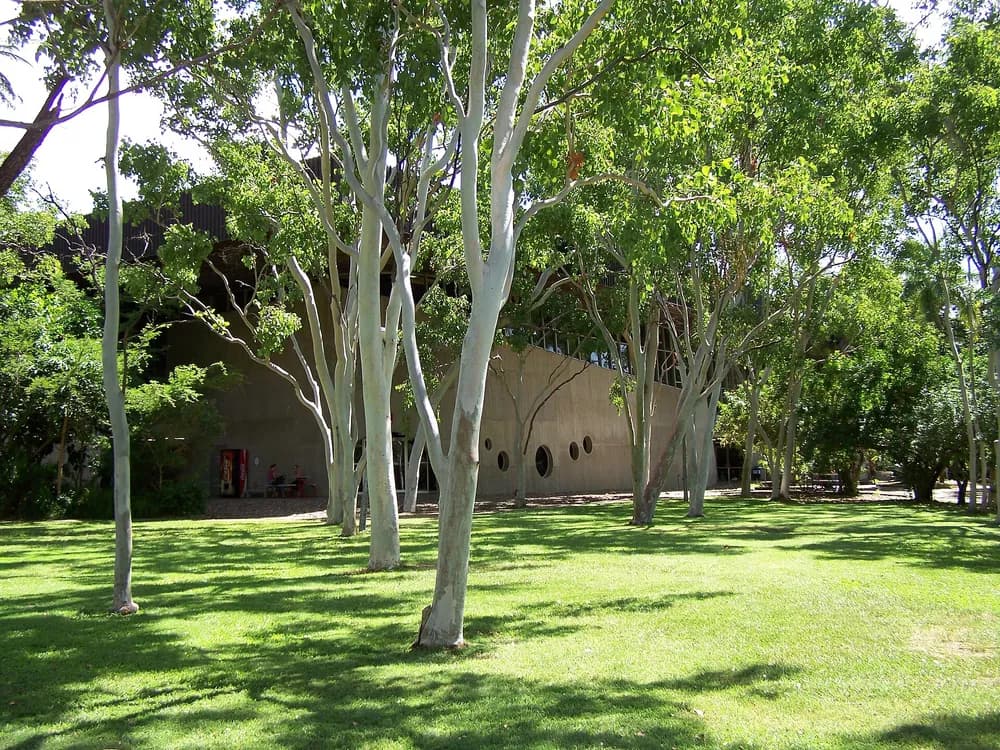
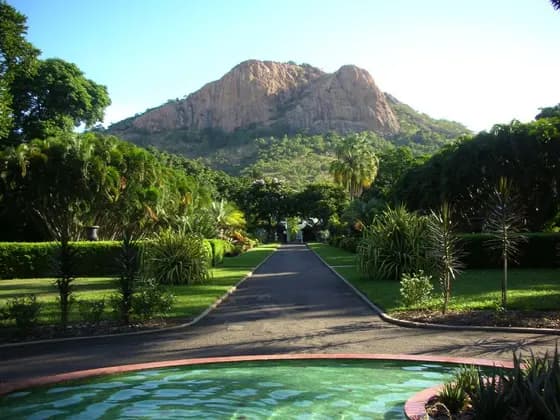
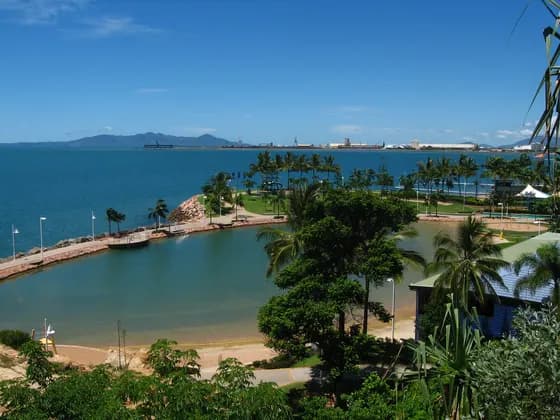
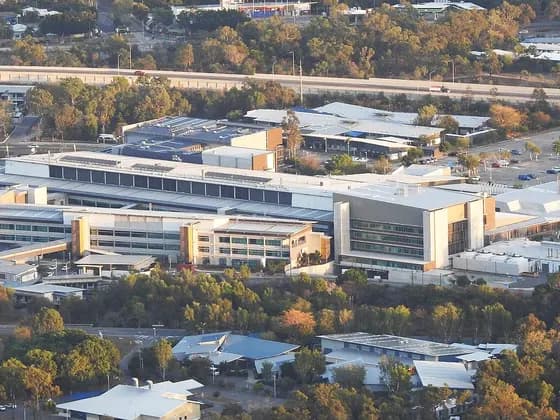
Photo: Nielg · Public domain · cropped
Photo: Heritage branch staff · CC BY 3.0 · Photo: Hector Garcia · CC BY-SA 2.0 · Photo: Rabin Tuladhar · CC BY-SA 4.0
The JCU medicine course at a glance (2027 entry)
James Cook University's Bachelor of Medicine, Bachelor of Surgery (MBBS) is a six-year, full-time undergraduate degree run by the College of Medicine and Dentistry. You start in February at the Bebegu Yumba campus in Douglas, Townsville, or the Nguma-bada campus in Smithfield, Cairns. The MBBS is a bachelor degree at level 7 of the Australian Qualifications Framework (AQF), the national scale for qualifications. In 2026 most offers went to school leavers; the few non-school leavers admitted take the same course.
The course is built around northern Queensland's health needs. Its learning outcomes include culturally appropriate care for rural, remote, tropical and Aboriginal and Torres Strait Islander populations, and advocacy for under-served communities. These themes run through the subjects from Year 1, and placements use hospitals, general practices and Aboriginal Medical Services from the Torres Strait to Central Queensland.
Years 1 to 3 are campus-based foundation years with short placements every year. Years 4 to 6 are the clinical years, based at a clinical school, the hospital-based teaching base you are attached to: Townsville or Cairns from Year 4, plus Mackay from Year 5. Year 6 prepares you for internship, the first supervised year of work after graduating (PGY1).
Day to day, Years 1 and 2 mix self-paced online preparation with guided sessions on campus, clinical skills and a weekly Home Group, a tutorial group with a facilitator. Later, most weeks are spent in hospitals, general practices and rural towns.
The Australian Medical Council (AMC), which accredits medical courses, has accredited the MBBS until 31 March 2028. Students are registered with the Medical Board of Australia through the Australian Health Practitioner Regulation Agency (AHPRA). JCU says graduates are eligible to apply for registration and to work a one-year internship in Australia or New Zealand.
| Degree | MBBS, Bachelor of Medicine, Bachelor of Surgery (AQF level 7) |
|---|---|
| Course length | 6 years full time, starting in February; not offered part time |
| Campus for Years 1 to 3 | Townsville (QTAC 317012) or Cairns (QTAC 327012) |
| Places | About 180 in 2026 (domestic applications page), plus international students |
| Clinical schools | Townsville or Cairns from Year 4; Mackay also from Year 5 |
| Teaching style | Integrated subjects; online preparation and guided sessions in Years 1 and 2 |
| Anatomy | Prosections in Years 1 and 2; dissection only in a Year 3 selective |
| First patient contact | Year 1: GP visits and a two-week community healthcare placement |
| Rural placements | At least 20 weeks in all, starting with four weeks in Year 2 |
| Honours | Optional: embedded in Years 5 and 6, a year out, or end-on |
What makes JCU medicine different
Rural, tropical and Indigenous health from Year 1
The subjects return to these areas every year: community health needs in Year 1, body systems in rural and tropical settings in Year 2, and tropical infections and skin disease in Year 3. Later placements include Aboriginal and Torres Strait Islander health services.
Placements every year, starting in Year 1
General practice visits and a community healthcare placement come in Year 1, four rural weeks in Year 2 and a week of emergency medicine in Year 3. The 2027 handbook then lists 700 placement hours in Year 4, 1,200 in Year 5 and 1,250 in Year 6.
At least 20 weeks in rural and remote communities
Placements reach from Thursday Island and Weipa to Mount Isa and Longreach. The Murtupuni Centre for Rural and Remote Health in Mount Isa encourages Year 5 students to stay 24 or 26 weeks. In Year 6 you can apply for a 20-week Integrated Rural Placement, and a few students spend almost the whole year in one town.
All six years in Cairns, if you start there
Since 2023 you can start in Cairns and stay for the whole course. Years 4 to 6 are at the Yeinie Building, opened in early 2026 beside Cairns Hospital. The AMC's 2024 report says Cairns uses the same learning outcomes and assessments as Townsville.
A final year as a trainee intern
Year 6 is a 40-week pre-internship year. JCU's course page describes 30 weeks embedded in a hospital as a trainee intern plus a 10-week clinical elective, but the MD6030 handbook entry describes five eight-week rotations instead (see Year 6).
How JCU teaches medicine
JCU describes its teaching as integrated. Each year is one subject chain, two or three linked subjects assessed together, teaching biomedical science, social science and clinical skills side by side around body systems and themes.
The 2027 handbook lists no lectures for Years 1 and 2. New material comes through self-paced online activities, which you then work with on campus in guided learning, synthesising and integrating sessions, alongside your Home Group and clinical skills. Year 3 adds weekly introductory lectures and, in Semester 2, longer three-hour guided learning sessions.
The AMC's 2024 report says each Cairns year group in Years 1 to 3 was planned at about 40, or around 50 in first year, and 36 started in 2023. That year most large-group lectures were streamed live from Townsville, with about a quarter to be given from Cairns in 2024; under the 2027 handbook, lectures start in Year 3. The AMC also said senior Cairns students help tutor anatomy, guided learning sessions and Home Groups.
Year 4 combines placements with clinico-pathological case discussions, intensives on clinical investigations and pathology, and four intensive lecture weeks. Years 5 and 6 are almost entirely placement-based, with clinical tutorials, lecture weeks in Year 5 and whole-of-year sessions in Year 6.
Compulsory Base Weeks punctuate Years 4 and 5, four in each year in 2027. In 2021 the AMC described them as weeks of lectures and tutorials that standardise learning across clinical sites.
The ways you will learn
| Guided learning sessions | On-campus workshops in Years 1 to 3 where you work through the week's material. In 2021 the AMC described them as held in a large open space with teaching staff on hand. |
|---|---|
| Synthesising and integrating sessions | Synthesising sessions draw together each module's concepts and content. Integrating sessions run weekly in Years 1 and 2; for Year 3 the handbook describes them as more complex issues presented in an interactive panel format. |
| Home Groups | A group that meets weekly in Years 1 and 2 and continues in Year 3. In 2021 the AMC said Home Groups help build your professional identity through discussion of scenarios that challenge professional behaviour. |
| Clinical skills and simulated patients | Classes from your first semester, from vital signs and infection control in Year 1 to skills for each body system. Volunteer simulated patients, trained members of the public, role-play cases, let you examine them and give feedback on your communication. |
| Clinico-pathological case discussions | Guided case discussions in Year 4, in which you work through a patient case, linking the history, examination and test results to the disease behind them. In 2021 the AMC described them as weekly small-group sessions and one of the year's key activities. |
A typical week on the JCU course
The 2027 handbook sets out the weekly pattern for Years 1 and 2, in semesters of 13 teaching weeks. Added up, a typical week has about 14 hours of timetabled campus sessions and 9 hours of online activities, before clinical skills classes, placements and your own study. In a typical week you have:
- Four two-hour online introductory activities, done at your own pace, and four 15-minute online orientation sessions.
- Four two-hour guided learning sessions on campus.
- Four 50-minute synthesising sessions.
- A two-hour integrating session and a one-hour Home Group.
- Clinical skills classes, which add up to between 7 and 13 hours a semester.
- In your first semester, one-off sessions on wellbeing and a cultural workshop.
How anatomy is taught at JCU
Anatomy is taught within the integrated subjects rather than on its own: cell and tissue structure and the musculoskeletal and reproductive systems in Year 1, then the body systems in Year 2. In 2021 the AMC reported that anatomy returns in Year 3 emergency medicine teaching and in a few clinically focused sessions in Year 4.
Both campuses have humidity-controlled anatomy laboratories. The teaching collection includes cadavers, prosections (specimens already dissected to display particular structures), pathology specimens and skeletons. In its 2024 report the AMC said anatomy sessions use prosections prepared for each session, with Cairns specimens matching those in Townsville. Donated bodies come through JCU's Human Bequest Program and are kept in secure facilities in Cairns or Townsville under Queensland's Transplantation and Anatomy Act 1979.
Dissecting yourself means taking Advanced Anatomy by Dissection (AT3000) as your Year 3 selective, a 3-credit-point subject of your choice, in Townsville or Cairns. You dissect two body regions: the first to learn technique, the second alongside a short research project that you present. Teaching runs in blocks, such as 9am to 5pm over three consecutive weekends or three nights a week for four weeks. The two dissections with their presentations count for 30 and 35 per cent, and the project presentation 35 per cent.
When you first meet patients at JCU
Your first patient contact comes in Year 1, through clinical skills classes and short visits to general practices. In its 2024 report the AMC described these GP visits as observational, focused on learning from how doctors show a patient-centred approach, empathy, compassion and respect. In 2021 it also said you must show competence in selected procedures in simulation, tracked in a logbook, before doing them on patients.
The Year 2 rural placement puts you inside a working health service for four weeks. In JCU's student stories, second-years describe taking histories, helping with examinations and, under supervision, suturing, giving injections and learning to insert cannulas.
From Year 4 you spend most of your time with patients. Fourth-years in a 2023 JCU story describe taking patient histories, reporting back to senior doctors and finding the emergency department very hands-on. In Year 6 you take on intern-level tasks under supervision.
JCU's course page says you complete more than 4,000 hours of clinical training. Its international version also lists a minimum of 3,423 hours of work-integrated learning (mainly placements), and the 2027 handbook's placement hours add up to 3,415, mostly in Years 4 to 6.
Year by year at JCU
- Year 1
Introduction to Integrated Medical Studies
Year 1 lays the foundations. Semester 1 (MD1010) covers normal cells, tissues and biochemistry and how the body controls itself, plus the Australian health system, how health is measured and the professional and ethical side of practice. Semester 2 (MD1020) moves to the musculoskeletal and reproductive systems and genetics.
- MD1010 and MD1020 are worth 12 credit points each (a full-time year is 24).
- Health and society: social determinants of health and the needs of rural, remote and Aboriginal and Torres Strait Islander communities, people with disabilities, children, older people and people with chronic illness.
- Early clinical skills: communication, infection control, vital signs and range of movement.
- A three-day general practice (GP) visits placement in the mid-year break, which you arrange or choose.
- A two-week Health Elective Placement (72 hours) in a community healthcare setting at the end of the year, also self-arranged or chosen.
- Year 2
Integrated Human System Pathophysiology
Year 2 (MD2011, MD2012) teaches the anatomy, physiology and common diseases of the body systems, adding mental health in Semester 2. Topics are set in rural, remote, Aboriginal and Torres Strait Islander and tropical contexts, including the patterns of disease in those populations.
- A module on Rural, Remote, Indigenous and Tropical Health, which the AMC's 2024 report says focuses on working with Aboriginal and Torres Strait Islander individuals, families and groups, and on models of health care.
- Clinical skills for each body system, and communication practice: interviewing across cultures and with children, couples and families.
- A scientific paper, a group scientific poster, and ethics from a social justice point of view.
- A four-week allocated rural placement (144 hours) in the mid-year break, at the end of the year or in January before Year 3.
- Year 3
Introduction to Clinical Healthcare
Year 3 turns to infection, immunity, cancer and prevention. Semester 1 (MD3011) is built around infectious diseases, inflammation and immunology, and preventive medicine and addiction studies. Semester 2 (MD3012) covers tissue injury and neoplasia (cancer), emergency medicine, skin and the special senses, and global health.
- How organisms cause and spread disease, how the immune system works and fails, and how cancers develop.
- How drugs act and are handled by the body, health promotion, and treating and preventing drug dependence.
- Infections and skin diseases important in Indigenous, rural, remote and tropical populations, such as scabies, impetigo, skin cancers and leprosy, and managing urgent medical problems.
- The selective in Semester 1, which you must pass before Year 4 (see electives).
- A supervised week (40 hours) of emergency medicine at the end of the year.
- Year 4
Integrated Pathology and Clinical Medicine
Year 4 (MD4011 to MD4013) is the bridge into clinical medicine, taught in Townsville or at the Yeinie Building in Cairns, in five six-week blocks with compulsory Base Weeks. By the end you should be able to take a focused history, examine patients, choose investigations and interpret them against the disease process.
- About 700 hours of placements in public and private hospitals, community services and rural settings.
- In 2021 the AMC listed the five rotations as rural, public hospital medicine, private hospital medicine, community and a clinical intensive.
- A six-week rural rotation that includes an Aboriginal and Torres Strait Islander health placement, in an Aboriginal Community Controlled Health Service (run by the local Aboriginal community) or a related government service (AMC, 2024).
- Rural rotations have taken students to the Atherton Tablelands, Mossman, towns around Mackay, and outback and lower Gulf communities.
- Teaching: 180 hours of case discussions, investigations and pathology intensives and clinical reasoning, 50 hours of clinical skills workshops and 55 hours of lectures.
- Year 5
Integrated Clinical Practice
Year 5 (MD5010 to MD5030) is a 40-week year of six six-week rotations in Townsville, Cairns or Mackay. JCU's Mackay and Murtupuni pages name them as adult medicine, surgery, general practice, mental health, reproductive and neonatal health, and child and adolescent health. You learn to list each patient's problems and plan their management.
- About 1,200 hours of placements in public and private hospitals, community settings and GP clinics, with clinical tutorials and lecture weeks.
- Four compulsory Base Weeks in the 2027 calendar.
- In 2021 the AMC described simulated GP clinics, where two or three students consult simulated patients and get feedback from the patient, a classmate and a watching GP academic.
- Year 6
Advanced Clinical Medicine
Year 6 (MD6010 to MD6030) is a 40-week pre-internship year. JCU's documents divide it differently. The course page gives 30 weeks as a trainee intern plus a 10-week clinical elective, and the 2027 calendar and Honours subject entries show four ten-week blocks. The MD6030 handbook entry instead says five eight-week rotations.
- About 1,250 hours of placements in public and private hospitals and community and rural health settings, with clinical tutorials and whole-of-year presentations.
- A rural placement, the Rural Internship rotation named in the AMC's 2024 report. In 2021 the AMC said every final-year student did a ten-week Rural Internship.
- The clinical elective (see electives) and a research project.
- A capstone assignment on Aboriginal and Torres Strait Islander peoples' health, focused on people with chronic disease (AMC, 2024). In 2021 the AMC also described a presentation on the evidence behind managing a clinical case.
How you are assessed at JCU
Each year's subjects are assessed together as a chain, and you must pass every subject in a year to move on. Marks come from on-course assessment, set during the semester, and from exams. Years 1 to 3 end each semester with multiple-choice question (MCQ) papers, plus short-answer papers in Years 1 and 2 or key feature papers (KFPs) in Year 3. A KFP asks about the critical decisions in short clinical cases.
Clinical skills are tested in Semester 2 of Years 1 to 3 in a multi-station assessment task (MSAT), a practical exam with several stations. Years 4 and 5 use an Objective Structured Clinical Examination (OSCE), in which you rotate through timed stations, each testing one task, such as examining a patient, in front of an examiner.
In Years 4 and 5, end-of-year exams carry 70 per cent of the marks and on-course work 30 per cent. In Year 5 that includes Mini-CEX assessments, in which a supervisor watches you with a patient and rates what they see. Year 6 is graded pass or fail, on assignments, presentations, a research project and Mini-CEX assessments.
JCU's public assessment guidelines date from 2021. They set the on-course pass mark at 50 per cent in Years 1 to 3 and 60 per cent in Years 4 and 5, with exam pass marks set by formal standard-setting methods. Borderline students may be offered supplementary exams, held in Townsville. Your grade point average (GPA) covers Years 1 to 5, and students with gaps after Year 5 may do a corrective placement instead of the elective.
- Year 1: on-course 16%, MSAT 8%, short-answer exams 40%, MCQ exams 36%.
- Year 2: on-course 18%, MSAT 10%, short-answer exams 40%, MCQ exams 32%.
- Year 3: on-course 18%, MSAT 12%, KFPs 40%, MCQ exams 30%.
- Year 4: case report, oral case presentation, patient health care journey presentation and a two-case viva (oral exam, being trialled), 5% each. Clinical investigations test 10%, MCQ exam 22%, KFP 24% and a two-day OSCE 24%.
- Year 5: rotation and whole-of-year tasks 30%, KFP 23%, MCQ exam 23%, OSCE 24%.
- If you leave early you may still be awarded a Diploma of Tertiary Studies (after 24 credit points), an Associate Degree of Health Sciences (48) or a Bachelor of Life Sciences (72).
Where you will actually be at JCU
For Years 1 to 3 you are based at the campus you were offered, with placements in the breaks. For Years 4 to 6 you are allocated to a clinical school. Cairns starters can stay in Cairns throughout or apply to move to Townsville or Mackay. Some Townsville starters must then relocate: in 2026, 41 of the 76 students starting Year 4 at the Yeinie Building came from Townsville.
JCU's pages disagree on Mackay. The handbook's course notes and the admissions page list it as a base for Years 4 to 6, but in the 2027 handbook Year 4 runs only in Townsville and Cairns. The Mackay Clinical School page describes a base for Years 5 and 6, with Year 2 and 4 students passing through on rural placements.
JCU says you spend at least 20 weeks, about five months, on allocated rural and remote placements, which the AMC places in Years 2, 4 and 6. The 2027 calendar gives four weeks in Year 2, the AMC's 2024 report a six-week rotation in Year 4, and its 2021 report a ten-week rural internship in Year 6. They draw on nine Rural Health Sites funded by the Australian Government's Rural Health Multidisciplinary Training program: Cairns, Townsville, Mackay, Atherton, Thursday Island, Weipa, Mount Isa, Cloncurry and Longreach.
Murtupuni, one of JCU's two University Departments of Rural Health (government-funded rural teaching centres), is based in Mount Isa with hubs in Cloncurry, Longreach and Weipa. Its region covers more than half of Queensland. It takes medical students in Years 2, 4, 5 and 6, and encourages Year 5 students to stay for an extended placement of 24 or 26 weeks.
In Year 6 you can apply for an Integrated Rural Placement of about 20 weeks in one rural town, combining the rural internship with the adult health rotation (AMC, 2024). In 2021 the AMC reported that between 13 and 20 students had taken it up in the previous four years. A small number of students spend almost all of Year 6 in one town on a Longitudinal Integrated Clerkship (LIC), following the same patients rather than rotating through blocks. Murtupuni lists Emerald, Longreach, Mount Isa, Cloncurry and Weipa among its year-long integrated clerkship towns, allocated each year.
Placements away from your campus can be at your own expense. Murtupuni offers subsidised, furnished shared houses for placements of at least two weeks. You qualify if you hold a Commonwealth Supported Place (CSP, a government-subsidised place) and are an Australian or New Zealand citizen or permanent resident. Its Thursday Island page lists a $1,000 travel subsidy, and JCU offers placement scholarships and bursaries.
- By April of Year 1 (28 April in 2026) you complete pre-placement requirements, including a Blue Card (Queensland's working-with-children check), a police check, first aid and CPR, and tuberculosis screening. You must also be immune to, or vaccinated against, hepatitis B, measles, mumps, rubella, chickenpox and whooping cough.
- From Year 2 you also complete Queensland Health's student orientation and electronic medical record training, and mask fit testing for hospital placements.
Home of the Townsville Clinical School. The health service also places students in its regional and rural hospitals and community services, and the AMC visited the clinical school's Mater Hospital campus in 2021.
- Townsville University Hospital
- Mater Hospital, Townsville
The Yeinie Building supports clinical training across the Cairns and Hinterland Hospital and Health Service. JCU says it has trained senior medical students in the region since 2004.
- Cairns Hospital
- The Yeinie Building
- Nguma-bada campus, Smithfield
Atherton has its own JCU clinical school and has taken Year 2, 4 and 6 students. JCU stories also describe placements in Innisfail and Mossman and a six-month final-year placement in Cooktown.
- Atherton Hospital
- Innisfail Hospital
- Mossman
- Cooktown
The Mackay Clinical School is at Mackay Base Hospital. In 2021 JCU named Moranbah, Collinsville, Bowen, Proserpine and Sarina among towns where students experience general practice. The health service takes elective students at Sarina and Proserpine as well as Mackay Base.
- Mackay Base Hospital
- Mater Private Hospital, Mackay
- Sarina Hospital
- Proserpine Hospital
Murtupuni's home region, which also includes Burketown, Boulia and Dajarra. All four sites listed take Year 6 students.
- Mount Isa Hospital
- Gidgee Healing, Mount Isa
- Cloncurry
- Normanton
Longreach is a Murtupuni hub, with a 10-bedroom student house metres from the hospital and simulation rooms. All five towns take Year 6 students. Emerald is also home to JCU's Central Queensland Centre for Rural and Remote Health, which takes medical students and has student houses.
- Longreach
- Winton
- Barcaldine
- Blackall
- Emerald
Murtupuni houses students on Thursday Island, reached by flying to Horn Island via Cairns and taking a short ferry, and in Weipa. JCU stories describe Year 2 and Year 6 placements on Thursday Island.
- Thursday Island Hospital
- Weipa Integrated Health Service
Electives, selectives and options at JCU
The Year 3 selective (MD3000) lets you study something outside the core course, either new to you or a step further in an area you know. Modules depend on availability and are announced the study period before, and can include lectures, practicals, independent study, placements or site visits. You can instead take 3 credit points of other subjects agreed with the course coordinator.
In 2021 the AMC listed the most popular selectives as Tutoring in Health, Introductory Bioethics, Alternative Dispute Resolution, Advanced Anatomy by Dissection and Building Research Skills in Medicine.
JCU's course page and the AMC's 2024 report describe a 10-week final-year elective, in a clinical or research area of your choice, in Australia or overseas. JCU recommends splitting it between two placements. JCU stories describe one student's 10 weeks in the Solomon Islands, mostly at Kilu'ufi Hospital in Malaita Province, and another's split between a rural hospital in Japan and hospitals in the Philippines.
In 2021 the AMC said most students chose a clinical rather than a research elective, with emergency medicine the most popular. Year 5 and 6 students could also apply to spend part of a core rotation in Fiji, Solomon Islands or Sri Lanka. This was funded by the New Colombo Plan, an Australian Government scheme for study in the Indo-Pacific. The 2027 calendar also mentions international placements in Year 2.
Intercalation and research degrees at JCU
Honours is optional and comes in three forms, each a research qualification at AQF level 8, one level above the MBBS. Each needs a credit average (a grade point average of at least 5.0) in set earlier years, and places can be limited, for the embedded route by supervisor availability.
The embedded MBBS (Honours) runs part-time alongside Years 5 and 6, on top of the normal workload, for students with a credit average in each of Years 2 to 4. You give an entry seminar and literature review in Year 5, then an exit seminar and thesis in Year 6. In 2022 Medical Deans Australia and New Zealand, the medical schools' peak body, said the thesis carries 65 per cent of the mark. Most students, it said, run clinical studies with a clinical and an academic supervisor.
The Bachelor of Medical Science (Honours) is a one-year research degree taken as a break after Year 3, 4 or 5, which Medical Deans describes as better suited to laboratory-heavy projects. The end-on Honours, awarded as MBBS(Hons)(Grad), is a one-year project and thesis taken part-time during Year 6, or full or part time within five years of graduating.
Outside Honours, JCU's Northern Queensland Regional Training Hubs (NQRTH), which work with the region's health services, run competitive summer research bursaries for students in Years 1 to 5. Projects are based in Townsville, Cairns, Mackay, Mount Isa or online.
Facilities and support at JCU
Where you will learn
Years 1 to 3 are taught at the Bebegu Yumba campus, about 13 kilometres from central Townsville, or the Nguma-bada campus, about 15 kilometres north of central Cairns.
The Yeinie Building, a four-storey building in central Cairns opened in early 2026, sits beside Cairns Hospital. It has eight clinical teaching rooms, a two-bed demonstration ward, a 10-bed hospital ward, multipurpose teaching rooms and lecture spaces.
In Mackay, JCU teaches at the Mackay Clinical School in Mackay Base Hospital, the Clinical Training Centre at the Mater Private Hospital and the Mackay Clinical Education Facility. Murtupuni's Mount Isa campus has a procedural skills laboratory and a health service library, and its Mount Isa, Cloncurry, Longreach and Weipa sites have simulation labs and shared student houses.
Volunteer simulated patients help with clinical skills teaching in Townsville, Cairns and Mackay, including workshops such as taking vital signs and recording an ECG. In 2021 the AMC commended the Year 4 Acute Care Clinic workshop, which uses a simulated ward.
Support while you study
Your Home Group is the first layer of support. In 2021 the AMC reported that students could get weekly feedback from Home Group supervisors and discuss their academic progress there.
In its 2024 report the AMC said each of the three clinical schools has an academic advisor for each of Years 4 to 6, who offers academic and pastoral support; many are clinicians. For Years 1 to 3 you book an advisor online; in 2023 one advisor covered all Year 1 to 3 students on both campuses. Advisors do not assess students in the year they advise. In 2021 the AMC also noted mentoring programs for international, rural and Indigenous students and the external Queensland Doctors' Health program.
Aboriginal and Torres Strait Islander students are supported by the Indigenous Education and Research Centre, based on the Townsville campus. In its 2024 report the AMC said it has Indigenous student support advisors and academic support advisors on both the Townsville and Cairns (Smithfield) campuses. In 2022 Medical Deans also described a mentoring program linking senior and junior Indigenous students, and anti-racism teaching from first-year orientation.
On placement in its region, Murtupuni provides orientation, cultural mentoring and pastoral support, with a dedicated team on Thursday Island.
Is the JCU course right for you?
This course may suit you if
- You want rural, remote, tropical and Aboriginal and Torres Strait Islander health at the heart of your training, including at least 20 weeks of rural placements.
- You want to start medicine straight after Year 12 in a six-year undergraduate degree.
- You would like to study in Cairns for all six years, or are open to moving between Townsville, Cairns and Mackay.
- You want placements every year and a final year working as a trainee intern.
- You would welcome months in one rural community, on a 20-week Integrated Rural Placement or a year-long integrated clerkship.
Things to think about
- If you start in Townsville you may be moved to Cairns or Mackay for Years 4 to 6, and placements away from campus can be at your own expense.
- Some placements are in small, remote places such as Thursday Island or outback towns, far from family.
- Years 1 and 2 rely on self-paced online preparation, so you need to keep up between campus sessions.
- In Years 4 and 5, end-of-year exams carry 70 per cent of the marks.
- JCU's pages disagree on the Year 6 structure, total clinical hours and Mackay's role, so check these with the College.
JCU medicine course — frequently asked questions
Applying to JCU?
How to get into JCU
Entry requirements, admission tests, written application and interview, step by step.
Open the guide →JCU entry requirements
ATAR or GPA, GAMSAT and UCAT ANZ thresholds, interview format and place types.
See the requirements →Compare JCU with other schools
Put the teaching style, anatomy teaching and placements next to another school.
Open the comparison →Prepare for the JCU interview
Format breakdown, school-specific sample questions and prep tips from tutors who interviewed here.
Read the guide →Where this JCU course guide came from
This guide was written from 79 official sources — James Cook University College of Medicine and Dentistry's own course pages and programme documents, plus the Australian Medical Council or Australian Dental Council and the health services the school places students with where they publish detail — read on 2026-10-08, then checked claim by claim against those sources.
- JCU: Bachelor of Medicine, Bachelor of Surgery course page
- JCU: Bachelor of Medicine, Bachelor of Surgery course page, international version (work-integrated learning hours)
- JCU Course and Subject Handbook 2027: Bachelor of Medicine, Bachelor of Surgery (72010)
- JCU Handbook 2027: Bachelor of Medicine, Bachelor of Surgery (Honours), embedded (72009)
- JCU Handbook 2027: Bachelor of Medicine, Bachelor of Surgery (Honours), end-on (107209)
- JCU Handbook 2027: Bachelor of Medical Science (Honours), end-on (72109)
- JCU Course and Subject Handbook, 2025 commencers: Bachelor of Medicine, Bachelor of Surgery (progression, exit awards, part-time status)
- JCU Handbook 2027: MD1010 Introduction to Integrated Medical Studies Part 1 of 2
- JCU Handbook 2027: MD1020 Introduction to Integrated Medical Studies Part 2 of 2
- JCU Handbook 2027: MD2011 Integrated Human System Pathophysiology Part 1 of 2
- JCU Handbook 2027: MD2012 Integrated Human System Pathophysiology Part 2 of 2
- JCU Handbook 2027: MD3011 Introduction to Clinical Healthcare Part 1 of 2
- JCU Handbook 2027: MD3000 Selective Study
- JCU Handbook 2027: MD3012 Introduction to Clinical Healthcare Part 2 of 2
- JCU Handbook 2027: MD4011 Integrated Pathology and Clinical Medicine Part 1 of 3
- JCU Handbook 2027: MD4012 Integrated Pathology and Clinical Medicine Part 2 of 3
- JCU Handbook 2027: MD4013 Integrated Pathology and Clinical Medicine Part 3 of 3 (Year 4 assessment)
- JCU Handbook 2027: MD5010 Integrated Clinical Practice Part 1 of 3
- JCU Handbook 2027: MD5030 Integrated Clinical Practice Part 3 of 3 (Year 5 assessment)
- JCU Handbook 2027: MD6010 Advanced Clinical Medicine Part 1 of 3
- JCU Handbook 2027: MD6030 Advanced Clinical Medicine Part 3 of 3 (Year 6 assessment)
- JCU Handbook 2027: AT3000 Advanced Anatomy by Dissection, Medicine
- JCU Handbook 2027: MD5110 Integrated Clinical Practice (Honours) Part 1 of 3
- JCU Handbook 2027: MD5130 Integrated Clinical Practice (Honours) Part 3 of 3
- JCU Handbook 2027: MD6110 Advanced Clinical Medicine (Honours) Part 1 of 3
- JCU Handbook 2027: MD6130 Advanced Clinical Medicine (Honours) Part 3 of 3
- JCU College of Medicine and Dentistry: 2027 MBBS Course Calendar
- JCU MBBS Program Assessment Guidelines, 2021
- JCU College of Medicine and Dentistry: About the College and message from the Dean
- JCU College of Medicine and Dentistry: Contact us (clinical schools)
- JCU: Making Rural Health Matter
- JCU: Our Training Network
- JCU College of Medicine and Dentistry: Making Rural Health Matter brochure
- JCU Making Rural Health Matter eMagazine, Edition 2, March 2025
- JCU: Cairns campus (Nguma-bada and the Yeinie Building)
- JCU: Townsville campus (Bebegu Yumba)
- JCU: Mackay (Ngudya Yamba)
- JCU: Mackay Clinical School
- JCU: Mount Isa (Murtupuni)
- JCU news, January 2026: JCU Medicine students move into new home in Cairns
- JCU news, October 2022: JCU launches full medical course in Cairns
- JCU news, March 2023: Cairns Medicine degree begins
- JCU, March 2023: Following the footsteps of Far North First-Years
- JCU, October 2022: A strong foundation for Medicine in Cairns
- JCU news, December 2021: JCU's plan to bolster Mackay region health workforce
- JCU, October 2023: From textbooks to treatments (placements on the Atherton Tablelands)
- JCU, April 2022: Reflections from our first JCU rural placement (Year 2, Atherton)
- JCU, August 2021: A whole new world on rural placement (Year 2, Thursday Island)
- JCU, November 2021: What makes a JCU rural placement so unforgettable (Weipa)
- JCU, October 2021: The best decision I've ever made (Longitudinal Integrated Clerkship, Thursday Island)
- JCU student story: Clinical learning across cultures (split elective, Japan and the Philippines)
- JCU student story: Island adventures in remote medicine (elective, Solomon Islands)
- JCU College of Medicine and Dentistry: Human Bequest Program
- JCU College of Medicine and Dentistry: Volunteer Simulated Patients
- JCU: Medicine placement checklist
- JCU: Medicine placement contacts by year level
- JCU: Placement scholarships and bursaries
- JCU: Domestic applications for Medicine, Dentistry and Veterinary Science (placements and immunisation)
- JCU: Medicine, Dentistry and Veterinary Science FAQs (places)
- JCU Murtupuni Centre for Rural and Remote Health: Medicine placements
- JCU Murtupuni Centre for Rural and Remote Health: Student placements
- JCU Murtupuni Centre for Rural and Remote Health: Accommodation information for students
- JCU Murtupuni Centre for Rural and Remote Health: Far North Queensland region
- JCU Murtupuni Centre for Rural and Remote Health: North West Queensland region
- JCU Murtupuni Centre for Rural and Remote Health: Central West Queensland region
- JCU Murtupuni Centre for Rural and Remote Health: About us
- Northern Queensland Regional Training Hubs: MBBS Summer Research Bursaries
- Northern Queensland Regional Training Hubs: Our training network
- Townsville Hospital and Health Service: Doctors in training (undergraduate placements)
- Mackay Hospital and Health Service: Medical students, interns and RMOs
- JCU Central Queensland Centre for Rural and Remote Health (Emerald): About us
- JCU Central Queensland Centre for Rural and Remote Health (Emerald): Student placements and accommodation
- Medical Deans Australia and New Zealand: JCU, inspiring the next generation of clinician researchers (Honours)
- Medical Deans Australia and New Zealand: Welcoming students to JCU's Indigenous family (2022)
- Medical Deans Australia and New Zealand: About Medical Deans (peak body of the medical schools)
- Australian Government Department of Foreign Affairs and Trade: About the New Colombo Plan
- Australian Medical Council: accreditation report on the JCU MBBS (Cairns material change), 2024
- Australian Medical Council: accreditation report on the JCU medical program, 2021
- Australian Medical Council: accredited medical schools (JCU accreditation to 31 March 2028)
Courses are restructured between cycles. Anything here that decides your application — an anatomy offer, a placement city, a compulsory intercalated year — should be confirmed against the official page for your entry year.
Applying to JCU?
We have helped hundreds of applicants turn their GAMSAT / UCAT ANZ, written application and interview prep into offers from JCU and other Australian medicine schools.