
The Deakin Medicine course
What you actually study, and where you will be
Deakin's MD is a 4-year (graduate entry) course taught through problem-based learning in an integrated curriculum, with patient contact from Year 1 and placements in Geelong, Ballarat, Warrnambool, rural Victoria and Melbourne's east (2027 entry). Deakin's Doctor of Medicine is a four-year graduate course with a focus on rural and regional medicine and Indigenous health. Years 1 and 2 combine problem-based learning, lab and clinical skills teaching and short placements, at Geelong's Waurn Ponds Campus or, for Rural Training Stream students, in Warrnambool or Ararat. Years 3 and 4 are full-time clinical training at one of five sites, ranging from a Geelong teaching hospital to a year in a small rural town.
- Degree
- MD
- Length
- 4 years (graduate entry)
- Teaching
- Problem-based learning + Integrated
- Clinical contact
- Year 1
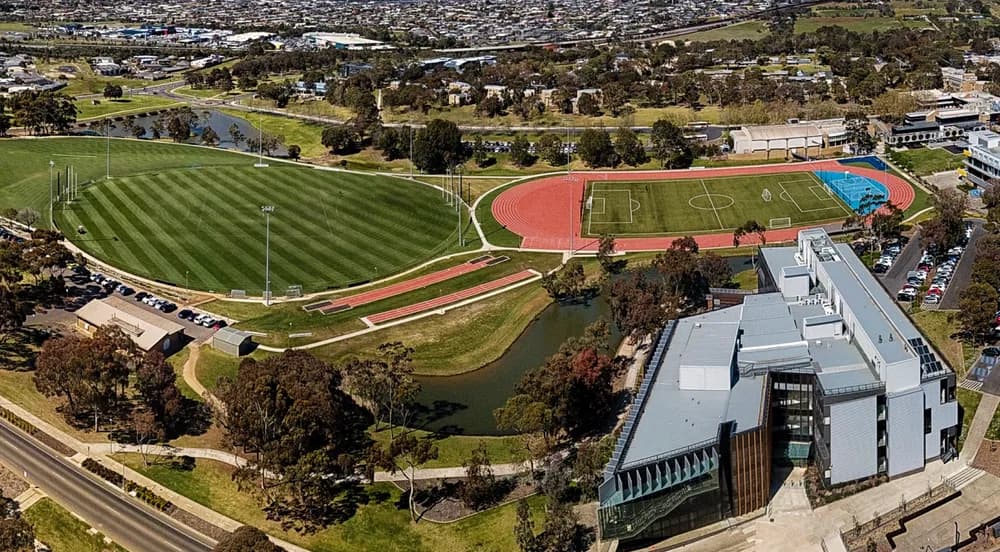
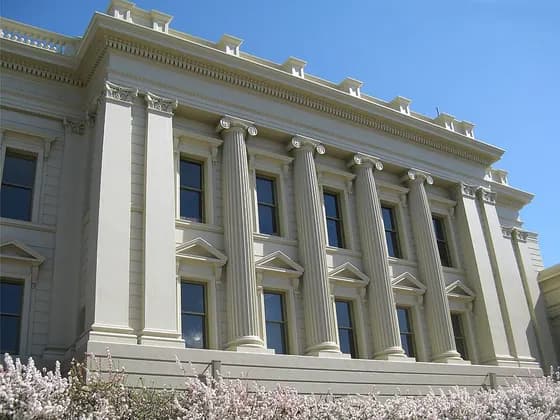
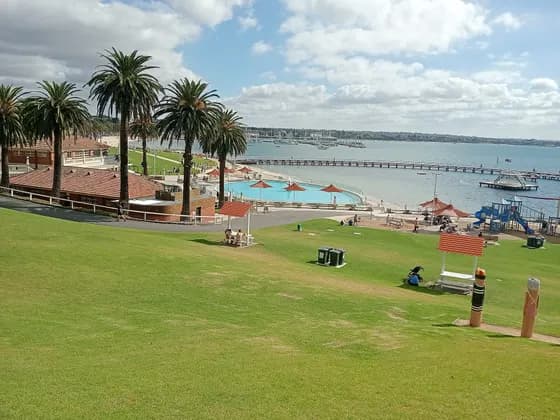
Photo: Bob T · CC BY-SA 4.0 · cropped
Photo: Rolland · CC BY-SA 2.0 · Photo: Mattplaysthedrums · CC BY-SA 4.0 · Photo: Paul Carmona · CC BY-SA 3.0
The Deakin medicine course at a glance (2027 entry)
Deakin's Doctor of Medicine (MD) is a four-year, full-time course for people who have already completed a bachelor degree. It is run by the School of Medicine in Deakin's Faculty of Health. Despite its name, the MD is an extended masters-level degree, at level 9 of the Australian Qualifications Framework (AQF). The Australian Medical Council (AMC), which accredits medical courses, has accredited it to 31 March 2029.
The course has a stated focus on rural and regional medicine, Indigenous health, patient-centred care and service to marginalised communities. Each semester is a single unit worth four credit points. Four themes, including public health and Indigenous health, run through every unit rather than being taught as separate subjects.
Years 1 and 2 lay the foundations through problem-based learning, where small groups work through clinical cases, plus interactive sessions, laboratory classes and clinical skills practice. Short placements with healthcare providers start in the first semester. Most students study at the Geelong Waurn Ponds Campus. Students in the Rural Training Stream, an entry pathway for applicants with a rural background, are based at Deakin's Warrnambool Campus or at East Grampians Health Service in Ararat instead.
Years 3 and 4 are full-time clinical training at one of five Deakin Medical School sites, also called clinical schools: the hospitals and community services you are attached to for your clinical years. They are Geelong – Barwon, Ballarat – Grampians, Warrnambool – South West, Rural Communities and Eastern Health in Melbourne.
Every unit is graded pass or fail. After graduating you complete an internship, the first supervised year of paid work as a doctor, also called postgraduate year one (PGY1). Deakin says its domestic graduates are guaranteed an internship in Victoria.
| Degree | Doctor of Medicine (MD), an extended masters degree at AQF level 9 |
|---|---|
| Course length | 4 years full time, 32 credit points, starting in January |
| Years 1 and 2 | Geelong Waurn Ponds; Warrnambool or Ararat for Rural Training Stream |
| Teaching style | Problem-based learning in Years 1 and 2, across four themes |
| First patient contact | Year 1 placements; full-time clinical training from Year 3 |
| Clinical sites | Geelong, Ballarat, Warrnambool, Rural Communities towns, Eastern Health in Melbourne |
| Rural placements | Year 1 Semester 2; a required rural placement in Year 3 |
| Research | Compulsory Research Scholar Program across Years 3 and 4 |
| Grading | Ungraded pass or fail; Years 3 and 4 each graded as a whole |
What makes Deakin medicine different
A year based in a small rural community
One Year 3 option is the Rural Communities site, run as a Longitudinal Integrated Clerkship. Instead of rotating through hospital blocks, you spend 12 months attached to a rural general practice with a rural clinical mentor, following patients through the practice, hospital, urgent care and specialist clinics.
Rural training from day one in the Rural Training Stream
The Rural Training Stream is an entry pathway for applicants with a rural background, with around 30 places a year. Its students spend Years 1 and 2 based in Warrnambool or Ararat rather than at Waurn Ponds. Years 3 and 4 are then spent at one or more of Deakin's three rural sites: Ballarat – Grampians, Warrnambool – South West and Rural Communities.
Indigenous health runs through all four years
Indigenous Health is one of the course's four themes, alongside the medical sciences, public health and ethics. In Year 1 you write a 1,500-word critical reflection on cultural safety, and in Year 2 you make an eight-minute video assessment on communicating with Indigenous patients. The clinical years build on this with culturally safe care in practice.
A research project built into Years 3 and 4
Every student completes the Research Scholar Program. You review the literature and write a research proposal in Year 3, then write the work up as a monograph and present it in a talk and on a poster in Year 4. Each stage is a hurdle you must pass to progress or to graduate.
A final year aimed at your first job
Year 4 includes two five-week pre-internship rotations that concentrate on readiness for internship. Semester 2 adds Targeted Intern Performance of Skills (TIPS) tasks, and you also sit a Prescribing Skills Assessment.
How Deakin teaches medicine
In Years 1 and 2 you learn through problem-based learning (PBL), interactive sessions and hands-on laboratory and clinical experiences. In PBL a small group works through a clinical problem, decides what it needs to learn, then applies that learning back to the case. Teaching happens both on campus and online.
In Years 1 and 2, each semester is one unit split into two blocks, each built around a topic, such as Human Biology, or a body system, such as Cardiovascular and Respiratory. The last block of Year 2 instead prepares you for clinical school. Four themes run through every block: Medical Science and Clinical Practice; Public Health Medicine; Ethics, Law and Professionalism; and Indigenous Health. The school describes its curriculum as spiralled and integrated: the themes come back each year at a higher level and are taught side by side within each block.
When the AMC assessed the school in 2018, each week of Years 1 and 2 centred on a new clinical scenario. PBL sessions with a facilitator opened the week's case and drew it together at the end. Lectures, practicals, role-plays, clinical skills sessions, simulations and workshops covered the content the case raised.
From Year 3 you learn mainly as a member of clinical teams, with formal teaching organised by your site, as the next section describes.
The ways you will learn
| Problem-based learning | The backbone of Years 1 and 2. You work with classmates on clinical problems that draw together the medical sciences, clinical practice, public health, ethics and law, Indigenous health and reflective practice. |
|---|---|
| Lectures and interactive sessions | Run alongside PBL in Years 1 and 2, both on campus and online. |
| Laboratory and practical classes | Hands-on medical science classes in teaching spaces built for them, tested in practical exams at the end of most blocks in Years 1 and 2. |
| Clinical skills and simulation | You practise interviewing, examining and clinical procedures in simulated settings, following the body systems. In Semester 2 of Year 1, for example, you learn to examine the cardiovascular, respiratory, renal and gastrointestinal systems while studying how they work. |
| Team-based learning | Used in Public Health Medicine. In team-based learning you prepare in advance, then solve problems with your team. Year 1 has two sets of three one-hour online sessions and Year 2 one set of three 90-minute sessions, all counting towards your result. |
| Clinical placements | Short placements with healthcare providers from the first semester, then full-time clinical training at your site in Years 3 and 4. |
A typical week on the Deakin course
Years 1 and 2 are full time. Each unit expects you to attend all learning activities, typically the equivalent of 40 hours a week covering clinical activities, formal teaching, personal reflection and self-directed study. That adds up to about 600 hours per semester. The school aims to publish timetables before each semester so you can plan work, caring or health commitments around them.
In Years 3 and 4 your week depends on your site and rotation. At Geelong – Barwon you join ward rounds, clinics and theatre with your team of junior doctors, registrars and consultants, plus lectures, bedside teaching and clinical skills sessions. Ballarat – Grampians says to expect around 20 to 30 hours a week on site. At Warrnambool – South West, ward work is paired with a formal teaching program.
Deakin describes a Rural Communities week like this. You have weekly parallel consulting sessions in your general practice, where you assess patients yourself and then work through their care with your clinical mentor. Fortnightly online tutorials and case discussions run alongside a fortnightly regional teaching day of bedside tutorials, clinical teaching and specialist consulting sessions, plus time in urgent care and on ward rounds.
The year starts in January. In 2027, Year 1 and 2 teaching runs from 18 January to 29 October, with an exam week at the end of each semester, in June and November. Years 3 and 4 start a week earlier, on 11 January, and Year 3 teaching runs to 5 November.
When you first meet patients at Deakin
Patient contact starts in your first semester. That semester's unit, Medicine 1A, includes a series of clinical placements. Deakin's course pages say you gain clinical experience early through placements with healthcare providers. A Deakin medical academic describes these early placements as short tasters with general practitioners, in hospitals, in allied health and in community care.
Before that first placement you need a police check and a Working with Children Check, which Deakin asks for when you start the course. The police check must then be valid before placements in each calendar year. Without these checks you cannot go on placement, which holds up your progress. You also declare your immunisation status, and a health service can turn away a student whose immunisation status it does not accept.
Alongside placements you practise clinical and procedural skills in a simulated environment, and your interviews and examinations of patients are assessed from Year 1. Semester 2 of Year 1 adds rural placements, and placements continue through both semesters of Year 2.
Year 2 ends with Transition to Clinical Practice. This block gets you ready to join a clinical school and to start seeing patients safely under supervision.
In Years 3 and 4 you take on real clinical tasks with patients, their families and the wider care team, guided by staff at your site. By the end of Year 4 you should be able to carry out the clinical procedures expected of a junior doctor, safely and with skill.
Year by year at Deakin
- Year 1
Foundations: the body, infection and four major systems
Year 1 is two units, Medicine 1A and Medicine 1B, each worth four credit points and split into two blocks. You start with how the body is built and how it defends and repairs itself, then study the heart, lungs, kidneys and gut.
- Human Biology block: cell biology, biochemistry, genetics, embryology, histology (the study of tissues under the microscope) and anatomy, and how the body keeps its internal balance.
- Infection, Defence and Repair block: tissue injury and healing, inflammation, infection and abnormal growth (neoplasia), the immune response and the microorganisms behind disease.
- Semester 2 blocks on the Cardiovascular and Respiratory systems, then the Renal and Gastrointestinal systems: how they develop and work, their major diseases, and how to take a history and examine each one.
- Public health and ethics: the burden of disease, epidemiology and biostatistics, consent, confidentiality and decision-making capacity, critical appraisal of research and Deakin's human research ethics process.
- Clinical placements in both semesters, including rural placements in Semester 2. You need your own stethoscope and a wireless-enabled laptop.
- Year 2
Complex systems and the move to clinical school
Year 2 covers the musculoskeletal system and metabolism, hormones and the life cycle, and the brain and behaviour, then ends with Transition to Clinical Practice. Clinical work steps up: you interpret findings, list possible diagnoses (differential diagnoses) and present cases. Students transferring from the International Medical University (IMU) in Malaysia join in Semester 2, through a transition unit that includes the same Transition to Clinical Practice curriculum.
- Musculoskeletal and Metabolism, then Endocrine and Lifecycle (Semester 1): bones, joints and muscles, how metabolism is regulated, hormones and reproduction, and development and ageing.
- Clinical reasoning and communication: a clinical examination with handover, ethics and law in women's health, paediatrics and musculoskeletal medicine, and motivational interviewing to help patients change lifestyle habits.
- Interprofessional learning: you work through an interprofessional team block and write a reflection on how health professions collaborate.
- Brain and Behaviour (Semester 2): the nervous system and special senses, mental health and psychiatric illness, empathy and active listening, and planning your own self-care as a future doctor.
- Public health and advocacy tasks: a health equity video, an advocacy report and a group analysis of a local community's health.
- Transition to Clinical Practice: a three-day visit to your clinical school in the block's first week, and a Clinical Practice Passport of online and face-to-face tasks that you must pass.
- Year 3
Core clinical disciplines at your site
Year 3 is one integrated year at your Deakin Medical School site, graded as a whole at the end. Most students rotate through medicine, surgery, children's health and women's health in hospitals and other clinical sites. At Rural Communities you instead learn these disciplines side by side over the year, based in a rural general practice. Every student must also complete a period of placement at a rural site.
- For students who rotate, six seven-week rotations, each about the equivalent of 40 hours a week.
- The Primary and Community Care Program, and learning outcomes on continuity of care, on the services patients use after leaving hospital, and on living with chronic illness.
- Research Scholar Program: a 500-word literature search protocol and a 2,000-word literature review in Semester 1, then a 2,500-word research proposal built around your own research question.
- Indigenous health in practice: culturally safe diagnostic and management plans, and recognising racism or discrimination in clinical interactions and learning to address it.
- Workplace-based assessments in every rotation, where supervisors assess you during real clinical work. At the end of the year, a written paper and an Objective Structured Clinical Examination (OSCE), a circuit of timed clinical stations.
- Year 4
Wider specialties and preparing for internship
Year 4 is spent at a Deakin Medical School site. The units list five rotations plus an Extended Studies Program and the Pre-Internship, and say you may be required to complete a rural placement.
- Rotations in emergency medicine; aged care, palliative care and rehabilitation; intensive care and anaesthetics; mental health; and general practice.
- Pre-Internship: two five-week rotations focused on getting you ready to start work as an intern.
- Research Scholar Program: a 3,000-word monograph, a 10-minute oral presentation with four minutes of questions, and a poster.
- TIPS tasks through Semester 2, the Prescribing Skills Assessment, a written paper and continuing workplace-based assessments.
- Deakin's pages differ on how the year is divided. The units' workload note says six five-week rotations, while the 2027 dates page lists seven numbered rotations and a Research Scholar Program period, all with dates still to be confirmed.
- In 2027, Year 4 exams run from 27 September to 1 October, with the seventh rotation listed after them. Graduation ceremonies are held in February at the Geelong Waterfront Campus.
How you are assessed at Deakin
Every unit in the MD is assessed on an ungraded pass or fail basis, so you pass or fail without a mark or grade. You must pass every unit and every component within it. In Medicine 1A, 1B and 2A you must pass each of the unit's two blocks, judged on your cumulative result across the block's tasks. In 1A and 2A that means at least 50% of the available marks.
Some units add further hurdles. Medicine 2A also requires passes in a minimum number of tasks in each block. Medicine 2B is judged across the whole unit instead: you need 50% overall across its eight main tasks, passes in at least six of them and a pass in the Clinical Practice Passport. Year 1 also includes a Human Research Ethics Quiz that you must complete.
Written tests include 45-minute intra-semester tests and two-hour end-of-semester exams. They mix multiple-choice questions (MCQs), extended matching questions (EMQs, where you match cases to answers from a long list) and short-answer questions (SAQs). Practical exams can mean 25 short-answer stations of 90 seconds each. Reports, reflections and ethics tests run alongside. Public health team-based learning sessions also count towards block results.
Clinical skills are assessed with patients and on video. Year 1 includes a recorded patient interview with a reflective piece, and a 14-minute in-person patient appointment followed by documenting your findings. Year 2 adds a clinical examination with handover, a clinical practice interview and an eight-minute Indigenous health communication video.
In Years 3 and 4 each year's two units are graded together at the end of the year, with a holding result of XA (not yet assessed) after the first semester. To start Year 4 you must pass four Year 3 hurdles. They are the Evidence Application Assessment (EAA), a three-hour paper of MCQs, EMQs and SAQs; the Research Scholar Program tasks; your workplace-based assessments; and an OSCE.
In the OSCE you move through 12 timed stations, each testing one clinical task, and you need 50% overall and passes in at least seven stations. Workplace-based assessments happen during real clinical work: the mini-CEX, where a supervisor watches you with a patient; case-based discussions; direct observation of procedural skills; and, in Year 3, in-training assessments. Year 4 repeats the EAA and adds TIPS and a two-hour Prescribing Skills Assessment of online multiple-choice and practical prescribing questions.
- Some exam items are shared with other medical schools through the Australian Medical Schools Assessment Collaboration (AMSAC) and the Australasian Collaboration for Clinical Assessment in Medicine (ACCLAiM), so Deakin can benchmark its students' results.
- Deakin's 2027 dates page sets aside further end-of-unit assessment periods, with the school notifying the students involved.
Where you will actually be at Deakin
For Years 1 and 2, General Entry Stream students are based at the Geelong Waurn Ponds Campus. Rural Training Stream students are based at Deakin's Warrnambool Campus or East Grampians Health Service in Ararat, with occasional days at Waurn Ponds. Their teaching mixes online and face-to-face learning, with at least one to two days a week in person. They give a preference between the two sites after accepting their offer, but it is not guaranteed.
For Years 3 and 4 everyone moves to the Deakin Medical School sites below. For Rural Training Stream students, Deakin says allocation happens during Year 2, using their preferences and the places available, regardless of where they studied in Years 1 and 2. These students are allocated to one or more of Ballarat – Grampians, Warrnambool – South West and Rural Communities, and must live at their site.
The Rural Training Stream is a firm commitment. When you accept a place you sign a declaration to train rurally for all four years. You cannot transfer to the general stream, and leaving the stream means giving up your place in the course.
Rural Communities works differently from the hospital-based sites. Once allocated there, you list your preferred towns and the classmates you would like to be placed with, and Deakin decides using everyone's preferences, so no town is guaranteed. Students learn in groups of two to five per town. Face-to-face intensive teaching weeks come about every six weeks in Warrnambool, Ballarat or Geelong, with accommodation provided, and you receive a travel allowance each semester for local travel.
Deakin's own pages disagree on some details of Rural Communities. The sites overview mentions nine locations and the School's Study with us page 10 rural community clinical sites, while the Rural Communities page lists fourteen towns supported by nine rural hospitals. The Rural Training Stream page adds that the locations are subject to change. The Rural Communities page also says its students complete Year 4 at another clinical school, but the 2027 Year 4 units list Rural Communities among the Year 4 sites.
Housing depends on the site. Geelong – Barwon students can use student accommodation at the Geelong Waterfront Campus. Deakin owns six four-bedroom houses within 5 km of the Warrnambool medical school that medical students can rent. Ballarat has no Deakin accommodation, so students rent privately. Deakin says its rural community sites offer on-site accommodation, and Deakin Rural Health rents furnished shared houses to students on placement in nine western Victorian towns, free in Ararat.
Deakin Medical School, Geelong – Barwon is the largest of Deakin's sites, on Level 1 of HERB beside University Hospital Geelong. Barwon Health has 1,016 beds across 21 sites in the region.
- Geelong Waurn Ponds Campus (Years 1 and 2)
- University Hospital Geelong (Barwon Health)
- Deakin Medical School, Health, Education and Research Building (HERB)
A small site within Grampians Health, whose Ballarat service has over 790 beds. More than 80 consultants teach, and you learn alongside University of Melbourne and Notre Dame students. Grampians Health Ballarat offers 32 intern positions.
- Grampians Health Ballarat (acute, sub-acute and community settings)
About 263 km south-west of Melbourne, roughly three hours by road, with V/Line trains via Geelong. South West Healthcare has over 212 beds, and the site keeps rotation groups small. It offers 17 two-year internships and hosts Deakin's Western Victoria Regional Training Hub.
- Deakin Warrnambool Campus (Rural Training Stream, Years 1 and 2)
- South West Healthcare, Ryot Street
The fourteen towns on the Rural Communities page, in Victoria's South West and Grampians regions, host the Year 3 Longitudinal Integrated Clerkship. Ararat is also home to East Grampians Health Service, a Years 1 and 2 base for Rural Training Stream students.
- Ararat
- Bacchus Marsh
- Camperdown
- Colac
- Daylesford
- Hamilton
- Horsham
- Portland
- Birregurra
- Apollo Bay
- Terang
- Beaufort
- Maryborough
- Stawell
Eastern Health Clinical School, a teaching partnership of Eastern Health, Monash University and Deakin set up in 2007. Deakin students spend Year 3 at Box Hill Hospital and Year 4 across Eastern Health sites, with the pre-intern rotation usually at Maroondah or Box Hill.
- Box Hill Hospital
- Maroondah Hospital
- Angliss Hospital
- Other Eastern Health sites
Electives, selectives and options at Deakin
The 2027 handbook's Year 4 units do not list an elective: the year is made up of the five named rotations, an Extended Studies Program and the Pre-Internship. Earlier editions of the same unit, in 2023 and 2024, did list an Elective, so older descriptions of a Deakin elective may not match the course you would take. If an elective matters to you, check the current handbook and ask the school.
The only unit the course structure labels an optional elective is the MD Extracurricular Research Program (HME090), described in the next section. Most of your remaining choices are about place and research. If you are allocated to Rural Communities you preference towns and classmates, and Rural Training Stream students give their Year 3 and 4 site preferences in Year 2. Everyone frames their own research question in the Research Scholar Program.
Intercalation and research degrees at Deakin
Research is built into the MD itself. Deakin developed the Research Scholar Program when the course moved from a bachelor-level degree to the MD. In Year 3 you search and critically appraise the literature, identify a gap, frame a specific research question and design a research proposal. In Year 4 you write up and present the work for academic, professional and public audiences.
You can add more through the optional MD Extracurricular Research Program (HME090), a zero-credit unit for joining a research project alongside your core studies. You can enrol at the start of any semester after completing Medicine 1A, and the first-semester requirement can be waived if you have already completed research such as an Honours year. You find the project and the supervisor yourself.
To enrol you need good academic standing, the online Human Research Ethics module, a project outline naming the supervisors and your role, ethics approval for the project and any required safety training. A project takes 40 to 80 hours in the semester, and you are assessed on an 800-word reflection or on outcomes the unit chair approves.
If you leave after passing Years 1 and 2, you can exit with a Master of Health and Medical Sciences (H720). It does not lead to registration as a doctor, and students on the International Medical University pathway cannot take it.
Facilities and support at Deakin
Where you will learn
For General Entry Stream students, Years 1 and 2 are taught in Deakin's $53 million purpose-built medical facilities at the Geelong Waurn Ponds Campus, which include simulation spaces for medicine, optometry and medical imaging. You learn in simulated clinical environments and medical science teaching spaces, with small-group sessions alongside. The facilities are in a precinct within walking distance of Epworth HealthCare's private hospital. Rural Training Stream students are based in Warrnambool or Ararat and come to Waurn Ponds occasionally.
Deakin Residential Services has seven two-bedroom terraces in the Waurn Ponds health precinct reserved for Doctor of Medicine students, each with private ensuite bedrooms and a shared kitchen and living area. Deakin says its housing for medical students in the precinct offers regular study sessions and exam and assignment debriefs.
At Geelong – Barwon, the medical school has procedure, simulation and ward rooms for teaching and practising clinical skills, and students can use the Barwon Health Library in Kitchener House. Deakin SimReady, the School of Medicine's simulation team, is based at the Geelong medical school. It runs simulation training for learners from students to qualified clinicians, in areas such as life support, deteriorating patients, airway management and communication.
At the Warrnambool campus, medical and nursing students train on Syn-D, a synthetic cadaver introduced in 2026 with support from Peter's Project Foundation. It mimics tissues, bones, muscles, organs and blood vessels, and can be dissected and put back together. The Foundation also funds scholarships for Year 1 and 2 medical students studying in Warrnambool.
At Ararat, East Grampians Health Service opened a practical laboratory in September 2025 that it shares with Deakin and Federation TAFE. It is laid out like a hospital ward, with two four-bed patient wards, patient bathrooms, medication rooms, a simulation lab and a break-out room. When it opened, the health service said 30 Rural Training Stream students were studying in Ararat across Years 1 and 2.
Support while you study
The School of Medicine provides a counsellor who offers mental health support specifically to medical students. In the AMC's 2025 report, the school describes a support team that gives academic advice and individual support, and close work with Deakin's Disability Resource Centre and Academic Support Unit. If you have a disability or health condition, the school invites you to discuss the course requirements and reasonable adjustments confidentially.
The Damion Drapac Centre for Equity in Health Professions Education, within the School, runs the Damion Drapac Access Fund. This small, flexible fund helps medical students facing personal or financial hardship. Past examples include unexpected medical costs, moving to a new clinical learning site and childcare during rescheduled assessments. The Centre also runs a scholarship covering the whole degree for students from under-represented groups facing financial barriers.
The AMC's 2025 report notes an Indigenous Health academic and professional team formed to support Indigenous medical students. Deakin also offers Aboriginal and Torres Strait Islander students culturally specific services, including orientation, tutoring, mentoring, financial support and social and emotional wellbeing support.
Student groups include MeDUSA, the Deakin Medical Students' Association, which works closely with the course team, and NOMAD, Deakin's rural health club. Some sites add their own support: at Eastern Health each student has a senior doctor as an academic mentor, with practice exams and OSCE bootcamps.
Is the Deakin course right for you?
This course may suit you if
- You would like the option of spending Year 3 in a small rural town, following patients through general practice, hospital and urgent care with a clinical mentor.
- You learn well by working through clinical problems in a small group, the main teaching method in Years 1 and 2.
- You have a rural background, particularly in western Victoria, and want to do all four years in rural Victoria through the Rural Training Stream.
- You want Indigenous health, public health and ethics taught alongside the science in every year, rather than as separate subjects.
- You want a research project built into the degree, from literature review to a written monograph and presentation.
Things to think about
- Years 3 and 4 may take you to Geelong, Ballarat, Warrnambool, a small rural town or eastern Melbourne, and you may have to move for them.
- Rural Communities students are likely to move twice in the clinical years: to a rural town for Year 3, then, according to Deakin's Rural Communities page, to another clinical school for Year 4.
- Joining the Rural Training Stream is binding: you commit to rural training for all four years and cannot switch to the general stream.
- The workload is full time from the start, the equivalent of about 40 hours a week in Years 1 and 2 including self-directed study, with assessments in every block.
- Progression is strict: Year 3 has four hurdles, including a 12-station OSCE, and you must pass every one to start Year 4.
Deakin medicine course — frequently asked questions
Applying to Deakin?
How to get into Deakin
Entry requirements, admission tests, written application and interview, step by step.
Open the guide →Deakin entry requirements
ATAR or GPA, GAMSAT and UCAT ANZ thresholds, interview format and place types.
See the requirements →Compare Deakin with other schools
Put the teaching style, anatomy teaching and placements next to another school.
Open the comparison →Prepare for the Deakin interview
Format breakdown, school-specific sample questions and prep tips from tutors who interviewed here.
Read the guide →Where this Deakin course guide came from
This guide was written from 44 official sources — Deakin University School of Medicine's own course pages and programme documents, plus the Australian Medical Council or Australian Dental Council and the health services the school places students with where they publish detail — read on 2026-10-07, then checked claim by claim against those sources.
- Deakin University: Doctor of Medicine course page (2027 course information)
- Deakin University: Doctor of Medicine for international students (IMU pathway and professional recognition)
- Deakin University Handbook 2027: H911 Doctor of Medicine
- Deakin University Handbook 2027: H720 Master of Health and Medical Sciences (exit award)
- Deakin University Handbook 2027: HME911 Medicine 1A
- Deakin University Handbook 2027: HME912 Medicine 1B
- Deakin University Handbook 2027: HME921 Medicine 2A
- Deakin University Handbook 2027: HME922 Medicine 2B
- Deakin University Handbook 2027: HME931 Medicine 3A
- Deakin University Handbook 2027: HME932 Medicine 3B
- Deakin University Handbook 2027: HME941 Medicine 4A
- Deakin University Handbook 2027: HME942 Medicine 4B
- Deakin University Handbook 2024: HME941 Medicine 4A (older edition listing an Elective)
- Deakin University Handbook 2027: HME090 MD Extracurricular Research Program
- Deakin University Handbook 2027: HME922X IMU Medical Student Transition
- Deakin University: 2027 Doctor of Medicine dates
- Deakin School of Medicine home page
- Deakin School of Medicine: Study with us
- Deakin Medical School Sites overview
- Deakin Medical School, Geelong – Barwon
- Deakin Medical School, Ballarat – Grampians
- Deakin Medical School, Warrnambool – South West
- Deakin Medical School, Rural Communities
- Deakin: Eastern Health Clinical School
- Deakin School of Medicine: Rural Training Stream
- Deakin Faculty of Health: Indigenous Entry Stream
- Deakin Faculty of Health: Medical facilities
- Deakin SimReady simulation team
- Deakin: Western Victoria Regional Training Hub
- Deakin: Medicine for international students (counsellor, MD housing and the Rural Communities year)
- Deakin School of Medicine: The Damion Drapac Centre
- Deakin Rural Health: Rural health placements and student accommodation
- Deakin Residential Services: 2 Bedroom Terraces for Doctor of Medicine students, Waurn Ponds
- Deakin news, January 2024: first year medical students start in Warrnambool and Ararat
- Deakin news, May 2026: synthetic cadaver at the Warrnambool campus
- Deakin career story: How to become a doctor in Australia (early placements)
- Australian Medical Council: Deakin University accreditation report, 2025
- Australian Medical Council: Deakin University reaccreditation report, 2018 (older)
- Australian Medical Council: list of accredited medical schools
- Medical Board of Australia: Interns
- Postgraduate Medical Council of Victoria: 2026 Intern Match
- Postgraduate Medical Council of Victoria: 2026 Intern Match Information
- Eastern Health: Education and Training (Eastern Health Clinical School)
- East Grampians Health Service news, September 2025: Practical Laboratory opened at EGHS, Ararat
Courses are restructured between cycles. Anything here that decides your application — an anatomy offer, a placement city, a compulsory intercalated year — should be confirmed against the official page for your entry year.
Applying to Deakin?
We have helped hundreds of applicants turn their GAMSAT / UCAT ANZ, written application and interview prep into offers from Deakin and other Australian medicine schools.