
The Charles Sturt Medicine course
What you actually study, and where you will be
Charles Sturt's BClinSc(Med)/MD is a 5-year (undergraduate entry) course taught through problem-based learning in an integrated curriculum, with patient contact from Year 1 and placements in nine clinical schools in rural NSW and northern Victoria (2027 entry). Charles Sturt's School of Rural Medicine runs this five-year course to train doctors for rural and regional Australia. In years 1 and 2 you are on the Orange campus, learning the body system by system through problem-based learning and clinical skills sessions, with a two-week rural placement each year. Years 3 to 5 are spent full-time at one of nine rural clinical schools in NSW and northern Victoria, on long placements in general practices, district hospitals and regional base hospitals.
- Degree
- BClinSc(Med)/MD
- Length
- 5 years (undergraduate entry)
- Teaching
- Problem-based learning + Integrated
- Clinical contact
- Year 1
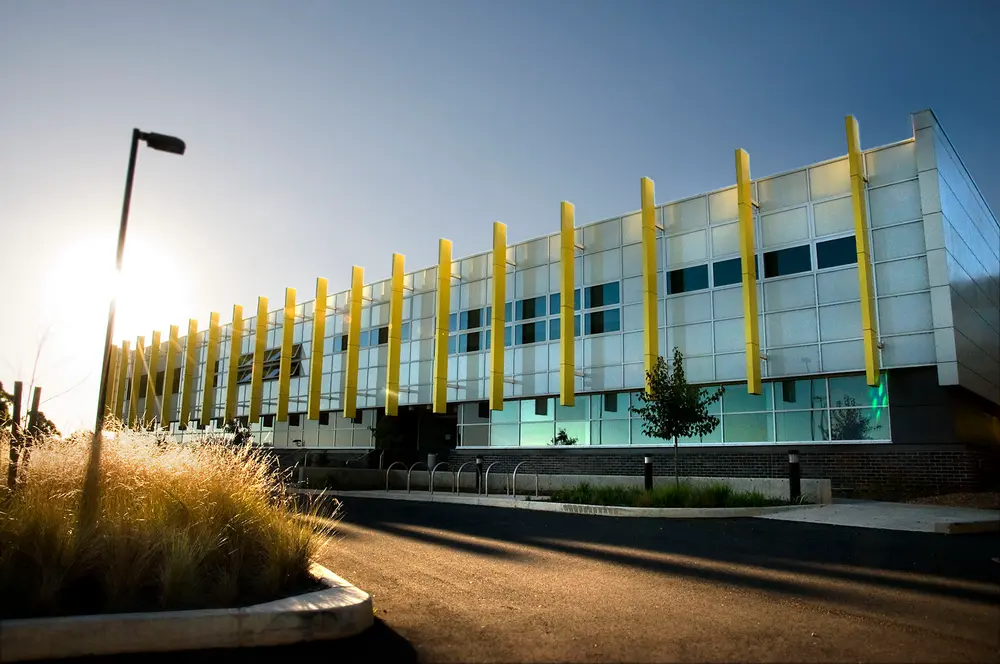
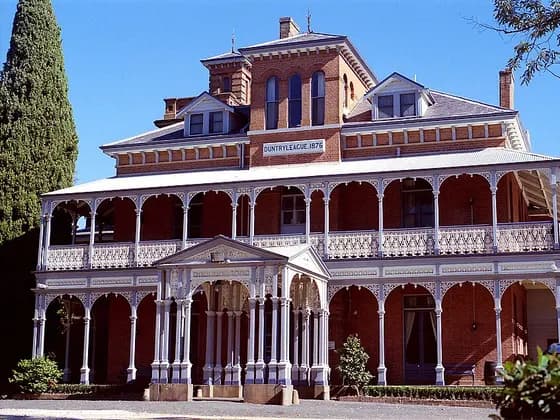
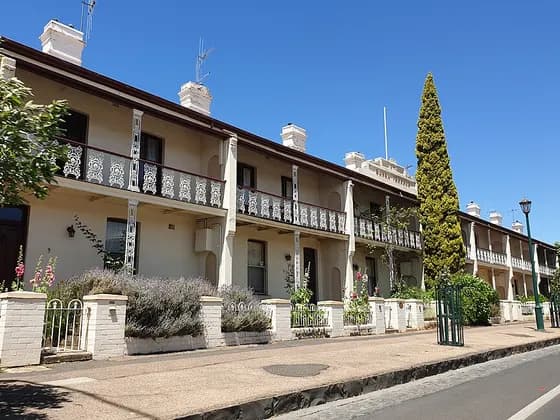
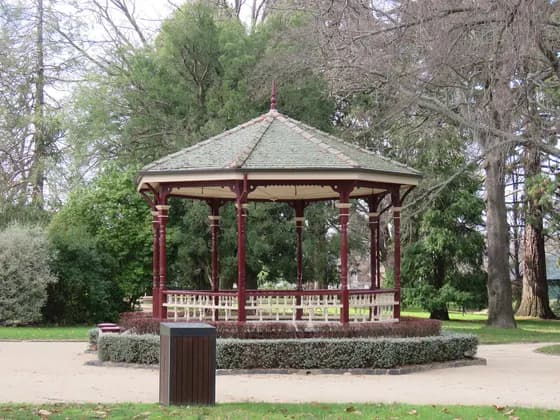
Photo: Content Charles Sturt · CC BY-SA 4.0 · cropped
Photo: Tinny186 · CC BY-SA 4.0 · Photo: Floodstreet · CC BY-SA 4.0 · Photo: Calistemon · CC BY-SA 4.0
The Charles Sturt medicine course at a glance (2027 entry)
The Bachelor of Clinical Science (Medicine) / Doctor of Medicine, written BClinSc(Med)/MD, is a five-year, full-time course run by Charles Sturt University's School of Rural Medicine in Orange, NSW. It is direct entry, so you can start straight from school. The Doctor of Medicine (MD) is an extended masters-level degree in Australia, not a research doctorate. Graduates can work in Australia and New Zealand as interns, doctors in their first supervised year after graduating, also called postgraduate year 1 (PGY1).
Charles Sturt now runs the course on its own. From 2021 it was taught as the Joint Program in Medicine with Western Sydney University. In August 2025 the Australian Medical Council (AMC), which accredits Australian medical courses, accredited Charles Sturt's standalone program from January 2026 to 31 March 2032, with conditions to meet along the way. The first cohort, 38 students who started in 2021, finished in 2025.
The course exists to train doctors for the country. It is built on rural generalist medicine, the work of a rural GP who also provides emergency care, hospital inpatient care and advanced skills. Teaching takes place in regional and rural settings throughout. The school aims to select mostly students of rural origin, and the AMC noted a significant group of mature-age students alongside school leavers.
Years 1 and 2 are on the Orange campus. You learn through problem-based learning (PBL), a method in which a small tutorial group starts from a patient scenario, works out what it needs to learn and then researches it. You also practise clinical skills from your first weeks and spend at least two weeks on a rural placement each year. For years 3 to 5 you move to one of nine clinical schools in rural NSW and northern Victoria, learning full-time on placement and returning to the same community each year.
It is a small course, with 47 government-subsidised places a year from 2026, up from 37 in 2021. The AMC found that staff know students as individuals and that supervisors value them as members of the team.
The AMC's 2025 report found that the program substantially meets its standards. It rated three areas as not met: assessment design, the handling of concerns about a student's health or professional behaviour, and staff appointment, promotion and development. The school is also redesigning its curriculum, with an update due to the AMC in 2027. Until the new curriculum is fully in place, it must report every year to 2030 that it has the resources to run the course on its own.
| Degree | Bachelor of Clinical Science (Medicine) / Doctor of Medicine, BClinSc(Med)/MD |
|---|---|
| Course length | 5 years full time; years 1–2 on the Orange campus |
| Intake | One a year: February (2026 brochure); 1 March 2027 (course page) |
| Class size | 47 government-subsidised places a year from 2026 |
| Teaching style | Problem-based learning hybrid in years 1–2; presentation-based learning on placement |
| Anatomy | Plastinated specimens, models, imaging and ultrasound; exams in years 1–2 |
| Clinical contact | Clinical learning from your first weeks; two-week rural placements in years 1–2 |
| Clinical schools | Nine, in rural NSW and northern Victoria, for years 3–5 |
| Placement hours | 3,360 in the 2027 handbook; 4,562 on a faculty web page |
| Research | MD Project: 10 weeks across years 3–4, on a local rural issue |
What makes Charles Sturt medicine different
Three clinical years in one rural community
For years 3 to 5 you live and study full-time at one of nine clinical schools, returning to the same community each year. The school links this to keeping doctors in rural towns. You also complete a three-year longitudinal placement in primary care, so you get to know a practice and its patients over time instead of meeting them on short rotations.
Rural placements from your first year
Both campus years include a Rural Generalist Placement of at least two weeks in general practice and rural hospitals. These are in regional, rural or remote NSW and Victoria, so you see country practice long before your clinical years.
Medicine in Context: learning in the community
Medicine in Context runs through all five years. In years 1 and 2 you spend one or two days on placement with community organisations in your clinical school's area, such as food banks, mental health services and school programs. Across the course it also reaches aged care homes, disability homes and headspace, a youth mental health service. The AMC singled it out as a strength of the course.
The option of an Aboriginal Medical Service placement
You can complete your three-year primary care placement at an Aboriginal Medical Service or Aboriginal Community Controlled Health Organisation, a clinic run by its local Aboriginal community. The AMC commended this and praised the placements at Orange Aboriginal Medical Service. In the 2027 handbook every year has an Indigenous Health Assessment and every subject covers culturally safe care.
A research project rooted in your clinical school
Every student completes an MD Project, a scholarly project on an issue facing your own clinical school's community, supervised by someone from its medical community. Current projects include noise levels in a regional special care nursery and a paediatric acute review clinic on the Mid North Coast.
How Charles Sturt teaches medicine
The school calls years 1 and 2 a problem-based learning hybrid. Lectures, tutorials and practicals support the weekly PBL case by teaching the science behind it.
Both campus years work through the body one system at a time. In each block the biomedical sciences, from anatomy, biochemistry and physiology to microbiology, pharmacology and population health, are taught through clinical scenarios and bedside teaching with patients. Threads on communication, professionalism, evidence-based practice and Aboriginal and Torres Strait Islander health run through every block, and practising clinicians do much of the teaching.
From year 3 the method changes to presentation-based learning. A presentation is the problem a patient arrives with, such as chest pain or a fever. For each one you learn the anatomy and disease processes behind it, the history and examination, which tests to order and how to manage it.
Each clinical year builds on the last. Year 4 revisits the year 3 presentations in paediatrics, obstetrics and gynaecology, and mental health. Year 5 is organised around the work of a junior doctor: assessing patients, ordering tests, prescribing safely and managing emergencies with basic and advanced life support.
The ways you will learn
| Problem-based learning tutorials | Weekly small-group tutorials in years 1 and 2, each built around a clinical scenario that draws in anatomy, physiology, pharmacology, pathology, population health, ethics and professional practice. PBL tutors meet the year 1 and 2 convenors weekly to flag students who may need extra support. |
|---|---|
| Lectures, tutorials and practicals | These support the PBL cases by teaching the biomedical science of each body system block. Practical work uses spaces such as the anatomy lab, the ultrasound room and the clinical skills rooms on the Orange campus. |
| Clinical and procedural skills | From the first weeks you practise on manikins and trainers and with actors playing patients. Skills include hand hygiene, airway care, reading ECGs, taking blood and inserting cannulas, suturing, bedside ultrasound, and basic life support for adults, children and newborns. |
| Longitudinal placements | In years 3 to 5 you join teams in general practices, district hospitals, regional base hospitals and community health services. Supervisors include GPs, rural generalists, specialists, registrars, house medical officers, Aboriginal Health Workers and nurse practitioners. |
| Clinical school tutorials and online learning | Small-group sessions at your clinical school support placement learning. Each clinical year includes a graded case-based tutorial presentation, where you present a patient case in a tutorial. Self-paced online modules cover theory and research skills in year 3, and year 4 adds online learning events on clinical reasoning. |
A typical week on the Charles Sturt course
In the campus years you have a weekly PBL tutorial, with lectures, practicals and clinical skills sessions around it. The handbook gives each year's workload in hours: 1,120 to 1,280 in year 1 and 1,120 to 1,310 in year 2. The clinical years rise to 1,700 to 1,900 hours in year 3, 1,600 to 1,800 in year 4 and 1,600 to 1,720 in year 5.
The school's Future students page says attendance is mandatory. You are expected to attend and take part in 100 per cent of scheduled teaching, and not meeting the requirement leads to a fail for that year's subject. The AMC's 2025 report, by contrast, described the course as having no fixed attendance requirements while stressing active participation, so check the current rule when you enrol.
For the clinical years, a final-year student at the Murray Clinical School described her routine on the university's student blog in April 2026. She was on placement Monday to Friday, with a few tutorials from local clinicians. On an anaesthetics rotation she joined morning and afternoon theatre lists across Albury and Wodonga hospitals, and fitted lectures and assignments into her own time.
How anatomy is taught at Charles Sturt
Anatomy is taught on the Orange campus in years 1 and 2, as part of each body system block. The school's anatomy education centre holds plastinated specimens, real human specimens preserved with plastic so they can be handled and studied. The campus also has an ultrasound room, where you learn to use ultrasound to examine patients.
In a university-published interview first posted in 2021, the then Associate Head of School listed anatomy models, cadavers, plastinated specimens, radiological images and ultrasound as resources. Anatomy tutors and clinicians teach both the structures and why they matter clinically. A second-year student featured by the university in September 2026 was struck by how much work had gone into the anatomy centre and its resources.
Anatomy has its own exam in each of years 1 and 2, worth 15 per cent of the year's mark. From year 3 it returns in clinical form, as the anatomy behind each presentation you study.
When you first meet patients at Charles Sturt
Clinical learning starts in your first weeks of study. The year 1 handbook describes bedside teaching with patients, hospital-based sessions and community visits alongside the PBL cases.
Each of years 1 and 2 includes a Rural Generalist Placement of at least two weeks (80 hours in the 2027 handbook) in general practices, Aboriginal Medical Services, community health services and rural hospitals. In a 2023 blog post, a second-year student described splitting hers between the GP clinic at the Trundle Multi Purpose Health Service and the operating theatres at Parkes Hospital, where she scrubbed in.
Medicine in Context adds short community placements in years 1 and 2. The AMC also names a Day on Country, a day spent on the traditional lands of local Aboriginal people, as part of Medicine in Context.
The AMC found in 2025 that every student gains clinical experience caring for Aboriginal and Torres Strait Islander patients. It added that more work is needed to make sure these experiences are culturally safe and adequate.
Year by year at Charles Sturt
- Year 1
Clinical Sciences 1 (MED102)
The first year-long subject lays the foundations, one body system at a time, through problem-based learning, bedside teaching, procedural skills teaching, lectures, tutorials and practicals. It also covers the human side of medicine: communication, professionalism and the quality and safety of care. Throughout, it looks at the social and cultural factors that shape health, with a focus on Aboriginal and Torres Strait Islander health.
- Body system blocks: Introduction to the Human Body, then the renal, cardiovascular and respiratory systems.
- Integrated topics include history taking and physical examination, diagnostic reasoning, disease prevention and health promotion, medical law and codes of conduct, academic writing and evidence-based practice.
- Culturally safe communication and reflective practice that draw on Aboriginal and Torres Strait Islander knowledges and models of care, new in the 2027 handbook.
- A Rural Generalist Placement of at least two weeks (80 hours).
- Weighted items: short answer exam (50%), multiple choice exam (25%), anatomy exam (15%) and public health assessment (10%). Pass/fail items: portfolio, Indigenous Health Assessment, identity map and presentation, workplace-based assessment logbook and professionalism.
- If you have no chemistry background, the handbook strongly encourages the Charles Sturt Study Link chemistry course before you start. You need a stethoscope, a pencil torch, a watch with a second hand and closed-in shoes.
- Year 2
Clinical Sciences 2 (MED202)
Year 2 completes the body systems and goes deeper into how diseases develop, the common and important conditions in each system, and their drug and non-drug treatment. You build towards taking a focused history and examining a patient yourself.
- Blocks: the renal system again, then the musculoskeletal system and rheumatology, neuroscience, endocrinology and the reproductive system, infectious diseases, and oncology, haematology and palliative care.
- Health in rural and Aboriginal and Torres Strait Islander communities, including the effects of colonisation and racism and how health agencies' policies are experienced differently by First Nations people.
- Learning to frame an answerable research question.
- A second Rural Generalist Placement of at least two weeks (80 hours).
- A session with pharmacy students, one of the few interprofessional activities the AMC found in 2025.
- Weighted items: short answer exam (40%), multiple choice exam (20%), clinical examination (20%), anatomy exam (15%) and public health assessment (5%). Pass/fail items: portfolio, Indigenous Health Assessment, logbook and professionalism.
- Year 3
Applied Clinical Sciences 1 (MED302)
Year 3 moves you to your clinical school full-time. The handbook calls it a longitudinal integrated rural generalist clerkship: a year based in one community, with rotations through general practice, emergency medicine, internal medicine, general surgery and other areas depending on the site. Teaching focuses on general practice, internal medicine, surgery, critical care, oncology and palliative care, and Indigenous health.
- 1,080 placement hours in the 2027 handbook, in rural general practices, district hospitals, regional base hospitals and community health services.
- Presentation-based learning: for each problem you work through the disease processes, possible diagnoses, history and examination, investigations, including advanced tests such as coronary angiograms, endoscopy and echocardiograms, and management.
- Small-group learning at your clinical school, plus self-paced online modules on theory and research skills.
- A dedicated week of teaching to prepare your MD Project, and an assessed MD Project Plan.
- Weighted items: short answer exam (30%), clinical examination (25%), multiple choice exam (20%), public health assessment (10%), MD Project Plan (10%) and case-based tutorial presentation (5%). Pass/fail items: portfolio, Indigenous Health Assessment, logbook and professionalism.
- Completing year 3 qualifies you for the exit award, the Bachelor of Clinical Science (Medicine), if you choose to leave rather than continue to the MD.
- Year 4
Applied Clinical Sciences 2 (MED402)
Year 4 continues the placement in the same clinical school but shifts the focus to paediatrics, obstetrics and gynaecology and mental health, alongside general practice and community health. You revisit the year 3 presentations in these patient groups and finish your MD Project. It is the first of the two postgraduate-level years that make up the MD.
- 940 placement hours in the 2027 handbook, with rotations that vary depending on where your attachments are.
- Focused time to complete your MD Project.
- Online learning events on clinical reasoning, plus small-group sessions at your clinical school.
- First Nations health content on clinician bias in pregnancy and mental health care, and on the health problems that fall hardest on First Nations children.
- Weighted items: short answer exam (25%), clinical examination (25%), multiple choice exam (20%), MD Project (20%) and case-based tutorial presentation (10%). Pass/fail items: portfolio, Indigenous Health Assessment, logbook and professionalism.
- The 2026 brochures list the year 4 mix differently, adding Indigenous health and calling mental health psychiatry. The school's Rural Generalist Placement Program web page adds emergency medicine, oncology and palliative care. This guide follows the 2027 handbook.
- Year 5
Applied Clinical Sciences 3 (MED502)
The final year prepares you for internship (PGY1). You work in clinical teams in medicine, surgery, general practice and critical care, with time in community health and Indigenous health. Teaching centres on the standards expected of a junior doctor.
- 1,180 placement hours in the 2027 handbook, in medicine, surgery, general practice, critical care (emergency medicine, anaesthetics and intensive care), Medicine in Context community health and Indigenous health.
- Four weeks of directed clinical placement matched to your identified learning needs.
- Teaching themes: full patient assessment, emergency care with basic and advanced life support, safe test ordering, safe prescribing, professional standards and culturally safe care.
- A pre-internship program, as the AMC described the plan in 2025, follows the final written and clinical exams. It starts with central teaching on intern tasks such as prescribing fluids, surgical skills and cannulation, then four rotations: medicine, surgery, general practice and one selective, a rotation you choose.
- Weighted items: short answer exam (30%), case-based discussion (25%), long case (20%), multiple choice exam (15%) and case-based tutorial presentation (10%). Pass/fail items: prescribing skills assessment, portfolio, Indigenous Health Assessment, logbook and professionalism.
How you are assessed at Charles Sturt
Each year of the course is a single 64-credit-point subject, so you pass or fail the year as a whole. It combines weighted items, mostly exams, with pass/fail items such as the portfolio, logbook, Indigenous Health Assessment and professionalism, and is graded on the university's high distinction to fail scale. The AMC noted in 2025 that, because of this structure, failing one discipline means repeating the whole year, and that the school had no plans to change this.
Knowledge is tested every year in short answer question (SAQ) and multiple choice question (MCQ) exams, plus an anatomy exam in years 1 and 2. The AMC reported that written exams are standard-set with the modified Cohen method, which sets the pass mark relative to the scores of the strongest students. It also counted more than 30 assessment pieces in years 1 and 2.
Clinical skills are examined in a Clinical Examination in years 2, 3 and 4. In year 5 this becomes a case-based discussion, where you talk an examiner through a patient you have cared for. There is also a long case, where you assess one patient in depth and present your findings and plan. The AMC also lists online OSCEs: Objective Structured Clinical Examinations, in which you rotate through timed stations that each test one task.
On placement, supervisors rate you on real tasks in workplace-based assessments, collected in a logbook that must be satisfactory each year. These include mini-CEX forms, each recording a short observed patient encounter with feedback. The pass/fail Indigenous Health Assessment, already part of years 1 and 2, appears in years 3 to 5 for the first time in the 2027 handbook.
The AMC's 2025 report set conditions here. By 2026 the school must show an assessment system blueprinted across all five years. By the same date it must show better training for clinical supervisors, after students reported being assessed by locums (temporary doctors) unfamiliar with the school's standards. By 2027 it must assess Aboriginal and Torres Strait Islander health and culturally safe practice across the whole course.
Struggling students are picked up early. Year convenors review results weekly with the Associate Head of School for learning and teaching. In years 1 and 2, students who fall behind agree a study plan with their convenor. In the clinical years, failing an attachment puts you at risk of failing the year and leads to a referral to your Head of Clinical School.
Where you will actually be at Charles Sturt
Placements begin in year 1, with a Rural Generalist Placement in each campus year and short Medicine in Context visits. Before your first placement you must give NSW Health a national police check, proof of vaccinations and a signed code of conduct agreement. These are verified through ClinConnect, NSW Health's system for checking students' placement documents. You also need a Working with Children Check and Mental Health First Aid training, and the faculty sets 1 June of first year as the deadline.
For years 3 to 5 you are allocated to one clinical school and study there full-time, returning to the same community each year. Each clinical school is a regional hub for surrounding towns. You are also seconded to regional base hospitals, district hospitals and general practices for specialist training and pre-internship work. In hospitals you can rotate through emergency departments, wards, theatres, intensive care, children's wards, maternity, special care nurseries and outpatient clinics.
When the network was funded in 2022, the university described clinical school campuses focused on smaller communities with district hospitals, each linked to a larger base hospital in its region. The school works with Western NSW, Murrumbidgee and Mid North Coast Local Health Districts, Albury Wodonga Health, Swan Hill District Health and Bendigo Health to deliver teaching. Some hospitals also host students from other universities, so supervisors and space are shared.
On costs, the handbook says you pay for travel, accommodation and resources on compulsory placements. The AMC reported in 2025 that students placed more than an hour from their base clinical school get accommodation. It is paid for by the school or by the Rural Health Multidisciplinary Training program, through which the Australian Government funds rural health training. The AMC also heard concerns about long, tiring drives, especially at the Northern Rivers Clinical School, where rentals are scarce and sites are spread out.
City experience is limited. The AMC found in 2025 that few placements in city hospitals are compulsory, because the program's Rural Health Multidisciplinary Training funding covers regional, rural and remote areas. Staff will try to arrange a city placement on request, and some students use electives to see how rural patients are transferred to city hospitals. Not every student gets city time.
For 2027 entrants, two university sources disagree on placement hours. The 2027 handbook's figures total 3,360 hours, with years 3 to 5 down from the 2026 handbook's 1,260, 1,220 and 1,260. The faculty's work-integrated learning page gives 138, 184, 1,200, 1,520 and 1,520 hours for years 1 to 5, or 4,562 in all.
Orange is also home to the campus years, so students placed here already know the town. During its 2025 visit to this clinical school, the AMC also met staff from Dudley Private Hospital, including its chief executive and senior theatre nursing staff.
- Orange
- Orange Health Service
- Orange Aboriginal Medical Service
The AMC visited Bathurst Health Service in 2025 and met supervisors teaching year 3, 4 and 5 students there.
- Bathurst
- Mudgee
- Bathurst Health Service
In 2025 the AMC commended Parkes Hospital's physiotherapists for supporting student learning, but found students there had no allocated study space.
- Condobolin
- Cowra
- Forbes
- Grenfell
- Parkes
- Peak Hill
- Trundle
- Parkes Hospital
Towns on the NSW Mid North Coast.
- Kempsey
- Port Macquarie
- South West Rocks
- Wauchope
The head of this clinical school is a GP obstetrician at Swan Hill District Health. Placements outside NSW need extra site-specific compliance checks.
- Swan Hill (Victoria)
- Kerang (Victoria)
- Deniliquin (NSW)
- Swan Hill District Health
A final-year student here wrote in 2026 that she lived on the Albury-Wodonga campus.
- Albury
- Beechworth
- Corowa
- Corryong
- Wangaratta
- Albury and Wodonga hospitals
The AMC met supervisors from these Griffith and Lake Cargelligo sites in 2025. The head of the clinical school is a GP and anaesthetist at Griffith Base Hospital.
- Griffith
- Hay
- Hillston
- Lake Cargelligo
- Griffith Base Hospital
- Griffith Aboriginal Medical Service
- Your Health, Griffith
- Lake Cargelligo Family Practice
Opened in May 2024 with the Mid North Coast Local Health District, planned for up to five students a year and 15 across years 3 to 5. Students are paired with local GP clinics for all five years.
- Bellingen
- Bowraville
- Coffs Harbour
- Dorrigo
- Grafton
- Macksville
- Nambucca Heads
- Macksville District Hospital
- Bellinger River District Hospital
- Cootamundra
- Finley
- Gundagai
- Temora
- Tumut
- Wagga Wagga
Electives, selectives and options at Charles Sturt
In year 5 the 2027 handbook includes four weeks of directed clinical placement, set according to your identified learning needs. The pre-internship program the AMC described in 2025 includes one selective alongside medicine, surgery and general practice.
More broadly, the AMC found in 2025 that students have room to follow their own interests and are encouraged to seek out extra opportunities. What is available varies between clinical schools, and some students find openings through senior doctors at their site that others may not get. The AMC said a written policy is needed to make the process consistent.
Facilities and support at Charles Sturt
Where you will learn
Years 1 and 2 are taught on the North Orange campus, which Charles Sturt calls its health hub, shared with courses such as dentistry, pharmacy and physiotherapy. The School of Rural Medicine has an anatomy education centre, an ultrasound room, clinical skills rooms and simulated hospital rooms, plus an academic hub with PBL tutorial rooms and study areas.
The hospital simulation area has two four-bed patient rooms, a scrub room and a nurses' station, fitted out like a real ward. The school's second site, on the Bloomfield campus in Forest Road, sits across the road from the hospital in Orange and has clinical skills rooms, tutorial rooms and student areas.
In August 2026 Charles Sturt officially opened the Newmont Simulation Centre and Immersion Room in the Bloomfield Medical building, funded with more than $1.5 million from Newmont through Cadia's Community Investment Program. It recreates wards, operating theatres and emergency settings, with advanced patient manikins, a portable 360-degree camera ring for recording and reviewing scenarios, and a 19.5-metre wraparound LED screen.
Clinical school facilities vary. In 2025 the AMC found purpose-built facilities at many sites, but students at Parkes had no allocated space and many sites lacked culturally safe spaces and parents' rooms. It asked the school to evaluate this by 2027. The course has its own IT staff member, and library staff ask students which journals they need.
Support while you study
Each clinical school has a Head of Clinical School, who runs placements and works with local supervisors, and a Clinical School Support Officer, who keeps an eye on student wellbeing. The AMC found the support officers very dedicated, and noted that small numbers give students good access to academics.
Study Access Plans can provide extra exam time, separate exam rooms, deferred exams, tailored timetables, larger print and allocation to a preferred clinical school. The AMC commended the school for taking family circumstances into account and for introducing wellbeing days, and noted flexible study policies developed with students. It also praised the good working relationship between course leaders and the student society, the Charles Sturt Health & Rural Medicine Society (CHARMS).
First Nations students are supported by an Associate Head of School for Indigenous Health, who started in July 2025, and an Indigenous Health Coordinator. The university's First Nations Student Connect team offers one-to-one tutoring and specialist advisers. The AMC commended Student Connect and Yarn Up, a program that brings students and staff together on Country. The school also plans an Elders in Residence program at each clinical school.
The school publishes inherent requirements, the abilities you need to complete the course, and the Course Director or a Disability Advisor can discuss reasonable adjustments with you. By 2027 the AMC wants a program-wide wellbeing strategy and clearer, culturally safe ways to report bullying, harassment and racism, after finding students were not always told what happened to complaints.
Is the Charles Sturt course right for you?
This course may suit you if
- You want to train for rural practice and would be happy to spend three full years living and learning in one country region.
- You learn well through small-group cases, with lectures and practicals in support rather than in the lead.
- You want real rural general practice and small-hospital experience from first year, not only in the final years.
- You are drawn to general practice or rural generalist work, including emergency and inpatient care in country hospitals.
- You would value a research project on a health issue facing the community you train in.
Things to think about
- Years 3 to 5 are spent full-time at one clinical school, possibly far from Orange and from family, and the AMC heard of long drives between sites, especially in the Northern Rivers.
- Mandatory city placements are limited, so time in large metropolitan hospitals depends on electives and requests.
- Each year is one subject, so failing one part can mean repeating the whole year, and the school's pages say full attendance is required.
- The school became independent in 2026 and is still meeting AMC conditions due between 2026 and 2030, so parts of the curriculum are changing. Brochures, web pages and the handbook do not always agree yet.
- The handbook says you pay for placement travel and accommodation, though accommodation is provided for placements far from your base.
Charles Sturt medicine course — frequently asked questions
Applying to Charles Sturt?
How to get into Charles Sturt
Entry requirements, admission tests, written application and interview, step by step.
Open the guide →Charles Sturt entry requirements
ATAR or GPA, GAMSAT and UCAT ANZ thresholds, interview format and place types.
See the requirements →Compare Charles Sturt with other schools
Put the teaching style, anatomy teaching and placements next to another school.
Open the comparison →Prepare for the Charles Sturt interview
Format breakdown, school-specific sample questions and prep tips from tutors who interviewed here.
Read the guide →Where this Charles Sturt course guide came from
This guide was written from 50 official sources — Charles Sturt University School of Rural Medicine's own course pages and programme documents, plus the Australian Medical Council or Australian Dental Council and the health services the school places students with where they publish detail — read on 2026-10-07, then checked claim by claim against those sources.
- Charles Sturt University course page, 2027 entry view
- Charles Sturt Handbook 2027: course 4926MD01
- Charles Sturt Handbook 2027: Doctor of Medicine constituent award 4926ME01
- Charles Sturt Handbook 2027: exit award 4426MD01
- Charles Sturt Handbook 2027: MED102 Clinical Sciences 1
- Charles Sturt Handbook 2027: MED202 Clinical Sciences 2
- Charles Sturt Handbook 2027: MED302 Applied Clinical Sciences 1
- Charles Sturt Handbook 2027: MED402 Applied Clinical Sciences 2
- Charles Sturt Handbook 2027: MED502 Applied Clinical Sciences 3
- Charles Sturt Handbook 2026: MED102, for comparison
- Charles Sturt Handbook 2026: MED302, for comparison
- Charles Sturt Handbook 2026: MED402, for comparison
- Charles Sturt Handbook 2026: MED502, for comparison
- School of Rural Medicine student brochure, 2026
- School of Rural Medicine brochure and clinical schools, 2026
- Rural and regional medicine course flyer, 2026
- The MD Project Program flyer, 2026-27
- Inherent requirements statement for the course
- School of Rural Medicine home page
- School of Rural Medicine: About
- School of Rural Medicine: Rural Generalist Placement Program
- School of Rural Medicine: NSW Health requirements
- School of Rural Medicine: Future students
- School of Rural Medicine: Requirements for the Doctor of Medicine
- School of Rural Medicine: First Nations research and engagement
- School of Rural Medicine: Collaborative research partnerships
- School of Rural Medicine: Current student MD projects
- School of Rural Medicine: Student research
- School of Rural Medicine: Student research projects
- Faculty of Science and Health: Medicine work-integrated learning
- Charles Sturt University: Professional accreditation page
- Charles Sturt University: Orange campus
- Charles Sturt University: Student support
- Charles Sturt Insight: Practical medical skills
- Charlie student blog: a final-year student on the course, April 2026
- Charlie student blog: a medical student on placement, July 2023
- CSU News: extra medicine places from 2026, November 2025
- CSU News: first cohort completes the course, December 2025
- CSU News: Newmont Simulation Centre opens, August 2026
- CSU News feature: second-year medical student, September 2026
- CSU News: nine clinical schools engagement session, December 2023
- CSU News: rural clinical school funding, March 2022
- CSU News: school opening and first cohorts, March 2022
- CSU News: Orange medicine training facilities, September 2020
- Australian Medical Council: Charles Sturt University School of Rural Medicine accreditation report, August 2025
- Australian Medical Council: accredited medical schools
- Medical Deans Australia and New Zealand: Charles Sturt University member profile
- Medical Board of Australia: general registration for Australian and New Zealand graduates
- Medical Board of Australia: provisional registration
- Mid North Coast Local Health District: Northern Rivers Clinical School opens, May 2024
Courses are restructured between cycles. Anything here that decides your application — an anatomy offer, a placement city, a compulsory intercalated year — should be confirmed against the official page for your entry year.
Applying to Charles Sturt?
We have helped hundreds of applicants turn their GAMSAT / UCAT ANZ, written application and interview prep into offers from Charles Sturt and other Australian medicine schools.