
University of Auckland Medicine Interview
Format, Questions & Prep Tips
University of Auckland medicine interviews for 2027 entry are multiple mini interviews (MMI). Published figures: Places per year (2027) 317 domestic + up to 30 international (347 total); Entry pathway Gateway Year 1 (2027 entry: BHSc or BSc Biomed; 2028 entry: BBiomedSc, BHSc or a listed BSc major) → MMI → MBChB Year 2; minimum GPA for interview eligibility 6.0 / 9.0 (B+) across the 7 scored first-year courses.
- Institution
- University of Auckland
- Interview (2027 entry)
- One fixed online sitting for all applicants: 11:00am, Tuesday 8 September 2026 (2027 entry); individual interview links are emailed from the week before
- Decisions (2027 entry)
- Offers of places for clinical programmes in late December (late December 2026 for 2027 entry)

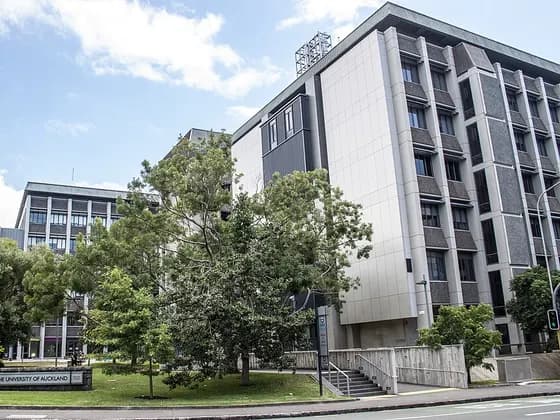

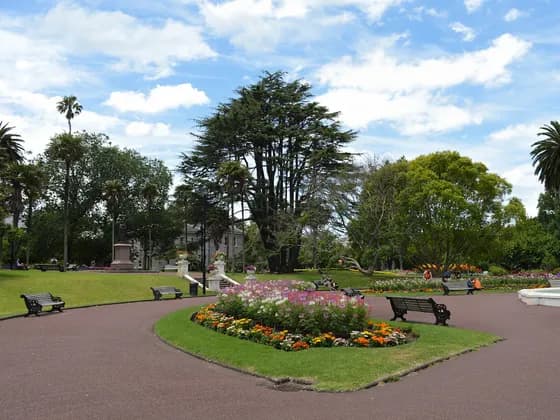
Photo: possumgirl2 · CC BY-SA 2.0 · cropped
Photo: Own work · Public domain · Photo: Jorge Royan · CC BY-SA 3.0 · Photo: Francisco Anzola · CC BY 2.0
How to get into University of Auckland — Medicine (MBChB) medicine
Step-by-step: entry requirements, admission tests, personal statement, interview format and the key deadlines.
Open the guide →University of Auckland — Medicine (MBChB) entry requirements
Admission profile, interview format, decision dates and what makes University of Auckland — Medicine (MBChB) different.
See the profile →The University of Auckland medicine course
Integrated, 6 years (incl. first-year pathway), placements across Auckland, Northland, Waikato, Bay of Plenty, Rotorua and Taranaki.
See the course →The University of Auckland — Medicine (MBChB) medicine interview
Auckland MBChB, like Otago, admits school leavers only after a full-time gateway first year — Auckland applicants enter through an Auckland gateway first year (for 2027 entry, the first year of the BHSc or BSc (Biomedical Science); for 2028 entry, the new Bachelor of Biomedical Science, set BHSc majors or set BSc majors), then compete for Year 2 MBChB entry based on GPA, UCAT ANZ, and a recorded online MMI delivered through the **Kira Talent** platform.
For 2027 entry, the final selection formula is: GPA 60% + MMI 25% + UCAT ANZ 15%. The MMI has seven scenario stations — each a short video of the scenario being read aloud, then 30 seconds to prepare and 3 minutes to record your answer — followed by ID and Children's Act 2014 safety-check stations. For 2027 entry every applicant sat it online at the same time: Tuesday 8 September 2026, 11am. Each answer is reviewed by a different person. There is no in-person or live-video component.
The Faculty of Medical and Health Sciences (FMHS) publishes the seven assessed domains: Equity, Moral/ethical, Career choice, Healthcare issue/topic, Personal insight, Personal experience, and Hauora Māori. Two carry New Zealand's distinctive emphasis — the Equity station asks you to recognise and reason about a social or health inequity, and the Hauora Māori station assesses cultural safety, critical thinking and understanding of the structural determinants of Māori health. There is no role-play or simulated-patient station.
MAPAS applicants (Māori and Pacific Admission Scheme) also attend a separate MAPAS Specialty Interview. RRAS applicants (Regional Rural Admission Scheme) follow the same general MMI but are ranked in a separate rural pool. Note: from 2028 entry Auckland replaces UCAT ANZ with Casper, and final ranking becomes MMI 50% + Casper 50% (with GPA as a threshold).
University of Auckland — Medicine (MBChB) interview at a glance (2027 entry)
| Places per year (2027) | 317 domestic + up to 30 international (347 total) |
|---|---|
| Entry pathway | Gateway Year 1 (2027 entry: BHSc or BSc Biomed; 2028 entry: BBiomedSc, BHSc or a listed BSc major) → MMI → MBChB Year 2 |
| Minimum GPA for interview eligibility | 6.0 / 9.0 (B+) across the 7 scored first-year courses |
| MMI format | Kira Talent asynchronous video — 8 stations (7 assessed) |
| Station duration | 3.5 min (30s reading + 3 min response) |
| MMI weighting in final ranking | 25% |
| UCAT ANZ weighting (2027 entry) | 15% (replaced by Casper from 2028 entry: MMI 50% + Casper 50%) |
| GPA weighting | 60% (4 core courses) |
| International places | Up to 30 (First Year or Graduate entry; only international graduates skip UCAT ANZ) |
| Domestic tuition (2026) | NZD 19,531 per year |
Interview format
- Online MMI on the **Kira Talent** platform with recorded responses — not a live video call or in-person event. Every applicant sits it at the same fixed time (11:00am, Tuesday 8 September 2026 for 2027 entry).
- 8 stations total: 7 assessed + 1 unscored administrative station for ID verification and Children's Act 2014 compliance.
- Each station: 30 seconds reading time followed by 3 minutes to record your video response.
- Seven assessed domains published by FMHS: Equity, Moral/ethical, Career choice, Healthcare issue/topic, Personal insight, Personal experience and Hauora Māori. There is no role-play or simulated-patient station.
- MAPAS applicants (verified Māori or Pacific whakapapa) additionally attend a separate 5-station MAPAS Specialty Interview run by the MAPAS Admissions Panel.
- RRAS applicants (rural/regional schooling background per Statistics NZ 2020 Urban Accessibility framework) are ranked separately within the same MMI process.
- Final selection formula (domestic First Year and Graduate): GPA 60% + MMI 25% + UCAT ANZ 15% (2027 entry). From 2028 entry: MMI 50% + Casper 50%, with GPA as an eligibility threshold.
- International Graduate applicants do not sit this MMI: they are interviewed separately (via Kira Talent, between June and July), reviewed and scored by two senior professionals, and do not sit UCAT ANZ. International First Year applicants sit the general MMI and UCAT ANZ like General applicants.
Working towards the UCAT score University of Auckland — Medicine (MBChB) expects? Build a week-by-week plan from your test date — free for the first two weeks.
Sample interview questions
Why do you want to study medicine at the University of Auckland specifically, and what role do you see Auckland's Faculty of Medical and Health Sciences playing in your development as a doctor?
Reference Auckland's gateway programme structure (BBiomedSc, BHSc or a BSc health major), the FMHS clinical footprint across Auckland hospitals, and any specific research or community-health interests. Be honest about your journey through your gateway first year.
You are in a clinical placement and a senior doctor consistently uses outdated terminology when referring to Māori patients. You have observed that Māori patients leave consultations appearing disengaged. What do you do?
Frame around Te Tiriti o Waitangi Article 3 obligations (equity in health outcomes), the right of Māori patients to culturally safe care, and the Medical Council of New Zealand (MCNZ) cultural safety expectations. Address the power dynamic between a student and a senior doctor. Document, raise with supervisor, consider patient advocacy pathways.
The FMHS values culturally responsive care, particularly for Māori and Pacific communities. Describe a time you engaged with a culture or community different from your own. What did you learn about your own assumptions?
Authentic reflection over performance. MAPAS panel and general FMHS examiners are alert to superficial "cultural awareness" answers. Be specific about what changed in your thinking.
Te Tiriti o Waitangi places obligations on the Crown and on institutions. In practical terms, what do you think those obligations mean for a medical school and for you as a future doctor?
Know the articles: Article 1 kāwanatanga (governance), Article 2 tino rangatiratanga (Māori authority over their own affairs, including hauora) and Article 3 ōritetanga (equity), plus the oral fourth article on spiritual freedom. In health, the Waitangi Tribunal's Hauora report (Wai 2575) framed the principles now used: tino rangatiratanga, equity, active protection, options and partnership. Translate these into concrete clinical and institutional practices — not abstract acknowledgement.
Hauora Māori practice scenario (Auckland runs no role-play station — discuss it): a 70-year-old Māori kuia has been referred to you for a follow-up appointment after a cardiac event. She tells you she also wants to discuss rongoā Māori (traditional healing) alongside her prescribed medications. How do you respond?
Lead with respect and genuine curiosity. Do not dismiss or pathologise rongoā. Explore interactions with medications, document, and involve a cultural liaison or kaumātua support service if available. MCNZ cultural safety standards apply.
Explain what UCAT ANZ is to a Year 12 student who has not heard of it and is unsure if they want to study medicine.
Lay language, no jargon. Break down the four subtests briefly. Contextualise why universities use it. Keep it two minutes maximum; check understanding.
You are studying for your BHSc final exams and a close friend asks to copy sections of your lab report. What do you do?
Academic integrity is a gateway issue — a misconduct finding in your gateway year could put your professional-programme application at risk. Address the friendship compassionately but clearly explain the stakes for both of you. Offer alternative help (tutoring, study session).
Auckland's RRAS scheme supports students from rural or regional backgrounds. Why is it important that the medical workforce reflects the communities it serves?
Discuss health workforce maldistribution across rural New Zealand, the link between doctor origin and practice location, and the Ministry of Health's Rural Health Strategy (2023). Avoid generic diversity-is-good framing — cite specific rural health outcomes.
A fellow BHSc student confides they used a prescription stimulant that wasn't prescribed to them to get through finals. They are applying for MBChB next year. What do you do?
Weigh confidentiality, professional fitness obligations (the Medical Council of New Zealand is the regulator, the counterpart of the Medical Board of Australia and AHPRA), and the welfare of your friend. Start with a conversation; don't catastrophise but don't ignore either. Consider FMHS student conduct obligations.
Your GPA in the 4 core courses is at exactly the 6.0 threshold but your UCAT ANZ was strong (90th percentile). How would you reflect on your readiness for the demands of MBChB?
Show self-awareness rather than defensiveness. Discuss what contributed to the GPA outcome, what strategies you would use in the more demanding MBChB curriculum, and why you still believe you are ready.
Describe a situation in which you had to give feedback to someone that you knew they would not want to hear. How did you approach it?
STAR with genuine reflection. Prioritise process over outcome — examiners want to see how you balance honesty with compassion.
New Zealand's Pae Ora (Healthy Futures) Act 2022 restructured the health system into Te Whatu Ora — Health New Zealand. Do you think centralising the health system has helped or hindered health equity for Māori and Pacific peoples?
Engage substantively with the reasoning behind the restructure (fragmentation across 20 DHBs) and Te Aka Whai Ora, the Māori Health Authority, which was disestablished in June 2024 with its functions moved into Health New Zealand and the Ministry of Health. Argue a position, acknowledge complexity, reference equity data if you can.
Moral/ethical practice scenario (discuss, rather than act out): you are a first-year house officer and a patient asks you directly whether they have cancer. You do not know the result yet and your consultant has not spoken to the patient. How do you handle this conversation?
Acknowledge the patient's anxiety. Be honest that you do not yet have the information. Do not speculate. Commit to a timeline for getting the consultant to speak with them. Document.
What is one current challenge facing the New Zealand health system that you think medical students should understand before they graduate?
Strong options:
- rural workforce shortages
- Māori health disparities
- mental health service gaps
- the Pae Ora reforms
- primary care underfunding
Show you have read beyond the Auckland FMHS website.
Tell us about a time you worked in a team where conflict arose. What role did you take, and what would you do differently now?
Avoid making the other party the villain. Focus on your own contribution to the dynamic and what your reflection produced. Genuine growth matters more than a tidy resolution.
Should the Medical Council of New Zealand require all registrants to demonstrate cultural safety competency with respect to Māori health as a condition of renewal of annual practising certificate?
MCNZ already requires cultural safety as a component of the Good Medical Practice framework. This question asks whether you would strengthen it further. Argue both sides before landing: workforce readiness, patient safety data, potential tokenism vs structural change.
If you were not studying medicine, what career would you pursue, and why does that path still relate to your commitment to health?
Authentic answer. FMHS examiners look for candidates with sustainable lives and genuine identity beyond medicine. Do not panic — a real answer is better than a curated one.
You receive an unexpected failing grade in MEDSCI 142. You need to pass all 7 prescribed courses to remain eligible for MBChB. What immediate steps do you take?
Practical and proactive:
- contact the course co-ordinator
- review the grade
- understand the aegrotat/reconsideration process
- speak to an academic advisor
Also address the emotional dimension — resilience, not denial.
A patient from a Pacific community refuses a recommended surgical procedure, saying they need to discuss it with their family and church elders first. The team is frustrated by the delay. How do you advocate for the patient?
Respect for whanau/collective decision-making is central to Pacific health models and is consistent with informed consent principles. Educate the team about the cultural context, ensure the patient has adequate interpreter support, and document the process.
Tell us about a moment when you seriously doubted whether medicine was the right path for you. What happened, and what did you conclude?
Vulnerability is an asset in this station. Auckland values self-awareness. A candidate who has genuinely interrogated their motivation is more credible than one who claims to have never wavered.
Practise the University of Auckland — Medicine (MBChB) interview
Rehearse the real format before the day — on demand with our AI interviewers, or live with a tutor.
Sit a mock with photoreal AI interviewers — any time
A timed MMI or panel interview on video — a range of international voices — with interviewers who listen, react and press with follow-ups. Rubric-scored feedback and a replay the moment you finish.





Live mocks with a tutor who’s been in the room
A full University of Auckland — Medicine (MBChB)-style mock with a medic or dentist tutor — honest scoring against real marking criteria, a station-by-station debrief and a written action plan.
Book a mock interviewHow to prepare for the University of Auckland — Medicine (MBChB) interview
Common pitfalls to avoid
University of Auckland — Medicine (MBChB) interview — frequently asked questions
Sources & official admissions information
Ready to nail your University of Auckland — Medicine (MBChB) interview?
Book a mock interview with a tutor who knows the New Zealand interview formats, orpractise unlimited stations from our interview question bank.