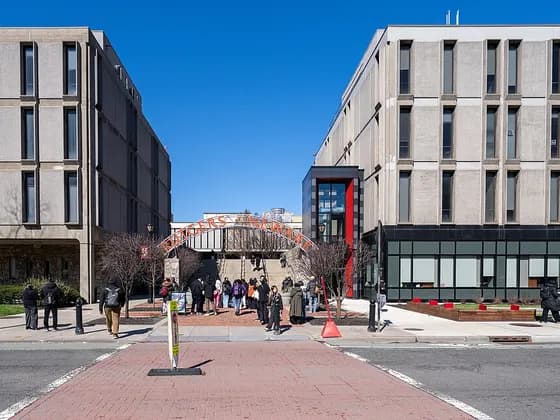
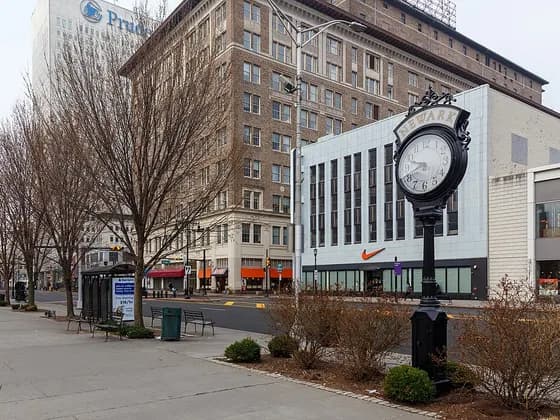
Newark, NJ, USEst. 1956

Rutgers School of Dental Medicine (DMD) Dental School - 2027 Entry Requirements & Interview Format

Rutgers School of Dental Medicine, located on the Rutgers Biomedical and Health Sciences campus in Newark, New Jersey, is the state's public dental school. Founded as New Jersey Dental School in 1956, it operates within one of the largest health sciences campuses in the northeastern United States. The school's Newark setting — a diverse, historically underserved urban community adjacent to New York City — provides students with exceptional clinical exposure to complex dental disease and underserved populations.

Entry Requirements

What you need to apply to Rutgers School of Dental Medicine (DMD).

Admission overview
Bachelor's degree and DAT required. Applications via ADEA AADSAS. New Jersey residents have a strong advantage (public university in-state mission). Dental experience, academic achievement, and community commitment expected.
GPA median
3.62 overall / 3.57 science (BCPM)
Acceptance rate
8.0%
Class size
85
In-state preference
Strong — primarily in-state
In-state matriculants
65%
CASPer
Not required
Holistic review emphasis
NJ residency, community health commitment, DAT, GPA, dental experience.
Notes
GPA medians hedged. DAT Academic Average median approximately 20–22 (hedged). Strong in-state preference as NJ's public dental school. Estimates from public AAMC FACTS / AACOMAS / ADEA AADSAS / class-profile; verify current cycle.
Specialities offered
Community Dentistry, Orthodontics, Oral and Maxillofacial Surgery, Periodontics, Pediatric Dentistry

Interview Format

How Rutgers School of Dental Medicine (DMD) interviews applicants.

Format
Traditional one-on-one interview with faculty
Interview window
September–February
Decision date
Rolling admissions
Post-interview chances
Approximately 30–45% post-interview (estimated).

What to expect at a Rutgers School of Dental Medicine (DMD) interview

Invited applicants attend an interview day at Rutgers School of Dental Medicine in Newark, New Jersey. The day includes a faculty one-on-one interview (typically 30–45 minutes), a tour of the dental clinics and simulation facilities, and informal interactions with current students. Rutgers SDM's Newark location — an urban, historically underserved city adjacent to New York City — shapes the interview emphasis on community health, diversity, access to care, and urban clinical practice. New Jersey residents benefit from strong in-state preference.

What makes Rutgers School of Dental Medicine (DMD) different

Applications via ADEA AADSAS. Rutgers School of Dental Medicine (formerly UMDNJ Dental) is New Jersey's public dental school, located on the Rutgers Biomedical and Health Sciences campus in Newark. The school is part of a large health sciences complex including Rutgers New Jersey Medical School, Rutgers School of Public Health, and associated hospitals — enabling strong interprofessional education. Newark's diverse, underserved patient population provides exceptional clinical training breadth.

Tutor insight

New Jersey residents have a strong advantage at Rutgers SDM — it is the state's only public dental school and tuition is significantly lower for in-state students. The Newark clinical environment is genuinely exceptional in terms of case diversity and patient need — if urban community health practice interests you, this is one of the strongest platforms in the northeast. Out-of-state applicants need to make a compelling case for New Jersey.
Prometheus
405 dentistry questions inside

Interview questions matched to Rutgers School of Dental Medicine (DMD)

Two questions our tutors flagged as a strong fit for Rutgers School of Dental Medicine (DMD)’s interview style. Try answering them out loud, then open Prometheus for the model answers and follow-up tips.

MediumPanel · MMIQ1

Interprofessional Practice: Dentist-Physician Collaboration for Diabetic Patients

An estimated 34 million Americans have Type 2 diabetes, and bidirectional evidence links periodontal disease with glycemic control: poorly controlled diabetes worsens periodontitis, and treating periodontitis may modestly improve HbA1c. The dental visit represents an opportunity to identify undiagnosed or poorly controlled diabetes through patient history, examination findings (severe generalized periodontitis in a young patient), and point-of-care HbA1c testing now available in some dental settings. How do you think about the dental office as a site for diabetes identification and interprofessional collaboration?

Likely follow-up · A patient with known diabetes presents for a full-mouth debridement. Before beginning, what clinical information about their diabetes management is clinically relevant, and how do you obtain it?

3 expert tips in Prometheus
MediumPanel · MMIQ2

Holistic Review: Transitioning from Another Career into Dentistry

You spent five years as a mechanical engineer before pursuing dentistry as a second career. You are 31 years old and entering a dental school interview acutely aware that most of your competitors are 22 or 23. Your engineering background has given you unusually strong three-dimensional spatial reasoning, familiarity with precision fabrication tools, and experience translating complex technical problems into practical solutions. Your weaker areas relative to traditional applicants may include fewer years of direct patient interaction and a shorter formal record of clinical volunteering. How do you want this committee to understand your non-traditional background as an asset rather than a deficiency, and how do you address the legitimate clinical preparation gaps honestly?

Likely follow-up · Your engineering career included significant experience with CAD/CAM design tools, which now drive digital dentistry in implant planning, CAD/CAM milling, and 3D printing of dental prosthetics. How does this experience translate, and does it represent genuine value or just an interesting coincidence?

3 expert tips in Prometheus

Ready to practise Rutgers School of Dental Medicine (DMD)?

Book a school-specific mock interview with Rutgers School of Dental Medicine (DMD) preselected.

Book a Rutgers School of Dental Medicine (DMD) mock

Rutgers School of Dental Medicine (DMD) - Frequently asked questions

Bachelor's degree and DAT required. Applications via ADEA AADSAS. New Jersey residents have a strong advantage (public university in-state mission). Dental experience, academic achievement, and community commitment expected.

Traditional one-on-one interview with faculty. Invited applicants attend an interview day at Rutgers School of Dental Medicine in Newark, New Jersey. The day includes a faculty one-on-one interview (typically 30–45 minutes), a tour of the dental clinics and simulation facilities, and informal interactions with current students. Rutgers SDM's Newark location — an urban, historically underserved city adjacent to New York City — shapes the interview emphasis on community health, diversity, access to care, and urban clinical practice. New Jersey residents benefit from strong in-state preference.

Rutgers School of Dental Medicine (DMD) typically interviews in September–February.

Decisions are released Rolling admissions.

Applications via ADEA AADSAS. Rutgers School of Dental Medicine (formerly UMDNJ Dental) is New Jersey's public dental school, located on the Rutgers Biomedical and Health Sciences campus in Newark. The school is part of a large health sciences complex including Rutgers New Jersey Medical School, Rutgers School of Public Health, and associated hospitals — enabling strong interprofessional education. Newark's diverse, underserved patient population provides exceptional clinical training breadth.
Reviewed by Isaac Butler-King, medical student at the University of Glasgow. Last reviewed: 6 June 2026 · NextGen MedPrep editorial team
Rutgers School of Dental Medicine (DMD) DMD | DAT, GPA & Interview Format | NGMP