
Rutgers School of Dental Medicine Interview
Format, Questions & Prep Tips
Rutgers School of Dental Medicine dentistry interviews for 2027 entry are a traditional interview, held September 2026 through February 2027. Published figures: Annual DMD class size ~85; Tuition (2025–26) ~USD 32,000 (in-state) / USD 60,000 (out-of-state) estimated.
- Institution
- Rutgers School of Dental Medicine
- Interview (2027 entry)
- September through February
- Decisions (2027 entry)
- Rolling; decisions typically within 4–6 weeks of interview

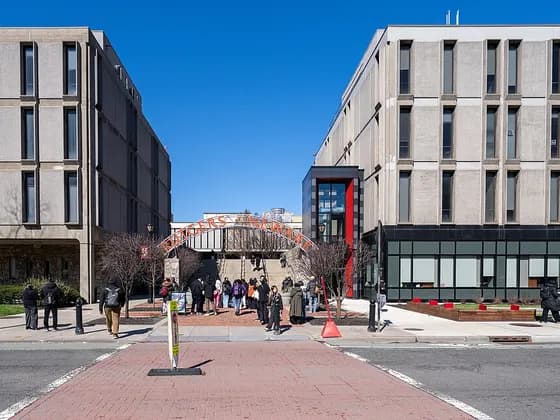
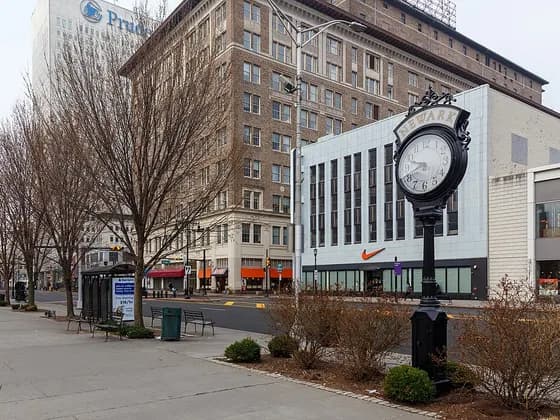
Photo: Hudconja · CC BY-SA 3.0 · cropped
Photo: Ajay Suresh · CC BY 4.0 · Photo: Kenneth C. Zirkel · CC BY-SA 4.0 · Photo: Cjbvii · CC BY 3.0
How to get into Rutgers School of Dental Medicine (DMD) dentistry
Step-by-step: entry requirements, admission tests, personal statement, interview format and the key deadlines.
Open the guide →Rutgers School of Dental Medicine (DMD) entry requirements
Admission profile, interview format, decision dates and what makes Rutgers School of Dental Medicine (DMD) different.
See the profile →The Rutgers School of Dental Medicine (DMD) dentistry interview
Rutgers School of Dental Medicine conducts traditional faculty interviews at its Newark, New Jersey campus. Rutgers SDM is New Jersey’s public dental school and one of the most distinctive clinical training environments in the northeast — its Newark location provides access to a large, diverse, and medically underserved patient population adjacent to the New York metropolitan area.
The school sits on the Rutgers Biomedical and Health Sciences campus alongside New Jersey Medical School and the School of Public Health, creating genuine interprofessional education opportunities. Expect questions about urban community health, dental access disparities, and cross-disciplinary practice.
New Jersey residents have a strong admissions advantage. Out-of-state applicants must make a compelling case for choosing Rutgers SDM.
Rutgers School of Dental Medicine (DMD) interview at a glance (2027 entry)
| Annual DMD class size | ~85 |
|---|---|
| Interview format | Traditional — faculty one-on-one |
| DAT required | Yes — via ADEA AADSAS |
| Tuition (2025–26) | ~USD 32,000 (in-state) / USD 60,000 (out-of-state) estimated |
| Application system | ADEA AADSAS primary + Rutgers secondary |
| Interview window | September–February |
Interview format
- Faculty one-on-one interview — 30–45 minutes.
- Clinic and simulation lab tour.
- Informal student interactions throughout the day.
- No MMI.
Sample interview questions
Why Rutgers School of Dental Medicine — and why train in Newark specifically?
What they are listening for:
- Newark clinical diversity
- urban patient population
- interprofessional RBHS campus
- NJ public school value
Out-of-state applicants must answer substantively.
Newark has high rates of dental disease and significant uninsured and underinsured populations. How does that clinical environment shape your training goals?
What they are listening for:
- Case complexity
- diversity of presentations
- community health practice preparation
- cultural competence
Show you see the clinical opportunity in the equity challenge.
A patient presents to your Newark clinic with significant dental disease and is clearly living in insecure housing. They need extensive restorative work but cannot afford the co-pays. What is your approach?
What they are listening for:
- Safety-net resources
- sliding-scale access
- housing and social services referral
- triage of urgent care
Social determinants of health awareness is critical at urban public schools.
Rutgers SDM is part of the RBHS health sciences campus alongside New Jersey Medical School. How would you use that proximity to physicians to enrich your dental training?
What they are listening for:
- Interprofessional case conferences
- oral-systemic clinical rotations
- shared simulation labs
- co-managed patients in hospital dental settings
Show specific awareness.
Tell me about a time you worked effectively in a team to solve a problem that was too complex for any one person alone.
Dental practice is inherently team-based — hygienists, assistants, specialists, referring physicians. STAR format; focus on your role and what the team achieved.
A patient declines a recommended extraction and asks you to treat the tooth indefinitely, even though you believe the prognosis is poor. How do you handle this over time?
Document the discussion, respect patient autonomy, revisit periodically as the tooth's condition evolves, be honest about prognosis at each visit. Do not abandon the patient because they declined your recommendation.
How does dental disease relate to systemic health — give two specific examples relevant to the urban patient population at Rutgers SDM.
Diabetes-periodontitis bidirectional relationship; cardiovascular disease and periodontal disease; preterm birth and periodontal disease. Newark population context: high diabetes prevalence.
Newark is one of the most linguistically diverse cities in New Jersey. How do you ensure informed consent when a patient speaks limited English?
What they are listening for:
- Professional interpreter (not family member)
- translated written materials
- teach-back method
- patience
Medical interpreter standards apply in dental care.
Describe the most challenging ethical dilemma you have encountered — in healthcare, work, or your personal life. How did you reason through it?
Authentic reflection — not a case study answer. Shows moral reasoning capacity. Use an ethical framework (autonomy, beneficence, non-maleficence, justice) without necessarily naming it.
Why general dentistry versus a specialty — or if you are considering a specialty, which one and what attracts you to it?
Genuine career reflection. No right answer. Rutgers has some specialty programs — if you are interested, show you have researched them. General practice is equally valued.
A Newark community oral-health screening shows that 60% of children in one ward have untreated caries while a neighboring ward sits near 25%. As a Rutgers SDM student planning an outreach project, how would you interpret that gap and use it?
Read the disparity, not just the number — water fluoridation, school-based sealant access, FQHC density, language, and transport differ ward to ward. Propose targeted sealant or screening outreach, then measure impact. Show you can move from a statistic to a community intervention.
You are the dental student and your simulated patient is an uninsured Newark resident who has just learned they need three extractions and a partial denture. They go quiet and say, 'I guess I'll just live with it.' How do you respond?
Acknowledge the emotion before the treatment plan. Explore what 'live with it' means, surface RBHS sliding-scale and safety-net options, and stage care so something achievable happens at this visit. Empathy first, then problem-solving — do not lead with the fee schedule.
A long-standing Rutgers SDM clinic patient asks why a dental student is doing their treatment instead of a 'real dentist'. How do you address it?
Affirm the supervised teaching model honestly — every step is checked by licensed faculty, you have more time per patient, and care meets the same standard. Rebuild confidence without sounding defensive about your training stage.
How does an interprofessional case conference with New Jersey Medical School change the management of a Newark patient with poorly controlled diabetes and advanced periodontitis, compared with you managing it alone?
What they are listening for:
- Shared HbA1c targets
- coordinated timing of periodontal therapy around glycaemic control
- medication reconciliation
- a unified message to the patient
Name the concrete RBHS mechanism rather than asserting that collaboration is generically good.
Describe a time you received critical feedback on a skill you thought you had mastered. How did you respond, and what changed?
Pre-clinical and clinical dentistry is built on iterative faculty critique of hand skills. Show coachability and a concrete behavior change — not just that you 'took it well'.
Practise the Rutgers School of Dental Medicine (DMD) interview
Rehearse the real format before the day — on demand with our AI interviewers, or live with a tutor.
Sit a mock with photoreal AI interviewers — any time
A timed MMI or panel interview on video — American & international voices — with interviewers who listen, react and press with follow-ups. Rubric-scored feedback and a replay the moment you finish.





Live mocks with a tutor who’s been in the room
A full Rutgers School of Dental Medicine (DMD)-style mock with a medic or dentist tutor — honest scoring against real marking criteria, a station-by-station debrief and a written action plan.
Book a mock interviewHow to prepare for the Rutgers School of Dental Medicine (DMD) interview
Common pitfalls to avoid
Rutgers School of Dental Medicine (DMD) interview — frequently asked questions
Sources & official admissions information
Ready to nail your Rutgers School of Dental Medicine (DMD) interview?
Book a mock interview with a tutor who knows the US interview formats, orpractice unlimited stations from our interview question bank.