
University of Central Florida College of Medicine Interview
Format, Questions & Prep Tips
University of Central Florida College of Medicine medicine interviews for 2027 entry are a traditional interview. Published figures: Annual MD class size ~120; Curriculum Integrated 4-year MD; Innovation Track available; In-state preference Strong — ~85% Florida residents.
- Institution
- University of Central Florida College of Medicine
- Interview (2027 entry)
- October through February; invitations issued on a rolling basis after secondary review
- Decisions (2027 entry)
- Decisions released on a rolling basis; final decisions by March 30; waitlist movement continues through summer


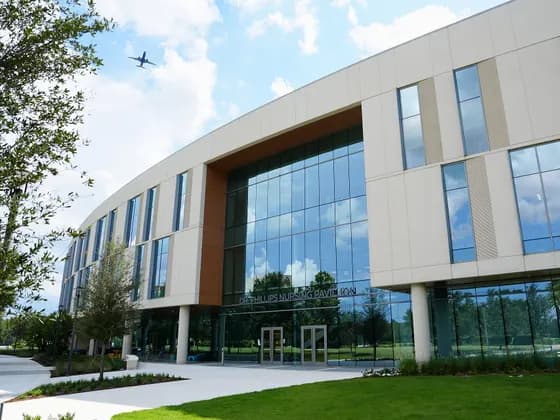
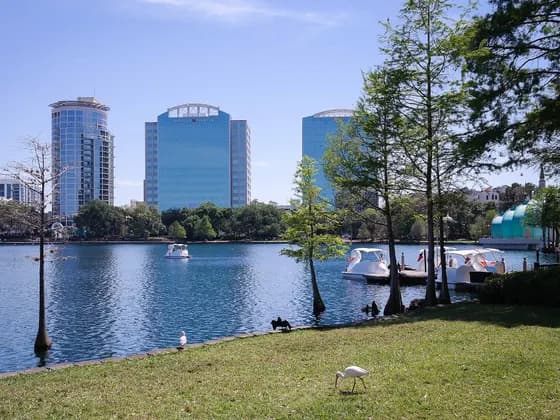
Photo: Ferrara29 · CC0 · cropped
Photo: elisfkc from Orlando, FL, United States · CC BY-SA 2.0 · Photo: UCF College of Nursing · CC BY-SA 4.0 · Photo: Visitor7 · CC BY-SA 3.0
How to get into University of Central Florida College of Medicine (MD) medicine
Step-by-step: entry requirements, admission tests, personal statement, interview format and the key deadlines.
Open the guide →University of Central Florida College of Medicine (MD) entry requirements
Admission profile, interview format, decision dates and what makes University of Central Florida College of Medicine (MD) different.
See the profile →The University of Central Florida College of Medicine MD program
Integrated + Case-based learning, 4 years, clinical rotations across the Orlando area, plus Florida sites from Naples to Tallahassee.
See the program →The University of Central Florida College of Medicine (MD) medicine interview
UCF College of Medicine interviews through two one-on-one virtual interviews hosted on Zoom (applicant reports average ~35 minutes each). The college does not run MMI stations.
UCF Med is embedded in Lake Nona Medical City — a purpose-built health-innovation district — and the interview reflects this identity. Expect scenarios touching on healthcare technology, innovation ethics, and interprofessional collaboration alongside standard MMI content.
The AAMC groups its 17 Premed Competencies into three categories: professional, science, and thinking and reasoning. UCF interviewers weight interpersonal skills and real-world problem-solving heavily. That is consistent with a program that trains clinicians for a rapidly evolving, tech-adjacent healthcare environment.
University of Central Florida College of Medicine (MD) interview at a glance (2027 entry)
| Annual MD class size | ~120 |
|---|---|
| Interview format | Two one-on-one virtual interviews via Zoom |
| Application system | AMCAS |
| Curriculum | Integrated 4-year MD; Innovation Track available |
| In-state preference | Strong — ~85% Florida residents |
| Interview window | October–February |
| Location | Lake Nona Medical City, Orlando, FL |
Interview format
- Two one-on-one virtual interviews on Zoom, ~30–40 minutes each.
- Conversational format — no MMI stations.
- Expect motivation, teamwork and Central-Florida community questions; know your application deeply.
Working towards the MCAT score University of Central Florida College of Medicine (MD) expects? Build a week-by-week plan from your test date — free for the first two weeks.
Sample interview questions
Why UCF College of Medicine and the Lake Nona Medical City — what specifically draws you to this healthcare innovation environment?
Name specific partners:
- Nemours Children's Hospital
- the VA
- UF Health
- research institutes
Connect the ecosystem to your career goals, not just "cutting-edge facilities."
A hospital system proposes replacing triage nurses with an AI-powered tool that its vendor claims is 95% accurate. As a physician on the committee, how do you evaluate this proposal?
Relevant to Lake Nona's innovation context. Address accuracy statistics in clinical context, liability, equity (algorithm bias), informed consent, and the nurse workforce implications.
You are a medical student on rotation and your attending asks you to explain a diagnosis to a patient using terms the patient clearly does not understand. How do you manage this?
Balance deference to attending with patient-centered communication obligations. Show you can navigate hierarchy diplomatically while prioritizing patient comprehension.
Central Florida has one of the largest uninsured populations in the US. How has your experience in this region shaped your view of what physicians are responsible for beyond the clinic?
UCF has a community health mission for Florida. Show awareness of Florida's Medicaid non-expansion status, the Orange County safety-net system, and your personal commitment to advocacy.
A patient requests genetic testing that their insurance will not cover. You know the results might prevent them from obtaining life insurance. How do you counsel them?
Address GINA protections (which cover health insurance and employment but not life insurance), patient autonomy, informed consent, and beneficence vs. non-maleficence.
During a simulation exercise, a team member makes a dosing error that goes unchallenged by the group. You noticed. What do you do?
Simulation safety culture is core to UCF's pedagogy. Show you can speak up constructively without shaming, and understand the psychological safety conditions that enable error reporting.
Telemedicine expanded dramatically during and after the COVID-19 pandemic. What are its benefits and limitations for underserved Florida populations specifically?
Discuss broadband access disparities, language access via telemedicine, rural vs. urban Florida, elderly patient digital literacy, and how telemedicine complements rather than replaces in-person care.
Describe a time you worked within a system or process that was clearly inefficient or broken. What did you do, and what did it teach you about systemic change?
Healthcare innovation at UCF is about systems thinking. Show you can identify root causes, propose incremental improvements, and persist without burning bridges.
How has your academic or professional background prepared you for UCF's integrated, simulation-heavy curriculum?
Reference specific UCF pedagogical features — the simulation center, early clinical exposure, interprofessional education. If you have engineering, tech, or healthcare innovation experience, highlight it.
Florida has one of the highest rates of uninsured residents in the US and has not expanded Medicaid. As a physician, do you have an obligation to engage in health policy advocacy?
Distinguish clinical obligations from civic ones. Acknowledge the AMA's position on physician advocacy; discuss how individual physicians can engage with policy without compromising clinical duties.
Role-play: You are a clinic volunteer and the actor is an older patient who was just told their visit will be conducted by telemedicine because the physician is off-site. They are anxious about the technology and feel dismissed. Speak with them.
Validate the anxiety, explain telemedicine simply, and offer practical support (a staff member to help, in-person follow-up if needed). UCF's innovation identity means interviewers want technology framed as a tool that serves patients, not one that alienates them.
A vendor's slide claims their triage AI is '95% accurate.' The interviewer asks you to probe that figure before the hospital adopts it. What questions do you ask?
Interrogate the metric: accuracy on which population, sensitivity vs. specificity, base rates, how false negatives are handled, and whether it was validated on Central Florida's diverse, uninsured patients. UCF rewards candidates who treat headline statistics skeptically.
During a simulation, your debrief facilitator points out a communication error you made with a standardized patient. You disagree with the critique. How do you respond in the debrief?
Show that you can receive feedback non-defensively, ask clarifying questions, and separate your ego from learning. Simulation-debrief culture is central to UCF's pedagogy and psychological safety is assessed both ways.
If you could design a small project for UCF's Innovation Track, what healthcare problem in Central Florida would you target and what approach would you prototype?
Pick a concrete local problem — transportation barriers, uninsured follow-up, broadband-limited telehealth — and a realistic prototype. Specificity and a clear problem-to-solution chain matter more than technical sophistication.
Tell me about a time you were genuinely curious about how something worked and pursued that curiosity beyond what was required. How does that trait fit UCF's environment?
UCF's Lake Nona identity prizes intellectual curiosity and systems thinking. Use a specific story and connect the disposition to how you would engage with the innovation ecosystem, not just to your academic record.
Practise the University of Central Florida College of Medicine (MD) interview
Rehearse the real format before the day — on demand with our AI interviewers, or live with a tutor.
Sit a mock with photoreal AI interviewers — any time
A timed MMI or panel interview on video — American & international voices — with interviewers who listen, react and press with follow-ups. Rubric-scored feedback and a replay the moment you finish.





Live mocks with a tutor who’s been in the room
A full University of Central Florida College of Medicine (MD)-style mock with a medic or dentist tutor — honest scoring against real marking criteria, a station-by-station debrief and a written action plan.
Book a mock interviewHow to prepare for the University of Central Florida College of Medicine (MD) interview
Common pitfalls to avoid
University of Central Florida College of Medicine (MD) interview — frequently asked questions
Sources & official admissions information
Ready to nail your University of Central Florida College of Medicine (MD) interview?
Book a mock interview with a tutor who knows the US interview formats, orpractice unlimited stations from our interview question bank.