
Bristol Dentistry Interview
Format, Questions & Prep Tips
Bristol dentistry interviews for 2027 entry are a panel interview, held Late December 2026 – March 2027 (online). Published figures: Interview selection 100% UCAT weighting once academic minimums met; Format Online structured interview, 45–60 min, 4 assessors; Distinctive Pasta habitat model + 5-min controversial-topic presentation.
- Institution
- University of Bristol Dental School
- Interview (2027 entry)
- Late December 2026 – March 2027 (online)
- Decisions (2027 entry)
- As soon as possible, but possibly not until all interviews are complete


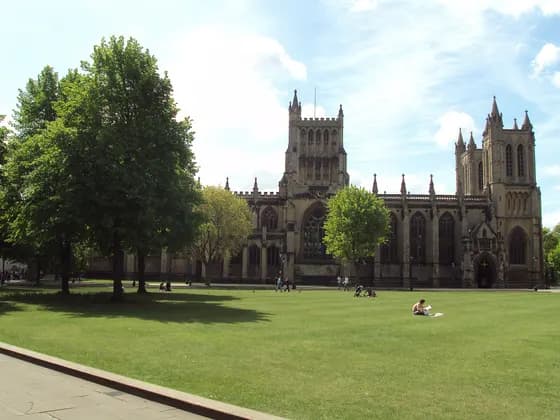

Photo: Suicasmo · CC BY-SA 4.0 · cropped
Photo: AmW22 · CC BY-SA 4.0 · Photo: Rept0n1x · CC BY-SA 3.0 · Photo: John Winder · CC BY-SA 2.0
Still deciding where to apply? Hear it from a student who's there
Bristol Dental School uses a structured interview format conducted online, NOT a traditional MMI circuit. In its latest published interview guidance the interview runs on Zoom for approximately 45–60 minutes with four assessors, and the 2027-entry admissions statement confirms online interviews from late December to March.
Bristol's interview has two unique pre-interview tasks that no other UK dental school requires: in the latest published version, you prepare a 3D model of an environmental habitat made out of dried PASTA that represents your personality, and a 5-minute PRESENTATION on a current controversial topic in dentistry, using up to three slides or visual aids. You show both to your assessors and answer their questions, so they're not optional warm-ups.
For 2026 entry interviews ran on various dates between December 2025 and February 2026; for 2027 entry Bristol expects them from late December to March. Check the interviews page for the current tasks before you start building. The pasta model and presentation are why Bristol stands out — they test creativity, communication, and the ability to research and argue a contested topic.
Bristol interview key facts (2027 entry)
| Interview selection | 100% UCAT weighting once academic minimums met |
|---|---|
| Format | Online structured interview, 45–60 min, 4 assessors |
| Distinctive | Pasta habitat model + 5-min controversial-topic presentation |
Interview Format
- Structured panel interview (NOT MMI) — 45–60 minutes
- Online — Zoom in the latest published guidance; online confirmed for 2027 entry
- Four assessors; performance scored and ranked, with the strongest overall performers receiving offers
- Pre-interview PASTA task: 3D model of an environmental habitat representing your personality
- Pre-interview PRESENTATION: 5 minutes on a current controversial topic in dentistry, max 3 slides/visual aids
- You show the model and give the presentation to your assessors, then answer their questions
- Interview selection uses UCAT only (100% weighting, no cut-off); UCAT breaks ties between identical interview scores
Sample Interview Questions
Why dentistry, and why Bristol specifically?
Reference Bristol's integrated curriculum, the early clinical contact, the Bristol Dental Hospital teaching environment, and the South-West Academy clinical placements.
Show me your pasta model and tell me about what it represents.
Bristol is testing creativity, communication and self-insight. Don't over-think the literal meaning — pick something that genuinely says something about you and explain confidently.
Deliver your 5-minute presentation on a current controversial topic in dentistry (for example, water fluoridation).
Whether for or against, structure: hook → 2–3 evidence points → counter-argument → conclusion. Read actual peer-reviewed evidence (BFS, NICE) — Bristol can tell if you've only read headlines.
What questions might someone reasonably ask you after your presentation?
Bristol may probe the counter-arguments to whichever side you took. Be ready to engage with the strongest opposing argument — not dismiss it.
Tell me about a time you had to communicate something complex to someone.
STAR framework. Focus on the listener's perspective. Avoid jargon. Check understanding.
What dental work experience have you done, and what surprised you?
Pick one specific moment. Reflect on what was unexpected — patient anxiety dynamics, the team's communication, the gap between procedure and consultation time.
Should the NHS continue to support water fluoridation in areas where it's implemented?
You may have already argued this in your presentation — be ready to engage with both sides. Reference the evidence on caries reduction vs concerns about mass medication.
A patient declines fluoride varnish for their child on personal-belief grounds. What do you do?
Respect parental autonomy. Provide accurate information about benefit-risk. Document. Don't coerce. Discuss alternatives (toothbrushing technique, diet advice).
A patient is upset because they were told the wrong appointment time. (Actor present, may be incorporated.)
Acknowledge the inconvenience genuinely. Apologise for the impact, not for things you didn't do. Offer concrete next steps.
Describe a time you worked in a team where there was disagreement.
Focus on managing the disagreement productively, not on who was right. Reflect on what you learned about collaboration.
What aspects of being a dentist do you think you'll find most challenging?
Honest reflection. Possible challenges: routine of repetitive procedures, emotional weight of paediatric or anxious patients, building rapport quickly. Concrete coping strategies.
How do you train your manual dexterity?
Concrete examples — model-making (your pasta task is itself one!), art, music, sports requiring fine motor control. Reflect on improvement.
Should cosmetic dentistry be regulated differently from clinical dentistry?
Engage with both autonomy and public-protection arguments. Reference GDC guidance on aesthetic treatments and the recent media coverage of "Turkey teeth".
What concerns you about a career in dentistry?
Honest concerns plus management strategies. NHS contract instability, physical demands, patient anxiety, business pressures.
Practise the Bristol interview
Rehearse the real format before the day — on demand with our AI interviewers, or live with a tutor.
Sit a mock with photoreal AI interviewers — any time
A timed MMI or panel interview on video — British & international voices — with interviewers who listen, react and press with follow-ups. Rubric-scored feedback and a replay the moment you finish.




Live mocks with a tutor who’s been in the room
A full Bristol-style mock with a medic or dentist tutor — honest scoring against real marking criteria, a station-by-station debrief and a written action plan.
Book a mock interviewHow to Prepare
Start the pasta model AT LEAST a week before the interview — dried pasta breaks; you'll iterate.
Research your presentation topic from real evidence sources (NICE, peer-reviewed journals, public health bodies) — assessors can spot headline-only prep.
Practise the 5-minute presentation TIMED, with no more than three slides or visual aids and a hard copy as backup.
Prepare to engage with the opposite side of whatever position you present — expect questions on counter-arguments.
Drill the panel interview rhythm separately from the two pre-interview tasks — they're different skill sets.
Read GDC "Standards for the Dental Team" — Bristol assesses against professional values.
Practise online interview etiquette: camera angle, lighting, eye contact at the lens, neutral background.
Invited to interview at Bristol? Say your first answer out loud today with the free two-minute warm-up drill, then sit a timed mock set up for Bristol.
Common Pitfalls
Frequently Asked Questions
Related guides
Free, evidence-based guides from current UK medical and dental students.
Free Interview Resources
Worked-through MMI stations, ethics scenarios, and panel questions.
Read guideNHS Core Values Guide
The 6 NHS values examiners listen for in every interview answer.
Read guideMedical School Rankings
See interview format (MMI vs panel) for each UK medical school.
Read guideUCAS 2026 Personal Statement
The new three-question format your interviewer will reference.
Read guideContextual Offers for Medicine
Every UK medical school's widening-access scheme in one place.
Read guideSources & official admissions information
We cross-check every interview guide against the school’s own admissions guidance and the UK regulators.
- University of Bristol — Dentistry admissions statement, 2027 entry — Online interviews late December – March; UCAT 100% weighting for interview; personal statement not weighted.
- University of Bristol — Dentistry interviews (latest published tasks) — Zoom structured interview, 45–60 minutes, four assessors; pasta habitat model and 5-minute controversial-topic presentation.
- University of Bristol — BDS Dentistry, 2027 entry — Standard offer AAA, contextual offer ABB; UCAT required.
- Bristol — official admissions page — Programme overview, entry requirements, interview format and timeline straight from the school.
- UCAT Consortium — Official UCAT registration, test format, scoring methodology and free practice materials.
- General Dental Council (GDC) — recognised UK dental qualifications — Statutory regulator. Recognised dental qualifications and registered-dentist register.
- Dental Schools Council — Coordinated body of UK dental schools. Entry-requirements comparison and widening-participation initiatives.
Ready to nail your Bristol interview?
Book a mock interview with a current dental student who recently went through the same process, or practise on demand with the AI interviewer.