
Sheffield Dentistry Interview
Format, Questions & Prep Tips
Sheffield dentistry interviews for 2027 entry are a panel interview. Sheffield describes the format as: Semi-structured face-to-face 15 min in-person panel + group task (Feb 20–27). Published figures: Applications per year ~1,250 for 71 places; Interviewed per year ~300; Format On-campus panel (2 staff + 1 senior dental student), up to 15 min + group interpersonal skills test.
- Institution
- University of Sheffield School of Clinical Dentistry
- Interview (2027 entry)
- 2027 dates to be published (2026 entry, latest published: 23–27 February 2026)
- Decisions (2027 entry)
- By the end of March

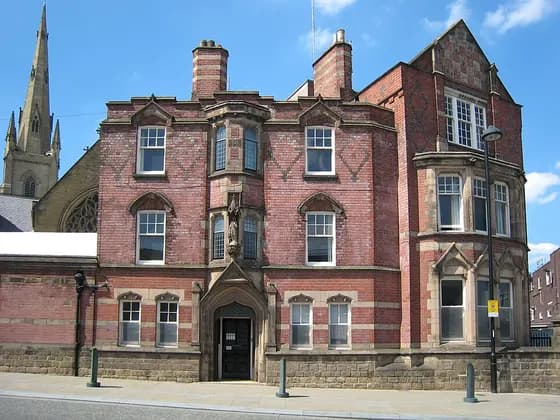


Photo: Chanpeter · CC BY-SA 4.0 · cropped
Photo: Chemical Engineer · CC BY-SA 4.0 · Photo: Nottingham311 · CC BY-SA 4.0 · Photo: Neil Theasby · CC BY-SA 2.0
Still deciding where to apply? Hear it from a student who's there
Sheffield Dental School uses a panel-based structured interview, NOT an MMI. You sit with a panel usually made up of two members of academic staff and a senior dental student, for up to 15 minutes, on campus — Sheffield does not offer online selection days. The format is semi-structured: there's a set framework and prepared questions, but interviewers can ask sensible follow-up questions depending on your answers.
Sheffield runs a separate interpersonal skills test as part of the selection day — a group task assessing respect, teamwork and communication.
Sheffield Dental screens on UCAT: for 2027 entry you need an average or above total score in the UCAT cognitive components, and you must achieve Band 1 or 2 in the Situational Judgement Test. Because Sheffield aims to interview around 300 applicants, the cognitive score is then used to prioritise who is interviewed. This is one of the strictest SJT thresholds among UK dental schools.
Sheffield interview key facts (2027 entry)
| Applications per year | ~1,250 for 71 places |
|---|---|
| Interviewed per year | ~300 |
| Format | On-campus panel (2 staff + 1 senior dental student), up to 15 min + group interpersonal skills test |
| UCAT requirement | Average or above cognitive total + SJT Band 1 or 2 |
Interview Format
- Panel-based structured interview (NOT MMI)
- 3 interviewers: 2 staff members + 1 senior dental student
- Up to 15 minutes, on campus (no online selection days)
- Separate group interpersonal skills test on selection day (respect, teamwork, communication)
- Set framework + prepared questions, with follow-up flexibility
- Screening: average or above UCAT cognitive total + SJT Bands 1 or 2 only
- UCAT cognitive score used to prioritise applicants for the ~300 interview places
Sample Interview Questions
Why dentistry, and why Sheffield specifically?
Reference Sheffield's integrated curriculum, the early clinical contact, the South Yorkshire patient population, and the affordability of Sheffield as a city. Sheffield's "career exploration values" assessment expects this specifically.
How have you explored dentistry and why does it suit you?
Sheffield's explicit assessment area #1 is "career exploration values". Show that you've genuinely investigated what dentistry involves — through work experience, reading, conversations with dentists.
How would you describe your personal qualities and communication style?
Sheffield's assessment area #2 is "personal qualities and communication skills". Be specific — pick 2–3 qualities and back each with a concrete example. Avoid generic claims.
Why Sheffield specifically over other dental schools?
Sheffield's assessment area #3 is "commitment to Sheffield". Articulate specific reasons — curriculum, city, placement environment, research strengths. Don't use generic praise.
In the group assessment: a patient is anxious about a procedure and the discussion turns to how the team should manage this. (Group discussion with peers.)
Participate actively without dominating. Listen to other applicants. Build on their points constructively. Sheffield is testing how you collaborate, not whether you "win" the discussion.
Describe a time you communicated effectively with someone who didn't share your perspective.
STAR framework. Focus on how you adapted your communication, not on who was right.
A patient asks you to bend the rules for a treatment they want but isn't medically indicated. What do you do?
Honesty and integrity (GDC standards). Discuss why — explore their underlying concern. Suggest legitimate alternatives. Don't compromise on professional standards.
Should patients have to pay for cosmetic dental treatment but get reconstructive work free on the NHS?
Engage with the distinction between cosmetic and reconstructive. Reference current NHS funding rules and the ethical basis for the distinction.
How would you communicate a difficult diagnosis to a patient?
SPIKES framework or similar. Show empathy. Check understanding mid-conversation. Allow silence. Don't rush to "fix" the emotional reaction.
In the group assessment: a member of the public asks the dental team for advice about their child's tooth brushing. (Group discussion.)
Engage the question constructively. Be aware that the public has heard varied advice — be clear, evidence-based and non-judgmental.
What dental work experience have you done, and what stood out to you?
Pick one specific moment. Reflect on what you learnt about the realities of being a dentist — communication, anxiety dynamics, team work.
Tell me about a time you contributed to a team where you weren't the leader.
Sheffield values followership. Reflect on what you learned about supporting others and contributing to shared outcomes.
A patient claims a previous dentist gave them unnecessary treatment. What do you say?
Don't blame previous practitioners without evidence. Focus on the current treatment plan. Acknowledge concern. Discuss complaint routes if appropriate.
What concerns you most about a career in dentistry?
Honest concerns + management strategies. NHS contract instability, physical demands, patient anxiety, business pressures.
Practise the Sheffield interview
Rehearse the real format before the day — on demand with our AI interviewers, or live with a tutor.
Sit a mock with photoreal AI interviewers — any time
A timed MMI or panel interview on video — British & international voices — with interviewers who listen, react and press with follow-ups. Rubric-scored feedback and a replay the moment you finish.




Live mocks with a tutor who’s been in the room
A full Sheffield-style mock with a medic or dentist tutor — honest scoring against real marking criteria, a station-by-station debrief and a written action plan.
Book a mock interviewHow to Prepare
Hit SJT Bands 1 or 2 — Sheffield will not interview Bands 3 or 4 regardless of cognitive UCAT score.
Prepare specifically against Sheffield's 3 assessment areas: (1) career exploration, (2) personal qualities + communication, (3) commitment to Sheffield.
Practise the GROUP interpersonal-skills assessment separately from the panel interview — different skill set.
In group discussions: contribute meaningfully without dominating. Build on others' points.
Read GDC "Standards for the Dental Team" — Sheffield assesses against professional standards.
Research Sheffield specifically — they explicitly test "commitment to Sheffield" not generic "why dentistry".
Maximise your UCAT cognitive total — Sheffield uses it to prioritise applicants for interview.
Invited to interview at Sheffield? Say your first answer out loud today with the free two-minute warm-up drill, then sit a timed mock set up for Sheffield.
Common Pitfalls
Frequently Asked Questions
Related guides
Free, evidence-based guides from current UK medical and dental students.
Free Interview Resources
Worked-through MMI stations, ethics scenarios, and panel questions.
Read guideNHS Core Values Guide
The 6 NHS values examiners listen for in every interview answer.
Read guideMedical School Rankings
See interview format (MMI vs panel) for each UK medical school.
Read guideUCAS 2026 Personal Statement
The new three-question format your interviewer will reference.
Read guideContextual Offers for Medicine
Every UK medical school's widening-access scheme in one place.
Read guideSources & official admissions information
We cross-check every interview guide against the school’s own admissions guidance and the UK regulators.
- University of Sheffield School of Clinical Dentistry — Dental Surgery admissions and selection process, 2027 entry — On-campus selection day: semi-structured interview up to 15 min + group interpersonal skills test; screening; ~1,250 apps/71 places.
- University of Sheffield School of Clinical Dentistry — Dental Surgery admissions and selection process, 2026 entry — Latest published interview dates: 23–27 February 2026.
- Sheffield — official admissions page — Programme overview, entry requirements, interview format and timeline straight from the school.
- UCAT Consortium — Official UCAT registration, test format, scoring methodology and free practice materials.
- General Dental Council (GDC) — recognised UK dental qualifications — Statutory regulator. Recognised dental qualifications and registered-dentist register.
- Dental Schools Council — Coordinated body of UK dental schools. Entry-requirements comparison and widening-participation initiatives.
Ready to nail your Sheffield interview?
Book a mock interview with a current dental student who recently went through the same process, or practise on demand with the AI interviewer.