
Birmingham Dentistry Interview
Format, Questions & Prep Tips
Birmingham dentistry interviews for 2027 entry are multiple mini interviews (MMI), held February 2027 half-term week (in person). Published figures: Applications (2026 entry) 880; Interviewed (2026 entry) 320; Offers (2026 entry) 118 for 65 places.
- Institution
- University of Birmingham School of Dentistry
- Interview (2027 entry)
- February half-term week (in person)
- Decisions (2027 entry)
- Not published — unsuccessful non-interviewees hear by mid-January

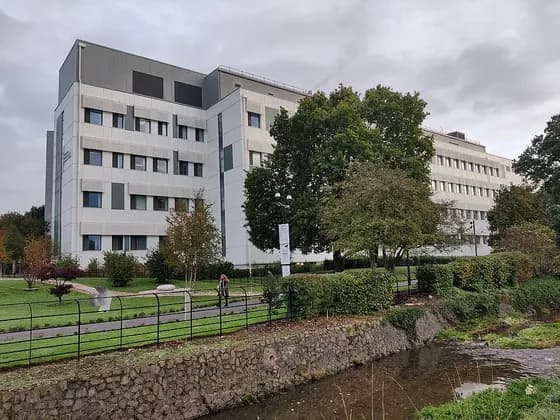
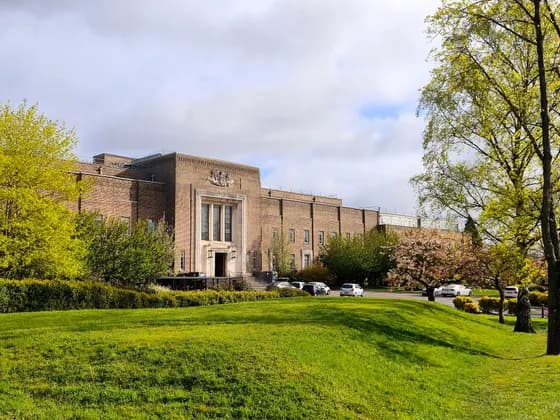

Photo: mattbuck · CC BY-SA 3.0 · cropped
Photo: Andy Mabbett · CC BY-SA 4.0 · Photo: Athikhun.suw · CC BY 4.0 · Photo: Andrew Abbott · CC BY-SA 2.0
Still deciding where to apply? Hear it from a student who's there
The University of Birmingham Dental School (at Birmingham Dental Hospital) uses a Multiple Mini Interview (MMI) made up of four to ten mini-interviews lasting five to ten minutes each, with one or two assessors at each station. Birmingham interviews approximately 300 candidates for the BDS.
Interviews take place in person at the Dental School in Birmingham throughout the February half-term week. No alternative dates, online or telephone interviews are offered, and applicants based overseas are typically expected to attend in person. Offers are then made purely on interview ranking.
No prior dental knowledge is required — you won't be asked to diagnose X-rays or recite anatomy. The assessment is values-based: Birmingham wants future dentists who embrace healthcare values such as respect, compassion, resilience and commitment to quality of care. Topics span motivation for dentistry, communication, empathy, self-insight, ethical reasoning, manual dexterity and leadership.
Birmingham interview key facts (2027 entry)
| Applications (2026 entry) | 880 |
|---|---|
| Interviewed (2026 entry) | 320 |
| Offers (2026 entry) | 118 for 65 places |
| MMI structure | 4–10 stations × 5–10 minutes |
| Format | In person at Birmingham Dental Hospital |
Interview Format
- Multiple Mini Interview (MMI) — four to ten mini-interviews of five to ten minutes each
- In person at the Dental School in Birmingham during February half-term week — no online or telephone option
- 1–2 assessors per station
- Values-based assessment — no prior dental knowledge required
- Themes: motivation, communication, empathy, self-insight, ethical reasoning, manual dexterity, leadership
- Offers are based on interview ranking alone — academic record and UCAT are not re-used at the offer stage
Sample Interview Questions
Why dentistry, and why Birmingham specifically?
Reference Birmingham Dental Hospital's teaching environment, the integrated curriculum, the diverse West Midlands patient population, and the long-established reputation of Birmingham as a dental school.
What dental work experience have you done, and what did you learn from it?
Pick one specific moment to go deep on. Birmingham values reflection over volume — what did you observe about communication, the team dynamic, patient anxiety, treatment planning?
Describe a complex idea from your A-Level studies to me as if I had no science background.
Avoid jargon. Use a vivid analogy. Check understanding mid-explanation. Birmingham scores clarity over depth.
Tell me about a time you demonstrated leadership.
STAR framework. Reflect on what you learned about leadership — not always "leader makes decision" but often "leader brings the team together".
A patient asks for a treatment that you don't feel is in their best interest. What do you do?
Respect autonomy. Provide accurate information about risks and benefits. Document. Don't pressure. The patient can proceed if informed and consenting.
Should the NHS continue to subsidise dental treatment for all UK residents?
Engage with both equity and resource-allocation arguments. Reference current NHS dental charges and exemptions. Acknowledge the workforce crisis.
A patient is nervous about a procedure they don't fully understand. (Actor present.)
Acknowledge the anxiety. Use simple non-jargon explanations. Use tell-show-do approach if appropriate. Offer signals the patient controls (raise hand to pause).
A colleague seems stressed and is making small mistakes. (Actor present.)
Approach with care. Listen first. Suggest support routes. Be honest about patient-safety implications if mistakes escalate. Don't lecture.
How do you train your manual dexterity?
Concrete examples — model-making, art, music, sports requiring fine motor control. Reflect on improvement over time.
Should dentists treat patients differently based on whether they've looked after their teeth?
Justice and non-maleficence argue no. Engage with the role of patient education without punitive withdrawal of care. Reference GDC guidance.
Describe a time you worked successfully as part of a team.
STAR framework. Focus on what you contributed and what you learned about collaboration — especially important in dental teams.
What qualities do you have that will make you a good dentist?
Avoid clichés. Pick 2–3 qualities and back each with a concrete example. Demonstrate self-awareness about gaps too.
A child needs an extraction but is refusing to open their mouth. What do you do?
Paediatric communication — engage the child, use non-threatening language, involve the parent appropriately. Don't restrain or coerce. Consider deferring if non-urgent.
What concerns you about a career in dentistry?
Honest concerns + management strategies. NHS contract instability, physical demands, patient anxiety, business pressures. Show informed self-awareness.
Practise the Birmingham interview
Rehearse the real format before the day — on demand with our AI interviewers, or live with a tutor.
Sit a mock with photoreal AI interviewers — any time
A timed MMI or panel interview on video — British & international voices — with interviewers who listen, react and press with follow-ups. Rubric-scored feedback and a replay the moment you finish.






Live mocks with a tutor who’s been in the room
A full Birmingham-style mock with a medic or dentist tutor — honest scoring against real marking criteria, a station-by-station debrief and a written action plan.
Book a mock interviewHow to Prepare
Drill MMI stations of five to ten minutes under realistic time pressure, so you can adapt to either length.
Visit Birmingham Dental Hospital on an open day if possible — Birmingham values applicants who've seen the clinical environment.
Read GDC "Standards for the Dental Team" — Birmingham values applicants who reference professional standards naturally.
Practise role-play scenarios with a peer playing the patient or anxious colleague.
Have specific manual-dexterity examples ready — Birmingham probes this dental-specific aptitude directly.
Read recent NHS dentistry news — workforce crisis, contract reform, supervised toothbrushing programmes.
Dress smartly but comfortably — content matters far more than outfit.
Invited to interview at Birmingham? Say your first answer out loud today with the free two-minute warm-up drill, then sit a timed mock set up for Birmingham.
Common Pitfalls
Frequently Asked Questions
Related guides
Free, evidence-based guides from current UK medical and dental students.
Free Interview Resources
Worked-through MMI stations, ethics scenarios, and panel questions.
Read guideNHS Core Values Guide
The 6 NHS values examiners listen for in every interview answer.
Read guideMedical School Rankings
See interview format (MMI vs panel) for each UK medical school.
Read guideUCAS 2026 Personal Statement
The new three-question format your interviewer will reference.
Read guideContextual Offers for Medicine
Every UK medical school's widening-access scheme in one place.
Read guideSources & official admissions information
We cross-check every interview guide against the school’s own admissions guidance and the UK regulators.
- University of Birmingham — Dentistry interviews — MMI of 4–10 mini-interviews of 5–10 minutes, in person in February half-term week, ~300 interviewed.
- University of Birmingham — Dentistry selection for interview — Academic screen, personal statement review, then UCAT (no cut-off; SJT band not used at any stage).
- University of Birmingham — BDS admissions statistics 2025–26 — 2026 entry: 880 applications, 320 interviewed, 118 offers, 65 places; offers on interview ranking only.
- Birmingham — official admissions page — Programme overview, entry requirements, interview format and timeline straight from the school.
- UCAT Consortium — Official UCAT registration, test format, scoring methodology and free practice materials.
- General Dental Council (GDC) — recognised UK dental qualifications — Statutory regulator. Recognised dental qualifications and registered-dentist register.
- Dental Schools Council — Coordinated body of UK dental schools. Entry-requirements comparison and widening-participation initiatives.
Ready to nail your Birmingham interview?
Book a mock interview with a current dental student who recently went through the same process, or practise on demand with the AI interviewer.