
Manchester Dentistry Interview
Format, Questions & Prep Tips
Manchester dentistry interviews for 2027 entry are multiple mini interviews (MMI), held January 2027 – March 2027. Published figures: Applications (2026 entry, A206) 1,116 (981 home, 135 overseas); Shortlisted for interview (2026 entry) 356; Offers made (2026 entry) 148 (~42% of shortlisted).
- Institution
- University of Manchester School of Dentistry
- Interview (2027 entry)
- January – March
- Decisions (2027 entry)
- By spring

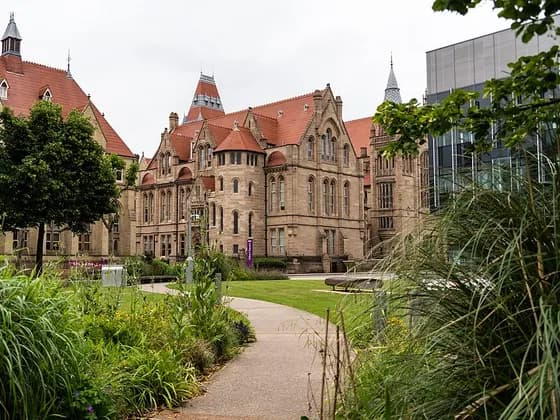
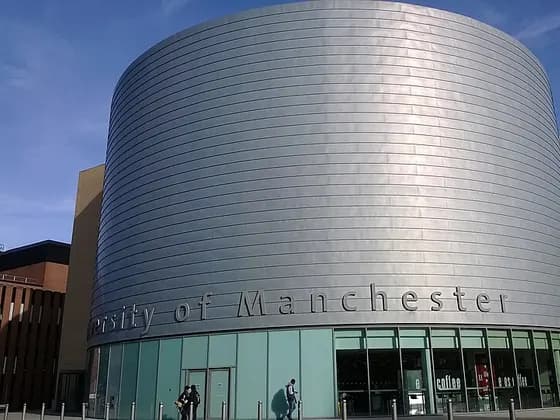
Photo: Happytree9527 / Wikimedia Commons · CC BY 4.0 · cropped
Photo: citysuitesimages · CC BY 2.0 · Photo: Arcona B B · CC BY 3.0 · Photo: Stephen McKay · CC BY-SA 2.0
Still deciding where to apply? Hear it from a student who's there
The University of Manchester Dental School uses a 5-station Multiple Mini Interview (MMI) format, with each station being 7 minutes long and a 2-minute (or longer) gap between stations. Each station is marked by a separate interviewer. There is no reading or writing component and no advance information is provided — you'll respond to each prompt as you arrive at the station.
Manchester does not test A-level science knowledge in the dental MMI. The focus is on your attributes, insight and judgement: clarity of communication, motivation for dentistry specifically (not medicine, not another career), reflection on previous experience, and your ability to summarise both sides of an ethical dilemma and justify your view while respecting others.
The starting station is randomly allocated; you then move in order through all five. Interviewers are looking for spontaneous, well-thought-out answers — Manchester says spontaneous, well-thought-out answers are more likely to impress than obviously rehearsed or coached responses.
Manchester interview key facts (2027 entry)
| Applications (2026 entry, A206) | 1,116 (981 home, 135 overseas) |
|---|---|
| Shortlisted for interview (2026 entry) | 356 |
| Offers made (2026 entry) | 148 (~42% of shortlisted) |
| MMI structure | 5 stations × 7 minutes |
| Format | In person on campus (Zoom for overseas-fee applicants living overseas) |
Interview Format
- Multiple Mini Interview (MMI) with 5 stations
- Each station 7 minutes, with 2+ minute gap between stations
- One assessor per station, marking independently
- No reading, writing or advance information — respond as you arrive
- Starting station randomly allocated; you move in order to complete all 5
- No A-level science knowledge tested — focus on attributes, insight, judgement
- Themes: communication, motivation for dentistry, work experience, ethics
Sample Interview Questions
Why dentistry rather than medicine?
Manchester is explicit about wanting applicants who actively chose dentistry. Articulate what draws you to the dental career specifically — manual work, long-term patient relationships, the mix of art and science.
What attracts you to Manchester Dental School specifically?
Reference Manchester's integrated curriculum, the inter-professional learning with medicine, the Greater Manchester clinical environment with its diverse patient population, and the strong outreach to dental schools.
Tell me about a time you had to communicate complex information to someone who didn't understand the technical detail.
STAR framework. Focus on the listener's perspective. Avoid technical jargon. Manchester values applicants who naturally check understanding.
Describe a time when you reflected on a piece of feedback and changed your approach.
Genuine example, not a humble brag. Reflect on what you specifically changed and how it improved outcomes.
A patient wants composite veneers on perfectly healthy teeth purely for cosmetic reasons. Should you do them?
Engage with autonomy + non-maleficence. Permanent enamel removal for purely cosmetic ends is a real ethical issue in modern dentistry. Discuss consent, alternatives, and the GDC position.
A patient comes to you with severe decay and asks why no previous dentist warned them. Some treatment they received clearly contributed. What do you say?
Honesty and duty of candour. Don't blame previous practitioners without evidence, but don't minimise either. Focus on the current treatment plan.
Should the NHS provide free dental care for children but charge adults?
Engage with both equity arguments (children can't choose) and adult-autonomy arguments. Reference current NHS dental charges and the patchwork of exemptions.
What aspects of dental work experience surprised you most?
Pick one specific moment. Reflect on what was unexpected — perhaps the emotional dimension, the communication required, the team dynamics with hygienists and nurses.
A patient is upset that they've been kept waiting an hour for their appointment. (Actor present.)
Acknowledge the inconvenience genuinely. Apologise for the wait, not for clinical decisions. Explain (briefly) what caused the delay. Offer concrete next steps.
Describe a time you worked in a team where there was disagreement.
Focus on how the disagreement was navigated productively. Reflect on what you learned about respecting differing views — important in MDT dentistry.
What do you think makes a good dentist beyond technical skill?
Communication, empathy, lifelong learning, integrity, ability to acknowledge limits and refer appropriately, business judgement. Connect each to a specific example from your experience.
A friend asks you to do a quick check on their teeth because they don't want to wait for an NHS appointment. (You're a dental student.) What do you do?
Acknowledge the limits of your training. Don't diagnose or prescribe. Encourage them to see a dentist — explore why they're hesitating. Reference student-scope guidance.
How will you maintain your wellbeing through a demanding dental degree?
Concrete strategies: exercise, social connection, mentorship, hobbies, knowing when to ask for help. Self-aware sustainability scores higher than abstract optimism.
How would you reassure a parent whose child is anxious about a first dental visit?
Acknowledge their concern. Use child-friendly language. Suggest the parent stays calm — children mirror parental anxiety. Tell-show-do approach for the child.
Practise the Manchester interview
Rehearse the real format before the day — on demand with our AI interviewers, or live with a tutor.
Sit a mock with photoreal AI interviewers — any time
A timed MMI or panel interview on video — British & international voices — with interviewers who listen, react and press with follow-ups. Rubric-scored feedback and a replay the moment you finish.






Live mocks with a tutor who’s been in the room
A full Manchester-style mock with a medic or dentist tutor — honest scoring against real marking criteria, a station-by-station debrief and a written action plan.
Book a mock interviewHow to Prepare
Practise 7-minute MMI stations under realistic time pressure with no prep time.
Drill the "why dentistry, not medicine" answer specifically — Manchester probes it directly.
Read GDC "Standards for the Dental Team" — Manchester values applicants who can name and apply professional standards.
Read recent NHS dentistry news so current-affairs prompts feel natural.
Practise role-play with a peer playing the patient — actor stations are routine.
Don't over-rehearse — Manchester interviewers explicitly warn that coached-sounding answers lose marks.
Research Manchester's integrated curriculum and inter-professional learning with the medical school.
Invited to interview at Manchester? Say your first answer out loud today with the free two-minute warm-up drill, then sit a timed mock set up for Manchester.
Common Pitfalls
Frequently Asked Questions
Related guides
Free, evidence-based guides from current UK medical and dental students.
Free Interview Resources
Worked-through MMI stations, ethics scenarios, and panel questions.
Read guideNHS Core Values Guide
The 6 NHS values examiners listen for in every interview answer.
Read guideMedical School Rankings
See interview format (MMI vs panel) for each UK medical school.
Read guideUCAS 2026 Personal Statement
The new three-question format your interviewer will reference.
Read guideContextual Offers for Medicine
Every UK medical school's widening-access scheme in one place.
Read guideSources & official admissions information
We cross-check every interview guide against the school’s own admissions guidance and the UK regulators.
- University of Manchester — BDS Dentistry interviews — Five-station MMI, 7 min + 2 min gap, in person (Zoom for overseas-fee applicants), January to March
- University of Manchester — BDS Dentistry application statistics — A206 applications, shortlisted and offers by entry year (2026 entry latest)
- University of Manchester — BDS Dentistry UCAT — Ranked by overall UCAT; SJT Band 3 or 4 not considered
- University of Manchester — BDS Dentistry decision and feedback — Decisions via UCAS, aim to notify by spring
- Manchester — official admissions page — Programme overview, entry requirements, interview format and timeline straight from the school.
- UCAT Consortium — Official UCAT registration, test format, scoring methodology and free practice materials.
- General Dental Council (GDC) — recognised UK dental qualifications — Statutory regulator. Recognised dental qualifications and registered-dentist register.
- Dental Schools Council — Coordinated body of UK dental schools. Entry-requirements comparison and widening-participation initiatives.
Ready to nail your Manchester interview?
Book a mock interview with a current dental student who recently went through the same process, or practise on demand with the AI interviewer.