
Cardiff Dentistry Interview
Format, Questions & Prep Tips
Cardiff dentistry interviews for 2027 entry are multiple mini interviews (MMI). Published figures: MMI structure ~10 stations × ~5 min (+ 2 min prep + 1 min move).
- Institution
- Cardiff University School of Dentistry
- Interview (2027 entry)
- January (2026 entry: 12–23 January 2026) — check 2027 dates
- Decisions (2027 entry)
- Not confirmed on pages we could access


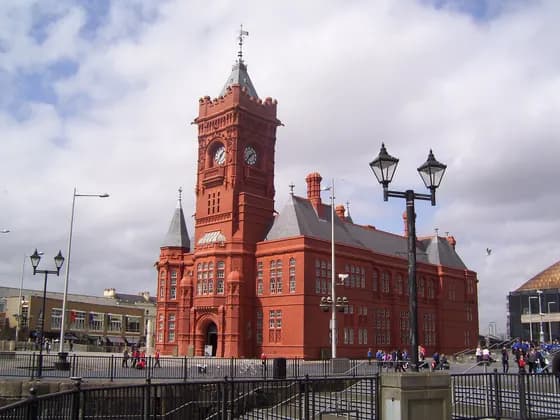

Photo: Jeremy Segrott (from Cardiff, Wales, UK) / Wikimedia Commons · CC BY 2.0 · cropped
Photo: Colin Smith · CC BY-SA 2.0 · Photo: Martin Speck · CC BY-SA 2.0 · Photo: Athena's Pix (Back, but give me time!) profile at Flickr website · CC BY 2.0
Still deciding where to apply? Hear it from a student who's there
Cardiff University School of Dentistry uses a Multiple Mini Interview (MMI) format for the Bachelor of Dental Surgery (BDS, A200) programme. The interview consists of approximately 10 short stations of ~5 minutes each, with 2 minutes of preparation time before each station and 1 minute to move between stations.
In the latest published dates (2026 entry), Cardiff Dental MMIs ran 12–23 January 2026; check Cardiff's advertised dates for 2027 entry, which can change. Interviews are in person on Cardiff campus for home (fee status) applicants; online interviews are only offered for overseas applicants to the BDS programme.
Like Cardiff Medicine, Cardiff Dentistry uniquely offers the MMI through the medium of Welsh, bilingually, or in English. A set number of Welsh/bilingual dates are reserved — contact the school once invited to interview to secure one. The MMI stations map onto attributes expected of Dental Professionals by the General Dental Council (GDC).
Cardiff interview key facts (2027 entry)
| MMI structure | ~10 stations × ~5 min (+ 2 min prep + 1 min move) |
|---|---|
| Welsh option | Yes — MMI available in Welsh, bilingually, or English |
Interview Format
- Multiple Mini Interview (MMI) — ~10 stations of ~5 minutes each
- 2 minutes of preparation time before each station
- 1 minute to move between stations
- In person on Cardiff campus for home applicants
- Online for overseas BDS applicants
- Welsh / bilingual MMI dates available — request when invited
- Stations mapped to GDC attributes for dental professionals
Sample Interview Questions
Why dentistry, and why Cardiff specifically?
Reference Cardiff's integrated curriculum, the bilingual clinical environment, Welsh NHS placements, and — if applicable — your interest in practising in Wales.
What dental work experience have you done and what did you learn?
Pick one specific moment. Reflect on the daily realities — communication, anxiety management, team dynamics with hygienists and nurses.
Describe a complex topic from your A-Levels to me as if I knew nothing about science.
Avoid jargon. Vivid analogy. Check understanding mid-explanation. Cardiff scores clarity over depth.
Tell me about a time you worked in a team and there was a conflict.
STAR framework. Focus on managing the conflict productively, not on who was right.
A patient with a chronic condition refuses to follow your treatment plan. How do you respond?
Respect autonomy. Explore why (cost, side-effects, mistrust, misunderstanding). Address the underlying issue without coercion.
Should the NHS treat patients differently if their dental problems are self-inflicted (e.g. heavy smoking or sugar intake)?
Justice and non-maleficence both argue no. Engage with the role of patient education and prevention without punitive withdrawal.
A patient is anxious about a procedure. (Actor present.)
Acknowledge the anxiety. Use simple non-jargon explanations. Tell-show-do approach. Offer the patient control signals.
A friend tells you they're considering quitting their course due to mental-health struggles. (Actor present.)
Validate. Don't prescribe solutions — ask what they need. Suggest professional routes (uni counselling, GP).
Here is data showing dental decay rates by region in Wales. What might explain the differences and what could be done?
Discuss multi-causal factors: deprivation, healthcare access, vaccine/fluoridation policy, sugar intake. Avoid simplistic explanations.
What is the role of a dentist beyond treating dental disease?
Public health, oral cancer screening, safeguarding (signs of abuse, eating disorders), patient education, advocacy for better dental access.
How would you explain to a parent why their child needs to come back for further treatment?
Listen first. Use simple language. Empathise with the inconvenience. Be specific about what the next visit will involve and why.
How do you train your manual dexterity?
Concrete examples — model-making, art, music, surgery shadowing. Reflect on improvement over time.
A patient asks you about a treatment they read about online but you're not familiar with. What do you do?
Honesty — don't pretend to know. Offer to research it together. Suggest they bring the information so you can both look at it. Don't dismiss.
What concerns you most about a career in dentistry?
Honest concerns + management strategies. NHS contract instability, physical demands (back/neck from posture), patient anxiety dynamics, business pressures.
Practise the Cardiff interview
Rehearse the real format before the day — on demand with our AI interviewers, or live with a tutor.
Sit a mock with photoreal AI interviewers — any time
A timed MMI or panel interview on video — British & international voices — with interviewers who listen, react and press with follow-ups. Rubric-scored feedback and a replay the moment you finish.


Live mocks with a tutor who’s been in the room
A full Cardiff-style mock with a medic or dentist tutor — honest scoring against real marking criteria, a station-by-station debrief and a written action plan.
Book a mock interviewHow to Prepare
If applicable, request a Welsh or bilingual interview date when you receive your invitation — Cardiff values applicants who interview in Welsh.
Drill 5-minute MMI stations with the 2-minute prep window included.
Practise role-play scenarios with a peer playing the patient or anxious friend.
Read GDC "Standards for the Dental Team" — Cardiff's rubric is explicitly mapped to GDC attributes.
Research Cardiff's integrated curriculum and Welsh NHS clinical placements so "why Cardiff" is specific.
Read recent NHS dental news, including NHS Wales-specific stories (the contract differs from England).
Have specific manual-dexterity examples ready — Cardiff probes this dental aptitude.
Invited to interview at Cardiff? Say your first answer out loud today with the free two-minute warm-up drill, then sit a timed mock set up for Cardiff.
Common Pitfalls
Frequently Asked Questions
Related guides
Free, evidence-based guides from current UK medical and dental students.
Free Interview Resources
Worked-through MMI stations, ethics scenarios, and panel questions.
Read guideNHS Core Values Guide
The 6 NHS values examiners listen for in every interview answer.
Read guideMedical School Rankings
See interview format (MMI vs panel) for each UK medical school.
Read guideUCAS 2026 Personal Statement
The new three-question format your interviewer will reference.
Read guideContextual Offers for Medicine
Every UK medical school's widening-access scheme in one place.
Read guideSources & official admissions information
We cross-check every interview guide against the school’s own admissions guidance and the UK regulators.
- Cardiff University — Admissions information for studying Dentistry — BDS MMI of 10 stations; in person for home applicants, online only for overseas; Welsh-medium option.
- Cardiff — official admissions page — Programme overview, entry requirements, interview format and timeline straight from the school.
- UCAT Consortium — Official UCAT registration, test format, scoring methodology and free practice materials.
- General Dental Council (GDC) — recognised UK dental qualifications — Statutory regulator. Recognised dental qualifications and registered-dentist register.
- Dental Schools Council — Coordinated body of UK dental schools. Entry-requirements comparison and widening-participation initiatives.
Ready to nail your Cardiff interview?
Book a mock interview with a current dental student who recently went through the same process, or practise on demand with the AI interviewer.