
UCLan (Graduate Dentistry) Dentistry Interview
Format, Questions & Prep Tips
UCLan dentistry interviews for 2027 entry are multiple mini interviews (MMI), held 14–15 December 2026 (no other dates). Published figures: Route 4-year graduate-entry BDS (A202), entry to Year 2; Interview (2027 entry) MMI on 14–15 December 2026 only; online or Preston TBC.
- Institution
- University of Central Lancashire Graduate Dentistry
- Interview (2027 entry)
- 14–15 December 2026 (no other dates)
- Decisions (2027 entry)
- Not published
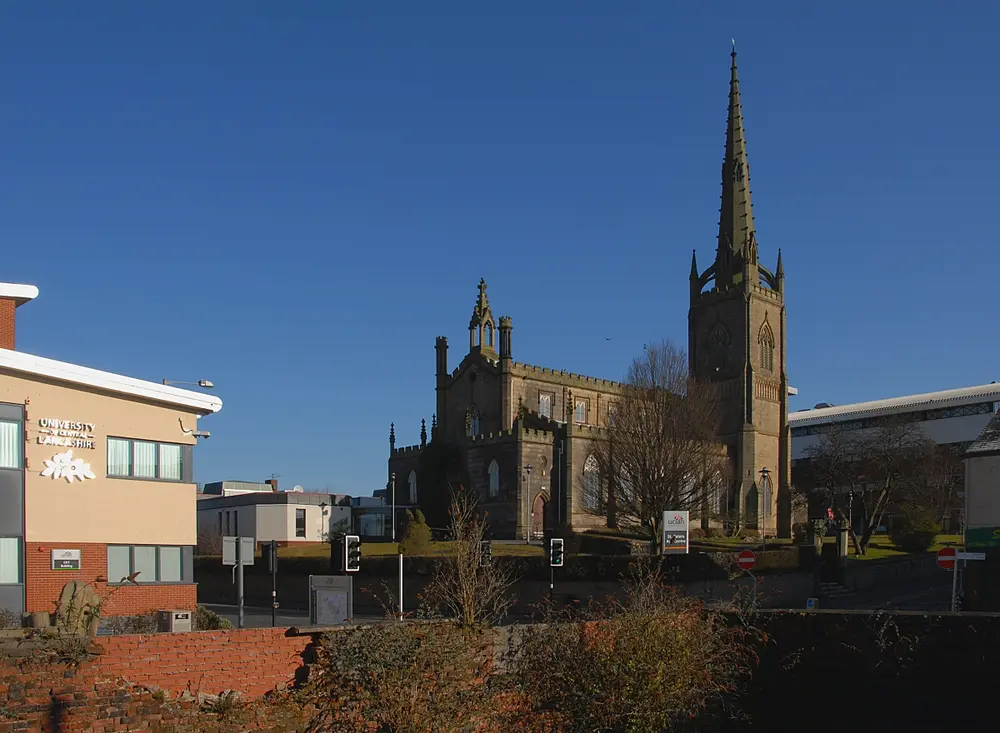
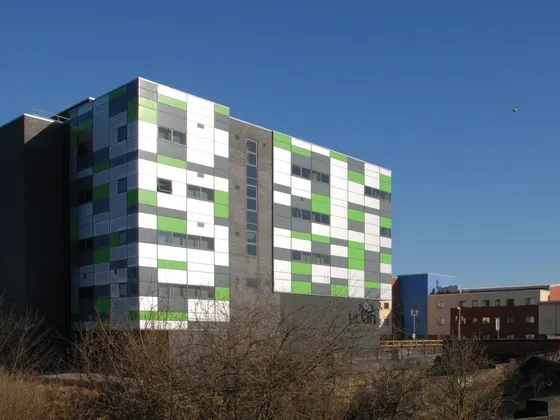


Photo: Galatas · CC BY-SA 2.0 · cropped
Photo: Galatas · CC BY-SA 2.0 · Photo: Stephen McKay · CC BY-SA 2.0 · Photo: Francis C. Franklin · CC BY-SA 3.0
Still deciding where to apply? Hear it from a student who's there
The University of Lancashire (formerly the University of Central Lancashire, UCLan) School of Dentistry in Preston runs a small-cohort BDS (UCAS A202) as a four-year graduate-entry pathway: graduates with a 1st or 2:1 in a medical science or health-related degree enter directly into Year 2. The course is primarily for UK students, with one place for an international student. For 2027 entry, interviews use a Multiple Mini Interview (MMI) format and will be held only on 14 and 15 December 2026 — the school will confirm later whether they are online or at the Preston Campus.
Stations span the standard MMI themes: motivation, ethics, communication, teamwork and reflection on work experience. The school lists communication skills, knowledge of dentistry, ethics, professionalism and team working as interview topics. Teaching combines lectures and tutorials with Problem-Based Learning (PBL), and after Year 2 students train in community Dental Education Centres in Accrington, Blackpool, Carlisle and Morecambe, and interviewers look for applicants who will thrive in that environment.
All applicants must sit the UCAT, and the score is used to rank applications before interview — the highest-scoring applicants are invited. Applicants must also complete a verification of prior learning form by 15 October 2026 to show their degree covered relevant biomedical subjects.
UCLan (Graduate Dentistry) interview key facts (2027 entry)
| Route | 4-year graduate-entry BDS (A202), entry to Year 2 |
|---|---|
| Who can apply | Primarily UK students; one international place |
| Interview (2027 entry) | MMI on 14–15 December 2026 only; online or Preston TBC |
Interview Format
- Multiple Mini Interview (MMI) — held only on 14 and 15 December 2026 for 2027 entry
- Topics include communication skills, knowledge of dentistry, ethics, professionalism and team working
- Stations marked independently by separate interviewers
- Online or at the Preston Campus — to be confirmed by the school
- Mix of faculty, clinical staff and current students on the panel
- Strong emphasis on problem-based and small-group learning fit
- UCAT score used to rank applications; highest scorers invited to interview
- Graduate-entry only: 1st or 2:1 in a medical science or health-related degree, plus verification of prior learning form
Sample Interview Questions
Why dentistry, and why UCLan?
Reference the graduate-entry BDS, the mix of lectures and problem-based learning, the three years in community Dental Education Centres, and learning alongside dental therapy and dental technology students. Distinguish from medicine clearly.
This is an accelerated graduate-entry course. What will you bring to a cohort of graduates from different backgrounds?
Draw on your first degree and work experience — teamwork, independent study, working with diverse people. Show openness to learning from peers with different academic and professional backgrounds.
How would you communicate with a patient whose first language is not English?
Use plain language, visual aids, demonstrations. Offer interpreter services where appropriate. Don't rely on family members for clinical translation. Check understanding by asking the patient to repeat back.
(Possible station) A patient is upset that they have been waiting for 45 minutes for their appointment. Speak to them.
Acknowledge and apologise briefly. Listen to the specific concern. Offer a realistic timeframe. Don't blame colleagues or the system. Offer to reschedule if appropriate.
A patient with capacity refuses treatment that you believe is necessary. What do you do?
Autonomy is paramount once capacity is established. Provide clear information about risks of refusal. Document. Offer to revisit. Reference GDC Standards.
Should dental schools admit more international students given UK workforce shortages?
Balance workforce policy against international education benefits. Discuss visa rules, post-qualification GDC registration, the value of international perspectives, and the funding model. Take a reasoned position.
Describe a meaningful piece of dental work experience and what it taught you.
Depth over breadth. Pick one moment to go deep on. Reflect on what you learned about dental practice, not just what you observed.
UCLan uses problem-based learning extensively. Why does that appeal to you?
Reflect on how you learn best. PBL favours active learners, collaborators and self-directed thinkers. Give a concrete example of when you've thrived in a group problem-solving setting.
Tell me about a time you had to resolve a conflict in a team.
STAR framework. Focus on listening, finding common ground and constructive resolution. Reflect on what you learned about team dynamics.
What manual dexterity skills do you have, and how have you developed them?
Concrete examples — sewing, painting, model-making, musical instruments, surgery shadowing. Reflect on improvement through practice.
A colleague at your work-experience placement is consistently late. What do you do?
Address the impact, not the person. Speak to them privately first. Escalate to a supervisor if it continues or affects patient care. Don't gossip.
(Possible station) Here is a graph showing global oral-health inequalities. What does it show, and what are the implications?
Describe what you see. Discuss the role of dentists in advocacy, prevention and outreach. Show awareness of the communities in Lancashire and Cumbria that the Dental Education Centres serve.
What concerns you most about a career in dentistry?
Workforce crisis, physical demands, business pressures, emotional weight of anxious patients. Show informed self-awareness and coping strategies.
How would you explain to a parent why their child needs a filling?
Age-appropriate language with the child. Direct, evidence-based explanation with the parent. Discuss prevention going forward. Empathy with both child and parent.
Why prevention over treatment in modern dentistry?
Most dental disease is preventable. Cost-effectiveness, oral-cancer screening, the shift from drill-and-fill to risk-assessed care. UCLan emphasises prevention in its curriculum.
Practise the UCLan (Graduate Dentistry) interview
Rehearse the real format before the day — on demand with our AI interviewers, or live with a tutor.
Sit a mock with photoreal AI interviewers — any time
A timed MMI or panel interview on video — British & international voices — with interviewers who listen, react and press with follow-ups. Rubric-scored feedback and a replay the moment you finish.






Live mocks with a tutor who’s been in the room
A full UCLan (Graduate Dentistry)-style mock with a medic or dentist tutor — honest scoring against real marking criteria, a station-by-station debrief and a written action plan.
Book a mock interviewHow to Prepare
Research UCLan's problem-based learning curriculum — it's a recurring theme at interview.
Understand the Dental Education Centre model — three years treating patients in community clinics in Accrington, Blackpool, Carlisle and Morecambe.
Have specific reasons for dentistry vs medicine — UCLan tests dentistry-specific motivation.
Read GDC "Standards for the Dental Team" — UCLan anchors ethical reasoning against it.
Practise short, structured MMI answers — station timings are not published, so rehearse pacing at a few different lengths.
Prepare reflection on at least two distinct work experiences.
Be ready to explain how your first degree prepared you for dentistry — the graduate-entry route assumes relevant biomedical study.
Invited to interview at UCLan (Graduate Dentistry)? Say your first answer out loud today with the free two-minute warm-up drill, then sit a timed mock set up for UCLan (Graduate Dentistry).
Common Pitfalls
Frequently Asked Questions
Related guides
Free, evidence-based guides from current UK medical and dental students.
Free Interview Resources
Worked-through MMI stations, ethics scenarios, and panel questions.
Read guideNHS Core Values Guide
The 6 NHS values examiners listen for in every interview answer.
Read guideMedical School Rankings
See interview format (MMI vs panel) for each UK medical school.
Read guideUCAS 2026 Personal Statement
The new three-question format your interviewer will reference.
Read guideContextual Offers for Medicine
Every UK medical school's widening-access scheme in one place.
Read guideSources & official admissions information
We cross-check every interview guide against the school’s own admissions guidance and the UK regulators.
- University of Lancashire — Dental Surgery BDS (A202) course page — 4-year graduate-entry pathway, primarily UK; UCAT ranking; MMI on 14–15 December 2026; online or Preston TBC
- University of Lancashire — Name change approved by Office for Students — University of Central Lancashire renamed University of Lancashire
- University of Lancashire — Study Dentistry — BDS, Dental Therapy and CDT students learn alongside each other; graduates with a 2:1 can apply to BDS
- UCLan (Graduate Dentistry) — official admissions page — Programme overview, entry requirements, interview format and timeline straight from the school.
- UCAT Consortium — Official UCAT registration, test format, scoring methodology and free practice materials.
- General Dental Council (GDC) — recognised UK dental qualifications — Statutory regulator. Recognised dental qualifications and registered-dentist register.
- Dental Schools Council — Coordinated body of UK dental schools. Entry-requirements comparison and widening-participation initiatives.
Ready to nail your UCLan (Graduate Dentistry) interview?
Book a mock interview with a current dental student who recently went through the same process, or practise on demand with the AI interviewer.