
Queen Mary (QMUL) Dentistry Interview
Format, Questions & Prep Tips
Queen Mary dentistry interviews for 2027 entry are a panel interview, held January–February (2027 entry). Published figures: A200 Home applications (2026 entry) 900; A200 Home interviews (2026 entry) 227; A200 Home offers (2026 entry) 179 for 67 places.
- Institution
- Queen Mary University of London (Barts and The London Institute of Dentistry)
- Interview (2027 entry)
- January–February (2027 entry)
- Decisions (2027 entry)
- March, once all interviews are complete

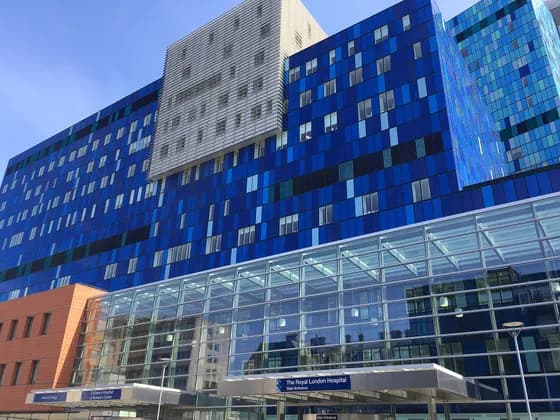
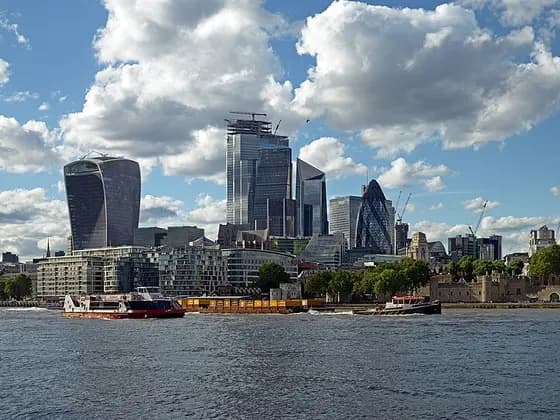

Photo: Paul the Archivist · CC BY-SA 4.0 · cropped
Photo: ClippednPinned · CC BY-SA 4.0 · Photo: Ввласенко · CC BY-SA 3.0 · Photo: ClemRutter · CC BY-SA 4.0
Still deciding where to apply? Hear it from a student who's there
Queen Mary University of London (Barts and The London) Dental School uses a traditional panel interview, NOT an MMI circuit. You stay in one online video call with a panel — typically two members of senior academic or clinical staff, a dental student and sometimes a lay selector — for the whole interview.
Queen Mary's medicine interviews include questions on a pre-read article, so be ready to discuss a short piece on dentistry, healthcare or ethics if your invitation includes one. The structure is conversational rather than rapid-fire, and Barts/Queen Mary selectors specifically value longer, reflective answers over rehearsed MMI-style bullets.
Key assessment areas: motivation and the reality of a career in dentistry; initiative, resilience and maturity; teamwork; organisation and problem solving; contribution to university life; and communication skills. For 2027 entry, interviews take place in January and February, with decisions communicated in March once all interviews are complete. Barts is one of the most diverse dental schools in the UK — selectors actively look for applicants who'll thrive in and contribute to that environment.
Queen Mary (QMUL) interview key facts (2027 entry)
| A200 Home applications (2026 entry) | 900 |
|---|---|
| A200 Home interviews (2026 entry) | 227 |
| A200 Home offers (2026 entry) | 179 for 67 places |
| Format | Online panel interview |
Interview Format
- Traditional panel interview (NOT MMI)
- Held online, in January and February — panel typically two senior academic or clinical staff plus a dental student
- Sometimes includes a lay selector
- Be ready to discuss a short article — Queen Mary uses pre-read articles in its medicine interviews
- Conversational rather than rapid-fire — values longer, reflective answers
- Assesses: motivation and reality of dentistry, initiative, resilience and maturity, teamwork, organisation and problem solving, contribution to university life, communication
Sample Interview Questions
Why dentistry, and what specifically draws you to it over medicine?
Barts wants applicants who chose dentistry deliberately, not by elimination. Articulate what attracts you — manual work, long-term patient relationships, the small-business dimension.
Why Barts/Queen Mary Dental Institute specifically?
Reference Barts' East London clinical placements, the diverse patient population, the Royal London Hospital teaching environment, and the strong reputation in oral surgery.
Tell me about an article or video you've read recently about dentistry or healthcare. What did you take from it?
Pick something real you can discuss in depth — Barts may give you reading material in advance. Be ready to articulate the argument, your reaction, and what it means for future practice.
Describe a meaningful work experience and what you learnt from it.
Barts selectors love reflection — not just what you observed, but how it helped you and what you'll carry forward. One experience explored deeply beats a list.
A patient with very limited English understanding signs a consent form for a complex treatment. What concerns might you raise?
Informed consent requires understanding, not just signature. Discuss interpreter services, written-translation options, the importance of teach-back. Don't assume capacity equals understanding.
Should the NHS prioritise free dental care for children and elderly people over working-age adults?
Engage with both equity arguments (vulnerable groups) and the systemic implications. Current NHS dental exemptions partly do this; engage with how and why.
A patient is upset because they've been waiting 3 weeks for an NHS appointment. (Actor present.)
Acknowledge the systemic context honestly. Don't over-apologise for things outside your control. Offer concrete next steps and information about the wider NHS dental crisis.
Tell me about a time you've contributed to a community or team beyond academic work.
Barts explicitly values contribution to student life. Pick a real example — sports team, society, volunteering, mentoring — and reflect on what you brought and what you learnt.
How would you explain to a patient that they need root canal treatment when they came in expecting a routine filling?
Listen first. Use clear non-jargon language. Explain the diagnosis and alternatives. Address financial concerns. Give them time and don't pressure.
Should dentists be allowed to refuse treatment to patients who refuse vaccination?
GDC says no — non-judgmental care. Engage with the autonomy/safety tension. Reference the parallel with NHS doctors and the duty not to refuse on personal-belief grounds.
Describe a time you received feedback that was hard to hear.
Genuine example with reflection on what you changed afterwards. Barts values self-awareness over polished narrative.
What concerns you most about a career in dentistry?
Honest concerns plus management strategies. NHS contract instability, physical demands, patient anxiety, business pressures. Show informed self-awareness.
A friend asks for your dental advice about a worrying symptom. What do you do as a dental student?
Acknowledge the limits of your training. Don't diagnose or prescribe. Encourage them to see a dentist — explore why they're hesitating. Reference student-scope guidance.
A patient is anxious about an extraction and considering not turning up. (Actor present.)
Validate the anxiety without minimising. Explore what specifically worries them. Offer information about pain management. Don't pressure attendance — offer to discuss alternatives.
Practise the Queen Mary (QMUL) interview
Rehearse the real format before the day — on demand with our AI interviewers, or live with a tutor.
Sit a mock with photoreal AI interviewers — any time
A timed MMI or panel interview on video — British & international voices — with interviewers who listen, react and press with follow-ups. Rubric-scored feedback and a replay the moment you finish.




Live mocks with a tutor who’s been in the room
A full Queen Mary (QMUL)-style mock with a medic or dentist tutor — honest scoring against real marking criteria, a station-by-station debrief and a written action plan.
Book a mock interviewHow to Prepare
Prepare for a conversational panel format, not MMI — long-form reflective answers, not 90-second bullets.
Practise summarising and reacting to a short article on dentistry/healthcare ethics — Queen Mary uses pre-read articles in its medicine interviews.
Have specific stories of contribution to community or student life ready — Barts assesses this directly.
Research East London context — Barts placements serve a diverse, multi-lingual, multi-ethnic patient population.
Read GDC "Standards for the Dental Team" — Barts assesses ethical reasoning against it.
Read recent NHS dental access news so current-affairs questions feel natural.
Have a strong "why dentistry, not medicine" answer ready — Barts probes this directly.
Invited to interview at Queen Mary (QMUL)? Say your first answer out loud today with the free two-minute warm-up drill, then sit a timed mock set up for Queen Mary (QMUL).
Common Pitfalls
Frequently Asked Questions
Related guides
Free, evidence-based guides from current UK medical and dental students.
Free Interview Resources
Worked-through MMI stations, ethics scenarios, and panel questions.
Read guideNHS Core Values Guide
The 6 NHS values examiners listen for in every interview answer.
Read guideMedical School Rankings
See interview format (MMI vs panel) for each UK medical school.
Read guideUCAS 2026 Personal Statement
The new three-question format your interviewer will reference.
Read guideContextual Offers for Medicine
Every UK medical school's widening-access scheme in one place.
Read guideSources & official admissions information
We cross-check every interview guide against the school’s own admissions guidance and the UK regulators.
- Queen Mary FMD — BDS (A200) selection criteria — Online panel interview Jan–Feb, panel make-up, assessment areas, decisions in March, UCAT/SJT shortlisting, PS unscored.
- Queen Mary FMD — Admissions statistics for Medicine & Dentistry — A200 Home 2026: 900 applications, 227 interviews, 179 offers, 67 places.
- Queen Mary — Contextualised admissions — Dentistry: one-grade contextual drop; enhanced AAA + guaranteed interview for access-scheme participants.
- Queen Mary (QMUL) — official admissions page — Programme overview, entry requirements, interview format and timeline straight from the school.
- UCAT Consortium — Official UCAT registration, test format, scoring methodology and free practice materials.
- General Dental Council (GDC) — recognised UK dental qualifications — Statutory regulator. Recognised dental qualifications and registered-dentist register.
- Dental Schools Council — Coordinated body of UK dental schools. Entry-requirements comparison and widening-participation initiatives.
Ready to nail your Queen Mary (QMUL) interview?
Book a mock interview with a current dental student who recently went through the same process, or practise on demand with the AI interviewer.