
University of Michigan School of Dentistry Interview
Format, Questions & Prep Tips
University of Michigan School of Dentistry dentistry interviews for 2027 entry are multiple mini interviews (MMI), held October 2026 through February 2027. Published figures: Annual DDS class size ~108; Interview format MMI — 10 stations, ~10 min each; Tuition (2025–26) ~USD 30,000 (in-state) / USD 60,000 (out-of-state).
- Institution
- University of Michigan School of Dentistry
- Interview (2027 entry)
- October through February
- Decisions (2027 entry)
- Regular decisions by late March; waitlist through spring

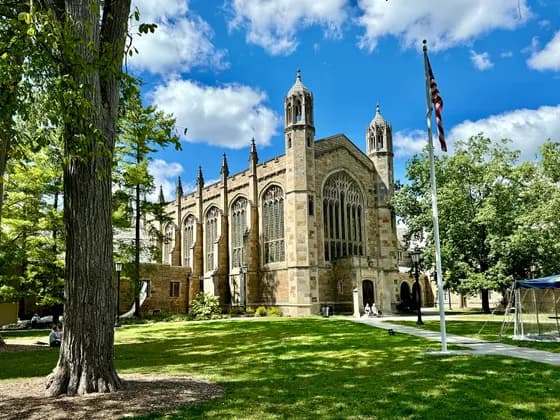
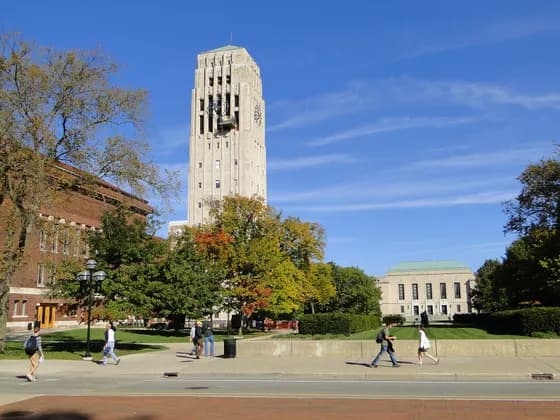
Photo: AndrewHorne · Public domain · cropped
Photo: w_lemay · CC BY-SA 2.0 · Photo: Cbl62 · CC BY 3.0 · Photo: Dwight Burdette · CC BY 3.0
How to get into University of Michigan School of Dentistry (DDS) dentistry
Step-by-step: entry requirements, admission tests, personal statement, interview format and the key deadlines.
Open the guide →University of Michigan School of Dentistry (DDS) entry requirements
Admission profile, interview format, decision dates and what makes University of Michigan School of Dentistry (DDS) different.
See the profile →The University of Michigan School of Dentistry (DDS) dentistry interview
University of Michigan School of Dentistry uses a **Multiple Mini Interview (MMI)** — ten stations of about 10 minutes each, with one-on-one discussions with faculty, staff and current students at its Ann Arbor campus. Michigan Dentistry is a top-ranked public dental school with strong research programs, a large and diverse patient base at its dental clinics, and a genuine commitment to training dentists who will serve Michigan communities.
Michigan Dentistry uses the ADEA AADSAS system and requires the DAT. The school has a strong emphasis on access to care — its dental clinics serve patients across the socioeconomic spectrum — and interviewers probe genuine awareness of dental access barriers.
Michigan's Advanced Specialty Education Programs are nationally renowned, and interviewers may probe interest in specialization vs. general practice.
University of Michigan School of Dentistry (DDS) interview at a glance (2027 entry)
| Annual DDS class size | ~108 |
|---|---|
| Interview format | MMI — 10 stations, ~10 min each |
| DAT required | Yes — via ADEA AADSAS |
| Tuition (2025–26) | ~USD 30,000 (in-state) / USD 60,000 (out-of-state) |
| Application system | ADEA AADSAS primary + Michigan secondary |
| Interview window | October–February |
Interview format
- Two sessions: faculty and student; ~30–45 minutes each.
- Ten MMI stations, ~10 minutes each.
Sample interview questions
Why dentistry rather than medicine? What specifically pulls you toward oral health as your career?
A positive case for dentistry: the combination of manual craft and biomedical science, longitudinal relationships, visible outcomes, and autonomy. Avoid implying dentistry is a lesser version of medicine.
Why general dentistry rather than specialization — or if you are considering a specialty, which one and why?
General practice versus specialty is a genuine career decision. Michigan has strong specialty programs, so be honest about your trajectory and what drives it rather than name-dropping a specialty you have not explored.
What draws you to a top public dental school in Michigan specifically, and to serving Michigan communities?
Reference the diverse patient base at Michigan's clinics, the access-to-care mission, and Michigan-specific oral-health context such as dental deserts in the Upper Peninsula and the Detroit metro area.
Tell us about the experience that confirmed dentistry is the right path for you.
A specific, reflective story — shadowing, hands-on work, or a personal experience — showing realistic understanding of the profession rather than an idealized view.
How have you developed your manual dexterity and fine-motor skills, and why do they matter in dentistry?
Concrete examples — art, music, crafts, lab or surgical work — and reflection on precision under time pressure. Link dexterity to restorative quality and patient safety.
A long-standing patient is anxious and resistant to a recommended extraction. How do you communicate and build trust?
What they are listening for:
- Non-judgmental listening
- explaining options and consequences in plain language
- anxiety management
- respecting autonomy while ensuring informed understanding
Michigan Dentistry's clinics see patients who cannot afford private dental care. How do you think about the role of dental school clinics in the healthcare safety net?
Dental school clinics as access points for underserved populations, the balance of training quality in a supervised environment, and how safety-net dental care is financed.
A patient asks for an extraction of a tooth you believe is restorable, simply because extraction is cheaper. How do you respond?
Educate on long-term consequences and alternatives, respect financial reality and autonomy, document the discussion, and avoid both paternalism and simply complying without counsel.
You realize a treatment you provided fell short of the standard you intended, though no harm has yet occurred. What do you do?
What they are listening for:
- Honesty
- disclosure
- corrective action
Patient trust and safety outweigh ego or embarrassment. Discuss learning from error and transparent communication.
Should fluoridated public water be mandatory? Argue the case considering autonomy and public health.
Balance population-level caries reduction against individual-choice arguments. Show you can reason about a genuine public-health debate using evidence rather than asserting one side.
The DDS curriculum pairs rigorous biomedical sciences with simulation lab work. How will you manage that combined demand?
Realistic study plan, time management between didactic and hands-on work, and use of support resources. Show self-knowledge about how you build technical skill.
Is there anything in your DAT scores or AADSAS academic record you would like to explain?
Own weaknesses honestly without excuses and demonstrate upward trajectory. Self-awareness and resilience matter more than a perfect record.
Role-play: a classmate is struggling in the simulation lab and asks you to complete part of their graded preparation. Respond.
Decline to compromise integrity while offering legitimate help such as practicing together. Professionalism in clinical training is being assessed.
Role-play: an upset patient says the previous dentist 'ruined' their crown and demands you redo it for free. Respond.
What they are listening for:
- Stay neutral about the prior clinician
- assess the clinical reality
- communicate options and costs honestly
- de-escalate
Empathy plus professionalism.
You are shown data showing far fewer dentists per capita in the Upper Peninsula than in the Detroit metro area. What might explain this and what would you want to know?
What they are listening for:
- Rural workforce shortages
- reimbursement
- training pipelines
- geography
Distinguish association from causation and identify what additional data would clarify the dental-desert picture.
Practise the University of Michigan School of Dentistry (DDS) interview
Rehearse the real format before the day — on demand with our AI interviewers, or live with a tutor.
Sit a mock with photoreal AI interviewers — any time
A timed MMI or panel interview on video — American & international voices — with interviewers who listen, react and press with follow-ups. Rubric-scored feedback and a replay the moment you finish.






Live mocks with a tutor who’s been in the room
A full University of Michigan School of Dentistry (DDS)-style mock with a medic or dentist tutor — honest scoring against real marking criteria, a station-by-station debrief and a written action plan.
Book a mock interviewHow to prepare for the University of Michigan School of Dentistry (DDS) interview
Common pitfalls to avoid
University of Michigan School of Dentistry (DDS) interview — frequently asked questions
Sources & official admissions information
Ready to nail your University of Michigan School of Dentistry (DDS) interview?
Book a mock interview with a tutor who knows the US interview formats, orpractice unlimited stations from our interview question bank.