
University of Detroit Mercy School of Dentistry Interview
Format, Questions & Prep Tips
University of Detroit Mercy School of Dentistry dentistry interviews for 2027 entry are a traditional interview. Published figures: Degree awarded DDS (4-year predoctoral program); Annual DDS class size ~148.
- Institution
- University of Detroit Mercy School of Dentistry
- Interview (2027 entry)
- September through February, with most interviews in the autumn and early winter
- Decisions (2027 entry)
- Decisions typically issued within 4–8 weeks of interview, in line with the AADSAS cycle

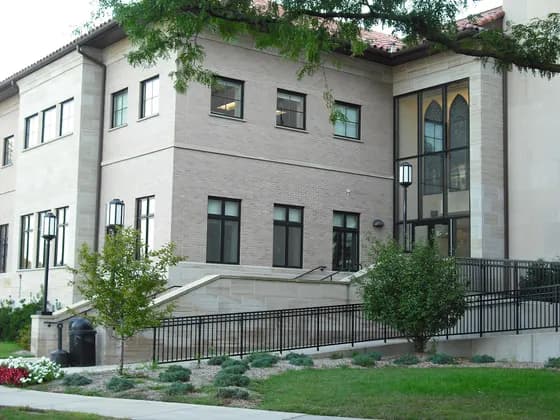
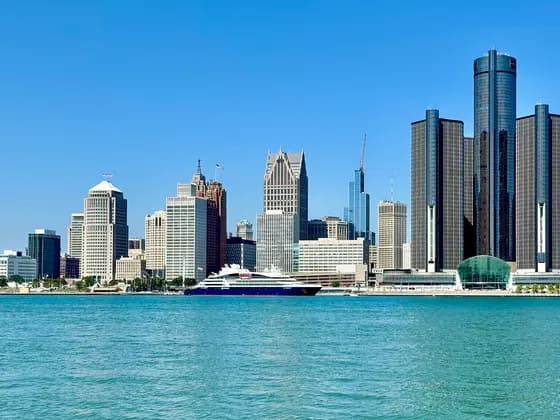

Photo: Mike Russell · CC BY-SA 3.0 · cropped
Photo: Pfretz13 · Public domain · Photo: Warren LeMay from Chicago, IL, United States · CC BY-SA 2.0 · Photo: Mkrajenke12 · CC BY-SA 4.0
How to get into University of Detroit Mercy School of Dentistry (DDS) dentistry
Step-by-step: entry requirements, admission tests, personal statement, interview format and the key deadlines.
Open the guide →University of Detroit Mercy School of Dentistry (DDS) entry requirements
Admission profile, interview format, decision dates and what makes University of Detroit Mercy School of Dentistry (DDS) different.
See the profile →The University of Detroit Mercy School of Dentistry (DDS) dentistry interview
The University of Detroit Mercy School of Dentistry awards the DDS and is a private, Catholic dental school in the Jesuit and Mercy tradition, located in Detroit, Michigan. Its mission is explicitly rooted in service and social justice — educating compassionate dentists who are committed to caring for the underserved and to the dignity of every patient. It is one of the largest oral-health-care providers in the region and treats a high volume of patients who face significant barriers to dental care.
Applications are made through ADEA AADSAS and the DAT (Dental Admission Test) is required. As a private, mission-driven school, Detroit Mercy does not apply a formal in-state residency preference; instead it recruits applicants from many backgrounds who genuinely share its commitment to service, social justice, and care for the underserved.
The interview is strongly values-aligned. Interviewers look for authentic motivation for dentistry over medicine, evidence of manual dexterity and how it was developed, and — above all — a real, demonstrated commitment to serving vulnerable communities and to the Jesuit-Mercy values of compassion, justice, and service to the whole person. Understanding Detroit's oral-health-access landscape and Detroit Mercy's mission is essential for a convincing performance.
University of Detroit Mercy School of Dentistry (DDS) interview at a glance (2027 entry)
| Degree awarded | DDS (4-year predoctoral program) |
|---|---|
| Annual DDS class size | ~148 |
| Application system | ADEA AADSAS primary + Detroit Mercy supplemental |
| DAT required | Yes — Dental Admission Test |
| Interview format | Traditional faculty/admissions panel and one-on-one sessions |
| Location & mission | Detroit, MI — private, Catholic (Jesuit & Mercy); service to the underserved |
Interview format
- On-campus interview day with one-on-one and/or panel sessions involving faculty and the admissions committee; typically a half-day commitment.
- Conversational, file-aware format that probes motivation, service commitment, and manual dexterity rather than running timed MMI stations.
- Strong emphasis on mission fit — interviewers explicitly explore your alignment with Jesuit-Mercy values of service, social justice, and care for the underserved.
- Tour of the dental school's patient-care clinics and simulation facilities, which serve a high volume of underserved patients.
- Opportunities to meet current DDS students and learn about service learning and community outreach.
- Decisions issued after the interview within the AADSAS cycle.
Sample interview questions
Detroit Mercy is a Catholic, Jesuit and Mercy institution with a service-to-the-underserved mission. What draws you to this school specifically, and how does its mission resonate with you?
This is close to a litmus test for fit. You do not need to be Catholic, but you must show genuine understanding of the Jesuit-Mercy values — service, social justice, care for the whole person — and connect them authentically to your own motivation. Generic 'I want to help people' answers fall flat.
Why dentistry rather than medicine or another health profession?
The foundational dental question. Speak to the hands-on procedural craft, the autonomy of clinical decision-making, and long-term patient relationships within one tissue system. Avoid framing dentistry as a shorter or easier route into medicine.
Tell us about an experience serving an underserved or vulnerable community. What did it teach you about providing care to people facing barriers?
This is a strong differentiator at Detroit Mercy. Be specific about what you learned about structural barriers, cultural humility, and meeting patients where they are. Reflection on what you took away matters more than the length of the service list.
How have you developed your manual dexterity, and how do you know you have the fine-motor aptitude dentistry requires?
Give sustained, concrete examples — art, crafts, instruments, lab or surgical-assisting work — and reflect on precision, patience, and working in a confined field. Connect the experience explicitly to operating in the small, mirror-image environment of the mouth.
A patient who cannot afford the ideal treatment plan needs care. How do you balance your obligation to the patient with the realities of cost?
Detroit Mercy treats many patients with limited means, so this is central to its mission. Discuss informed consent, presenting realistic options including phased or alternative treatment, the justice principle, and never letting cost erode the patient's dignity or your honesty about what they need.
A patient declines a procedure you believe is essential because they distrust the healthcare system. How do you respond?
Medical and dental distrust is well documented in marginalized communities. Demonstrate cultural humility, respect for autonomy, and an effort to build trust and understand the patient's reasons — without being paternalistic or coercive.
How do you understand the principle of social justice in the context of dental care, and what does it ask of a dentist trained in the Mercy tradition?
Connect justice to equitable access, advocacy for the underserved, and treating each patient with dignity. The strongest answers ground the principle in concrete commitments — community clinics, serving Medicaid patients, addressing oral-health disparities — rather than abstractions.
You notice a classmate cutting corners on infection-control protocol in the clinic. What do you do?
Patient safety and professional integrity come first. Describe addressing it directly and respectfully where appropriate, and escalating to faculty if it continues, framing it as upholding standards and protecting patients rather than punishing a peer.
Explain to an anxious patient with limited health literacy why they need a deep cleaning for gum disease, in plain language.
Avoid jargon, check understanding, and acknowledge the anxiety. Frame it around keeping their teeth and overall health, and pause for questions. This assesses chairside communication and respect, not technical recall — fitting for Detroit Mercy's patient population.
Describe a time you worked with someone whose background or worldview differed sharply from your own. How did you build a working relationship?
Use a specific example showing cultural humility, active listening, and adaptability. Detroit Mercy serves a diverse community, so interviewers want evidence you can connect across difference with respect.
Explain the oral-systemic health connection and why it matters for an underserved patient population.
Know the bidirectional periodontal-diabetes relationship and links to cardiovascular disease and adverse pregnancy outcomes. Connect it to underserved patients who often present with advanced, untreated disease and limited access to preventive care.
What do you understand about oral-health disparities and access-to-care barriers in a city like Detroit?
Know the drivers:
- limited Medicaid dental participation
- geographic maldistribution of dentists
- cost
- transportation
- historical disinvestment
Discuss the role of safety-net clinics and a mission-driven school in narrowing the gap.
Role-play: a patient is upset because they have waited a long time and now learns their treatment will need more than one visit. Address their frustration.
Acknowledge and validate the frustration before explaining, apologize for the wait sincerely, and set clear, realistic expectations for next steps. The assessor is watching empathy and de-escalation under pressure, which is routine in a busy public-serving clinic.
Role-play: a classmate confides that they are struggling financially and considering dropping out of the program. How do you respond?
Lead with empathy and active listening, then signpost realistic support — financial aid advising, faculty mentors, student wellbeing services. Show you take a colleague's wellbeing seriously, consistent with the Mercy value of caring for the whole person, without overstepping.
You are shown data on untreated dental decay rates by neighborhood income level. What does it tell you, and what would you want to know before acting on it?
Read the pattern, then probe denominators, access-to-care variables, and socioeconomic confounders. Strong answers separate observation from inference and identify what further data — and what community-level responses — would be needed.
What do you understand about the realities and frustrations of clinical dentistry, particularly in a setting that serves many patients with complex needs and limited resources?
Reference shadowing and service exposure honestly — high patient volume, advanced untreated disease, financial constraints, and emotional demands. Detroit Mercy wants applicants whose motivation has been tested against, not insulated from, these realities.
Practise the University of Detroit Mercy School of Dentistry (DDS) interview
Rehearse the real format before the day — on demand with our AI interviewers, or live with a tutor.
Sit a mock with photoreal AI interviewers — any time
A timed MMI or panel interview on video — American & international voices — with interviewers who listen, react and press with follow-ups. Rubric-scored feedback and a replay the moment you finish.






Live mocks with a tutor who’s been in the room
A full University of Detroit Mercy School of Dentistry (DDS)-style mock with a medic or dentist tutor — honest scoring against real marking criteria, a station-by-station debrief and a written action plan.
Book a mock interviewHow to prepare for the University of Detroit Mercy School of Dentistry (DDS) interview
Common pitfalls to avoid
University of Detroit Mercy School of Dentistry (DDS) interview — frequently asked questions
Sources & official admissions information
Ready to nail your University of Detroit Mercy School of Dentistry (DDS) interview?
Book a mock interview with a tutor who knows the US interview formats, orpractice unlimited stations from our interview question bank.