
TTUHSC El Paso Hunt School of Dental Medicine Interview
Format, Questions & Prep Tips
TTUHSC El Paso Hunt School of Dental Medicine dentistry interviews for 2027 entry are a traditional interview, held October 2026 through February 2027. TTUHSC El Paso Hunt School of Dental Medicine describes the format as: Hybrid: two paired MMI stations, one individual MMI station, a group activity and a 25–30-minute traditional interview (school interview-tips sheet, fall 2024). Published figures: Annual DMD class size ~60; Tuition (2025–26) ~USD 22,000 (in-state) / USD 42,000 (out-of-state).
- Institution
- Texas Tech University Health Sciences Center El Paso Hunt School of Dental Medicine
- Interview (2027 entry)
- October through February
- Decisions (2027 entry)
- TMDSAS uniform notification dates; rolling offers

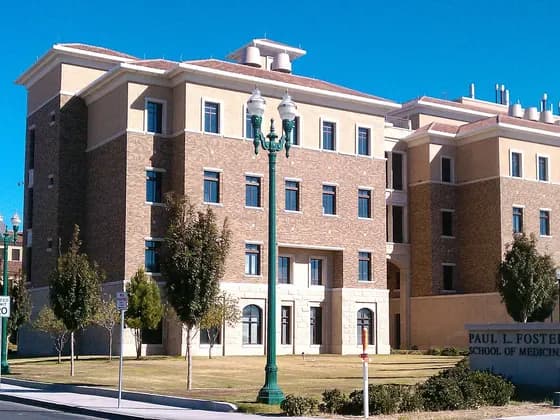
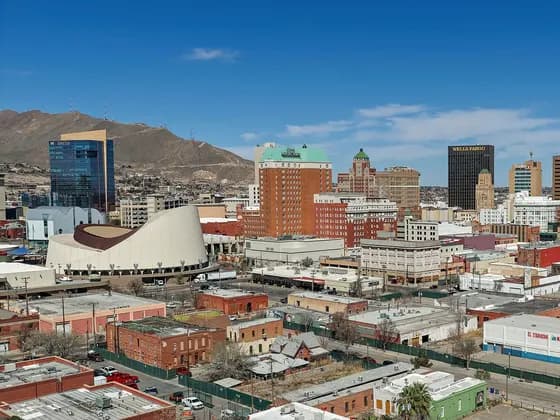
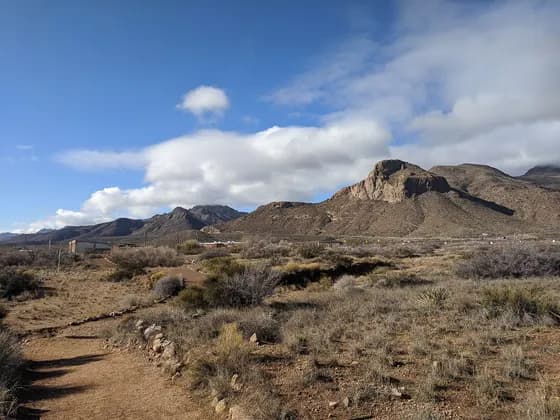
Photo: CDonn3, Dicklyon · Public domain · cropped
Photo: CDonn3 · Public domain · Photo: Quintin Soloviev · CC BY 4.0 · Photo: Susan Barnum · CC BY-SA 4.0
How to get into TTUHSC El Paso Hunt School of Dental Medicine (DMD) dentistry
Step-by-step: entry requirements, admission tests, personal statement, interview format and the key deadlines.
Open the guide →TTUHSC El Paso Hunt School of Dental Medicine (DMD) entry requirements
Admission profile, interview format, decision dates and what makes TTUHSC El Paso Hunt School of Dental Medicine (DMD) different.
See the profile →The TTUHSC El Paso Hunt School of Dental Medicine (DMD) dentistry interview
Texas Tech University Health Sciences Center El Paso Hunt School of Dental Medicine uses a structured interview format — traditional or MMI-style sessions at its El Paso campus. This school is the only dental school on the US-Mexico border and the first dental school in El Paso’s history, established in 2020.
The school’s border health mission is central to the interview. Interviewers probe genuine commitment to serving Hispanic, bilingual, and border communities with significant oral health disparities. Spanish-language ability is valued but not required.
The school applies via TMDSAS — Texas residency is essential, ~90% of seats are reserved for Texas residents. This is a newer program with evolving infrastructure but a strong mission identity.
TTUHSC El Paso Hunt School of Dental Medicine (DMD) interview at a glance (2027 entry)
| Annual DMD class size | ~60 |
|---|---|
| Interview format | Traditional or MMI-style structured |
| DAT required | Yes — via TMDSAS |
| Tuition (2025–26) | ~USD 22,000 (in-state) / USD 42,000 (out-of-state) |
| Application system | TMDSAS — NOT ADEA AADSAS |
| Interview window | October–February |
Interview format
- Structured interview: traditional or MMI-style stations.
- Border health mission is a central interview theme.
- Spanish-language proficiency is valued.
- Campus tour and student interaction typically included.
Sample interview questions
Why El Paso? The US-Mexico border has among the highest rates of dental disease and some of the lowest rates of dental care access in the United States. What draws you to training and potentially practicing here?
What they are listening for:
- El Paso oral health data
- Colonias communities
- US-Mexico border health disparities
- Spanish-language clinical practice
Be specific and genuine.
A large proportion of El Paso's dental patients are Spanish-speaking and uninsured or underinsured. What structural barriers to dental access exist in this community, and what can a dentist do?
What they are listening for:
- Federally Qualified Health Centers
- CHIP dental
- documentation barriers
- linguistic barriers
- Medicaid dental gaps in Texas
- border community trust
You are treating a monolingual Spanish-speaking patient who is fearful of dental treatment. How do you approach this appointment?
Professional interpreter use, dental anxiety management, cultural competence, building trust through respectful non-verbal communication even across language barriers.
A patient is willing to pay you directly for care, but mentions they are undocumented and afraid of providing identifying information. How do you approach this?
ADA ethics — non-discrimination, patient dignity, privacy. Dental care can be provided without immigration status information. Patient welfare is the primary obligation.
TTUHSC El Paso is a very new dental school still developing its infrastructure. What draws you to training in a newer program rather than an established one?
Pioneering spirit, shaping school culture, mission alignment over prestige, practical advantages of a smaller and newer class size and close faculty relationships.
What do you know about oral health in the Colonias — the unincorporated border communities around El Paso — and why is this relevant for a dental school located here?
Colonias lack basic water and sanitation infrastructure, leading to high fluorosis risk and dental disease. Dental school mission and community partnerships.
Describe your Spanish-language ability and how you have used or plan to develop it for clinical dental practice.
Honest self-assessment, specific examples of Spanish use in healthcare or community settings, plans to continue language development. Do not exaggerate.
How does TTUHSC El Paso's location on the US-Mexico border shape the kind of dentist you could become that other training environments cannot?
What they are listening for:
- Bilingual clinical practice
- border health context
- exposure to patient demographics rarely encountered elsewhere
- cultural competence as a genuine skill built through daily practice
As a newer dental school, TTUHSC El Paso is still building its clinical infrastructure. How do you think about patient safety and the quality of student-delivered care in a developing program?
What they are listening for:
- Supervision standards
- CODA accreditation requirements
- patient informed consent regarding student care
- faculty oversight
- student responsibility to report concerns
Why dentistry rather than medicine for serving border communities?
What they are listening for:
- Oral health as a gateway to systemic health
- dentistry's unique access model
- dental disease prevalence in this population specifically
- cost-effectiveness of prevention
Role-play: a monolingual Spanish-speaking mother brings her young child to your El Paso clinic with visible early-childhood decay. She is embarrassed and worried she will be blamed. The interpreter is present. Show me how you would open this conversation.
What they are listening for:
- Non-judgmental warmth
- working smoothly through the interpreter while addressing the mother directly
- validating that she sought care
- offering practical prevention
The interviewer is watching cultural sensitivity and how you avoid shaming.
The Colonias around El Paso often lack reliable water and sanitation infrastructure. How would you reason about whether dental disease patterns there are driven mainly by water issues, access, diet, or a combination?
Multiple interacting determinants, the difficulty of isolating one cause, the role of non-fluoridated or contaminated water, access and language barriers, and what data you would need. Show structured public-health reasoning specific to the border.
As a founding-era cohort at a brand-new dental school, you will help shape protocols and culture. How do you learn and contribute in an environment where systems are still being built?
What they are listening for:
- Adaptability
- comfort with ambiguity
- initiative in giving constructive feedback
- self-directed learning
Tie it to the genuine reality of training in a developing program rather than treating it as a drawback.
A patient who is undocumented confides that he avoided care for years for fear of immigration consequences, and asks whether seeking treatment now is 'safe'. How do you respond?
Reassure within what is true (clinical care does not require immigration status, privacy of the encounter), avoid overpromising on matters outside dentistry, and center his welfare and dignity. ADA ethics on non-discrimination.
How would you, with limited Spanish, make a frightened bilingual teenager comfortable during their first dental visit while the interpreter handles the clinical detail?
Honest use of the Spanish you do have, warm non-verbal cues, addressing the patient not just the interpreter, tell-show-do, and not exaggerating your fluency. Shows realistic cross-language rapport-building.
Practise the TTUHSC El Paso Hunt School of Dental Medicine (DMD) interview
Rehearse the real format before the day — on demand with our AI interviewers, or live with a tutor.
Sit a mock with photoreal AI interviewers — any time
A timed MMI or panel interview on video — American & international voices — with interviewers who listen, react and press with follow-ups. Rubric-scored feedback and a replay the moment you finish.






Live mocks with a tutor who’s been in the room
A full TTUHSC El Paso Hunt School of Dental Medicine (DMD)-style mock with a medic or dentist tutor — honest scoring against real marking criteria, a station-by-station debrief and a written action plan.
Book a mock interviewHow to prepare for the TTUHSC El Paso Hunt School of Dental Medicine (DMD) interview
Common pitfalls to avoid
TTUHSC El Paso Hunt School of Dental Medicine (DMD) interview — frequently asked questions
Sources & official admissions information
Ready to nail your TTUHSC El Paso Hunt School of Dental Medicine (DMD) interview?
Book a mock interview with a tutor who knows the US interview formats, orpractice unlimited stations from our interview question bank.