
UTHealth Houston School of Dentistry Interview
Format, Questions & Prep Tips
UTHealth Houston School of Dentistry dentistry interviews for 2027 entry are a traditional interview, held October 2026 through February 2027. Published figures: Annual DDS class size ~105; Tuition (2025–26) ~USD 22,000 (in-state) / USD 42,000 (out-of-state).
- Institution
- University of Texas Health Science Center at Houston School of Dentistry
- Interview (2027 entry)
- October through February
- Decisions (2027 entry)
- TMDSAS uniform notification dates; rolling offers
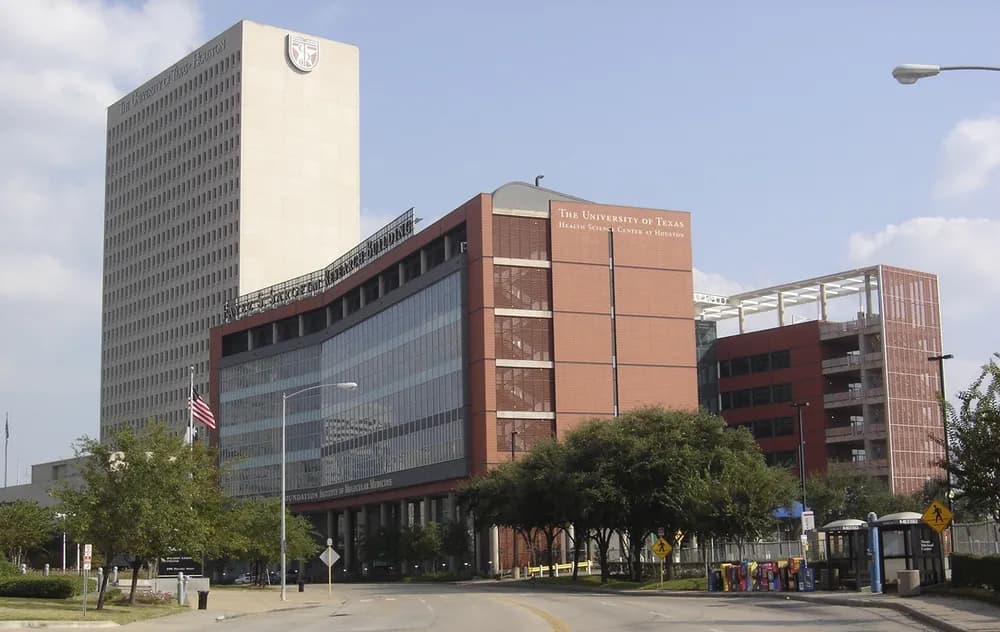
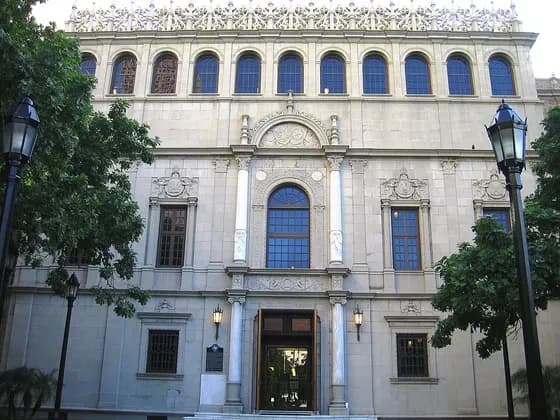
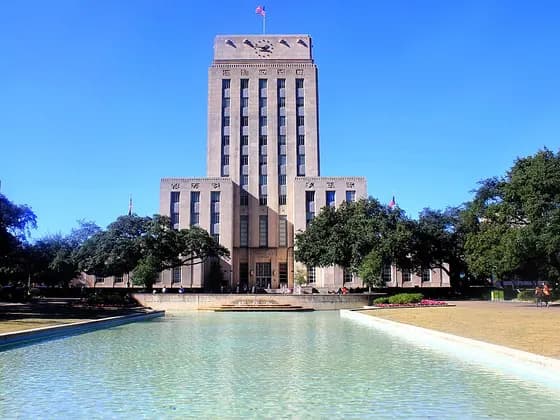

Photo: Zereshk · CC BY 3.0 · cropped
Photo: Riofriotex · CC BY-SA 4.0 · Photo: Yinan Chen · Public Domain · Photo: Michael Barera · CC BY-SA 4.0
How to get into UTHealth Houston School of Dentistry (DDS) dentistry
Step-by-step: entry requirements, admission tests, personal statement, interview format and the key deadlines.
Open the guide →UTHealth Houston School of Dentistry (DDS) entry requirements
Admission profile, interview format, decision dates and what makes UTHealth Houston School of Dentistry (DDS) different.
See the profile →The UTHealth Houston School of Dentistry (DDS) dentistry interview
University of Texas Health Science Center at Houston School of Dentistry (UTHealth Houston) uses a traditional interview format — one-on-one or panel sessions with faculty at its Texas Medical Center campus in Houston. UTHealth Houston is one of the oldest and most established public dental schools in the US, founded in 1905 and located within the world’s largest medical complex.
The school applies via TMDSAS — Texas residency is critical, ~90% of seats are reserved for Texas residents. Houston’s extraordinary demographic diversity — the most ethnically diverse major city in the United States — is a central feature of clinical training and interview discussion.
Interviewers probe Texas community commitment, cultural competence, dental experience, and awareness of Houston’s distinct oral health landscape.
UTHealth Houston School of Dentistry (DDS) interview at a glance (2027 entry)
| Annual DDS class size | ~105 |
|---|---|
| Interview format | Traditional — faculty session(s) |
| DAT required | Yes — via TMDSAS |
| Tuition (2025–26) | ~USD 22,000 (in-state) / USD 42,000 (out-of-state) |
| Application system | TMDSAS — NOT ADEA AADSAS |
| Interview window | October–February |
Interview format
- Traditional faculty one-on-one or panel session; approximately 30–45 minutes.
- Texas Medical Center location — interprofessional training discussed.
- TMDSAS application — Texas residency essential.
Sample interview questions
UTHealth Houston sits in the Texas Medical Center — the world's largest medical complex. How would you take advantage of this unique training environment as a dental student?
What they are listening for:
- Interprofessional education
- access to hospital-based oral health care
- research opportunities at MD Anderson or UTHealth institutes
- exposure to rare and complex cases
Houston is the most ethnically diverse major city in the United States and has a large uninsured population. What does this mean for oral health access in the city, and how does UTHealth Dental address it?
What they are listening for:
- High uninsured rate in Texas
- linguistic diversity in patient communication
- UTHealth dental clinics as safety-net providers
- community health rotations
A patient requests a procedure that is cosmetic and expensive. They are on a fixed income and you are concerned they are financially overextending themselves. How do you handle this?
Respecting patient autonomy, informed financial consent, alternative treatment options, the dentist's obligation to disclose costs and help patients make informed decisions.
Houston has a large Vietnamese and Chinese-speaking population, as well as a large Spanish-speaking population. You see a patient who speaks little English. How do you conduct the appointment?
What they are listening for:
- Professional interpreter services
- non-verbal communication techniques
- managing dental anxiety across language barriers
- cultural competence
Why UTHealth Houston specifically among the Texas dental schools?
What they are listening for:
- Texas Medical Center
- Houston patient diversity
- specific faculty or research programs
- clinical volume and case complexity
- Houston as Texas's largest city
Texas has not expanded Medicaid. What does this mean for dental care access in Houston, and what can dentists do in this context?
What they are listening for:
- Texas Medicaid dental coverage gaps
- CHIP for children
- community health centers
- NHSC loan repayment
- FQHCs in the Houston area
Houston is a high-pressure, high-volume training environment. How do you manage stress and maintain clinical focus when you are tired or overwhelmed?
What they are listening for:
- Self-awareness
- specific strategies for maintaining focus and quality under pressure
- patient safety primacy
- willingness to ask for help
What research is happening at UTHealth Houston School of Dentistry, and how might you engage with it during your training?
What they are listening for:
- Research in oral biology
- implantology
- periodontal regeneration
- oral health disparities
Shows genuine school-specific preparation.
You find out that a dental supply company rep gave a faculty member a gift. Does this concern you? What are the ethical issues?
What they are listening for:
- ADA ethics on conflicts of interest
- ADEA guidelines on industry relationships in dental education
- patient welfare vs. commercial interests
What makes Houston the right city for you to train in as a future dentist?
What they are listening for:
- Personal ties to Texas or Houston
- patient diversity as a clinical training asset
- Texas Medical Center research environment
- post-graduation Texas practice intent
Role-play: a patient who speaks little English arrives at your Houston clinic anxious about an extraction, gesturing that they are in pain. The interpreter is being arranged. Show me how you would reassure and orient them in the meantime.
What they are listening for:
- Calm non-verbal communication
- acknowledging pain
- simple gestures and any shared words
- avoiding consent-level discussion until the interpreter arrives
The interviewer wants composure and respect across a language barrier in a high-diversity setting.
Texas has one of the highest uninsured rates in the country and did not expand Medicaid. If you saw data showing low dental-visit rates in Houston, how would you separate the effects of insurance, language, and geography?
What they are listening for:
- Disaggregate by coverage status
- language
- neighborhood
- clinic type; consider confounding and self-report limits
Connect to safety-net and FQHC roles. Show you reason about overlapping structural barriers rather than a single cause.
Being inside the Texas Medical Center gives access to hospital-based care, MD Anderson, and research institutes. How would you decide whether to pursue a research project during dental school, and what would you want from it?
What they are listening for:
- Honest interest level
- a concrete area (e.g. oral-systemic links, oral cancer, regeneration)
- realistic time management
- the value of research literacy even for a clinician
Tie it to UTHealth Houston's genuine TMC resources.
A hospitalized patient on the oral-medicine service has a poor prognosis, and a family member asks you privately not to mention a suspicious oral lesion to the patient to 'spare them'. How do you respond?
What they are listening for:
- Patient's right to information
- capacity and autonomy
- sensitive disclosure rather than concealment
- involving the supervising team
- cultural humility about family dynamics
ADA ethics on honesty and patient welfare.
How would you explain to a patient on a fixed income, without making them feel pressured, that a cheaper interim option exists alongside the ideal treatment you would normally recommend?
What they are listening for:
- Transparent presentation of options and trade-offs
- no upselling
- respect for their financial reality
- shared decision-making
Demonstrate the honest, patient-centered communication a diverse safety-net setting demands.
Practise the UTHealth Houston School of Dentistry (DDS) interview
Rehearse the real format before the day — on demand with our AI interviewers, or live with a tutor.
Sit a mock with photoreal AI interviewers — any time
A timed MMI or panel interview on video — American & international voices — with interviewers who listen, react and press with follow-ups. Rubric-scored feedback and a replay the moment you finish.






Live mocks with a tutor who’s been in the room
A full UTHealth Houston School of Dentistry (DDS)-style mock with a medic or dentist tutor — honest scoring against real marking criteria, a station-by-station debrief and a written action plan.
Book a mock interviewHow to prepare for the UTHealth Houston School of Dentistry (DDS) interview
Common pitfalls to avoid
UTHealth Houston School of Dentistry (DDS) interview — frequently asked questions
Sources & official admissions information
Ready to nail your UTHealth Houston School of Dentistry (DDS) interview?
Book a mock interview with a tutor who knows the US interview formats, orpractice unlimited stations from our interview question bank.