
University of Missouri-Columbia School of Medicine Interview
Format, Questions & Prep Tips
University of Missouri-Columbia School of Medicine medicine interviews for 2027 entry are a traditional interview. Published figures: Annual MD class size ~120; Interview format Traditional — faculty + student, ~30–45 min each; Notable Home of America's first student-run free clinic (1994).
- Institution
- University of Missouri-Columbia School of Medicine
- Interview (2027 entry)
- October through February; rolling invitations after secondary review
- Decisions (2027 entry)
- Rolling decisions; final offers by late March; waitlist activity through summer

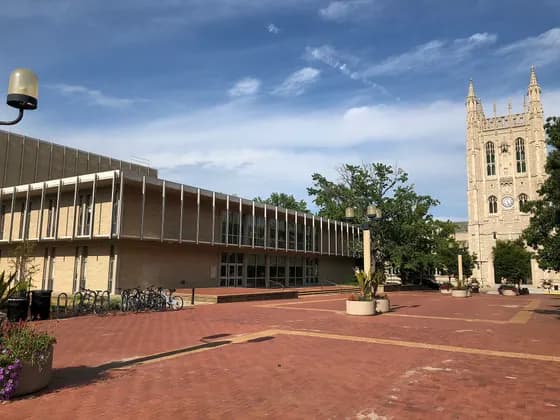
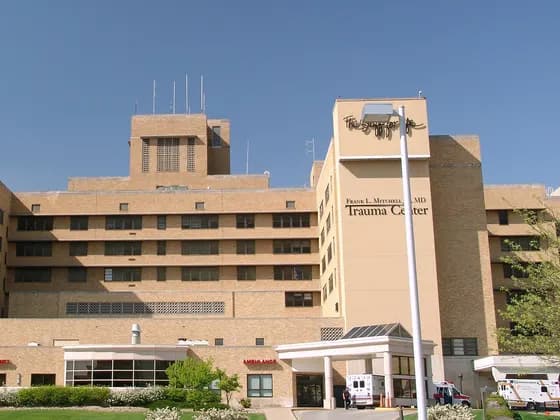

Photo: Fresaj · CC BY-SA 3.0 · cropped
Photo: Grey Wanderer · CC BY-SA 4.0 · Photo: BCFDFF · CC BY-SA 3.0 · Photo: mostateparks · Public domain
How to get into University of Missouri-Columbia School of Medicine (MD) medicine
Step-by-step: entry requirements, admission tests, personal statement, interview format and the key deadlines.
Open the guide →University of Missouri-Columbia School of Medicine (MD) entry requirements
Admission profile, interview format, decision dates and what makes University of Missouri-Columbia School of Medicine (MD) different.
See the profile →The University of Missouri-Columbia School of Medicine (MD) medicine interview
The University of Missouri-Columbia School of Medicine uses a traditional interview format with faculty physicians and medical students in one-on-one sessions of approximately 30–45 minutes. Mizzou School of Medicine is the home of America’s first student-run free clinic (established 1994) — a fact that embodies the school’s deep service orientation and shapes every aspect of its admissions culture.
Expect questions that probe the AAMC Premed Competencies, with emphasis on service orientation, rural Missouri health commitment, and interpersonal maturity. Missouri residents are strongly preferred; out-of-state applicants must make a compelling case for their Missouri ties.
The interview day includes a tour of MU Health Care facilities — a comprehensive academic medical center in Columbia — and opportunities to interact informally with current students who are often enthusiastic ambassadors for the school’s mission.
University of Missouri-Columbia School of Medicine (MD) interview at a glance (2027 entry)
| Annual MD class size | ~120 |
|---|---|
| Interview format | Traditional — faculty + student, ~30–45 min each |
| Application system | AMCAS + Mizzou secondary |
| Interview window | October–February |
| Clinical training | MU Health Care (Columbia) and affiliated rural/community sites |
| Notable | Home of America's first student-run free clinic (1994) |
Interview format
- Traditional one-on-one interviews: one faculty physician and one medical student in separate sessions.
- Sessions approximately 30–45 minutes; open-ended and conversational.
- Interviewers have read the full application in advance.
- Interview day: MU Health Care tour, admissions briefing, student Q&A panel, student host pairing.
- No MMI format; holistic evaluation heavily weights service history and rural commitment.
- Student-run free clinic is often referenced — candidates should be familiar with its history and mission.
Working towards the MCAT score University of Missouri-Columbia School of Medicine (MD) expects? Build a week-by-week plan from your test date — free for the first two weeks.
Sample interview questions
Mizzou School of Medicine is home to America's first student-run free clinic. What does that tell you about the school's values, and how does it align with yours?
Shows research. Connect the free clinic to your own service history. Reflect on what student-run healthcare models do and don't achieve — intellectual depth is valued over pure admiration.
Missouri has significant rural and frontier health access challenges — the Bootheel, the Ozarks, and rural northwest Missouri all have physician shortages. Where in Missouri do you see yourself practicing?
Name a specific region. Demonstrate that your rural commitment is geographically concrete. If you are from a rural Missouri community, say so.
A patient in a rural Missouri community is driving two hours each way for a specialist appointment they cannot afford. As their primary care physician, what options do you explore?
What they are listening for:
- Telehealth referral
- 340B pharmacy assistance
- community health worker engagement
- co-management with a rural generalist
Do not simply accept the barrier as fixed.
Missouri has had contentious debates around scope of practice expansion for nurse practitioners and physician assistants. As a future physician, how do you think about team-based care and scope?
Balanced answer: acknowledge the evidence for advanced practice provider effectiveness in primary care, the workforce access benefits in rural Missouri, and the physician's role in team leadership and complex care.
Tell me about a service experience that fundamentally changed how you think about medicine or health.
STAR. The experience does not need to be clinical — community service, advocacy, or public health work that produced a genuine value shift is equally compelling.
Missouri's Bootheel region has some of the highest rates of poverty and chronic disease in the Midwest. What structural factors drive this, and how should the healthcare system respond?
What they are listening for:
- Historical cotton economy
- racial segregation legacy
- limited FQHC coverage
- Medicaid eligibility gaps (prior to any expansion)
Structural poverty → chronic disease cascade.
You volunteer at the student-run free clinic and realize that a patient's care has fallen through the cracks between their visits. There is no attending physician on site at that moment. What do you do?
Patient safety in a student-run clinic context. Know the escalation protocol. Do not proceed with care beyond your competency. Immediately contact a supervising physician.
Describe a time you worked with a team that was not functioning well. What was your role, and what did you do to improve the situation?
STAR. Teamwork and leadership under dysfunction. Demonstrate that you could diagnose the team problem and take constructive action without authority.
What specialty are you considering, and how does Mizzou's training environment prepare you for that career path?
Reference MU Health Care's specific clinical programs (Missouri Cancer Associates, University Hospital Trauma Center, etc.) that align with your specialty interest.
Should medical schools have an obligation to train physicians who will practice in rural areas, even if this means adjusting admissions criteria to prioritize rural background?
Pipeline argument for rural-focused admissions (rural origin predicts rural practice). Weigh against academic standard concerns. Reference AAMC data on rural origin and rural practice correlation.
Rural Missouri counties have markedly fewer physicians per capita than the Columbia or St. Louis metros, and the gap has been widening for years. If you were advising the state on the single most effective lever to reverse that trend, what would you choose and why?
Engage with the evidence: rural-origin admissions and rural training tracks (like Mizzou's) most strongly predict rural practice, ahead of loan forgiveness alone. Acknowledge trade-offs and that no single lever is sufficient.
Role play: you are a student volunteer at the MU Student-Run Free Clinic. A returning patient is frustrated because their blood-pressure medication ran out two weeks ago and they could not get a refill between visits. The supervising physician is with another patient. How do you handle the encounter?
Acknowledge the frustration and apologize for the gap without blaming the clinic. Stay within your competency, prioritize safety, and escalate to the supervising physician for the prescribing decision while problem-solving the continuity issue (recall systems, pharmacy assistance).
Tell me about a time you earned the trust of a community or group that was initially skeptical of you or your role. What did you do?
STAR. Rural and underserved practice depends on earned credibility over time. Emphasize listening, showing up consistently, and humility rather than a single persuasive moment.
A long-time patient in a small Missouri town asks you to treat their adult child, who is also your patient, and casually shares personal details about them 'since you know us both.' How do you handle overlapping relationships in a tight-knit rural community?
Confidentiality does not relax because a town is small. Address boundary-setting, the risks of dual relationships, and how rural physicians maintain professionalism while remaining embedded in the community they serve.
Beyond the free clinic, what does Mizzou's emphasis on service mean for the kind of physician you want to become 10 years from now? Be concrete about where and how.
Tie service to a specific future practice picture (a named region, population, or care model) rather than restating admiration for the clinic. Show that service is a sustained trajectory, not an admissions talking point.
Practise the University of Missouri-Columbia School of Medicine (MD) interview
Rehearse the real format before the day — on demand with our AI interviewers, or live with a tutor.
Sit a mock with photoreal AI interviewers — any time
A timed MMI or panel interview on video — American & international voices — with interviewers who listen, react and press with follow-ups. Rubric-scored feedback and a replay the moment you finish.





Live mocks with a tutor who’s been in the room
A full University of Missouri-Columbia School of Medicine (MD)-style mock with a medic or dentist tutor — honest scoring against real marking criteria, a station-by-station debrief and a written action plan.
Book a mock interviewHow to prepare for the University of Missouri-Columbia School of Medicine (MD) interview
Common pitfalls to avoid
University of Missouri-Columbia School of Medicine (MD) interview — frequently asked questions
Sources & official admissions information
Ready to nail your University of Missouri-Columbia School of Medicine (MD) interview?
Book a mock interview with a tutor who knows the US interview formats, orpractice unlimited stations from our interview question bank.