
KCU-Joplin COM Interview
Format, Questions & Prep Tips
KCU-Joplin COM medicine interviews for 2027 entry are a traditional interview, held September 2026 through February 2027. Published figures: Annual DO class size ~155 students (Joplin campus); MCAT median (est.) ~505.
- Institution
- Kansas City University College of Osteopathic Medicine Joplin
- Interview (2027 entry)
- September through February
- Decisions (2027 entry)
- Rolling decisions after interview

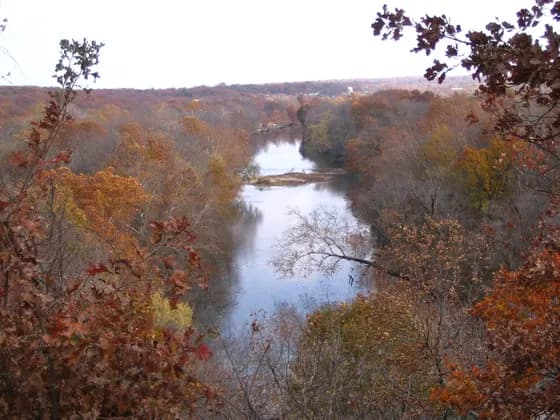
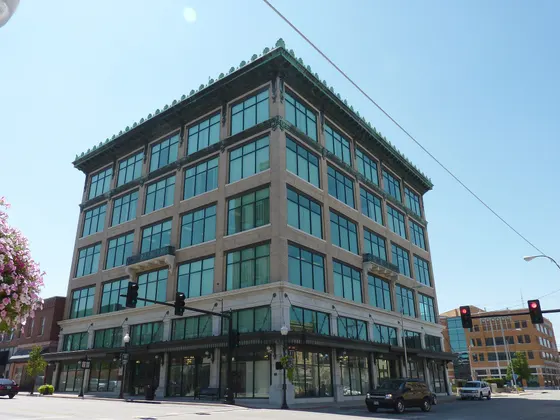
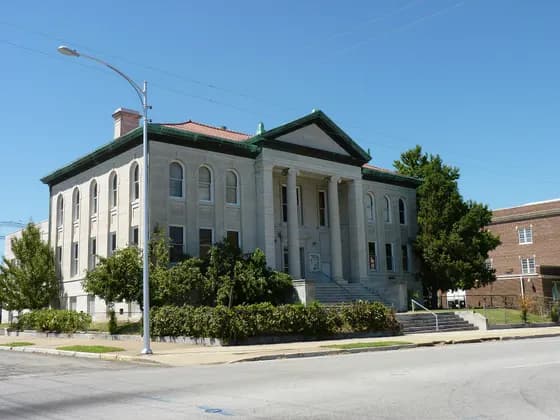
Photo: EJParnell · CC BY-SA 4.0 · cropped
Photo: AbeEzekowitz · CC BY 3.0 · Photo: AbeEzekowitz · CC BY-SA 3.0 · Photo: AbeEzekowitz · CC BY-SA 3.0
How to get into KCU-Joplin COM (DO) medicine
Step-by-step: entry requirements, admission tests, personal statement, interview format and the key deadlines.
Open the guide →KCU-Joplin COM (DO) entry requirements
Admission profile, interview format, decision dates and what makes KCU-Joplin COM (DO) different.
See the profile →The KCU-Joplin COM (DO) medicine interview
Kansas City University College of Osteopathic Medicine Joplin campus (KCU-Joplin), opened in 2017, serves the Four States region (Missouri, Kansas, Arkansas, Oklahoma) — one of the most chronically underserved rural corridors in the Midwest. KCU-Joplin uses a traditional interview format and carries KCU’s long osteopathic heritage into a distinctly rural clinical training environment.
KCU-Joplin does **not currently require CASPer. Applications go through AACOMAS**, with rolling admissions favoring early submission. The Joplin campus is smaller than Kansas City and has a tight-knit community atmosphere.
Joplin’s interview day emphasizes rural Four States medicine and community resilience — the city’s recovery from the 2011 F5 tornado that killed 161 people and destroyed its main hospital is woven into the campus identity. Interviewers want applicants who understand this specific regional context.
KCU-Joplin COM (DO) interview at a glance (2027 entry)
| Annual DO class size | ~155 students (Joplin campus) |
|---|---|
| Interview format | Traditional — two one-on-one sessions (faculty + student) |
| CASPer required | No |
| Application system | AACOMAS primary + KCU secondary |
| Interview window | September–February |
| MCAT median (est.) | ~505 |
Interview format
- Two one-on-one sessions: faculty physician and current student; ~25–30 minutes each.
- Campus tour of Joplin facilities.
- Regional context discussion — Joplin community health and Four States region frequently referenced.
Working towards the MCAT score KCU-Joplin COM (DO) expects? Build a week-by-week plan from your test date — free for the first two weeks.
Sample interview questions
Joplin was devastated by an F5 tornado in 2011 that killed 161 people and destroyed its main hospital. The community rebuilt, and KCU established a campus here in 2017. What does this story mean to you as someone choosing to train in Joplin?
What they are listening for:
- Community resilience
- disaster medicine
- the critical importance of healthcare infrastructure in small cities
- your personal connection to rebuilding and serving communities through medicine
The Four States region of Missouri, Kansas, Arkansas, and Oklahoma has significant rural primary care shortages. Why do you want to train in and potentially practice in this region?
Ozarks rural health context, agricultural community medicine, the specific health burdens of Southwest Missouri (chronic disease, opioid epidemic, mental health access), and concrete ties to the Four States area if applicable.
A rural Missouri patient has been diagnosed with cancer and you recommend transferring to a larger center for treatment. She refuses to leave her farm and her elderly husband. How do you proceed?
What they are listening for:
- Patient autonomy
- the rural patient's attachment to place and family obligation
- shared decision-making
- teleoncology and remote treatment coordination
- the ethics of advocating for transfer while respecting refusal
How would you communicate a serious diagnosis to a patient in rural Southwest Missouri who has limited health literacy and has never been outside the region?
What they are listening for:
- Plain language
- health literacy assessment
- teach-back method
- culturally grounded communication in rural Ozarks context
- using visual or written aids
What experience do you have in rural Four States or comparable Ozarks communities?
Be specific and honest. Family medicine shadowing in rural Missouri, free clinic work in underserved areas, agricultural health, or church-based health ministry all apply in this context.
You notice your rural clinic is being asked to see significantly more patients per hour than is safe. You are a third-year student — what do you do?
Patient safety first, appropriate escalation to a supervisor, ACGME/medical student rights, and the ethical obligation to speak up even as a trainee without burning the clinical relationship.
What specifically drew you to the Joplin campus rather than the Kansas City campus of KCU?
What they are listening for:
- Rural training environment
- Four States clinical network
- smaller campus community
- lower cost of living
- Joplin community health mission
- personal connection to Southwest Missouri
Be deliberate — interviewers know some applicants choose Joplin by default.
How does OMT specifically apply to the occupational health needs of farmers and rural laborers in Southwest Missouri?
Musculoskeletal injuries from agricultural work, OMT for back pain and repetitive strain, the value of in-office manipulation when PT access is limited, and managing chronic pain without over-reliance on opioids in the Ozarks opioid epidemic context.
You are a third-year student in a rural Four States clinic. A farmer in his 60s comes in with weeks of worsening shortness of breath but says he 'can't afford to be sick' during harvest and wants to leave with antibiotics. The room is the patient — talk to him.
Acknowledge his time and livelihood pressures, take a focused history, explain why his symptoms need evaluation without dismissing his concerns, and negotiate a realistic next step (same-day workup, follow-up timing). Show empathy for rural agricultural realities while not abandoning safety.
Southwest Missouri counties around Joplin consistently rank in the bottom quartile of Missouri counties for health outcomes despite Mercy Hospital being rebuilt. What might explain a gap between hospital capacity and population health metrics?
Distinguish acute-care infrastructure from upstream social determinants — primary care and specialist shortage, poverty, health literacy, chronic disease prevalence, and access barriers (transport, insurance). Show that a hospital alone does not move population-level metrics.
KCU shares one curriculum across Kansas City and Joplin. Tell us about a time you had to master a large volume of material quickly. What study system did you build and how would it transfer to the preclinical years here?
Describe a concrete, self-aware study system (spaced repetition, active recall, integrated systems-based learning) and link it to the demands of an integrated DO preclinical curriculum culminating in COMLEX-USA Level 1. Avoid vague 'I work hard' answers.
A patient's adult daughter calls you, frustrated that her father keeps missing appointments at your Joplin clinic because he lives 40 minutes out and no longer drives at night. How do you respond?
What they are listening for:
- Listen to the caregiver's frustration
- problem-solve around rural transport barriers (telehealth, daytime scheduling, community resources)
- respect patient confidentiality and consent boundaries
- treat the family as part of the care team
A long-time patient brings you a generous gift after you helped his family through a difficult illness. In a small Joplin community where you'll see him for years, how do you handle it?
What they are listening for:
- Professional boundaries
- gratitude vs. obligation
- the heightened dual-relationship dynamics of small-community practice
- gracious ways to decline or limit gifts without damaging trust
Osteopathic medicine emphasizes treating the whole person, not just the disease. Describe a non-clinical experience that shaped how you see a patient as a whole person in their family and community context.
Connect a genuine lived experience to osteopathic philosophy (body as a unit, self-regulation, structure-function) and to the Four States community-embedded model. Avoid reciting tenets without a personal anchor.
The opioid overdose rate in the rural Ozarks has risen sharply over the past decade. As a future osteopathic physician here, what role could OMT and integrated primary care realistically play, and what are its limits?
OMT as one non-pharmacological tool for chronic musculoskeletal pain, the value of in-office manipulation where PT access is limited, balanced against the need for MAT, behavioral health, and harm reduction. Show you won't overstate OMT as a cure-all.
Practise the KCU-Joplin COM (DO) interview
Rehearse the real format before the day — on demand with our AI interviewers, or live with a tutor.
Sit a mock with photoreal AI interviewers — any time
A timed MMI or panel interview on video — American & international voices — with interviewers who listen, react and press with follow-ups. Rubric-scored feedback and a replay the moment you finish.




Live mocks with a tutor who’s been in the room
A full KCU-Joplin COM (DO)-style mock with a medic or dentist tutor — honest scoring against real marking criteria, a station-by-station debrief and a written action plan.
Book a mock interviewHow to prepare for the KCU-Joplin COM (DO) interview
Common pitfalls to avoid
KCU-Joplin COM (DO) interview — frequently asked questions
Sources & official admissions information
Ready to nail your KCU-Joplin COM (DO) interview?
Book a mock interview with a tutor who knows the US interview formats, orpractice unlimited stations from our interview question bank.