
UMKC School of Medicine Interview
Format, Questions & Prep Tips
UMKC School of Medicine medicine interviews for 2027 entry are a traditional interview. Published figures: Annual MD class size ~100 (graduate-entry track); Interview format Traditional — faculty/physician + student panel, ~45 min; Notable 6-year BA/MD program also available (separate track).
- Institution
- University of Missouri-Kansas City School of Medicine
- Interview (2027 entry)
- October through February; rolling invitations after secondary review
- Decisions (2027 entry)
- Rolling decisions; final offers by late March; waitlist activity through summer

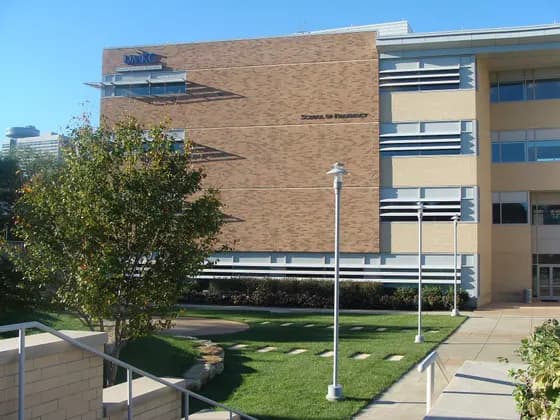
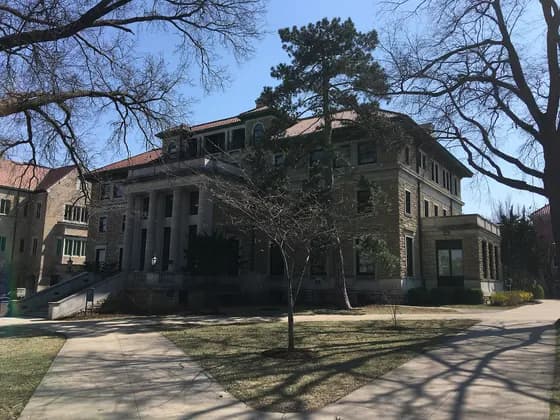

Photo: Voidxor · CC BY-SA 3.0 · cropped
Photo: Nightryder84 · CC BY-SA 3.0 · Photo: 1mikegrn · CC BY-SA 4.0 · Photo: User:Charvex · Public domain
How to get into UMKC School of Medicine (MD) medicine
Step-by-step: entry requirements, admission tests, personal statement, interview format and the key deadlines.
Open the guide →UMKC School of Medicine (MD) entry requirements
Admission profile, interview format, decision dates and what makes UMKC School of Medicine (MD) different.
See the profile →The UMKC School of Medicine (MD) medicine interview
The University of Missouri-Kansas City School of Medicine uses a traditional interview format with faculty physicians, practicing clinicians, and a medical student in panel sessions. UMKC is best known for its unique 6-year BA/MD program (admitting students directly from high school), but it also accepts graduate-entry applicants through a standard AMCAS pathway.
Expect questions that probe the AAMC Premed Competencies, with a strong emphasis on urban safety-net health orientation, interpersonal warmth, and commitment to Kansas City’s diverse and underserved patient population. Training at Truman Medical Centers — one of Missouri’s largest safety-net hospital systems — defines the clinical environment.
Graduate-entry applicants should clearly differentiate their track from the 6-year program and articulate why they chose the traditional route to UMKC’s mission-driven curriculum.
UMKC School of Medicine (MD) interview at a glance (2027 entry)
| Annual MD class size | ~100 (graduate-entry track) |
|---|---|
| Interview format | Traditional — faculty/physician + student panel, ~45 min |
| Application system | AMCAS + UMKC secondary |
| Interview window | October–February |
| Clinical training | Truman Medical Centers and Children's Mercy Hospital, Kansas City |
| Notable | 6-year BA/MD program also available (separate track) |
Interview format
- Traditional panel interview with faculty physicians and a medical student.
- Sessions approximately 45 minutes; conversational and values-oriented.
- Interviewers have read the full application in advance.
- Interview day: Hospital Hill campus tour, Truman Medical Center overview, Children's Mercy Hospital visit, admissions briefing, student panel.
- No MMI format; evaluation weights service orientation, urban health commitment, and interpersonal maturity.
- Graduate-entry vs. 6-year program distinction is discussed on interview day.
Working towards the MCAT score UMKC School of Medicine (MD) expects? Build a week-by-week plan from your test date — free for the first two weeks.
Sample interview questions
UMKC's clinical training is centered at Truman Medical Centers — one of Missouri's largest safety-net hospitals. Why does that environment appeal to you?
Be specific about Truman: urban trauma, high uninsured patient volume, diverse patient population. Connect to concrete experiences in similar settings.
UMKC offers both a 6-year BA/MD program and a graduate-entry track. Why did you choose the graduate-entry route, and what maturity does that bring to your candidacy?
Acknowledge the 6-year program's value while articulating what your post-undergraduate experiences add. Avoid implying the 6-year students are disadvantaged.
A Spanish-speaking patient in the ED cannot afford an interpreter through the hospital system and a family member offers to translate. Should you use the family member?
What they are listening for:
- Title VI language access requirements
- professional interpreter standards
- the risk of translation errors and confidentiality breaches
The family member should not be used for clinical decisions — a professional interpreter must be engaged.
Kansas City has significant health disparities between its predominantly Black urban core and predominantly White suburban communities. As a UMKC-trained physician, what is your responsibility to address this?
What they are listening for:
- Historical redlining
- KCMO segregation legacy
- current cardiovascular/maternal health disparities
Physician advocacy, community health worker models, and practice location choices are all relevant.
Role play: A parent brings their 5-year-old child to the pediatric clinic. You are the medical student. The parent is very anxious and keeps interrupting the history-taking. How do you manage the encounter?
Empathize with parental anxiety, use a structured but flexible approach, involve the child age-appropriately, and keep the conversation focused on the chief complaint.
Kansas City's Hospital Hill is a historic medical district that has undergone significant reinvestment. What are the current health challenges facing the communities surrounding UMKC's campus?
What they are listening for:
- East KCMO food deserts
- uninsured population
- violence-related trauma
- opioid epidemic
Shows genuine local knowledge beyond the campus itself.
You are on your pediatrics rotation at Children's Mercy and a parent refuses a recommended vaccine for their child based on misinformation. What do you do?
Motivational interviewing to explore specific concerns, correct misinformation with evidence, respect parental authority within limits, and document the discussion. Do not threaten or dismiss.
Tell me about a time you advocated for a patient or community member who was not receiving the care they needed. What did you do?
STAR. Urban safety-net medicine requires active patient advocacy. Show that advocacy is a practiced skill with concrete examples.
Children's Mercy Hospital is one of the top ranked children's hospitals in the US. If you are interested in pediatrics, how does UMKC's partnership shape your training goals?
Shows research. Reference Children's Mercy's specific programs (heart center, hematology/oncology, NICU). Relevant even for non-pediatrics applicants as a signal of UMKC's clinical network.
Should physicians who work at safety-net hospitals receive higher salaries to attract and retain talent in underserved settings? Who should fund this?
Health workforce equity question. Engage with the public/private pay disparity, loan repayment programs, and the structural disincentives for safety-net practice.
Within Kansas City, life expectancy on the predominantly Black east side is years shorter than in the wealthier southern suburbs, despite the same metro and many of the same hospitals. What drives a gap that persists even where care is geographically available?
Move past 'access' alone: historical redlining and disinvestment, food and transport deserts, chronic-disease burden, and differential treatment within the system. Connect to Truman's safety-net role and the physician's part in addressing structural drivers.
Role play: you are a student at Truman Medical Center. A patient who frequently uses the ED for primary-care needs is angry about a long wait and says 'nobody here actually cares about people like me.' Respond to them.
De-escalate by validating the experience rather than defending the system, then explore the underlying barriers driving repeat ED use (no primary-care home, work hours, insurance). Demonstrate empathy and a constructive pivot toward continuity options.
Frequent emergency-department use for primary-care-sensitive conditions is a recurring challenge at urban safety-net hospitals like Truman. What systemic interventions actually reduce it, and what is the physician's role within them?
Discuss patient navigation, co-located primary care, community health workers, FQHC linkage, and addressing social needs. Show you understand this as a system design problem, not patient non-compliance.
A teenager comes to a Truman clinic seeking confidential reproductive-health care and asks that nothing be shared with their parents. How do you weigh adolescent confidentiality against parental involvement?
Reference minor-consent provisions for sensitive services and the limits of confidentiality (safety risks). Emphasize building trust, encouraging family involvement where safe, and documenting appropriately — without breaching the adolescent's protected access.
As a graduate-entry applicant, what specifically have your post-undergraduate experiences taught you that you could not have learned coming straight out of high school into the 6-year program?
Be concrete and respectful of the 6-year pathway. Name maturity, lived clinical or service experience, and decision-making under uncertainty — and connect them to UMKC's urban, interpersonal-heavy environment.
Practise the UMKC School of Medicine (MD) interview
Rehearse the real format before the day — on demand with our AI interviewers, or live with a tutor.
Sit a mock with photoreal AI interviewers — any time
A timed MMI or panel interview on video — American & international voices — with interviewers who listen, react and press with follow-ups. Rubric-scored feedback and a replay the moment you finish.






Live mocks with a tutor who’s been in the room
A full UMKC School of Medicine (MD)-style mock with a medic or dentist tutor — honest scoring against real marking criteria, a station-by-station debrief and a written action plan.
Book a mock interviewHow to prepare for the UMKC School of Medicine (MD) interview
Common pitfalls to avoid
UMKC School of Medicine (MD) interview — frequently asked questions
Sources & official admissions information
Ready to nail your UMKC School of Medicine (MD) interview?
Book a mock interview with a tutor who knows the US interview formats, orpractice unlimited stations from our interview question bank.