Kansas City, MO, USEst. 1971

UMKC School of Medicine (MD) Medical School - 2027 Entry Requirements & Interview Format

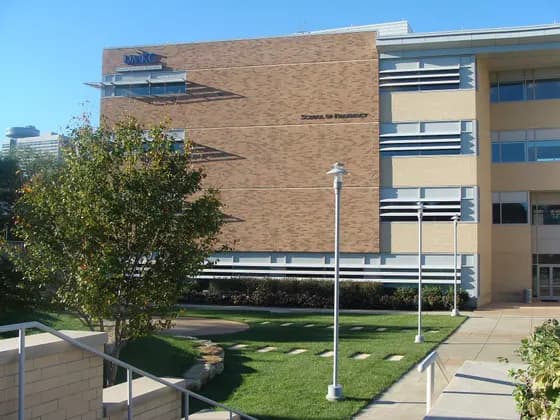
The University of Missouri-Kansas City School of Medicine, located on Kansas City's Hospital Hill, is distinctive for offering both a 6-year combined BA/MD programme (enrolling students directly from high school) and a standard 4-year graduate-entry MD. Founded in 1971, the school is tightly integrated with Truman Medical Centers (a major urban safety-net system) and Children's Mercy Kansas City. This clinical environment gives students broad exposure to urban medicine, health equity, and complex multi-morbidity. The school has particular strengths in primary care, paediatrics, and urban health.

Entry Requirements

What you need to apply to UMKC School of Medicine (MD).

Admission overview
Missouri residents strongly preferred. Bachelor's degree and MCAT required for graduate-entry track. Strong academic record, clinical experience, and urban/safety-net orientation valued. Application via AMCAS; secondary required.
MCAT median
505 (range 500–511)
GPA median
3.74 overall / 3.68 science (BCPM)
Acceptance rate
5.0%
Class size
100
In-state preference
Strong — primarily in-state
In-state matriculants
80%
CASPer
Not required
Holistic review emphasis
Urban medicine and safety-net commitment, Missouri residency, community service, primary care interest.
Notes
Estimates from public AAMC FACTS / AACOMAS / ADEA AADSAS / class-profile; verify current cycle.
Specialities offered
Primary Care, Paediatrics, Urban Medicine, Internal Medicine, Health Equity

Interview Format

How UMKC School of Medicine (MD) interviews applicants.

Format
Traditional interview (faculty, physician, and student interviewers)
Interview window
October–February
Decision date
March 30 (AAMC standard)
Post-interview chances
Estimated 25–35% of interviewees receive an offer; urban medicine orientation and Missouri ties are weighted.

What to expect at a UMKC School of Medicine (MD) interview

UMKC School of Medicine conducts traditional panel-style interviews with faculty and practicing physicians as well as a medical student. The interview day is held at the Kansas City campus and includes tours of affiliated hospitals (Truman Medical Center, Children's Mercy), an admissions briefing, and a student interaction session. Because UMKC operates a unique 6-year BA/MD programme, interviews may include questions specific to the integrated programme track if applicable. For standard graduate-entry applicants, interviewers focus on urban health service orientation, motivation, and interpersonal communication skills.

What makes UMKC School of Medicine (MD) different

Operates both a unique 6-year BA/MD programme (accepting students directly from high school) and a traditional graduate-entry track. Located in Kansas City's Hospital Hill district, students train at Truman Medical Centers, Children's Mercy Hospital, and a network of urban safety-net hospitals. Strong urban medicine and safety-net hospital clinical training.

Tutor insight

UMKC interviews are oriented toward urban safety-net medicine — prepare examples of work with economically disadvantaged, uninsured, or high-acuity populations. The Truman Medical Center connection is central to the school's identity; understanding Kansas City's urban health challenges will distinguish your application. If applying as a graduate-entry student, clarify your track clearly in your essays and interview — the 6-year programme is the more widely known UMKC track, and interviewers may probe your awareness of how the graduate-entry experience differs.
Prometheus
595 medicine questions inside

Interview questions matched to UMKC School of Medicine (MD)

Two questions our tutors flagged as a strong fit for UMKC School of Medicine (MD)’s interview style. Try answering them out loud, then open Prometheus for the model answers and follow-up tips.

MediumPanelQ1

Service Orientation: Rural Health and Physician Workforce Shortages

You grew up in a rural county where the nearest primary care physician was 45 miles away. Your grandmother drove three hours round-trip for specialist appointments and was once hospitalised because a preventable condition had gone unmanaged. You are now applying to a rural-track medical school programme. What motivates you, what challenges do you anticipate in practising in a rural setting, and how will you sustain your commitment over a career?

Likely follow-up · What federal and state programmes exist to incentivise physicians to practise in underserved rural areas?

3 expert tips in Prometheus
HardMMI · PanelQ2

US Healthcare Ethics: ACA Coverage Gap

A 38-year-old patient presents to your emergency department with a non-STEMI myocardial infarction. He is stabilised and treated. When you arrange follow-up care, you discover he is uninsured and lives in a state that did not expand Medicaid. His income falls into the coverage gap -- too high for Medicaid eligibility but too low to qualify for premium tax credits on the exchange. He cannot afford the cardiologist follow-up or the medications prescribed at discharge. What are your ethical obligations, and what practical steps can you take?

Likely follow-up · What is the coverage gap, and why does it exist in some states but not others?

3 expert tips in Prometheus

Ready to practise UMKC School of Medicine (MD)?

Book a school-specific mock interview with UMKC School of Medicine (MD) preselected.

Book a UMKC School of Medicine (MD) mock

UMKC School of Medicine (MD) - Frequently asked questions

Missouri residents strongly preferred. Bachelor's degree and MCAT required for graduate-entry track. Strong academic record, clinical experience, and urban/safety-net orientation valued. Application via AMCAS; secondary required.

Traditional interview (faculty, physician, and student interviewers). UMKC School of Medicine conducts traditional panel-style interviews with faculty and practicing physicians as well as a medical student. The interview day is held at the Kansas City campus and includes tours of affiliated hospitals (Truman Medical Center, Children's Mercy), an admissions briefing, and a student interaction session. Because UMKC operates a unique 6-year BA/MD programme, interviews may include questions specific to the integrated programme track if applicable. For standard graduate-entry applicants, interviewers focus on urban health service orientation, motivation, and interpersonal communication skills.

UMKC School of Medicine (MD) typically interviews in October–February.

Decisions are released March 30 (AAMC standard).

Operates both a unique 6-year BA/MD programme (accepting students directly from high school) and a traditional graduate-entry track. Located in Kansas City's Hospital Hill district, students train at Truman Medical Centers, Children's Mercy Hospital, and a network of urban safety-net hospitals. Strong urban medicine and safety-net hospital clinical training.
Reviewed by Isaac Butler-King, medical student at the University of Glasgow. Last reviewed: 6 June 2026 · NextGen MedPrep editorial team
UMKC School of Medicine (MD) | MCAT median 505, GPA & Interview Format | NGMP