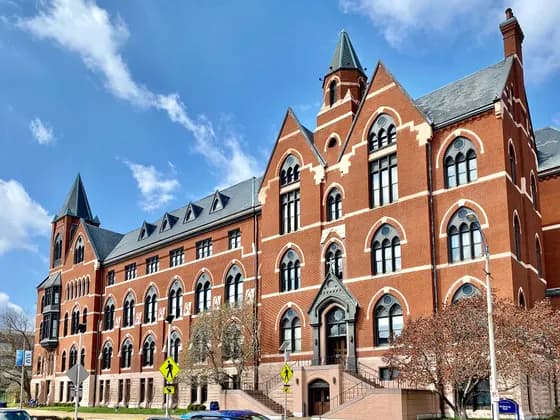
Saint Louis University School of Medicine (MD) Medical School - 2027 Entry Requirements & Interview Format
Saint Louis University School of Medicine, founded in 1836, is one of the oldest and most historically significant medical schools in the American Midwest and the nation's foremost Jesuit medical school. Located on SLU's south St. Louis campus adjacent to SSM Health Saint Louis University Hospital, it offers a rigorous MD curriculum grounded in the Jesuit tradition of cura personalis — care for the whole person — and a strong emphasis on social justice and service. The school has particular strengths in primary care, internal medicine, and biomedical research, with a growing focus on global health and health equity.
Entry Requirements
What you need to apply to Saint Louis University School of Medicine (MD).
Admission overview
Bachelor's degree and MCAT required. National applicant pool; no state residency preference. Strong academic record, clinical experience, community service, and evidence of Jesuit-aligned values (service, social justice) valued. Application via AMCAS; secondary required.
MCAT median
513 (range 508–518)
GPA median
3.80 overall / 3.75 science (BCPM)
Acceptance rate
3.5%
Class size
180
In-state preference
None
CASPer
Not required
Holistic review emphasis
Jesuit values alignment (cura personalis, social justice), service record, academic excellence, primary care interest.
Notes
Estimates from public AAMC FACTS / AACOMAS / ADEA AADSAS / class-profile; verify current cycle.
Specialities offered
Primary Care, Internal Medicine, Global Health, Biomedical Research, Health Equity
Interview Format
How Saint Louis University School of Medicine (MD) interviews applicants.
Format
Traditional interview (one-on-one faculty and student interviews, ~30–45 min each)
Interview window
October–February
Decision date
March 30 (AAMC standard)
Post-interview chances
Estimated 20–30% of interviewees receive an offer; holistic review with values alignment given significant weight.
What to expect at a Saint Louis University School of Medicine (MD) interview
SLU School of Medicine conducts traditional one-on-one interviews with a faculty physician and a medical student, each approximately 30–45 minutes. The day includes a campus tour of SLU's Medical Center, an admissions overview, and informal student interaction. Because SLU is a Jesuit institution, interviewers often probe the applicant's values around social justice, cura personalis (care for the whole person), and service to underserved communities — consistent with Jesuit educational philosophy. Candidates are expected to be able to articulate a reflective perspective on the ethical dimensions of medicine and their personal motivation beyond career success.
What makes Saint Louis University School of Medicine (MD) different
One of the nation's oldest Jesuit medical schools, founded on principles of cura personalis and service to the whole person. Strong primary care and international health programmes. Located in St. Louis, one of the Midwest's largest medical markets. AAMC-approved MD programme with strong match outcomes in competitive specialties.
Tutor insight
SLU interviewers expect candidates who can articulate a personal values narrative aligned with service and care for the whole person — Jesuit mission is not decoration but a genuine admissions filter. Prepare concrete stories from community service, global health, or underserved settings that reveal character, not just achievement. Know the difference between SLU and other St. Louis medical schools (Wash U, Mizzou satellite) and articulate specifically why the Jesuit educational model appeals to your learning values. Research SLU's global health programme and any clinical affiliates at SSM Health that align with your specialty interests.
PrometheusQuestion Bank
595 medicine questions inside
Interview questions matched to Saint Louis University School of Medicine (MD)
Two questions our tutors flagged as a strong fit for Saint Louis University School of Medicine (MD)’s interview style. Try answering them out loud, then open Prometheus for the model answers and follow-up tips.
Medium·PanelQ1
AAMC Core Competency: Resilience and Adaptive Expertise
During your gap year you were deeply involved in a longitudinal research project that was abruptly terminated when the principal investigator lost funding. Months of your work were never published and the project was archived. How did you respond to that setback, and what did it teach you about resilience, uncertainty, and the nature of scientific progress?
Likely follow-up · How do you anticipate managing the uncertainty and setbacks inherent in clinical medicine, where not all patients recover and not all diagnoses are clear?
3 expert tips in Prometheus
Hard·Panel · MMIQ2
AAMC Core Competency: Scientific Inquiry and Critical Thinking
A researcher publishes a widely publicised study claiming that a common over-the-counter supplement significantly reduces the risk of heart disease. The study is observational, has a small sample size, and was funded by the supplement manufacturer. Many of your patients begin asking whether they should start taking it. How do you evaluate this evidence, and what do you say to patients who are eager to begin using the supplement based on media coverage?
Likely follow-up · What specific features of study design would you look for to assess whether the findings are reliable enough to inform clinical recommendations?
Apply to Saint Louis University School of Medicine (MD) with confidence
We've helped students get into Saint Louis University School of Medicine (MD) and other US medicine schools. Get tailored support for each stage of the application.
Saint Louis University School of Medicine (MD) - Frequently asked questions
Bachelor's degree and MCAT required. National applicant pool; no state residency preference. Strong academic record, clinical experience, community service, and evidence of Jesuit-aligned values (service, social justice) valued. Application via AMCAS; secondary required.
Traditional interview (one-on-one faculty and student interviews, ~30–45 min each). SLU School of Medicine conducts traditional one-on-one interviews with a faculty physician and a medical student, each approximately 30–45 minutes. The day includes a campus tour of SLU's Medical Center, an admissions overview, and informal student interaction. Because SLU is a Jesuit institution, interviewers often probe the applicant's values around social justice, cura personalis (care for the whole person), and service to underserved communities — consistent with Jesuit educational philosophy. Candidates are expected to be able to articulate a reflective perspective on the ethical dimensions of medicine and their personal motivation beyond career success.
Saint Louis University School of Medicine (MD) typically interviews in October–February.
Decisions are released March 30 (AAMC standard).
One of the nation's oldest Jesuit medical schools, founded on principles of cura personalis and service to the whole person. Strong primary care and international health programmes. Located in St. Louis, one of the Midwest's largest medical markets. AAMC-approved MD programme with strong match outcomes in competitive specialties.