
Buckingham Medicine Interview
Format, Questions & Prep Tips
Buckingham medicine interviews for 2027 entry are multiple mini interviews (MMI). Published figures: Course length 4.5-year MBChB (accelerated); Funding model Private — UK fees from £41,500 a year.
- Institution
- University of Buckingham
- Interview (2027 entry)
- Selection events scheduled through the year — upcoming dates not yet published
- Decisions (2027 entry)
- Not published — exceptionally strong applicants may receive an offer after the MMA stage

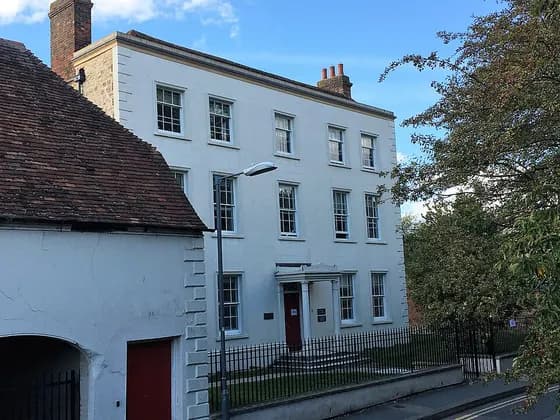

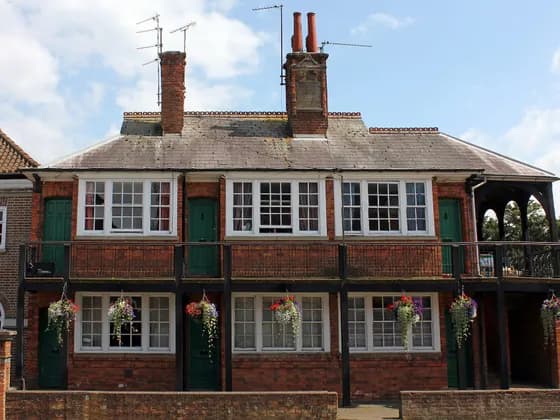
Photo: Nilo775 / Wikimedia Commons · CC0 · cropped
Photo: Tita Beaven · CC BY-SA 4.0 · Photo: DeFacto · CC BY-SA 4.0 · Photo: Jo Turner · CC BY-SA 2.0
Still deciding where to apply? Hear it from a student who's there
The University of Buckingham Medical School is the only fully independent, privately funded medical school in the UK. Tuition fees are substantially higher than at state-funded schools (UK fees from £41,500 a year). Selection runs in three stages — academic screening, a computer-based Multiple Mini Assessment (MMA), then a Multiple Mini Interview (MMI) — and you apply directly to Buckingham rather than only through the UCAS October deadline. Note that Buckingham paused MB ChB applications from 20 May due to demand; check the course page for when they reopen.
The MBChB is delivered over 4.5 years on an accelerated schedule, starting in January, with clinical placements at partner hospitals near Buckingham (including Milton Keynes University Hospital) and near Crewe. Buckingham accepts both home and international applicants and is known for considering applicants with strong academic potential who may not meet the conventional UCAS metrics — though it still expects at least ABB at A-level, including Chemistry or Biology.
The MMI is broadly conventional but probes motivation rigorously: candidates need to be open about why they are choosing a private school, how they will fund the degree, and how they will manage the 4.5-year accelerated structure.
Buckingham interview key facts (2027 entry)
| Course length | 4.5-year MBChB (accelerated) |
|---|---|
| Funding model | Private — UK fees from £41,500 a year |
| Selection | Academic screening → digital MMA → MMI |
| Start date | January |
Interview Format
- Three-stage selection: academic screening, a computer-based Multiple Mini Assessment (MMA), then the MMI
- MMA and MMI tasks test abilities related to the GMC's Good Medical Practice; exceptionally strong MMA performers may get an offer before the MMI
- Open to home and international applicants
- Apply directly to Buckingham — but applications were paused from 20 May due to demand, so check whether they have reopened
- Private fees (UK from £41,500 a year) — a funding plan is essential
- 4.5-year accelerated MBChB — six-week terms with shorter holidays
- Clinical placements at partner hospitals near Buckingham (e.g. Milton Keynes University Hospital) and near Crewe
- GMC-recognised MBChB on graduation
Sample Interview Questions
Why have you chosen a privately funded medical school?
Honesty matters. Discuss your reasoning — accelerated structure, smaller cohort, alternative entry route — and how you have planned the financial commitment.
How will you fund the degree, and what backup plans do you have?
Have a concrete answer — savings, family support, professional and career development loans, sponsorship. Don't pretend the cost is trivial.
Why Buckingham specifically rather than a different private or international school?
Reference the UK GMC-recognised qualification, the Milton Keynes placement structure, the accelerated timeline and the cohort size.
Is it ethical for the UK to have privately funded medical schools?
Engage with arguments on both sides — widening access via alternative routes versus concerns about commodifying medicine. Avoid platitudes.
A patient asks whether you trained at a private medical school and whether that affects your competence. How do you respond?
Acknowledge openly, reassure them about GMC standards being identical, focus on your role today.
You are a senior medical student. A peer is struggling with the financial pressure of the course and considering withdrawing. (Actor present.)
Listen without minimising. Signpost financial support, student wellbeing, academic mentoring — without pressuring them either way.
Describe how you would explain a long-term diagnosis to a patient who is also worried about treatment costs (in a private context).
Empathy first, clinical information clearly, then practical discussion of NHS pathways or insurance options.
Here is a graph showing graduate destinations of UK medical schools. What does it suggest?
Describe carefully, note geography and specialty patterns, acknowledge limitations of the dataset.
How will you handle the accelerated 4.5-year structure with shorter holidays?
Show realistic awareness — the schedule is intense. Discuss organisation, support networks and self-care.
A wealthy patient offers to pay you privately for additional time outside clinic. How do you respond?
GMC guidance — manage conflicts of interest, transparency, fairness. Do not accept gifts that influence care.
What attracts you to the integrated, accelerated curriculum model?
Reflect on your own learning style — accelerated programmes reward consistent, disciplined work. Be honest about both the appeal and the challenge.
Explain to an international applicant's parent how a Buckingham MBChB compares to a non-UK medical degree. (Actor present.)
GMC recognition, UK clinical placements, ability to apply to the UK Foundation Programme. Be honest about challenges — visa, settlement, post-foundation routes.
Tell us about a time you had to manage competing pressures and demands.
Concrete example. Buckingham students face genuine financial, academic and time pressure simultaneously.
Where do you see yourself five years after qualifying?
Realistic answer — likely UK Foundation Programme then early specialty training. Show awareness of how Buckingham fits into that pathway.
Practise the Buckingham interview
Rehearse the real format before the day — on demand with our AI interviewers, or live with a tutor.
Sit a mock with photoreal AI interviewers — any time
A timed MMI or panel interview on video — British & international voices — with interviewers who listen, react and press with follow-ups. Rubric-scored feedback and a replay the moment you finish.






Live mocks with a tutor who’s been in the room
A full Buckingham-style mock with a medic or dentist tutor — honest scoring against real marking criteria, a station-by-station debrief and a written action plan.
Book a mock interviewHow to Prepare
Have a clear, honest funding plan ready — interviewers will probe it.
Understand the accelerated 4.5-year structure and what it means day-to-day.
Research the partner hospitals near Buckingham and near Crewe where placements take place.
Be ready to discuss why you chose Buckingham over UCAS-funded routes.
Practise MMI under timed conditions with full reset between stations.
Read up on UK Foundation Programme eligibility from private and international routes.
If international, prepare for questions about post-graduation pathways and visas.
Invited to interview at Buckingham? Say your first answer out loud today with the free two-minute warm-up drill, then sit a timed mock set up for Buckingham.
Common Pitfalls
Frequently Asked Questions
Related guides
Free, evidence-based guides from current UK medical and dental students.
Free Interview Resources
Worked-through MMI stations, ethics scenarios, and panel questions.
Read guideNHS Core Values Guide
The 6 NHS values examiners listen for in every interview answer.
Read guideMedical School Rankings
See interview format (MMI vs panel) for each UK medical school.
Read guideUCAS 2026 Personal Statement
The new three-question format your interviewer will reference.
Read guideContextual Offers for Medicine
Every UK medical school's widening-access scheme in one place.
Read guideSources & official admissions information
We cross-check every interview guide against the school’s own admissions guidance and the UK regulators.
- University of Buckingham — MB ChB Medicine (4.5-year degree) — January start, three-stage selection (screening, digital MMA, MMI), applications paused from 20 May, UK fees from £41,500.
- UCAT Consortium — Official UCAT registration, test format, scoring methodology and free practice materials.
- General Medical Council (GMC) — Statutory regulator. Approved medical schools, the registered-doctor register, and fitness-to-practise standards.
- Medical Schools Council — Selecting-for-excellence guidance, MMI principles, and an A–Z of UK medical schools.
Ready to nail your Buckingham interview?
Book a mock interview with a current medical student who recently went through the same process, or practise on demand with the AI interviewer.