
The Lancaster Medicine course
What you actually study, and where you will be
Lancaster's MBChB is a 5-year course taught through case-based learning, with patient contact from Year 2 and placements in Lancashire, Cumbria and Yorkshire (2027 entry). Most learning is in small groups, through workshops, case-based learning, and clinical skills and clinical anatomy sessions, with lectures alongside. Anatomy teaching uses Anatomage tables, and placements run through more than 70 healthcare providers across Lancashire, Cumbria and Yorkshire.
- Degree
- MBChB
- Length
- 5 years
- Teaching
- Case-based learning
- Clinical contact
- Year 2
- UCAS code
- A100


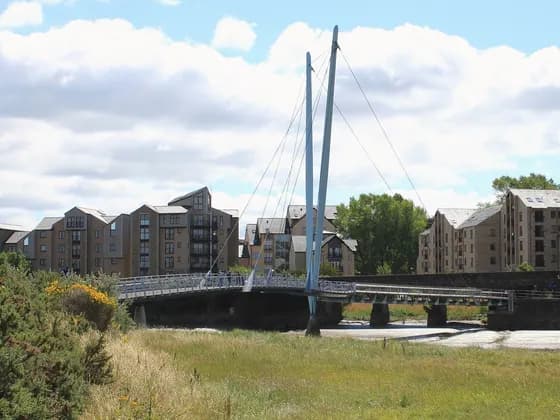
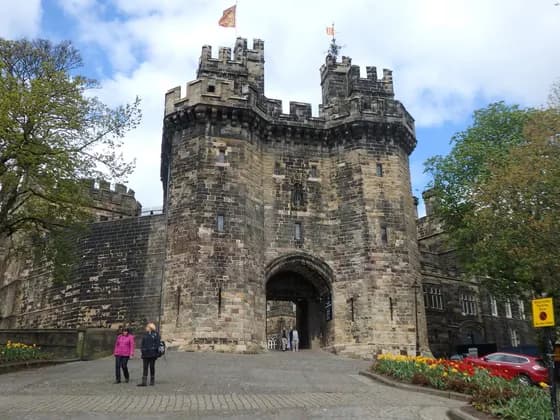
Photo: SideLong / Flickr · CC BY 2.0 · cropped
Photo: Michael Fox · CC BY-SA 2.0 · Photo: Michael Fox · CC BY-SA 2.0 · Photo: Stephen Armstrong · CC BY-SA 2.0
The Lancaster medicine course at a glance (2027 entry)
Lancaster's MBChB in Medicine and Surgery is a five-year, full-time degree run by Lancaster Medical School, part of the university's Faculty of Health and Medicine. MBChB stands for Bachelor of Medicine and Bachelor of Surgery. The school has been training doctors for about 20 years, and 134 students started the course in 2025. For your first two years you are based mainly at the Health Innovation Campus, a 15-minute walk from the university's main campus.
The course teaches the body system by system, for example the heart and circulation, the bones and muscles, and the kidneys. You learn how each system works, then how illness disrupts it. Because many patients live with several long-term conditions at once, the school teaches how conditions interact. You also learn how social, psychological and ethical factors shape a patient's illness and the care they receive.
Most teaching happens in small groups: workshops, case-based learning (working through real clinical problems as a group), and clinical skills and clinical anatomy sessions, alongside some lectures. You practise talking to and examining patients with trained actors in Year 1, then start clinical placements in Year 2. From Year 3 you spend most of your time on placement with partner organisations across Lancashire, Cumbria and North Yorkshire, coming back to campus for teaching weeks.
One feature shapes the whole course: the timing of the finals. You sit both parts of the Medical Licensing Assessment (MLA), the licensing exams the General Medical Council (GMC) requires of every UK medical graduate, in Year 4. Year 5 has no formal final exams. It runs like an internship, assessed through a portfolio and reviews with your clinical supervisor, and ends with a four-week elective.
The course is changing. Lancaster's 2027 brochure, printed in June 2026, says the school is carrying out a comprehensive review of its MBChB and that the structure may change for students starting in 2027-28. The Year 3 assessments have already been redesigned for 2026/27. This guide describes the course as the school published it in 2026, so check the school's website before you apply.
| Degree | MBChB Medicine and Surgery, UCAS code A100 |
|---|---|
| Course length | 5 years, full time |
| Cohort size | 134 places for 2026 entry (130 UK, 4 international); 134 started in 2025 |
| Gateway Year route | 15 places on the six-year A104 route, with a preparatory first year |
| Main base | Health Innovation Campus, Lancaster University, for Years 1 and 2 |
| Teaching style | Small groups and case-based learning, organised by body system |
| Anatomy | Anatomage digital cadaver tables and anatomical models |
| First patient contact | Actors in Year 1, real patients on placement from Year 2 |
| Licensing exams | Both parts of the Medical Licensing Assessment in Year 4 |
| Placement area | 70+ providers across Lancashire, Cumbria and Yorkshire |
| Intercalation | Optional year between Years 4 and 5 |
What makes Lancaster medicine different
Licensing exams finished by the end of Year 4
The Medical Licensing Assessment has two parts: the Applied Knowledge Test (AKT), a computer-based knowledge exam, and the Clinical and Professional Skills Assessment (CPSA), a practical clinical exam. Lancaster schedules both in Year 4. You must pass them, together with the rest of Year 4, to move into your final year.
A final year run like a first job
Year 5 is set up like an internship, with no formal final exams. You work in clinical teams through five placement blocks, each signed off by your clinical supervisor. Morecambe Bay's hospital trust says that in its simulation sessions, Year 5 students prescribe, start treatments such as oxygen and fluids, and handle interruptions from nurses.
Anatomy on digital cadaver tables
Lancaster offers Anatomage tables, which hold digitised human cadavers that you dissect virtually on screen, as its alternative to wet dissection: the traditional cutting up of preserved donated bodies. On the tables you can switch between ages, sexes and diseases, and lay CT and MRI scans over the body.
Placements that follow your campus learning
Placements are timed to match what you have just studied. Once you have learned the theory of a body system on campus, you go out on placement to see it in real patients.
A mobile eight-bed simulated ward
The Mobile Simulation Teaching Unit is a mobile, eight-bed simulated hospital ward that the school uses to teach clinical skills in the community across Lancashire and South Cumbria. Each bed holds either a manikin or an actor playing a patient.
How Lancaster teaches medicine
Lancaster teaches mostly through active learning in small groups rather than long days of lectures. You take part in workshops, case-based learning, and sessions in clinical skills and clinical anatomy. You also have lectures and time for independent study. The school says it picks each method to suit what you are learning at that stage, from how the body works to making complex clinical decisions.
The course is organised around the body's systems and comes back to them each year. In a 2024 GMC report, the school's assessment strategy calls this a spiral curriculum: each time a topic returns, you apply it more to real patients and the cases get more complex.
Core themes run alongside the body systems. The course page lists them as including medical sciences, the psychology and sociology of health and illness, population health, professional practice and values, and medical ethics and law. The Medical School's own pages give a slightly different list, which also names epidemiology and evidence-based medicine, and professionalism and professional life skills.
The school describes its programme as values-led, with social justice, inclusion and sustainability at its centre. In practice this means learning how hospital and community care fit together, how health inequalities affect patients, and how to treat every patient fairly. You are taught to see patients as whole people whose background, surroundings and life circumstances shape their illness.
The balance shifts as you go. In Years 1 and 2 you are mainly on campus, working through the body systems in blocks with study skills and consolidation sessions between them. From Year 3 most learning happens on placement, and you come back to campus for teaching weeks that link the science to treating and managing patients. On placement you take patient histories yourself, present them, and use them as the starting point for further study.
The ways you will learn
| Case-based learning (CBL) | In CBL your small group works through a real clinical problem. You use the case to decide what is going on and what should happen next, which trains you to think the way a doctor does on the ward. |
|---|---|
| Lectures and workshops | Lectures introduce the body systems in Year 1 and run alongside small-group work. Interactive workshops give you room to ask questions, discuss ideas and practise what you are learning. |
| Clinical skills sessions | In the clinical skills and simulation laboratory, a mock clinical setting, you practise examinations and procedures on whole-patient manikins. Ultrasound scanning helps with procedures such as intravenous cannulation, which means putting a thin tube into a vein. |
| Simulated patients and simulation | From Year 1 you practise consultations with simulated patients, trained actors who play the part of a patient. Morecambe Bay's hospitals say students on placement there take part in simulation training, with scenarios such as a cardiac arrest or a deteriorating patient, and practise hard conversations such as breaking bad news. |
| Clinical anatomy sessions | Anatomy is taught in small-group sessions in the Clinical Anatomy Learning Centre, using models and digital cadaver tables. The anatomy section below explains how they work. |
| Placements and teaching weeks | From Year 2 you learn with patients in hospitals, GP surgeries, mental health services, hospices and community services. Each placement includes clinical teaching such as tutorials and skills sessions as well as patient contact. From Year 3, placement blocks alternate with teaching weeks on campus. |
How anatomy is taught at Lancaster
You study anatomy in the Clinical Anatomy Learning Centre at the Health Innovation Campus. It has hundreds of anatomical models and Anatomage tables. These tables hold digitised human cadavers, bodies that have been turned into detailed digital images, which you can dissect virtually on a screen.
Lancaster offers the tables as its alternative to wet dissection. Every student can carry out the same procedure on the same digital body. You can switch between male and female bodies, different ages and different diseases, and lay CT and MRI scans over the anatomy. There are no chemicals, fumes or heavy protective kit.
Anatomy is tied closely to clinical work. The tables are also used to teach you to interpret clinical images such as scans. In the clinical skills lab, ultrasound scanning helps you see structures under the skin and helps with procedures such as cannulation.
When you first meet patients at Lancaster
Your first patients are actors. In Year 1 you practise communication with simulated patients at the Health Innovation Campus, learning to adapt how you speak to different people's needs. The same sessions build your confidence in taking a medical history and doing basic examinations.
Before you have any contact with real patients, you must pass a fitness assessment from the occupational health department at University Hospitals of Morecambe Bay NHS Foundation Trust. This includes health screening and checking your immunisations against a range of infectious diseases. All medical students also have an enhanced Disclosure and Barring Service (DBS) criminal record check.
Real patients arrive with your first clinical placements in Year 2, in a range of care settings. Each placement follows the body system you have just studied on campus, so you meet the conditions you have learned about. From Year 3 most of your time is spent on placement, and in Year 5 you work in clinical teams in a role close to that of a newly qualified doctor.
Year by year at Lancaster
- Year 1
Building strong foundations
You start with a Foundation Block that helps you move from A-level study to more independent university learning. You then work through the body's main systems in blocks, based mainly at the Health Innovation Campus. Your patient contact this year is with trained actors.
- Foundation Block: learning to find, use and judge reliable sources, and an introduction to topics you may not have met at school, with formative (practice) tests to show how you are doing
- Body-system blocks taught through lectures, small-group work and clinical skills sessions, with study skills and consolidation sessions before each new system
- Communication, history-taking and basic examination practice with simulated patients
- A Study Skills Module, completed through formative tasks, and a Community (Primary Care) course, both needed to progress
- Three summative written papers, each of which you must pass to move into Year 2
- Year 2
Developing your knowledge and skills
You continue through more of the body's systems, consolidating each block before moving on. Year 2 is also when clinical placements begin, so you split your time between campus and a range of care settings.
- More body-system blocks, each with time set aside to check and strengthen your understanding
- Your first clinical placements, including a hospital placement, where you apply what you have learned to real patients
- A continuing Community (Primary Care) course
- A Special Study Module (SSM): a block of coursework, which the regulations describe as four weeks long, marked against a standard rubric
- Your first Objective Structured Clinical Examination (OSCE), a circuit of timed stations where an examiner watches you carry out a clinical task, plus three written papers. You must pass all of them to enter Year 3
- Starting your online portfolio (e-portfolio), which you keep adding to until Year 5
- Year 3
Learning in clinical practice
Most of Year 3 is spent on placement with the more than 70 health and care organisations the school works with across Lancashire, Cumbria and North Yorkshire. You return to campus for teaching weeks that link body systems and disease to treating and managing patients. The Year 3 assessments were redesigned for 2026/27.
- Hospital and GP placements, with university teaching weeks between them
- Psychiatry placements with Lancashire and South Cumbria NHS Foundation Trust, which the trust says take place in Years 3 and 4
- Lancashire Teaching Hospitals says it hosts Lancaster's Year 3 neurology placements, where students take patient histories and learn about neurology first-hand
- A four-week research module that builds research skills and prepares you if you want to intercalate
- Written exams split across two assessment windows and several clinical science areas, and an OSCE also spread over two windows
- Passes in Medical Ethics and Law and in Epidemiology and Evidence-Based Medicine, plus workplace-based assessments (clinicians observing and signing off your work with patients) in your portfolio
- Year 4
Preparing for qualification
Year 4 follows the same pattern as Year 3, with most of your time on placement and teaching weeks in between. It ends with your finals: both parts of the Medical Licensing Assessment. You must pass them, along with your placements and portfolio, to move into Year 5.
- Hospital and GP placements, with teaching weeks on campus between them
- Finals preparation, as described to the GMC in 2023 and 2024: an assessment talk, practice papers and an invigilated mock written exam on the real exam platform. There is also a formative finals OSCE, with spoken and written feedback on each station
- The Applied Knowledge Test: two computer-based papers of 100 questions each, on consecutive days
- The Clinical and Professional Skills Assessment: a 14-station OSCE
- Continued e-portfolio evidence and placement attendance
- Year 5
Portfolio and professional development
Year 5 is set up like an internship to prepare you for the Foundation Programme. This is the two years of training after you graduate, when you work as a resident doctor and try different specialties before choosing one. In Year 5 you work on placements in a role close to that of a newly qualified doctor. There are no formal final exams: you are assessed through your portfolio and reviews with your clinical education supervisor.
- Preparing for Practice: a two-week course at the start of the year, assessed with a logbook of clinical skills and medicines management
- Five placement blocks: Ward Care, Acute Care (Emergency Medicine), Community-Orientated Medical Practice, and two Selectives in Advanced Medical Practice (SAMPs). The school describes the SAMPs as a way to shape your own route through the course
- A Professional Education and Training Appraisal (PETA) for each block, completed by your clinical supervisor and graded pass or fail
- Applying for your Foundation Year 1 (F1) post through the UK Foundation Programme Office (UKFPO) during the year
- A four-week elective at the end of the year, once your Year 5 assessments are done
How you are assessed at Lancaster
Assessment is split into formative tests, which are practice with feedback, and summative exams, which count towards progression. Every summative component must be passed on its own: a strong result in one exam cannot make up for a fail in another. Attendance and engagement at teaching and on placement are also compulsory requirements for moving up a year.
In Years 1 to 4 you sit written exams covering all areas of the curriculum. A panel sets each paper's pass mark without knowing how students did, normally using the modified Angoff method, in which examiners judge how a borderline student would do on each question. The mark can be reviewed afterwards using data on how each question performed and student feedback. Every written exam the school sets already includes 25 per cent extra time for all students.
Clinical skills are tested in OSCEs in Years 2 to 4. At each station an examiner watches you do a task, such as taking a history, examining a patient, carrying out a procedure or explaining your reasoning. A standard OSCE has 14 stations, and you must reach the overall pass score and pass at least 10 stations.
Your Year 4 finals are the Medical Licensing Assessment. The GMC requires every UK medical degree awarded from 2024-25 onwards to include a pass in it. The AKT is a national exam from the Medical Schools Council: two two-hour computer papers, each of 100 single best answer questions, where you pick the best of several options. In 2024 Lancaster planned a first sitting in June and a resit in August.
The CPSA is Lancaster's own finals OSCE, which the GMC confirmed in 2023 meets its requirements. As the school described it then, you complete 14 stations in two sets of seven on consecutive days, each lasting ten minutes. The actors playing patients contribute up to 5 per cent of each station's marks. After the exam, examiners' written feedback, including comments on your professionalism, is checked by the school before it is released to you.
From Year 2 to Year 5 you build an online portfolio showing you have met the required clinical outcomes. Practical procedures are signed off separately through an entrustability framework, where supervisors judge when you can be trusted to do them. Coursework, including Special Study Modules, is graded Excellent, Good, Pass or Fail.
- Resits: in Years 1 to 4 you get a resit within the same academic year. Failing a Year 5 placement block means repeating some or all of the final year the following year.
- Years 1 and 2: failing a resit normally ends your studies, with a right of appeal. Accepted exceptional circumstances, such as illness, can instead lead to a repeat year.
- Year 3 changes from 2026/27. With limited gaps in your results, your resit is a targeted reassessment of just those areas. For the OSCE that means seven more stations, normally needing 15 passes out of the combined 21. Wider gaps normally mean repeating Year 3. Failing the targeted reassessment normally ends your studies, with a right of appeal.
- Year 4: you have an automatic right to repeat the year once. Across the original and any repeat Year 4, you normally get up to four attempts at each part of the MLA.
- Limits: you can normally repeat only one year in total, and must finish within seven years of starting, including any intercalated year.
- Degree class: your ranking combines all your Year 1 to 3 results (two thirds of the score) with your Year 4 results (one third). Individually, Year 4 assessments carry more weight, because they are your final exams. The top tenth graduate with an MBChB with Honours and the next tenth with an MBChB with Commendation.
- Leaving early: if you leave after passing the first three years you may qualify for a BSc (Hons) Medical Sciences, and after four years a BSc (Hons) Advanced Medical Sciences.
- The regulations also mention the Prescribing Safety Assessment (PSA), a national pass or fail test of safe prescribing run by MSC Assessment and the British Pharmacological Society. It tests tasks such as writing prescriptions and calculating doses. The school's built-in extra time does not automatically apply to the PSA or the AKT; their providers decide any adjustments.
Where you will actually be at Lancaster
Lancaster has partnerships with more than 70 healthcare providers across Lancashire, Cumbria and Yorkshire. They include acute hospitals, mental health trusts, GP surgeries, hospices and community healthcare providers. The school says the mix ranges from small rural GP practices to city hospitals and coastal communities with high levels of deprivation.
Placements start in Year 2 and are timed to follow your campus teaching on each body system. In Year 3 you spend most of your time on placement with the partner organisations, and Year 4 follows the same pattern, with teaching weeks on campus between placements. The school puts particular weight on placements in the community, backed by community-focused teaching across the course.
Placements cost money as well as time. The course page lists travel to and from GP and community placements, and accommodation while on placement, among the costs you pay yourself. It says placements are likely to be within Lancashire and South Cumbria. You also need your own stethoscope, scrubs and smart shoes.
In 2021-22 the GMC found that every placement trust was represented on the school's Clinical Collaboration Committee. The school used the committee to monitor teaching, support and facilities on placement, and to act when standards slipped.
University Hospitals of Morecambe Bay NHS Foundation Trust provides clinical training for Lancaster students. Its education centres and clinical training and assessment centres at these three hospitals host teaching, clinical skills, simulation and OSCEs.
- Royal Lancaster Infirmary
- Furness General Hospital
- Queen Victoria Hospital
Lancashire Teaching Hospitals NHS Foundation Trust runs these two hospitals. It says it offers Lancaster students neurology placements in Year 3 and seven-week student choice placements in Year 5.
- Royal Preston Hospital
- Chorley Hospital
Lancashire and South Cumbria NHS Foundation Trust, the mental health trust, places Lancaster students in these areas for psychiatry in Years 3 and 4.
- North Lancashire (Lancaster)
- East Lancashire
GP surgeries, hospices and community healthcare providers across Lancashire, Cumbria and Yorkshire, including small rural practices and coastal communities with high levels of deprivation.
Electives and chosen modules at Lancaster
Alongside the core course, you can shape your own route through coursework projects, including Special Study Modules, and through the two SAMPs among your five Year 5 placement blocks.
Lancashire Teaching Hospitals NHS Foundation Trust says it offers seven-week student choice placements in Year 5. They are aimed at Lancaster students who want to build their knowledge of a particular area of medicine.
The elective is a four-week period at the end of Year 5, after your final-year assessments. You arrange and pay for it yourself. It can be a clinical placement in a hospital or community setting anywhere in the UK or the world, or a short research project on improving healthcare. Some students go to the school's partner institution, Sunway University in Kuala Lumpur, Malaysia.
You can instead take a wellbeing elective, a structured option for looking after your mental, emotional and physical health before Foundation training. Examples the school gives include yoga, meditation and mindfulness, arts or music, language study and exploring your religion. An elective supervisor form must be completed before you can graduate.
Intercalation at Lancaster
Intercalating means taking a year out of medicine to study for an extra degree. At Lancaster it is optional and happens between Years 4 and 5, so it comes after your Year 4 finals. The course page says you can study for a bachelor's or a master's-level qualification. The intercalation options Lancaster itself lists are postgraduate: taught master's degrees and master's by research.
The Medical School's intercalation page lists its focal courses for medical students. The taught options are the MSc Biomedicine, MSc Child Mental Health, MSc Clinical Research, MA Global Medical and Health Humanities, MSc Health Data Science, and MSc Psychology of Child Development and Education.
The research options are the MSc by Research in Biomedical Science and the MSc by Research in Medical Sciences, which includes bioethics projects on topics such as medical ethics and law. If you want a course outside this list, the school invites you to discuss it. The four-week Year 3 research module is designed partly as preparation.
Students from other medical schools can also intercalate at Lancaster. For funding, the course page says an NHS bursary is available, subject to availability, in your fifth and sixth years of study. The intercalation page adds that NHS bursaries depend on eligibility, and that you may be eligible for the Lancaster Master's Scholarship.
An intercalated year counts towards the seven years you have to complete the course. The school normally expects your MLA pass to fall within two years of graduating; beyond that, the exam board reviews your recent evidence before deciding whether you need further assessment.
Facilities and support at Lancaster
Where you will learn
Lancaster Medical School is based in Health Innovation One, the main building of the Health Innovation Campus. It has lecture theatres, tutorial rooms, clinical learning facilities, quiet study space and a cafe, and it also houses businesses working on health research and innovation. Most of your campus learning, including clinical skills, anatomy and small-group teaching, happens there.
- Clinical Anatomy Learning Centre: the models and digital cadaver tables described in the anatomy section
- Clinical skills and simulation laboratory: the mock clinical setting with whole-patient manikins and ultrasound described under teaching
- Independent learning rooms for practising skills in your own time: one at the Health Innovation Campus with five bays and models, and one on the main campus, a 15-minute walk away, with two bays
- Mobile Simulation Teaching Unit: funded by Health Education England and the university. Its interior can be set up as a resuscitation room, an operating theatre or a ward. The manikins show vital signs such as heart rate, and you can practise taking blood and inserting urinary catheters on them
- Clinical training and assessment centres run by University Hospitals of Morecambe Bay at Furness General Hospital, the Royal Lancaster Infirmary and Queen Victoria Hospital, used for teaching, simulation and OSCEs
- Biomedical and Life Sciences laboratories, used by students in the Gateway Year, the preparatory first year of the six-year route
Support while you study
When you join, you are given an academic tutor who meets you regularly to review your progress and offer academic and pastoral support. In welcome week you are also paired with a peer mentor, a medical student from a year above, for informal advice on studying and everyday student life.
The medical school has its own support for problems that affect your studies, including academic difficulties, physical and mental health, disability, and personal or financial issues. This sits alongside support from the central university and from your college: Lancaster is a collegiate university, and every student belongs to a college. The MBChB Hub is an online resource with information about the course.
Support continues on placement. At Morecambe Bay hospitals you can go to the trust's undergraduate team or your supervisors, and use its occupational health service. When the school described its finals OSCE to the GMC in 2023, students who failed met a senior staff member to go through their feedback and agree a support plan.
Is the Lancaster course right for you?
This course may suit you if
- You would like the licensing exams behind you before your final year, so Year 5 can be spent working like a junior member of a clinical team.
- You learn well in small groups, working through patient cases and workshops rather than spending most of the day in lectures.
- You are happy to learn anatomy from digital cadaver tables, models and scans rather than by dissecting donated bodies.
- You would value a year of practising consultations with actors before you meet real patients on placement in Year 2.
- You are interested in medicine across rural, coastal and urban communities in Lancashire, Cumbria and Yorkshire.
Things to think about
- The school is reviewing its curriculum and warns the structure may change for 2027-28 entry, so some details here could shift.
- Year 4 carries the whole Medical Licensing Assessment, and its results alone make up a third of your final ranking, so it is a heavy, high-stakes year.
- From Year 3 you are mostly on placement across a wide region, and you pay for travel to GP and community placements and any placement accommodation.
Lancaster medicine course — frequently asked questions
Applying to Lancaster?
How to get into Lancaster
Entry requirements, UCAT, personal statement and interview, step by step.
Open the guide →Lancaster UCAT cut-offs and offers
UCAT cut-offs, A-level offers, interview format and decision dates.
See the requirements →Compare Lancaster with other schools
Put the teaching style, anatomy teaching and placements next to another school.
Open the comparison →Prepare for the Lancaster interview
Format breakdown, school-specific sample questions and prep tips from tutors who interviewed here.
Read the guide →Where this Lancaster course guide came from
This guide was written from 16 official sources — Lancaster University Medical School's own course pages and programme documents, plus the regulator and NHS placement partners where they publish detail — read on 2026-09-23, then checked claim by claim against those sources.
- Medicine and Surgery MBChB (A100), 2027 entry - Lancaster University course page
- About your course, Medicine and Surgery - Lancaster Medical School
- Medicine and Surgery, places for 2026 entry and curriculum themes - Lancaster Medical School
- Intercalation at Lancaster, courses and funding - Lancaster Medical School
- Medicine and Surgery undergraduate brochure for 2027 entry (printed June 2026) - Lancaster Medical School
- Medical Degree Assessment Regulations, applicable from September 2026 - Lancaster University Manual of Academic Regulations and Procedures
- Medicine and Surgery, how to apply (fitness to practise, occupational health and DBS) - Lancaster Medical School
- Admissions data, including students enrolled 2021 to 2025 - Lancaster Medical School
- Mobile Simulation Teaching Unit - Lancaster Medical School
- MLA Clinical and Professional Skills Assessment compliance report and decision for Lancaster Medical School (November 2023) - GMC
- MLA Applied Knowledge Test compliance decision for Lancaster Medical School (June 2024) - GMC
- Annual Quality Assurance Summary for Lancaster Medical School, May 2021 to April 2022 - GMC
- Undergraduate Medical Education - University Hospitals of Morecambe Bay NHS Foundation Trust
- Undergraduate Medical Education, The Health Academy - Lancashire Teaching Hospitals NHS Foundation Trust
- Undergraduate training (psychiatry placements) - Lancashire and South Cumbria NHS Foundation Trust
- Prescribing Safety Assessment - British Pharmacological Society and MSC Assessment
Courses are restructured between cycles. Anything here that decides your application — an anatomy offer, a placement city, a compulsory intercalated year — should be confirmed against the official page for your entry year.
Applying to Lancaster?
We have helped hundreds of applicants turn their UCAT, personal statement and interview prep into offers from Lancaster and other UK medicine schools.