
The Newcastle Medicine course
What you actually study, and where you will be
Newcastle's MB BS is a 5-year course taught through case-based learning, with patient contact from Year 1 and placements in North East England and Cumbria, in three placement zones (Years 3–5) (2027 entry). A case-led course built around 25 clinical cases in the first two years (13 in Year 1 and 12 in Year 2), then three clinical years on placement across the North East of England and Cumbria. Newcastle also runs a Malaysian campus, and Year 2 students can spend time there.
- Degree
- MB BS
- Length
- 5 years
- Teaching
- Case-based learning
- Clinical contact
- Year 1
- UCAS code
- A100

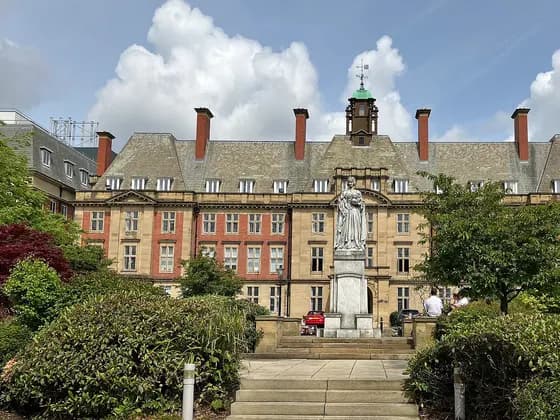


Photo: Sarah Cossom · CC BY-SA 3.0 · cropped
Photo: Anthony Foster · CC BY-SA 2.0 · Photo: Anthony Foster · CC BY-SA 2.0 · Photo: Benjamin Smith · CC BY-SA 4.0
The Newcastle medicine course at a glance (2027 entry)
Newcastle's Medicine and Surgery degree is a five-year MB BS (Bachelor of Medicine and Bachelor of Surgery; the programme documents write it MBBS). You spend Years 1 and 2 mostly on the city campus in Newcastle upon Tyne. Years 3 to 5 are spent on clinical placements in hospitals, GP surgeries and community settings across the North East of England and Cumbria.
The School of Medicine, which says it has taught medicine since 1834, calls itself a regional medical school. Its teaching depends on NHS partners across a wide area, with a patient population of around 3.5 million. In practice, that means you rotate through many hospitals, practices and community settings, in both urban and rural areas, rather than one teaching hospital.
The first two years are case-led. Instead of separate courses in anatomy, physiology and pharmacology, you work through 25 clinical cases, each built around a patient problem. A stroke case, for example, becomes the way in to the nervous system, the heart and circulation, the drugs involved, public health and how to talk to the patient. Each case is taught by a team drawn from several disciplines.
Patients appear early. The school says you have contact with patients from the start of Year 1, including two full days in a GP surgery, and general practice then runs through every later year. The final year is built around assistantships: placements in which you work as a supervised junior member of the team, preparing for the two-year Foundation Programme that all new UK doctors complete after graduating.
Final year also includes the Medical Licensing Assessment (MLA), the national exam overseen by the General Medical Council (GMC), the UK's medical regulator. Throughout the course, timetables, study guides and resources sit on the Medical Learning Environment (MLE), the school's own online platform.
| Degree | MB BS (Medicine and Surgery) |
|---|---|
| Course length | 5 years, full time |
| UCAS code | A100 (institution code N21) |
| Main campus | Newcastle city campus for Years 1 and 2 |
| Teaching style | Case-led, built on 25 clinical cases in Years 1 and 2 |
| First patient contact | Year 1, including two full days in a GP surgery |
| Anatomy | Donated bodies and prosections, plus imaging, ultrasound, models and body painting |
| Clinical years | Three placement zones across the North East and Cumbria, Years 3 to 5 |
| Elective | Eight weeks, January to March of Year 5 |
| Intercalation | Optional, after Year 2 or Year 4 |
What makes Newcastle medicine different
Twenty-five patient cases shape the first two years
After a three-week foundation block, Years 1 and 2 run as 25 clinical cases: 13 in Year 1 and 12 in Year 2. Each case sets up a patient problem, then teaches the science, clinical skills, ethics and communication that go with it. By the end you have covered how every major body system works normally and what happens when it goes wrong.
General practice in every year of the course
You spend two days in a GP surgery in Year 1 and two more in Year 2, usually at the same practice. In Year 3 your group, usually four students, goes to one practice in 28 weeks of the year. Year 4 adds a weekly GP session where you follow a panel of patients for months. Year 5 has two GP assistantships, including two out-of-hours shifts.
Placement zones you know about from Year 1
The school tells you which placement zones you will be in for Years 3 to 5 early in Year 1, well before your first clinical year. Because one of those years may mean living away from Newcastle, that gives you time to plan housing, travel and costs.
Long clinical exam stations with real patients
Newcastle's main clinical exam in Years 4 and 5 is the MOSLER (Multiple Observed Structured Long Examination Record): a few long, observed encounters rather than many short stations. In the final-year version, as described to the GMC in 2024, examiners watch you assess patients, most of them real. They discuss each case with you at the end and judge you against the standard expected of a new Foundation doctor.
Option of a semester in Malaysia in Year 2
Newcastle runs a branch campus, NUMed, in the south of Johor, Malaysia. It opened in 2011 and teaches the same MB BS curriculum. During Year 2 you have the opportunity to spend a semester there.
A final year organised around assistantships
Year 5 is built from assistantships in child health, reproductive health, mental health, general practice, medicine and surgery. In the second GP assistantship you work towards supported surgeries, seeing patients yourself and discussing each one with your GP supervisor. You also help with triage (deciding how urgently each patient needs to be seen), remote consultations and arranging follow-up.
How Newcastle teaches medicine
Newcastle describes its approach as guided discovery. Staff set out clear learning outcomes and a study guide for each case, and you are expected to take charge of mastering the content rather than waiting to be told everything. The aim of each case is to understand the mechanisms underneath it, not simply to memorise the named condition.
The course starts with more structure because most Year 1 students have just come from school. Less familiar ways of learning are added step by step, and by the clinical years you are expected to be much more independent in your study. Before you arrive, an online MBBS Launch Pad introduces the course structure, key staff, sample learning materials and study skills for the move to university.
From Year 3 the unit of study changes from the case to the placement, each with its own study guide, and some early cases return with added clinical complexity. The course is attendance-based: some material is online, but sessions planned as face-to-face teaching cannot be replaced by online or remote study.
The ways you will learn
| Case-led learning | Each of the 25 cases in Years 1 and 2 opens with a patient scenario. The lectures, seminars, skills sessions, anatomy practicals and visits during that case all link back to it, so you see why each piece of science matters. |
|---|---|
| Lectures and large-group sessions | Lectures, clinical demonstrations and case presentations are used mainly in Years 1 and 2, in theatres that include two 400-seat halls. The university's ReCap service records lectures so you can watch them again when revising. |
| Small-group seminars and tutorials | Seminars give you time to discuss and question what you have covered. Some small-group teaching in Years 1 and 2 is led by GP lecturers, local GPs who also oversee GP teaching across the region. |
| Clinical and communication skills | In the Clinical Skills Laboratory you practise on mannequins, on each other and on volunteer patients, supervised by senior staff and junior doctors. Communication skills are taught through role play and video. |
| Early Clinical and Community Experience | Early Clinical and Community Experience (ECCE) placements began in 2017. Groups of two to four students spend two full days a year in a GP practice in Years 1 and 2, usually from 10am to 4pm. You observe consultations, join home visits, interview and examine patients, and shadow the practice team. |
| Guided self-study | Study guides and e-learning packages on the MLE set out what to learn for each case or placement. Working through them on your own is a planned part of the course. |
How anatomy is taught at Newcastle
You study anatomy in Years 1 and 2, as one of the formats built into the cases. Year 1 includes sessions in the dissecting room, where you learn from cadavers (bodies donated for medical education) under close supervision from anatomy demonstrators. The anatomy laboratory is licensed by the Human Tissue Authority under the Human Tissue Act 2004, the law that governs the use of donated bodies.
The cadaveric teaching uses prosections: parts of the body that experts have already dissected to show particular structures, so you can study them directly. Alongside these you learn from anatomical models, ultrasound, X-ray and scan images, and body painting, where the outlines of organs and muscles are drawn on the skin to show where they lie beneath it. The anatomy department says it teaches through prosections and, on some of its programmes, full-body dissection.
The department also uses 3D platforms: Complete Anatomy, Virtual Human Dissector and a Sectra terminal, a screen-based system for exploring 3D anatomy and real scan images. These let you explore anatomy in three dimensions and apply it to clinical imaging, a skill you will use throughout clinical practice.
When you first meet patients at Newcastle
You meet patients from the start of Year 1, and volunteer patients take part in clinical skills teaching. Through the school's Patients as Partners scheme, volunteers let small groups practise examining the chest, abdomen, eyes, ears and joints, and taking a pulse and blood pressure, with a clinically trained tutor always present. Other volunteers talk to groups about their condition and their experience of the NHS, which helps you practise taking a history.
Outside the university, Years 1 and 2 include time in general practice, hospitals and community settings, so each case has a real-life context.
A three-week block called Transition to Clinically Based Practice ends Year 2. It includes simulation, learning alongside students from other healthcare courses, induction for Year 3, and applying your examination skills to patients with real clinical signs.
From Year 3 you are on clinical placements for most of the year. The programme is designed so that your clinical exposure grows in each of the five years.
Year by year at Newcastle
- Year 1
Essentials of Medical Practice: foundation and 13 cases
Years 1 and 2 share the theme Essentials of Medical Practice and are based mainly on the Newcastle campus. Year 1 opens with a three-week foundation block, then moves through 13 clinical cases. Clinical skills and professionalism are taught and assessed from the start.
- Foundation block (3 weeks): cell biology, genetics, metabolism and infectious disease, plus introductions to professionalism, clinical and communication skills, and ethics.
- Cases 1 to 5 (first semester): topics include the kidneys, the heart and circulation, blood, metabolism, cancer, infection, health psychology and public health.
- Cases 6 to 13 (second semester): topics include the lungs, liver and gut, allergy, immunology, inflammation, genetics, infection and mental health.
- Two full ECCE days in a GP practice, plus visits to hospital and community settings.
- Early in the year you find out your placement zone allocation for Years 3 to 5.
- Year 2
Essentials of Medical Practice: 12 more cases and the move to clinical work
Year 2 continues the case-led approach with cases 14 to 25, covering areas such as the nervous system, reproduction, the musculoskeletal system and ageing. It ends with a three-week block that prepares you for full-time clinical placements. There is also the option of spending a semester at the Malaysia campus.
- Cases 14 to 20 (first semester): topics include reproduction, neuroscience, nutrition, immunology, infection and dementia.
- Cases 21 to 25 (second semester): topics include neuroscience, the musculoskeletal system, mental ill health, ageing and immunology.
- Two more ECCE days in general practice, where possible at the practice you visited in Year 1.
- Transition to Clinically Based Practice (3 weeks), preparing you for Year 3.
- Option of a semester at NUMed Malaysia.
- After passing Year 2 at the first attempt, you can choose to intercalate, meaning you take a year out for an extra science degree before returning.
- Year 3
Clinically Based Practice
Year 3 is your first full clinical year, spent in one of the three placement zones. The first semester builds core clinical practice and covers medicine, acute care and surgery. The second semester is organised as integrated placements in reproductive health, mental health, and child and young people's health.
- First semester: Essentials of Clinical Practice, then Medicine, Acute Care and Surgery.
- Second semester: Integrated Medical Placements in Reproductive Health, Mental Health, and Child and Young Persons' Health, each a six-week module, plus a Specialist Topics 1 block.
- One GP practice all year for your group, usually four students: one morning a week from September to December, then a full day most weeks from January to May. In all, you are at the practice in 28 weeks of the year.
- A four-week block of student choice, the first of two in the clinical years.
- Clinical exams include an OSCE (Objective Structured Clinical Examination), a circuit of short timed stations, each testing one clinical task in front of an examiner.
- Students from the four-year accelerated programme (A101), who cover Years 1 and 2 in one extended year, join your year group from Year 3.
- A short introduction to electives, ahead of planning yours in Year 4.
- Year 4
Complexity in Medical Practice: Continuity, Co-morbidity and Context
Year 4 focuses on patients whose care is complicated: people with more than one condition (co-morbidity), people followed over time, and the wider context of their lives. Its main placements cover long-term conditions and planned surgery, and acute and critical care. You also plan your elective and sit a MOSLER clinical exam.
- Clinical Experience in Long Term Conditions and Elective Surgery (CELTS). Elective surgery here means planned operations rather than emergencies.
- Acute and Critical Care placement.
- Specialist Topics 2, and a Student Selected Component (SSC), a four-week block on a topic you choose.
- Longitudinal integrated clerkship in general practice, a GP placement that runs through most of the year: one morning a week from September to March, in a pair or a group of four.
- In the clerkship you run your own appointment sessions, called student-led surgeries, under your GP tutor's supervision, and follow a panel of patients through their care. On the other days of the week you are on hospital and community placements.
- Elective planning, with guidance and funding information.
- After passing Year 4 at the first attempt, you can choose to intercalate a master's or research degree.
- Year 5
Transition to Medical Practitioner
The final year prepares you to start work as a Foundation Year 1 doctor. It is built around assistantships in six areas of practice, with an eight-week elective from January to March. You also sit both parts of the Medical Licensing Assessment.
- First semester: assistantships in Child and Young Persons' Health, Reproductive Health, Mental Health and General Practice 1. There is also a Good Medical Practice block, named after the GMC's guidance on the professional standards expected of every doctor.
- GP Assistantship 1 (3 weeks): joint surgeries with a GP, and parallel surgeries where you see patients in your own room at the same time, to sharpen history-taking, examination and management.
- Eight-week elective, January to March, in the UK or abroad.
- Second semester: assistantships in Medicine, Surgery and General Practice 2.
- GP Assistantship 2 (4 weeks): supported surgeries, triage (sorting patients by urgency), remote consultations, handling test results and two out-of-hours shifts with local providers. Weekly tutorials cover topics such as palliative care, documentation, resilience and leadership.
- In both GP assistantships you are in the practice four days a week, with one day of face-to-face teaching elsewhere.
- Finals: the national Applied Knowledge Test and Newcastle's MOSLER clinical exam, as well as the school's own requirements.
How you are assessed at Newcastle
The MB BS is not split into credit-bearing modules. Each year has a set of assessments, and you must pass every element to move on: a strong result in one area cannot make up for a fail in another. Pass marks for written papers and OSCEs are set for each sitting using recognised standard-setting methods, so they are not published in advance.
Knowledge is tested mainly with single best answer (SBA) questions, where you pick the best of several possible answers, and with short written papers such as the Written Skills Examination (WriSkE). Clinical skill is tested with OSCEs and, in Years 4 and 5, with MOSLERs, where examiners watch you through long encounters, mostly with real patients.
Alongside the exams, clinical staff observe you with patients and give structured feedback, and practical skills such as taking blood and inserting a urinary catheter must be signed off by healthcare professionals. This is recorded in your e-portfolio, an online record of your reflections, achievements and learning needs, and in clinical logbooks that track the experience and skills you build up on placement. Professional behaviour is monitored throughout each year and judged as either acceptable or unacceptable.
Since 2024-25, every UK medical degree must include a pass in the MLA. The Applied Knowledge Test (AKT) is a national written exam with a nationally set pass mark. The Clinical and Professional Skills Assessment (CPSA) is run by each school to GMC requirements; at Newcastle it is the final-year MOSLER.
When the GMC approved Newcastle's CPSA in May 2024, it had eight 25-minute stations over two days, each with three minutes' reading time. Most used real patients; two used trained actors, one of them an acute care simulation. The AKT was then two computer-based papers of 100 SBA questions, each two hours long, on consecutive days.
- Merit: awarded for each of Years 1 to 4 in which you finish in the top tenth of your year group.
- With Distinction: top tenth in at least three years (two of them from Years 3 to 5), every year passed first time, and good professional standing.
- Honours (with Distinction): top tenth in at least four years, including Years 4 and 5, with the same first-time and professionalism conditions.
- Resits: you normally get two further attempts. The first is in August for Years 1 and 2, July for Years 3 and 4, and April for Year 5.
- If you fail the first resit, you usually repeat the year in person. No more than two repeat years are allowed across the whole course.
- By graduation you must be able to carry out 32 listed practical procedures, from measuring blood pressure to setting up an intravenous drip, urinary catheterisation and skin suturing.
Where you will actually be at Newcastle
For Years 3 to 5, Newcastle divides its region into three geographical zones and bases you in a different one each year. One year is at sites close to the university, one is commutable from the campus, and in one you may need to live away from Newcastle for up to an academic year. The admissions policy warns that you will spend long periods away from campus and will sometimes work outside normal hours.
The spread is deliberate. The school says its regional medical school covers the North East of England and Cumbria, with clinical learning centres across all the NHS trusts in that area. It needs hospitals across the whole region to provide enough placements. It also wants every student to see rural and urban medicine and to spend time in a tertiary hospital, one that takes specialist referrals from other hospitals.
Each NHS trust has a Local Education Provider (LEP) lead who organises student teaching there. The leads meet regularly during term to keep the experience equal across sites, and a shared student record system lets staff support you while you are based away.
General practice teaching draws on more than 200 GP practices across the North East. It is led by the school's primary care team, whose associate sub-deans cover Tees, Northumbria and Tyne, and Wear. The team says a redesign of the course doubled the time students spend in primary care.
The trust's hospitals are the Royal Victoria Infirmary, the Great North Children's Hospital and the Freeman Hospital. Its undergraduate team supports Newcastle MB BS students through to graduation. Its training centres at Eldon Court and the Freeman Hospital, opened in 2023, include replica wards and an operating theatre. The trust also uses Eldon Court for final-year exams.
- Newcastle upon Tyne Hospitals NHS Foundation Trust
- Royal Victoria Infirmary
- Great North Children's Hospital
- Freeman Hospital
- Eldon Court education and training centre (city centre)
The school's placement region for Years 3 to 5, stretching from the North East west into Cumbria. Students spend a year in each of three zones within it.
GP teaching is grouped under associate sub-deans for Tees, Northumbria and Tyne, and Wear. Each practice has a local GP lecturer as its first point of contact.
- More than 200 GP practices across the North East
Newcastle's branch campus, opened in 2011, teaches the same MB BS curriculum. Year 2 students have the opportunity to spend a semester there.
Electives and chosen modules at Newcastle
Student choice in the clinical years comes in two forms. The first is two four-week student-selected components (SSCs), one in Year 3 and one in Year 4. You can use them to go deeper into something from the core course or to try a specialty it does not cover, and optional SSC placements give extra time in general practice.
Topics students have chosen for these choice blocks and electives include care of newborn babies, emergency medicine, wilderness medicine, global health, tropical diseases, and paramedic and air ambulance attachments.
The second is the elective: eight weeks in the second semester of Year 5, from January to March. It counts as part of the student-selected side of the degree, and you can go almost anywhere in the world that official UK travel advice considers safe. Destinations have included Australia, Canada, Cambodia, Japan and Thailand, and the school says about 30 per cent of students stay in the UK.
You get a short introduction to electives in Year 3 and plan yours during Year 4, with guidance on health and safety, travel, choosing a destination and specialty, setting objectives, and grants and bursaries. A Medical Elective Handbook, past students' feedback and funding information are available on the MLE.
Intercalation at Newcastle
Intercalating means stepping out of the medical course for a year to study for an extra degree, then returning. At Newcastle it is optional. The school encourages it for motivated students who want research experience, which the main course has limited room for. You can only intercalate after passing the preceding year at the first attempt.
After Year 2, you can take the final year of one of the honours science degrees run by the School of Biomedical Sciences. After Year 4, you can take a postgraduate taught or research programme, such as a master's, in the Faculty of Medical Sciences. Equivalent courses at other universities need the Degree Programme Director's approval.
Some students who intercalate are offered the chance of a PhD. That needs permission for an extended leave of absence and depends on your academic record. You must submit the thesis before rejoining the MB BS, then complete at least a year of formative study and reskilling before final year.
If you do not intercalate, you can still do research through your SSCs, the summer research scholarship scheme, or extra-curricular projects, which usually run in the summer vacation. Within the School of Medicine these projects are in medical education research; for laboratory projects you approach supervisors in the Faculty of Medical Sciences research institutes. Students must be paid for this extra-curricular research work.
Facilities and support at Newcastle
Where you will learn
Years 1 and 2 are taught mainly in the Medical School on the city campus. It has two 400-seat lecture theatres, a suite of smaller theatres, seminar rooms and computer clusters, some open 24 hours. The Walton Library, the specialist library for the Faculty of Medical Sciences, is in the Catherine Cookson Building within the Medical School.
The Clinical Skills Laboratory, recently refurbished, is where you learn practical skills before using them on wards. These include basic life support and CPR, taking blood, measuring pulses and blood pressure, and examining the eye, ear, breasts, joints, abdomen and chest. The Medical School also has a simulation laboratory.
The Dame Margaret Barbour Building, a short walk from the Medical School, has consultation rooms and space for clinical skills teaching. Anatomy and clinical skills centres with patient simulators are found in Newcastle and elsewhere in the region.
Support while you study
When you start the course you are introduced to two members of staff: an academic mentor and a personal and professional development tutor. Both meet you regularly through the year to give advice and support and to check your progress. Your mentor also goes through your results after assessments and points you to extra help, and the school told the GMC in 2024 that every student meets their mentor after assessments, pass or fail.
Every new student is also paired with a Year 2 student as a peer mentor. The school has a senior student adviser and study skills advisers, and its Medical Student Office handles everything from admission to graduation and can set up meetings with the right staff.
The School of Medicine has its own Student Wellbeing Adviser, whom you can book directly. The university's wider wellbeing service also advises on money, including student loans and NHS bursaries. Occupational health checks when you start can lead to reasonable adjustments to help you meet GMC standards.
In Year 3, the GP who teaches your small group also takes on a pastoral mentoring role, giving you a second point of contact while you are on placement.
Is the Newcastle course right for you?
This course may suit you if
- You like learning science through patient problems, with 25 cases setting the agenda in Years 1 and 2 rather than separate subject courses.
- You want steady contact with general practice, including following the same patients over several months in Year 4.
- You are keen to see medicine in rural, urban and specialist hospital settings and are happy to move around the region to do it.
- You would like the option of spending a semester at Newcastle's Malaysia campus in Year 2.
- You like a structured start but are ready to direct more of your own study as the course goes on.
Things to think about
- Your placement zones are allocated by the school, and one clinical year may mean living away from Newcastle, so budget for the extra cost and disruption.
- Every element of every year must be passed with no compensation between them, and failing a first resit usually means repeating the year in person.
- The course is attendance-based, and the clinical years include some work outside normal hours, such as two out-of-hours GP shifts in Year 5.
- Guided discovery means much of your learning is self-directed from study guides, which suits some people more than others.
Newcastle medicine course — frequently asked questions
Applying to Newcastle?
How to get into Newcastle
Entry requirements, UCAT, personal statement and interview, step by step.
Open the guide →Newcastle UCAT cut-offs and offers
UCAT cut-offs, A-level offers, interview format and decision dates.
See the requirements →Compare Newcastle with other schools
Put the teaching style, anatomy teaching and placements next to another school.
Open the comparison →Prepare for the Newcastle interview
Format breakdown, school-specific sample questions and prep tips from tutors who interviewed here.
Read the guide →Where this Newcastle course guide came from
This guide was written from 22 official sources — Newcastle University's own course pages and programme documents, plus the regulator and NHS placement partners where they publish detail — read on 2026-09-23, then checked claim by claim against those sources.
- Newcastle University: Medicine and Surgery MB BS (A100), 2027 entry
- Newcastle University School of Medicine: Course content
- Newcastle University School of Medicine: Regional clinical placements
- Newcastle University School of Medicine: Undergraduate study
- Newcastle University School of Medicine: Student support
- Newcastle University MBBS Programme Specification 2026/27
- Newcastle University MBBS Programme Regulations 2026/27
- Newcastle University School of Medicine MBBS Admissions Policy, 2027 entry
- Newcastle Medical School Primary Care Team: Teaching Opportunities for General Practitioners 2026-2027
- Newcastle University School of Medicine: Become a GP Teacher (teaching by year group)
- Newcastle University School of Medicine: Facilities
- Newcastle University School of Medicine: Anatomy
- Newcastle University School of Medicine: NUMed Malaysia
- Newcastle University: Patients as Partners in Healthcare Education
- Newcastle University School of Medicine: Undergraduate research partnerships
- Newcastle University School of Medicine: Electives
- Newcastle upon Tyne Hospitals NHS Foundation Trust: Medical education
- GMC: MLA CPSA compliance report and decision, School of Medicine, The University of Newcastle (May 2024)
- GMC: MLA AKT compliance decision, School of Medicine, The University of Newcastle (June 2024)
- Newcastle University School of Medicine: homepage (regional medical school)
- Newcastle University School of Medicine: Induction 2026
- Newcastle upon Tyne Hospitals NHS Foundation Trust: Our education and training centres
Courses are restructured between cycles. Anything here that decides your application — an anatomy offer, a placement city, a compulsory intercalated year — should be confirmed against the official page for your entry year.
Applying to Newcastle?
We have helped hundreds of applicants turn their UCAT, personal statement and interview prep into offers from Newcastle and other UK medicine schools.