
The Queen's University Belfast (QUB) Medicine course
What you actually study, and where you will be
Queen's University Belfast's MB BCh BAO is a 5-year course taught through case-based learning in an integrated, spiral curriculum, with patient contact from Year 1 and placements in Northern Ireland (2027 entry). Case-based learning runs through Years 1–4, with patient contact from Year 1 through the Family Attachment Scheme and regular Clinical Experience afternoons. The clinical years are spread across Northern Ireland's five health and social care trusts and more than 150 general practices, and every student does at least two placements in Belfast and at least two elsewhere in Northern Ireland.
- Degree
- MB BCh BAO
- Length
- 5 years
- Teaching
- Case-based learning + Integrated + Spiral
- Clinical contact
- Year 1
- UCAS code
- A100

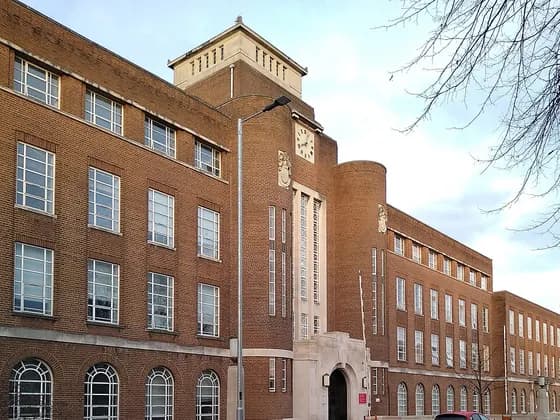


Photo: Nick Birse · CC BY-SA 4.0 · cropped
Photo: Mx. Granger · CC0 · Photo: Suicasmo · CC BY-SA 4.0 · Photo: Manuel Velazquez · CC BY 3.0
The Queen's University Belfast (QUB) medicine course at a glance (2027 entry)
Medicine at Queen's University Belfast (QUB) is a five-year, full-time course leading to the MB BCh BAO: Bachelor of Medicine, Bachelor of Obstetrics and Bachelor of Surgery. It is a primary medical qualification. Passing it lets you apply for provisional registration with the General Medical Council (GMC), the body that licenses UK doctors. You can then start work as a Foundation Year 1 doctor, the first year of the two-year Foundation Programme that new UK doctors begin with.
The course you would join is called C25. The school began redesigning the degree in 2020, and the first students to complete the new version graduated in summer 2025. The school says 300 new medical students start each year, beginning in the Medical Biology Centre on the university's Health Sciences Campus in Belfast.
It runs in three stages: Foundations for Practice in Years 1 and 2, Immersion in Practice in Years 3 and 4, and Preparation for Practice in Year 5. For the first four years the backbone is case-based learning (CBL), in which small groups work through patient cases while lectures and practicals are organised around them.
Patients appear from Year 1, and by Year 3 almost all teaching happens in hospitals and GP surgeries across Northern Ireland. Final year includes an assistantship, in which you work closely with a Foundation doctor and take on the tasks they do.
| Degree | MB BCh BAO |
|---|---|
| Course length | Five years, full time |
| UCAS code | A100 |
| Students starting each year | 300, according to the school |
| Main base | Medical Biology Centre, Health Sciences Campus, Belfast |
| Teaching style | Case-based learning, Years 1 to 4 (about two weeks per case in Years 1–2) |
| Anatomy | Cadaveric dissection, when donor specimens allow |
| First patient contact | Year 1, through the Family Attachment scheme |
| Placements | Hospitals across Northern Ireland and more than 150 general practices |
| Intercalation | Optional extra year after Year 2, 3 or 4 |
What makes Queen's University Belfast (QUB) medicine different
General practice in every year of the course
A quarter of clinical placements are in primary care. You follow a family through a GP practice in Year 1 and have GP tutorials in Year 2. In Year 3 you spend a day a week in a practice for a semester, and in Year 4 you keep returning to the same one. Final year includes seven weeks in a practice.
Year 4 organised around stages of life
Instead of separate specialty blocks, Year 4 runs through four pillars: Child Health, Mental Health, Reproductive Health, and Ageing and Health. Each starts with a teaching week at Queen's, designed jointly by GPs and hospital doctors. You then move between hospital wards and your home GP practice, seeing patients at every stage of life.
Written finals sat at the very start of final year
Every UK medical graduate must pass the national Medical Licensing Assessment. You sit its written half, the Applied Knowledge Test, as Year 5 begins. You will have practised for it in progress tests: regular computer-based exams in the same style, sat from Year 1. Final year can then concentrate on the elective, the assistantship, a quality improvement project and the final clinical exam.
Simulation in every year, with interprofessional scenarios in Year 4
Each year has its own simulation course in acute, critical and emergency care (ACE), from First Steps to ACE in Year 1 to an acute care course in Year 5. Year 4 adds interprofessional simulation, where you train with other healthcare students: child health students manage acute paediatric scenarios with children's nursing students. Final-year students are offered the START acute illness course from the Royal College of Surgeons of England.
A real quality improvement project in final year
In an 18-week module you join a group of five or six students working with a GP practice or hospital team on a real problem in patient care, supervised by clinicians there. The aim is a lasting improvement, and along the way you learn the methods doctors use to make services safer.
How Queen's University Belfast (QUB) teaches medicine
In case-based learning, each case comes with a co-ordinated programme of lectures, seminars, practicals, laboratory work and clinical skills sessions. That way the science you meet in a lecture is tied to the patient problem your group is working on.
The curriculum is built as a spiral, meaning the same body systems come back at greater depth. In Years 1 and 2 you learn normal structure and function, with an introduction to disease. Year 3 is the second pass, with cases taught in the clinical setting. Year 4 is the third, looking at how the same systems present at different stages of life.
Four themes, which the school calls its Curriculum DNA, run through every year: Global and Population Health, Clinical Science and Practice, Achieving Good Medical Practice, and Teamwork for Safe Care. Each year also has a reflective practice unit, in which you write about your learning experiences and set yourself targets for improvement.
The balance shifts sharply over the five years. The first two years are mostly on campus, while by Year 3 almost all teaching is in hospitals and general practices, backed by live and recorded lectures. You log clinical learning and reflections in an ePortfolio and mobile app, MyProgress, which tutors also use to give you feedback from Year 1.
The ways you will learn
| Case-based learning groups | Small groups work through realistic patient cases, with a member of academic staff facilitating. In Years 1 and 2 a group moves on to a new case roughly every two weeks. Each case pulls together biomedical science, clinical medicine, behavioural science and public health. |
|---|---|
| Lectures | Lectures introduce new topics to the whole year group as a starting point for your own reading. They are recorded and posted on Canvas, the university's online learning system, and audience response systems let you answer questions live. |
| Seminars and tutorials | Much of the teaching happens in groups of about 8 to 40 students, led by staff who specialise in the topic. You are expected to ask questions and give presentations. |
| Practical classes | Practicals run throughout Years 1 and 2 to support the basic sciences, including laboratory work and anatomy sessions. |
| Clinical skills with simulated participants | In the Clinical Skills Education Centre you learn to talk with patients, examine them and carry out procedures before doing so for real. Simulated participants, members of the public trained to play patients, take part in this teaching and in your exams. |
| Simulation and interprofessional learning | You train alongside future nurses, pharmacists and other health professionals in simulated scenarios based on real healthcare work, in a large interprofessional simulation suite set aside for students. |
A typical week on the Queen's University Belfast (QUB) course
In Years 1 and 2 the timetable is built around the current case. One afternoon a week, from 2pm to 5pm, is set aside for Clinical Experience sessions with GP and hospital tutors, though each student attends only a set number of them. Family Attachment and GP tutorials take up five further afternoons in each year.
In Year 3 you are mostly in hospital. Northern Ireland's hospitals and community services are run by five regional Health and Social Care (HSC) Trusts, and your GP placement is in the same Trust area as your hospital. For one semester you spend a full Wednesday each week in general practice, 12 Wednesdays in all in 2026 to 2027. You are in a group of four to six students with the same GP tutor.
In final year your GP placement fills nine sessions a week, almost the whole working week, with a weekly group learning session led by a GP to discuss cases.
How anatomy is taught at Queen's University Belfast (QUB)
Anatomy at Queen's is taught through cadaveric dissection: you carefully cut through a body donated for teaching to expose and study its structures yourself. The school says this happens when enough specimens are available, so how much dissection you do depends on the number of donated bodies.
Teaching takes place in two refurbished gross anatomy laboratories with audio-visual equipment in the Medical Biology Centre. The same building has a virtual histology microscopy suite, where you examine digitised tissue slides on a screen, and two physiology teaching laboratories.
Anatomy is woven into the body systems rather than taught as a separate subject. In Year 1 it covers the heart, lungs, blood and the first part of the musculoskeletal system, including embryology and histology. In Year 2 you move on to the abdomen, pelvis, breast, endocrine glands, brain, spinal cord, skull and neck, and lower limb, and learn to describe specimens you have not seen before.
In its review for June 2025 to May 2026, the GMC set the school no requirements or recommendations. It did list dissection opportunities among the topics it wants an update on in the school's next submission, due in June 2027.
When you first meet patients at Queen's University Belfast (QUB)
You meet patients from the start. The introductory unit of Year 1 includes your first patient encounters, an introduction to clinical skills and training in basic life support.
The Family Attachment scheme runs through Year 1. A GP tutor pairs students with a patient or family registered at the practice, and you keep in contact with them over the year. At five afternoon tutorials you discuss what you have learned, and with consent you can look at your patients' records.
Clinical Experience sessions add hands-on practice. In the spring of Year 1 you attend three online sessions, taking histories from real patients with heart, lung or musculoskeletal problems. In each semester of Year 2 you attend five face-to-face sessions in groups of four or five, in a GP surgery or on a hospital ward. The spring sessions pull together everything you have learned ahead of your Objective Structured Clinical Examination (OSCE), a practical exam in which you move round timed stations, each testing a clinical skill.
Year 2 also brings General Practice Experience: five afternoon tutorials in a practice, in groups of about eight. You meet patients and members of the primary care team, and often consult with a patient for the first time.
Year by year at Queen's University Belfast (QUB)
- Year 1
Foundations for Practice 1
The first year lays the scientific groundwork and starts clinical training at the same time. An introductory unit covers how cells, genes and the body work, alongside ethics, behavioural science, statistics and public health. You then study the heart, lungs and blood, and the first part of the musculoskeletal system.
- Foundations for Practice 1 (110 credits) has four units: Reflective Practice; the science, ethics and social science behind medicine; cardiovascular, respiratory and haematological systems; and Musculoskeletal system part 1.
- Your first patients, basic life support training, the Family Attachment scheme and online Clinical Experience sessions in the spring.
- Simulation begins with First Steps to Acute, Critical and Emergency care (ACE).
- A Student Selected Component (SSC), a 10-credit module on a subject you choose from a range, over 12 weeks in the spring.
- Year 2
Foundations for Practice 2
Year 2 completes the first pass through the body systems before you move into clinical placements. You study the gut, kidneys, hormones and reproduction, then the nervous system, then the rest of the musculoskeletal system and the skin, with more real patient contact in general practice and hospital.
- Foundations for Practice 2 (110 credits) covers gastrointestinal, renal, endocrine and reproductive systems; the neurological system; and musculoskeletal part 2 and skin, plus Reflective Practice.
- Topics range from embryology, pregnancy and the newborn to how liver and kidney disease change the effect of drugs, safe prescribing and diabetes treatment.
- General Practice Experience tutorials and face-to-face Clinical Experience sessions in groups of four or five, which build up to an OSCE.
- Stepping Forward to ACE, a simulation course supported by an app with short demonstrations of airway management, cannulation, defibrillation and handing over an acutely unwell patient.
- Student Selected Component 2 (10 credits), running across the year.
- You receive your Trust allocation for the rest of the course, so you can plan ahead.
- Year 3
Immersion in Practice 1
Year 3 moves you into the clinical workplace for 28 weeks. This is a longitudinal integrated clerkship: a long, continuous attachment in which you learn many specialties side by side. It is split between a district general hospital, a local hospital serving one area, and a tertiary referral centre, a larger hospital that takes specialist referrals.
- Immersion in Practice 1 (130 credits): 14 weeks in a district general hospital and 14 weeks in a tertiary referral centre.
- Common presentations across medicine, surgery, cardiology, neurosciences, emergency medicine, endocrinology, ear, nose and throat (ENT), dermatology, radiology, haematology, nephrology, ophthalmology, anaesthesia and musculoskeletal medicine including fractures.
- One day a week in general practice for a semester.
- Case-based learning continues on placement as the second pass through the body systems, with regular case overview teaching.
- A three-week Student Selected Component in the autumn built around quality improvement, plus an online module and clinical skills revision.
- Simulation includes ACE 3 in perioperative medicine and bedside heart and lung examination on a high-fidelity cardiopulmonary simulator.
- Year 4
Immersion in Practice 2
Year 4 is organised around four stages of life rather than specialties. You rotate through Child Health, Mental Health, Reproductive Health, and Ageing and Health, moving between hospital wards and your home GP practice.
- Immersion in Practice 2 (135 credits) runs for 34 weeks.
- Each pillar opens with a pillar week at Queen's. Then come three to four weeks in the hospital specialty, two weeks in general practice and, in alternating pillars, up to two weeks in the emergency department.
- You return to the same GP practice four times for two weeks, ideally paired with another student: eight weeks in all.
- Placements across the pillars in fractures, oncology and radiology.
- Interprofessional simulation for adult and child patients, including acute paediatric scenarios with Year 3 children's nursing students, and ACE 4 in emergency medicine.
- You sit two progress tests during Year 4, in November and February. In 2024 the school told the GMC that moving into Year 5 needs a satisfactory combined score in them, a pass in the Year 4 OSCE, a completed logbook and portfolio, and satisfactory attendance.
- Year 5
Preparation for Practice
Final year prepares you to work as a Foundation doctor. It opens with the Applied Knowledge Test and a clinical elective over the summer. You then work more independently in primary care and in acute and non-acute medicine and surgery, and take the final clinical exam in the spring.
- Clinical Elective (25 credits) at the start of the year, in July and August.
- Preparation for Practice (125 credits, 31 weeks): primary and preventative care, acute and non-acute medical care, and acute and non-acute surgical care.
- An assistantship alongside a Foundation doctor, supported by Pass the Bleep, compulsory since 2024 to 2025, which includes a workshop on prioritising 18 typical junior doctor jobs while being interrupted.
- Seven weeks within an eight-week period in a GP practice, in pairs, consulting with patients, often under indirect supervision, with two directly observed consultations.
- Student Selected Component 4: an 18-week Sustainable Quality Improvement project in groups of five or six.
- Courses in START, eALS (advanced life support) and ACE 5 acute care, and in human factors: how teamwork, fatigue and systems affect patient safety. You also get immersive training in challenging unprofessional behaviour and virtual reality training showing life with a visual impairment.
- The Clinical and Professional Skills Assessment, the practical part of finals, in the spring.
How you are assessed at Queen's University Belfast (QUB)
Knowledge is tested mainly through progress testing. These are computer-based exams of single best answer questions: you read a short clinical scenario and choose the best of several options. You sit them from Year 1 to Year 4, with questions drawn from the national licensing exam's content map, so you can track your progress towards the standard needed at the end. You get individual feedback on your strengths and weaknesses and see how you compare with your year.
Clinical skills are tested in OSCEs. At each timed station an examiner watches you do a task, such as taking a history, examining a patient or explaining a treatment. SSCs are assessed through projects, presentations and written assignments. A portfolio of reflective practice and workplace-based assessments, such as a tutor scoring one of your consultations, covers the rest.
The practical share of your marks grows as you go. In each year's main module, practical assessment counts for 50% in Year 1, rising to 55%, 60% and then 65% in Year 4, with written exams making up the rest.
Every UK medical graduate must now pass the Medical Licensing Assessment (MLA) to join the medical register. Its first part, the Applied Knowledge Test (AKT), is a national written exam set by the Medical Schools Council: two papers of 100 single best answer questions, two hours each, on consecutive days. Queen's students sit it in June after Year 4, and around 40% of its questions are set in primary care. In 2024 the school told the GMC that a second attempt comes about ten months later, in May of Year 5.
The second part, the Clinical and Professional Skills Assessment (CPSA), is a final-year OSCE that the school runs to GMC requirements. When the GMC observed it in March 2026, it ran over three days: two at the Medical Biology Centre and one at hospital sites around Northern Ireland. The GMC found it well organised with a good level of consistency across stations.
When the GMC reviewed the CPSA in 2024, it had 16 stations, some of them rest stops, and each lasted nine and a half minutes, including a minute and a half of reading time. Real patients took part where you had to detect genuine clinical signs, and every station had a professionalism element. To pass, you needed an overall score at or above the pass mark and passes in at least 11 individual stations. Feedback came by station and by skill area, with your year's results for comparison.
Where you will actually be at Queen's University Belfast (QUB)
Placements cover the whole of Northern Ireland and its five HSC Trusts: Belfast, Northern, South Eastern, Southern and Western. Queen's says its students are welcomed in every hospital in the region and in more than 150 general practices. A quarter of clinical placements are in primary care.
You receive your Trust allocation in Year 2, and it holds for the rest of the course, so you can plan ahead. Whatever your allocation, in Years 3 to 5 you do at least two clinical placements in Belfast and at least two elsewhere in Northern Ireland.
In Year 4 most hospital placements stay within a single Trust, with your GP practice matched to it geographically where possible, so you see how care is co-ordinated between hospital and community.
Travel and accommodation need planning. In Years 1 and 2 you pay your own travel to the weekly clinical sessions, although a limited travel contribution scheme funded by the Department of Health is being set up. Arrangements for free residential accommodation during hospital placements in Years 3 to 5 are under review with the Department of Health for Northern Ireland, and may be replaced by travel contributions or travel zones.
Some Trusts currently charge a refundable deposit for residential accommodation. GP placements in Years 4 and 5 may mean staying in bed and breakfast accommodation, depending on where the practice is. The cost can be reclaimed up to a nightly limit. The school is also developing simulation training at placement sites, so students need not travel back to Queen's for it.
Home to the Mulhouse building, a base for medical students on the Royal Victoria Hospital site.
- Royal Victoria Hospital
The South Eastern Trust keeps Home 1, a block of 20 single rooms on the Ulster Hospital site, for Queen's and Ulster University medical students on placement. Rooms share kitchens, bathrooms and living space, and students can stay for up to a year.
- Ulster Hospital, Dundonald
The Western Trust says it has close links with Queen's and teaching hospital status at both of its acute hospitals. Altnagelvin has an education centre with simulation rooms and a four-bed training ward. The Trust also teaches medical students at its psychiatric hospitals, Grangewood in Londonderry and the Tyrone and Fermanagh Hospital in Omagh.
- Altnagelvin Hospital, Londonderry
- South West Acute Hospital, Enniskillen
One of the five area Trusts. Queen's says its students are welcomed in every hospital in the region, which includes this Trust's hospitals.
When it opened a medical education centre at Daisy Hill in 2022, the Southern Trust described both hospitals as Queen's teaching hospitals. The centre has a simulation suite where medical students and staff practise ward scenarios and procedures such as fluid prescribing and urinary catheterisation.
- Craigavon Area Hospital
- Daisy Hill Hospital, Newry
More than 150 practices take Queen's students. Year 2 practices are usually within about 15 miles of campus or on a direct public transport route; later GP placements are matched to your Trust area where possible.
Electives and chosen modules at Queen's University Belfast (QUB)
Student Selected Components (SSCs) are modules where you choose the topic, giving you time to go deeper into an area that interests you. There is one in each of Years 1, 2 and 3, and a fourth in final year. Contact hours and teaching methods vary with the subject, and SSCs are assessed through project work, presentations and written assignments.
The Year 3 and final-year SSCs are both built around quality improvement, from a three-week project in Year 3 to the 18-week group project in Year 5. Clinical SSCs can involve travel, but accommodation and subsistence costs for them can be reclaimed.
The Clinical Elective comes at the start of final year, in July and August. The module description sets it as a four-week elective, in a module timetabled over six weeks. You arrange it yourself, and it does not have to be overseas: you can stay in Northern Ireland, go elsewhere in the UK or travel abroad.
Many students travel abroad, often to Australia, India, Canada or countries in Africa, and some book through commercial elective providers. The university estimates costs from about £100 to £5,000 depending on the destination, and competitive travel awards are available within Queen's.
Outside the timetable, the school offers summer studentships in medical education and in its research centres, a way to try research or teaching projects during the holidays.
Intercalation at Queen's University Belfast (QUB)
Intercalating means taking a year out of medicine to study for another degree, usually with a research focus, before returning to the course. At Queen's it is optional. You can work towards a Bachelor of Science (BSc), a Master's degree or a PhD.
The intercalated BSc in Medical Sciences is usually taken after Year 2 or Year 3, and it can also follow Year 4. The year is equivalent to the final year of a human biology degree: a compulsory research project, mostly laboratory-based with some clinical options, plus two modules chosen from four.
The four modules are Cardiovascular Pathobiology and Treatment, Embryology and Developmental Biology, Pharmacology and Therapeutics, and Applied Physiology in Health and Disease. Modules are assessed by coursework and exams, and the project by a dissertation and an oral presentation. Each new student is put in touch with someone who has just finished the degree, who acts as a mentor.
Intercalated Master's degrees are open after Year 3 or Year 4. They combine 30 weeks of teaching with a 15-week dissertation or research project, which usually runs from June to September.
The school's intercalation page lists the MSc Biomedical and Clinical Research, the Master of Public Health (MPH) and the MSc in Bioinformatics and Computational Genomics. It also lists the MSc (Res) Cancer Medicine, a research-based master's. The course page adds the MPH in Global Health and the MSc in Clinical Anatomy, and the School of Psychology offers the MSc Applied Developmental Psychology and MSc Clinical Health Psychology.
For the BSc you must have passed all assessments in the year you apply from. For a Master's after Year 3, you need first-attempt passes in all Year 3 modules and an overall profile equivalent to a 2.2. After Year 4 you also need first-attempt passes in all Year 4 modules and in the AKT. The school strongly encourages students who pass the AKT first time to intercalate at that point.
Facilities and support at Queen's University Belfast (QUB)
Where you will learn
Your first two years are centred on the Medical Biology Centre. It has three large lecture theatres, the Biomedical Library with a student computing area, the anatomy and physiology laboratories, and the Clinical Skills Education Centre on its first floor. The Whitla Medical Building next door houses the school office and the Centre for Medical Education, which runs the course.
The Clinical Skills Education Centre is used in every year, from basic life support in Year 1 to high-fidelity simulation in Years 4 and 5. It hosts the undergraduate OSCEs, apart from one day of the final CPSA, which runs at hospital sites. Its equipment includes a full-body cardiopulmonary simulator with pulses, heart sounds, murmurs and breath sounds, used to teach bedside heart and lung examination in Year 3.
The KN Cheung SK Chin InterSim Centre, open since 2021, is the university's interprofessional simulation centre, used across medicine, dentistry, nursing, midwifery and pharmacy.
On the Royal Victoria Hospital site, the Mulhouse building is a base for medical students and clinical academic staff. It has the Medical Library and five large seminar rooms, and two large lecture theatres sit in the neighbouring Institute of Clinical Science.
Support while you study
Each student has a reflective practice tutor throughout the course. The tutor supports the reflective parts of the course, mentors you and points you to the university's help with academic, financial and wellbeing problems. You also have an Advisor of Studies, and each year group has a Student Support Lead.
Peer support is built into teaching. Senior students trained as simulation facilitators teach junior years, including basic life support and first responder training for more than 300 first-year students each year. The GMC's 2024 review of the final clinical exam also noted student-led mock OSCEs for Years 3 and 4, and a 12-week online programme for final-year students taught by Foundation doctors.
According to the same 2024 review, students who fail the final OSCE or score in the bottom 3% are invited to a one-to-one feedback meeting. Those resitting are offered extra tutoring, a mock OSCE and targeted clinical consolidation classes.
Is the Queen's University Belfast (QUB) course right for you?
This course may suit you if
- You want to meet real patients in your first year, through a family you follow and clinical afternoons with GP and hospital tutors.
- You enjoy working through patient cases in a group, with the science tied to a person rather than taught on its own.
- You are curious about general practice, since you spend time in a GP practice in every year of the course.
- You would like the national written exam done at the very start of final year, so the rest of the year can focus on working like a junior doctor.
- You learn well by doing, in simulated emergencies and alongside nursing and other healthcare students.
Things to think about
- Expect to travel, and at times to live away from Belfast, during Years 3 to 5.
- The Trust allocation you receive in Year 2 lasts for the rest of the course and shapes where your hospital placements are.
- Dissection depends on how many donated bodies are available, so the amount you do is not guaranteed.
- Failing the Applied Knowledge Test at the first attempt rules out intercalating after Year 4.
- Year 4 GP practices are not expected to run formal teaching, so you need to seek out learning in everyday practice and keep up with online work.
Queen's University Belfast (QUB) medicine course — frequently asked questions
Applying to Queen's University Belfast (QUB)?
How to get into Queen's University Belfast (QUB)
Entry requirements, UCAT, personal statement and interview, step by step.
Open the guide →Queen's University Belfast (QUB) UCAT cut-offs and offers
UCAT cut-offs, A-level offers, interview format and decision dates.
See the requirements →Compare Queen's University Belfast (QUB) with other schools
Put the teaching style, anatomy teaching and placements next to another school.
Open the comparison →Prepare for the Queen's University Belfast (QUB) interview
Format breakdown, school-specific sample questions and prep tips from tutors who interviewed here.
Read the guide →Where this Queen's University Belfast (QUB) course guide came from
This guide was written from 24 official sources — Queen's University Belfast's own course pages and programme documents, plus the regulator and NHS placement partners where they publish detail — read on 2026-09-23, then checked claim by claim against those sources.
- Medicine (MB, A100) course page, including module descriptions, Queen's University Belfast
- General Regulations: primary degrees of the University, Queen's University Belfast
- School of Medicine, Dentistry and Biomedical Sciences home page
- Medical Education at 190, School of Medicine, Dentistry and Biomedical Sciences
- Teaching Facilities, School of Medicine, Dentistry and Biomedical Sciences
- The Centre, KN Cheung SK Chin InterSim Centre
- Clinical Skills and Simulation: Report on Activities 2025, Centre for Medical Education
- Year 1 and 2 Clinical Experience, QUB General Practice teaching site
- Year 1 and 2 Family Medicine (Family Attachment and General Practice Experience), QUB General Practice teaching site
- Year 3 Foundations of Generalism, QUB General Practice teaching site
- Year 4 Practising Generalism, QUB General Practice teaching site
- Year 5 Professional Practice, QUB General Practice teaching site
- Medical Licensing Assessment and progress testing, QUB General Practice teaching site
- Intercalated Degrees, School of Medicine, Dentistry and Biomedical Sciences
- Intercalated BSc in Medical Sciences, School of Medicine, Dentistry and Biomedical Sciences
- Intercalated Masters, School of Medicine, Dentistry and Biomedical Sciences
- GMC Annual Quality Assurance Summary for Queen's University Belfast, June 2025 to May 2026
- GMC compliance decision on the Queen's University Belfast Clinical and Professional Skills Assessment, 2024
- GMC compliance decision on the Applied Knowledge Test at Queen's University Belfast, 2024
- Hospitals, Belfast Health and Social Care Trust
- Junior Doctor Accommodation, including Home 1 for medical students, South Eastern Health and Social Care Trust
- Medical and Dental Education, Western Health and Social Care Trust
- New Medical Education Centre at Daisy Hill Hospital (2022), Southern Health and Social Care Trust
- Daisy Hill Hospital, Southern Health and Social Care Trust
Courses are restructured between cycles. Anything here that decides your application — an anatomy offer, a placement city, a compulsory intercalated year — should be confirmed against the official page for your entry year.
Applying to Queen's University Belfast (QUB)?
We have helped hundreds of applicants turn their UCAT, personal statement and interview prep into offers from Queen's University Belfast (QUB) and other UK medicine schools.