
The Surrey (GEM) Medicine course
What you actually study, and where you will be
Surrey's BMBS is a 4-year (graduate entry) course taught through team-based learning in a spiral curriculum, with patient contact from Year 1 and placements in Surrey and the wider South East (2027 entry). A new graduate-entry school whose anatomy teaching uses prosections plus ultrasound-guided surface anatomy and live-streamed surgery, with full dissection available to some students as a special study unit. AI and VR are written into the curriculum.
- Degree
- BMBS
- Length
- 4 years (graduate entry)
- Teaching
- Spiral + Team-based learning
- Clinical contact
- Year 1
- UCAS code
- A101


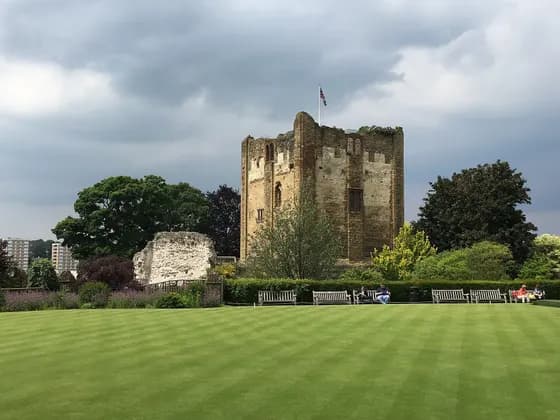
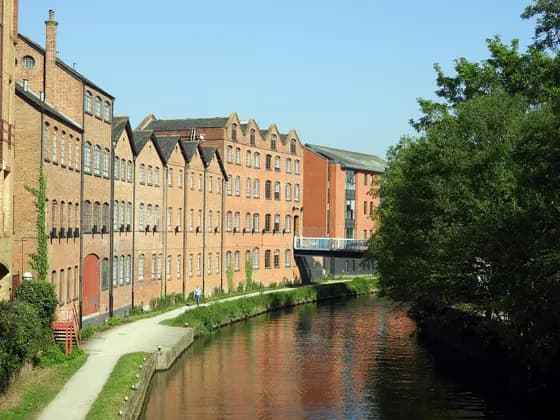
Photo: Geographer / Geograph Britain and Ireland · CC BY-SA 2.0 · cropped
Photo: Robert Ashby · CC BY-SA 2.0 · Photo: AleatoryPonderings · CC0 · Photo: Reading Tom · CC BY 2.0
The Surrey (GEM) medicine course at a glance (2027 entry)
Medicine (Graduate Entry) at the University of Surrey in Guildford is a four-year course for people who already hold a degree. It leads to the BMBS (Bachelor of Medicine, Bachelor of Surgery), which gives you the academic qualification to start work as a foundation doctor. That is the two-year training job every new UK doctor begins with. Teaching is based in the Kate Granger Building on the Surrey Research Park, a 10-minute walk from the university's Manor Park student village.
The School of Medicine is new. It opened in September 2024 with a first year group of more than 30 international students, and the government awarded it 34 funded places for UK students starting in 2025. The General Medical Council (GMC), which regulates doctors and medical degrees in the UK, lists Surrey as a new school under review. Its final decision on approving the degree comes when the first students graduate, expected in 2028.
Until then the University of Exeter acts as Surrey's contingency school. It supports the development of the course and would award GMC-approved degrees if Surrey's own approval were delayed.
Surrey calls its course a spiral curriculum, meaning you come back to the same topics several times, each time in more depth. Year 1 is mostly on campus, learning science and clinical skills together, with eight days in general practice and mental health services. Years 2 and 3 are spent mainly on placement, rotating through hospital and community specialties in nine-week pathways. In Year 4 you join clinical teams for six weeks at a time and take a six-week elective.
| Degree | BMBS Medicine (Graduate Entry) |
|---|---|
| Course length | 4 years, full time, starting in September |
| UCAS code | A101 (institution code S85) |
| Main teaching base | Kate Granger Building, 30 Priestley Road, Surrey Research Park |
| Year group | Opened 2024; 34 government-funded UK places for 2025 entry, plus international students |
| Teaching style | Spiral curriculum: lectures and team-based learning, then clinical pathways |
| Anatomy | Prosections for all; full-body dissection for some interested students via a special study unit |
| First patient contact | Year 1: four GP days and four mental health days |
| Placement area | NHS trusts and GP practices across Surrey and the South East |
| GMC status | New school under GMC review; first graduates expected in 2028 |
What makes Surrey (GEM) medicine different
One year on campus, then three mostly on placement
After Year 1, most of your learning happens in NHS settings. Clinical placement rises from 64 hours in Year 1 to 810 hours in each of Years 2 and 3 and 932 hours in Year 4. In Years 2 and 3 a weekly campus day keeps seminars, clinical skills and tutorials running alongside.
Nine-week clinical pathways with GP weeks built in
Years 2 and 3 each contain three nine-week pathways, such as surgery, or cancer, palliative care and mental health. Every pathway mixes specialty rotations of two to three weeks with two GP weeks, so general practice runs through both years. Each pathway ends with an interprofessional simulation week based on what you have just covered.
Anatomy on real human specimens, with dissection for some
Everyone learns anatomy in a licensed dissection room at the Centre for Anatomical and Surgical Education (CASE), using prosections: body parts already dissected by experts to show key structures. Some interested students can also dissect a whole body through a special study unit (SSU), a project on a topic you choose to study in depth. From Year 1 you also use handheld ultrasound scanners and virtual reality headsets.
A final year shaped around the foundation doctor job
Year 4 has five six-week blocks in medicine, surgery, immediate care, general practice and other specialties. Each block ends with a preparation-for-practice week, listed as a student assistantship, in which you work within the team on the tasks of a foundation doctor. You also plan and arrange your own six-week elective.
Simulation alongside nursing, midwifery and paramedic students
The Surrey Clinical Simulation Centre, shared with the university's other health courses, has mock wards, a critical care unit, an ambulance bay and a community flat. Once a year it is run as a simulated NHS hospital, with actors as patients, and medical students handle mental health crises, births and accidents alongside student nurses, midwives and paramedics.
How Surrey (GEM) teaches medicine
Surrey uses a mix of lectures, small-group work, role play and simulation, laboratory practicals and placements. Each year is organised into strands that are taught and assessed side by side. Medical knowledge covers the biomedical, psychological, social and population health sciences. Clinical practice covers history taking, examination, practical procedures and diagnosis. Professional development and student-selected study run alongside both.
In Year 1 most teaching happens on campus. The module catalogue lists 301 hours of lectures, 128 hours of laboratory work and 196 hours of practical sessions, plus 794 hours of independent study. Subject specialists give the lectures, and team-based learning is used to apply that knowledge to clinical cases. Short practice tests run through the year so you get regular feedback before the exams that count.
From Year 2 the balance flips. You learn mainly on placement, from patients and the NHS staff who care for them, and spend one day a week on campus for seminars, workshops, clinical skills and professional development tutorials. Learning cases on each rotation are matched to the Medical Licensing Assessment (MLA), the national exam every UK medical student must pass before joining the medical register.
In Year 4 you learn mainly as an apprentice within clinical teams. Formal teaching drops to half a day a week of small-group and clinical skills sessions, with some larger interactive sessions on prescribing and radiology.
The ways you will learn
| Lectures | Large-group lectures carry most of the Year 1 science, including clinical bioscience, anatomy, pharmacology and practical prescribing. In Years 2 and 3 they drop to 30 hours a year, with most teaching moving to seminars, workshops and placements. |
|---|---|
| Team-based learning (TBL) | You prepare material before the session, take a short individual readiness test to check you have understood it, then work through clinical cases with your team. You also give feedback on your teammates' contributions. Surrey uses TBL in Year 1 to consolidate knowledge and build teamwork. |
| Clinical skills and simulation | Sessions in the Surrey Clinical Simulation Centre cover communication, physical examination and practical procedures, using manikins and simulated patients. They include practice for Objective Structured Clinical Examinations (OSCEs), exams where you move round timed stations, each testing a clinical task while an examiner watches. |
| Anatomy sessions at CASE | Teaching in the dissection room and seminar room with prosections, bones, models, ultrasound and 3D software, led by a team of clinical anatomists, radiologists and surgeons. |
| Professional Development Groups (PDGs) | Small groups where you reflect on what you saw on placement, explore what it means to be a doctor and set personal goals. A PDG tutor leads them in Year 1. In Years 2 and 3 GP clinical tutors lead this reflection, and professional development tutorials run on your weekly campus day. The groups continue in Year 4, which sets aside 42 hours for PDG sessions and portfolio work. |
| Clinical placements | On placement you take histories, examine patients and are assessed at the bedside, with clinical teaching and expert feedback in small groups. |
A typical week on the Surrey (GEM) course
In June 2026 Surrey published one first-year student's account of a typical week. It gives a good feel for how Year 1 is organised, though your own timetable may differ. Teaching can run from 9am to 6pm, Monday to Friday, and because the course is practical there may be sessions on Wednesday afternoons.
From Year 2 the shape of the week changes: most days are spent on placement, with one day a week back on campus for teaching. The placements section below describes how one partner trust organises this.
- Monday: a biosciences day of four to eight lectures at the Kate Granger Building, covering topics from cell biology to pharmacology, plus case discussions.
- Tuesday: no fixed lectures. The day is used for GP or mental health placements, special study unit work and independent study.
- Wednesday: anatomy at CASE in the Leggett Building, next to the Manor Park student village, with anatomy and radiology lectures, case-based discussions and dissection room teaching.
- Thursday: clinical and communication skills at the Surrey Clinical Simulation Centre, rotating between communication workshops, examination training, procedural skills and OSCE practice, often in pairs or small groups.
- Friday: 9am to 5pm, with short practice tests on the week's work, team-based learning, structured revision and a meeting with your professional development group and mentor.
How anatomy is taught at Surrey (GEM)
Anatomy is taught at CASE, in the Leggett Building. Its anatomy suite is licensed under the Human Tissue Act 2004 and regulated by the Human Tissue Authority. It holds a dissection room, cadaver storage and preparation areas, and embalming facilities. Display screens and an overhead camera let a whole group see fine detail at once. The bodies come from members of the public who donate them for education and research.
In Year 1 everyone learns clinically relevant anatomy from prosections, working with human bones, plastic models, medical imaging, histopathology and 3D anatomy software alongside them. A proportion of interested students can go further and carry out a full-body dissection as a special study unit.
Anatomy is also linked to living patients. From Year 1 you learn surface anatomy with GE Vscan Air handheld ultrasound scanners, first learning how the scanners work and then using them on different parts of the body. Live streams of patient surgery show anatomy in real operations.
Through a partnership with Virtual Reality in Medicine and Surgery (VRiMS), first-year students use virtual reality headsets with 3D anatomy software that show different surgical techniques. Surrey also plans to use surgery filmed at CASE for virtual reality teaching in the later years, alongside surgical placements.
Two practice anatomy spot tests, where you identify structures on specimens, check your progress: one halfway through Year 1 and one at the end. Attending them is compulsory, but they are for feedback rather than marks.
When you first meet patients at Surrey (GEM)
You meet patients in Year 1. The clinical practice strand includes eight placement days, four in general practice and four in community mental health, adding up to 64 hours. You take histories and examine real patients under direct supervision. You must complete four placement assessments, two in each setting, which are for feedback rather than marks.
Alongside those days you practise on manikins and simulated patients in the Clinical Simulation Centre. Year 1 also includes in-person basic life support and paediatric life support training, so you have these skills before you need them on placement.
Patient contact rises steeply from Year 2. On each rotation you meet patients at home, in general practice, in acute hospitals and in community services, and work with the full range of NHS staff. You are assessed with real patients, and experienced doctors, nurses and midwives give you feedback on your professionalism. By Year 4 you are part of a clinical team for six weeks at a time.
Year by year at Surrey (GEM)
- Year 1
Graduate Entry Medicine Year 1 (MED1001)
Year 1 is a single 165-credit module taught mainly on campus. It opens with an introductory block and then runs seven blocks, each built around a clinical theme, so the science is always tied to how illness shows up in patients. Clinical skills, anatomy, professional development and a special study unit run through the whole year. The GMC's 2024/25 review notes that Year 1 is designed to combine the first two years of the University of Exeter's medical course, so there is a lot to cover.
- Introduction to Graduate Entry Medicine: an orientation week, introductory lectures, Making Sense of Evidence lectures, and guidance on the NHS and GMC regulations.
- Seven themed blocks that between them cover oxygen supply and exchange, metabolism, development, the mind, movement and control, host defence, carcinogenesis, and ageing and staying well.
- Medical knowledge teaching through clinical bioscience, anatomy, pharmacology and practical prescribing lectures, team-based learning, and Healthcare in Context sessions. The GMC's 2024/25 review describes Healthcare in Context, formerly called Pre-Pel, as a course students complete before the main programme begins.
- Clinical skills in the Surrey Clinical Simulation Centre, plus four GP days and four community mental health days.
- Compulsory training, including basic life support and paediatric life support, and a set of online SCRIPT modules on safe prescribing.
- A Biomedical Science special study unit on a topic you choose, presented as a narrated oral presentation.
- Year 2
Clinical Pathways 1 (MED2001)
Year 2 moves you into NHS hospitals and GP practices across the South East. After a teaching week for the whole year group, you rotate through three nine-week pathways, in an order that differs from student to student. The module catalogue's example timetable shows the rotations below, each pathway including two GP weeks and ending with an interprofessional simulation week.
- Medicine pathway: medicine of the older adult, cardiovascular and respiratory rotations.
- Surgery pathway: surgery including gastrointestinal conditions, a specialty rotation in urology and ear, nose and throat (ENT), and musculoskeletal and imaging.
- Specialties pathway: mental health, child health, and obstetrics and gynaecology.
- One campus day each week for seminars, workshops, clinical skills and professional development tutorials.
- Two special study units, Medical Humanities and Improving Healthcare, each a two-week block assessed by coursework.
- Experience of digital patient record systems and remote consultations, plus basic life support and paediatric basic life support training.
- A revision week and two assessment weeks at the end of the year.
- Year 3
Clinical Pathways 2 (MED3001)
Year 3 follows the same pattern as Year 2, with three new nine-week pathways in more specialised areas. Each still includes GP weeks and ends with an interprofessional simulation week. By the end of the year you are expected to be familiar with diagnosing, investigating and managing core conditions and able to handle common emergencies.
- Pathway 4: infection, sexual health and dermatology; endocrine, metabolic and renal medicine; neurosciences and ophthalmology.
- Pathway 5: cancer and haematology; palliative and end of life care; mental health.
- Pathway 6: acute and emergency medicine; perioperative medicine and anaesthesia; child health.
- Two special study units, Doctor as Teacher and Research.
- Continued campus teaching one day a week, with a revision week and two assessment weeks at the end of the year.
- Year 4
Preparation for Medical Practice (MED4001)
The final year prepares you for your first job as a doctor. After an induction programme you complete five six-week clinical blocks and a six-week elective you choose and arrange yourself. The module lists 932 hours of clinical placement, and during the year you sit the licensing assessments you need before joining the medical register.
- Blocks in medicine, surgery, immediate care, community general practice and other specialties, in an order that varies between students.
- A student assistantship week at the end of each block, working within the team on the day-to-day tasks of a foundation doctor.
- Half a day a week of small-group and Clinical Skills Resource Centre teaching, plus 20 hours of interactive sessions on safe prescribing and 10 hours on radiology.
- An Immediate Life Support course, certified by the Resuscitation Council UK, covering airway management, the ABCD approach to assessing patients, cardiac arrest management and defibrillation.
- A six-week elective that can be clinical, research or leadership based, in the UK or abroad.
How you are assessed at Surrey (GEM)
Each year is a single module that you pass or fail as a whole, and you must pass it in full before moving on. Every assessment unit in it is listed as pass or fail, but you still receive grades along the way. Individual knowledge tests in Years 1 to 3 are graded unsatisfactory, borderline, satisfactory or excellent. In Year 4 they are marked only satisfactory or unsatisfactory, but OSCE scores are ranked and the top 10% of the year group are graded excellent.
In Year 1 you sit a medical knowledge exam and an OSCE, in which you take a history from a real or simulated patient, examine them, or both. You also complete a portfolio of practical skills, give your special study unit presentation and build up 17 professional judgements, which are records of your professional behaviour made by tutors. Practice versions come first, halfway through the year: a four-station OSCE and a 50-question single best answer paper, where each question offers several plausible options and you pick the best one.
In Years 2 and 3 you sit an Applied Medical Knowledge exam and an end-of-year OSCE. A 30-question practice paper follows each pathway. In Year 2 you also get a practice OSCE station after each pathway, with spoken feedback straight away. In Year 3 a six-station practice OSCE is laid out like the real one.
Placement assessments in Years 2 and 3 include 10 Mini-CEXs and 17 case-based discussions (CBDs) each year. In a Mini-CEX (mini clinical evaluation exercise) an assessor watches you with a real patient. In a CBD you talk a clinician through a patient you have seen. You also complete prescribing DOPS (direct observation of procedural skills), in which you are watched carrying out a prescribing task, and 20 professional judgements a year.
In Year 4 Surrey's Applied Medical Knowledge assessment is listed as two three-hour tests of 125 multiple-choice questions. A satisfactory result in the first two means you have passed; otherwise you get two further tests to reach the standard. While Surrey builds up its own data, the pass mark is set using historic results from Exeter. Final-year OSCEs have four 20-minute stations. You sit two, with a third for anyone who needs it, and must pass at least eight stations across the year.
You must also pass the MLA. Every student graduating from a UK medical school from 2024-25 onwards needs it as part of their degree before joining the medical register. It has two parts. The Applied Knowledge Test (AKT) is an on-screen multiple-choice exam run by medical schools. The Clinical and Professional Skills Assessment (CPSA) is a practical exam of clinical and professional skills that each school sets and runs. The GMC sets requirements that both parts must meet.
- Year 3 also includes clinical competency assessments and an assessment of your clinical log, which is your record of the patients you have seen and the skills you have practised. Both are pass or fail.
- Year 4 workplace assessments: 8 Mini-CEXs of about 30 minutes, 8 CBDs of about two hours, 24 DOPS on real patients and 3 clinical competency assessments away from real patients.
- A 20-minute discussion of your clinical log with your educational supervisor.
- 25 professional judgements and two 500-word reflective essays on your professional portfolio. There is also a 360-degree professional review, in which five different assessors give feedback on the professional behaviour they have seen in your teaching sessions.
- The Immediate Life Support certificate, which Surrey says must be passed before the degree is awarded.
- The Prescribing Safety Assessment, a national pass-or-fail exam on prescribing medicines safely. Surrey's module says you do not need it to graduate but must pass it to complete foundation training.
- The GMC's 2024/25 review said it would begin checking Surrey's preparations for both parts of the MLA, with further visits planned for early 2026.
- Attendance must be at least 80% in each strand, and in Years 2 and 3 in every rotation and pathway, with no averaging between pathways.
- Professional behaviour is tracked all year. Failing to submit an absence notification three times in a term or pathway brings negative feedback, and two negative reports in a term or pathway trigger a formal professionalism review.
- A fitness to practise panel considers every student. You cannot progress if judged not fit to practise, and you must be judged fit to practise to be awarded the degree.
- If you fail a main area of Year 4, you repeat all of that year's teaching and assessment the next year. There is one such chance, after which you would usually have to leave the course.
Where you will actually be at Surrey (GEM)
Placements run through all four years. In Year 1 they are single days in general practice and community mental health. In Years 2 and 3 you rotate through hospital and community placements across the South East, and in Year 4 you spend six weeks at a time with each clinical team. A clinical placements team at the University organises them.
Every placement provider is within commuting distance of the University. You pay travel costs upfront, and the University reimburses anything above your normal journey to campus. You do not need a driving licence, but the University says a car makes getting to placements easier, and drivers can claim extra for student passengers.
Surrey names its partners at trust level: five NHS trusts, two integrated care systems (ICSs, the NHS partnerships that plan care across an area) and a network of local GP practices. The list below gives each partner and what it provides. Because pathways and blocks come in different orders, your rotation sequence will not match everyone else's.
One partner publishes how it hosts Surrey students. Surrey and Sussex Healthcare NHS Trust, which runs East Surrey Hospital in Redhill, says they stay with it for the whole academic year. They spend Mondays, Wednesdays, Thursdays and Fridays on the wards, in outpatient clinics and in theatre. They work through the Medicine, Surgery and Specialties pathways, which match the three Year 2 pathways. Every Tuesday they return to the University for teaching. This is that trust's own arrangement, so the pattern elsewhere may differ.
A named partner. The trust runs Royal Surrey County Hospital on Egerton Road in Guildford and is a regional cancer centre.
A named partner. The trust's St Peter's Hospital in Chertsey provides emergency services and its more complex medical and surgical care.
A named partner. Its hospitals include Frimley Park Hospital on Portsmouth Road, Camberley. Surrey also lists the Frimley Health and Care integrated care system as a partner.
A named partner. East Surrey Hospital has more than 700 beds and provides the trust's acute and complex care. The trust's medical education pages confirm it hosts University of Surrey students, with local information for students placed in Redhill.
- East Surrey Hospital, Redhill
A named partner providing mental health, drug and alcohol, learning disability and neurodevelopmental services to 1.4 million people in Surrey and north-east Hampshire.
GP placements run in every year, with a network of local GP practices named as partners. Surrey Heartlands ICS is also a named partner.
Electives and chosen modules at Surrey (GEM)
Student-selected work runs through the course as special study units (SSUs). In Year 1 you choose a topic within biomedical science and work to a schedule set by the tutor running the unit, called the SSU facilitator. You then present your findings as a narrated oral presentation.
Year 2 has two units, Medical Humanities and Improving Healthcare, each a two-week block assessed by coursework. In both you find and weigh up evidence and use it to make recommendations for better care. Year 3 adds two more, Doctor as Teacher and Research.
The Year 4 elective lasts six weeks, and you choose and arrange it yourself. It can be clinical, research or leadership based, or a mix, and an elective in another country and health system can be considered. You first submit a proposal; if it still falls short after one resubmission, you cannot go.
Afterwards you are assessed on a report from your elective host and an A3 poster presentation, and you complete a health questionnaire and an online record of the experience. A locality electives advisor helps if your proposal or host report needs work.
Facilities and support at Surrey (GEM)
Where you will learn
The Kate Granger Building at 30 Priestley Road, on the Surrey Research Park, is shared by medicine, paramedic science, nursing and midwifery. It houses the Surrey Clinical Simulation Centre (SC2), which has two mock wards, a critical care unit, an ambulance bay, model operating theatres, an immersive learning room and a community flat.
The centre's manikins move, speak and react, and technical staff can change their breathing, pulse, blood pressure and oxygen levels as a scenario unfolds. A camera system records sessions for playback and feedback. An internal phone network mimics a hospital switchboard, so you can practise handovers and communication between rooms during emergencies. The Independent Clinical Learning Facility, in the same building, lets you practise skills with or without supervision.
CASE, the anatomy centre described above, also works with the Minimal Access Therapy Training Unit (MATTU), which gives access to a range of surgical simulation options. VRiMS provides a library of immersive surgical training videos that Surrey students can use.
Every student is given a university iPad for the whole course. Through SurreyLearn, the university's online learning platform, you reach a 3D anatomy platform, a curriculum map showing what you learn and where, quizzes, group exercises and discussion boards. Your e-portfolio records your learning on campus and on placement, tracks attendance and is set up like the portfolios used in postgraduate training.
Support while you study
Your main personal support in Year 1 is your Professional Development Group (PDG), a small group with a tutor who also acts as a mentor. You meet to reflect on placements and set goals. In Years 2 and 3 GP clinical tutors lead this work. In Year 4 clinical supervisors support you on placement, while PDG sessions (42 hours in the Year 4 module) and your PDG tutor continue alongside.
The course sets out who helps when something goes wrong. Concerns about professional behaviour are worked through with your PDG tutor or GP clinical tutor, OSCE difficulties with clinical skills tutors, and wider learning needs through referral back to your PDG tutor. In Year 4, if two or more of your case-based discussions by the end of the first term are rated below satisfactory, your PDG tutor arranges extra help. Practice tests come with quick feedback, including personalised data from the online exam systems.
In its 2024/25 review the GMC found the school's student support services foster a positive learning environment. It noted that students often went straight to the Director for Student Support, and recommended the school reduce its reliance on a small senior team as year groups grow. The school has secured funding to expand student support and revised its peer mentoring scheme during that year.
Is the Surrey (GEM) course right for you?
This course may suit you if
- You want most of your course in clinical settings: after one campus year, Years 2 to 4 are mainly placement-based, with more than 800 placement hours a year.
- You learn well by applying knowledge with other people, through team-based learning, small-group placement teaching and simulation shared with other health students.
- You want to learn anatomy from real human specimens, with a chance for some interested students to dissect a whole body through a special study unit.
- You would like to stay based in one place, since every placement provider is within commuting distance and extra travel costs are reimbursed.
- You want to see general practice and mental health from Year 1 and keep returning to GP throughout Years 2 and 3.
Things to think about
- Year 1 is compressed: the GMC notes it is designed to cover what Exeter teaches in two years, and one first-year describes Mondays with four to eight lectures.
- Surrey is a new school with no graduates yet. The GMC decides on final approval when the first students graduate, expected in 2028, with Exeter as the back-up.
- The GMC's 2024/25 review found problems in parts of Year 1 for the first students, including teaching materials and psychiatry placements. The school made changes, and the GMC said in that report that it would keep monitoring them.
- Placement travel takes time and upfront money. Partner hospitals are spread across Surrey and the South East, and a car helps though it is not required.
- Attendance rules are strict: at least 80% for every rotation and pathway, and repeatedly missing absence notifications counts against your professionalism record.
Surrey (GEM) medicine course — frequently asked questions
Applying to Surrey (GEM)?
How to get into Surrey (GEM)
Entry requirements, UCAT, personal statement and interview, step by step.
Open the guide →Surrey (GEM) UCAT cut-offs and offers
UCAT cut-offs, A-level offers, interview format and decision dates.
See the requirements →Compare Surrey (GEM) with other schools
Put the teaching style, anatomy teaching and placements next to another school.
Open the comparison →Prepare for the Surrey (GEM) interview
Format breakdown, school-specific sample questions and prep tips from tutors who interviewed here.
Read the guide →Where this Surrey (GEM) course guide came from
This guide was written from 21 official sources — University of Surrey's own course pages and programme documents, plus the regulator and NHS placement partners where they publish detail — read on 2026-09-24, then checked claim by claim against those sources.
- Medicine (Graduate Entry) BMBS course page, 2027 entry, University of Surrey
- Medicine (Graduate Entry) BMBS programme specification 2027/8, University of Surrey
- MED1001 Graduate Entry Medicine Year 1, module catalogue 2027/8
- MED2001 Clinical Pathways 1 Year 2, module catalogue 2027/8
- MED3001 Clinical Pathways 2 Year 3, module catalogue 2027/8
- MED4001 Preparation for Medical Practice Year 4, module catalogue 2027/8
- GMC Annual Quality Assurance Summary for new schools, University of Surrey School of Medicine, 2024/25
- The Medical Licensing Assessment explained, General Medical Council
- Taking the MLA: what the assessment involves, General Medical Council
- Prescribing Safety Assessment, run by the Medical Schools Council and the British Pharmacological Society
- University of Surrey's School of Medicine anatomy facilities open for business
- University of Surrey's new medical school secures government-funded places, May 2024
- A week in the life of a medical student, University of Surrey, June 2026
- Training doctors of the future, University of Surrey
- About us, Royal Surrey NHS Foundation Trust
- Royal Surrey County Hospital, Royal Surrey NHS Foundation Trust
- About us, Ashford and St Peter's Hospitals NHS Foundation Trust
- About us, Surrey and Sussex Healthcare NHS Trust
- Our Trust, Surrey and Borders Partnership NHS Foundation Trust
- Undergraduate placements, Surrey and Sussex Healthcare NHS Trust medical education
- Frimley Park Hospital, NHS website (information supplied by Frimley Health NHS Foundation Trust)
Courses are restructured between cycles. Anything here that decides your application — an anatomy offer, a placement city, a compulsory intercalated year — should be confirmed against the official page for your entry year.
Applying to Surrey (GEM)?
We have helped hundreds of applicants turn their UCAT, personal statement and interview prep into offers from Surrey (GEM) and other UK medicine schools.