
The Swansea (GEM) Medicine course
What you actually study, and where you will be
Swansea's MB BCh is a 4-year (graduate entry) course taught through case-based learning in a spiral curriculum, with patient contact from Year 1 and placements in Wales (2027 entry). A four-year graduate-entry course open to graduates of any discipline. It is a spiral curriculum with each learning week built around a clinical case, and clinical placement experience starts in the first term.
- Degree
- MB BCh
- Length
- 4 years (graduate entry)
- Teaching
- Case-based learning + Spiral
- Clinical contact
- Year 1
- UCAS code
- A101
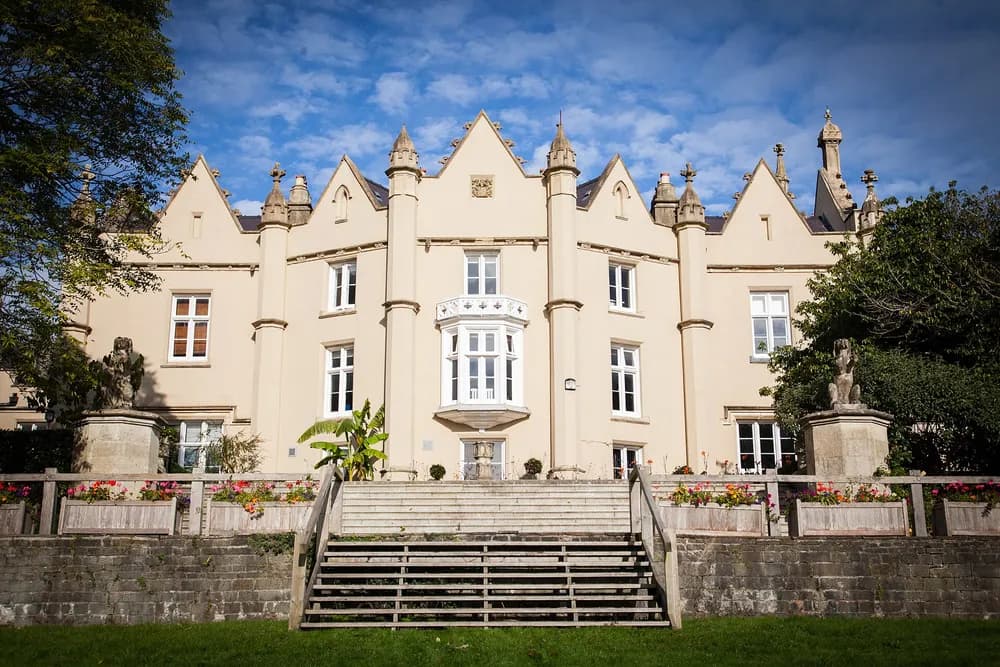
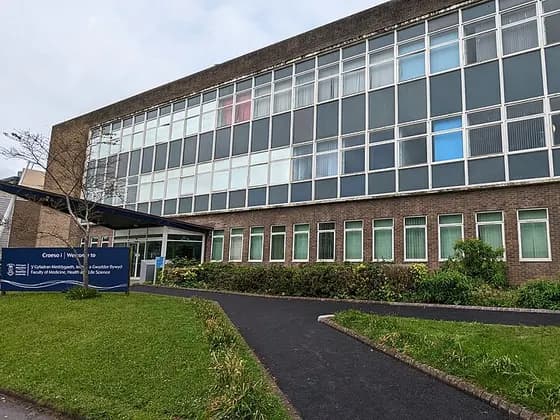
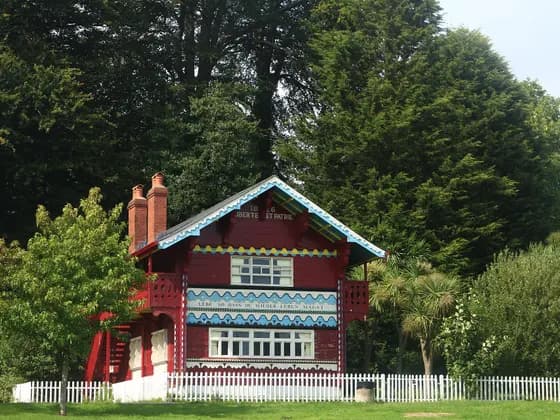

Photo: Swanseauni · CC BY-SA 4.0 · cropped
Photo: Eugenus78 · CC BY-SA 4.0 · Photo: WelshDave · CC BY-SA 4.0 · Photo: Gzregozr · CC BY-SA 4.0
The Swansea (GEM) medicine course at a glance (2027 entry)
Swansea's Graduate Entry Medicine course, usually called GEM, is a four-year medical degree for people who already hold a degree in any subject. It leads to the MB BCh, which stands for Bachelor of Medicine, Bachelor of Surgery. Teaching is based at the Singleton Park Campus in Swansea, and the UCAS code is A101. In 2022 the Welsh Government added 25 places to the yearly intake, following 25 added in 2021. Swansea said at the time that this brought its home places to 142.
The course is organised around the way patients present to doctors and the way doctors approach them, rather than around separate science subjects. You learn the biomedical sciences in the context of clinical medicine, public health, pathology, therapeutics (treatment with medicines and other therapies), ethics and the social side of illness. Swansea calls this a spiral curriculum, because you return to topics several times and go deeper each time.
Each year has the same three strands, each worth 50 credits: Doctor as Scholar and Scientist, Doctor as a Practitioner and Doctor as a Professional. That makes 150 credits a year and 600 in total. Every module is core, so you must pass all of them to move on. The regulations set the final outcomes at master's level, though by UK custom the degree keeps its bachelor's title.
Patients come early. Placements start in the first weeks of Year 1, and in Years 1 and 2 your time is split roughly half and half between placement and the classroom. In Years 3 and 4 you are mostly on placement in NHS hospitals, GP surgeries and community services. The medical school's partner health boards are Swansea Bay, covering Swansea and Neath Port Talbot, and Hywel Dda, which covers Carmarthenshire, Ceredigion and Pembrokeshire.
You can shape the course in three ways: an optional rural track, a Year 3 spent mostly in general practice, and study partly in Welsh. Finals include the Medical Licensing Assessment (MLA), which the General Medical Council (GMC), the body that regulates doctors, requires every UK medical student to pass. After graduating you move on to the two-year UK Foundation Programme, the first stage of training as a doctor.
| Degree | MB BCh (Bachelor of Medicine, Bachelor of Surgery) |
|---|---|
| Course length | 4 years, full time, for graduates of any subject |
| UCAS code | A101 |
| Main base | Grove Building, Singleton Park Campus, Swansea |
| Teaching style | Weekly patient case, lectures and small-group practicals, in a spiral curriculum |
| First patient contact | Placements begin in the first weeks of Year 1 |
| Placement area | Mainly Swansea Bay and Hywel Dda health boards (south-west and mid Wales) |
| Optional tracks | Rural and remote health (RRHIME); Year 3 Primary Care Academy |
| Welsh-medium study | At least 40 credits a year can be taken in Welsh |
What makes Swansea (GEM) medicine different
An optional rural and remote health track
RRHIME, short for Rural and Remote Health in Medical Education, is open to a small number of students in each year group. More of your placements happen in rural and remote settings, such as rural GP practices, district hospitals and hospital care in Aberystwyth and Haverfordwest. The aim is to help you decide whether a rural career suits you. You miss nothing from the standard course.
A Year 3 spent mostly in general practice
Up to 20 students can spend Year 3 in the Primary Care Academy instead of the usual hospital attachments. You are placed with West Wales GP practices, alone or in pairs, and spend roughly 60 to 70 per cent of the year in primary care. You plan the rest around your own learning needs, and learn alongside allied health staff and students, such as physiotherapists, occupational therapists and paramedics.
Part of the course in Welsh
Fluent Welsh speakers can study at least 40 credits a year through Welsh. Each year the Doctor as a Professional strand has a Welsh-language version, Meddyg fel Gweithiwr Proffesiynol, which goes with Welsh-speaking placements. You can also work towards the Welsh Language Certificate from the WJEC and Coleg Cymraeg Cenedlaethol, which gives future employers evidence of your Welsh.
Progress tests every year before the national exam
A progress test is a long multiple-choice exam that samples the whole of medicine, so it shows how your knowledge grows over time. You sit a practice one in Year 1 and assessed ones in Years 2 and 3, each two papers of 100 questions. The Year 4 Applied Knowledge Test, the written half of the MLA, uses the same two-paper, 100-question format.
How Swansea (GEM) teaches medicine
Teaching in Years 1 and 2 is organised around eight body systems: cardiovascular, endocrine, gastrointestinal, immunology and microbiology, nervous, renal, reproductive and respiratory. Each system brings its common conditions, such as heart failure, diabetes, stroke or asthma. It also brings the clinical skills that go with it, such as examining the abdomen or reading an ECG (a tracing of the heart's electrical activity).
Four strands run through every system. Anatomy covers the structure of the body. Therapeutics covers how medicines work and how to prescribe them safely. Integrated Clinical Method (ICM) teaches examination, communication and clinical reasoning, and Medicine, Health and Society covers ethics, law, public health and the social side of illness.
In practice, the spiral means the same body systems and similar patient cases come round again later in Year 1 and again in Year 2. Each week covers a new case in full, from what has gone wrong in the body to tests, diagnosis and treatment. Over time you meet each topic several times and build on what you learned before.
A large part of your learning is self-directed. The GEM team does not set any reading before you start, but expects you to find and use resources yourself once the course begins. Staff and fellow students run extra sessions for anyone who feels they need more support in the basic sciences, which helps if your first degree was not in science.
The balance shifts over the four years. In Years 1 and 2 about half your time is on campus and half on placement. In Years 3 and 4 most of your learning happens on placement, with some teaching still at the university.
The ways you will learn
| Lectures and tutorials | Lectures give the whole year group the medical sciences, therapeutics, and Medicine, Health and Society teaching linked to each week's case. Tutorials are smaller sessions where you work through that material with a tutor and ask questions. |
|---|---|
| Case-based learning | Each week of Years 1 and 2 centres on one patient case, introduced by a clinician. You use it to learn the science, clinical reasoning and ethical questions behind it. This fits the course's aim of teaching medicine the way patients actually present to doctors. |
| Integrated Clinical Method (ICM) | ICM is where you learn clinical and communication skills, in small-group practicals led by clinicians. Sessions take place in the ICM Suite in the Grove Building, which is set out like a hospital ward so you get used to clinical surroundings. ICM runs in all four years, each with its own lead. |
| Clinical forums | Weekly sessions, led by practising clinicians, that pull together what you have learned from the week's case, including its professional and ethical side. |
| Professional practice study days | Seven structured days spread over Years 1 and 2, in small and large groups. They cover professional values, fitness to practise (whether a doctor is safe to work), how doctors are regulated, medical errors and reflecting on your own practice. |
| Learning Opportunities in the Clinical Setting (LOCS) | LOCS are clinical learning sessions you choose yourself, starting from Year 1. They sit alongside the set placements and let you follow your own interests. Students on the rural track must make at least two of them rural or remote in focus. |
| Clinical apprenticeships | Early placements, named in the Year 1 teaching, where you learn on the job alongside clinical staff. The rural track page numbers them 1 to 6. |
| Specialty attachments and assistantships | Year 3 is built on eight five-week hospital specialty attachments. An assistantship is a placement where you do much of a junior doctor's work under supervision. Year 4 has three six-week junior assistantships and ends with a Senior Student Assistantship. |
| Community-based learning | Placements in community settings outside hospital. They include one-day placements in Years 1 or 2, a block in Year 3 and a community-based junior assistantship in Year 4. |
A typical week on the Swansea (GEM) course
In Years 1 and 2, each learning week is built around one patient case, which a clinician introduces. The case changes every week, and most of the week's teaching links back to it.
Lectures cover the science behind the case, such as anatomy, physiology, biochemistry and pathology, along with the medicines used to treat it and its social and ethical side. Anatomy is taught in small-group practical sessions, and clinical skills in small-group practicals led by clinicians.
Tutorials and other practical sessions fill out the week, and a clinical forum brings its learning together. Structured self-directed study and online resources support the teaching. Alongside all this, roughly half your time in these two years is spent on placement.
How anatomy is taught at Swansea (GEM)
Anatomy is one of the four strands that run through the course. In Years 1 and 2 it is taught in small-group practical sessions, and in most weeks it links to that week's patient case.
Swansea says it makes extensive use of donated human tissue to teach anatomy, to medical students and to students on several other courses. The donors are people who chose to leave their bodies to medical education. In April 2026 the university unveiled a memorial to them outside the Grove Building, where its anatomy labs are. A second-year GEM student spoke in the announcement about learning from donors.
The Anatomy Lab in the Grove Building is used for teaching and for independent study. It has a 3D computer model of the human body for looking at fine detail, and it is shared with physician associate and applied medical sciences students. The Clinical Anatomy Lab focuses on anatomy as you will use it with patients, taught by specialists in smaller groups.
Anatomy starts in induction week, with a session on the regulations that govern anatomy teaching, an introduction to anatomy and small-group sessions in the Clinical Anatomy Labs.
When you first meet patients at Swansea (GEM)
Your first placement comes within the first weeks of Year 1. The last day of induction week includes an introduction to clinical placement, and scrubs are fitted and ordered that same week.
In Years 1 and 2 roughly half your time is on placement, in health board settings and GP practices. Early contact comes through one-day community placements, clinical apprenticeships and the self-chosen sessions called LOCS.
In Years 3 and 4 most of your time is clinical. Year 3 normally means eight five-week hospital attachments, covering surgery, emergency medicine, general medicine and cancer care, children, mental health, frailty, women's health and other specialties, plus a community block. Year 4 brings three junior assistantships, your elective and a final Senior Student Assistantship.
Year by year at Swansea (GEM)
- Year 1
Induction, science in context and first placements
Year 1 combines the science of medicine with placements from the first weeks. You take Doctor as Scholar and Scientist 1, Doctor as a Practitioner 1 and Doctor as a Professional 1, in English or Welsh. Two of the three modules run on an extended medicine year, from week 1 to week 46.
- Induction week in early September covers the curriculum, course rules, assessments, professionalism and student support, mostly in the Grove lecture theatre.
- Induction rotations cover clinical anatomy, the ICM Suite and talks from the medical defence organisations and the British Medical Association (BMA). The course rules require you to join a medical defence organisation.
- Sessions on healthcare in Wales, a Welsh-medium session and an introduction to the rural track also run in the first week.
- A formative progress test of two 100-question papers, scored together out of 200. Formative means it gives you feedback but does not count towards progression.
- If rural medicine interests you, you attend the RRHIME introductory meeting this year and can then put your name forward for the track.
- Year 1 assessments include a literature review, an e-poster presentation and a family case study. You also do pharmacy calculations and a written clerking: a full written record of a patient's history and examination.
- Other requirements are seven LOCS sessions, mandatory training and a mid-year appraisal. You also receive multi-source feedback, which gathers views on you from the people you work with.
- Year 2
Building on the spiral
Year 2 continues the three strands at a higher level: Doctor as Scholar and Scientist 2, Doctor as a Practitioner 2 and Doctor as a Professional 2. Your time is still split roughly half and half between campus and placement. It is also the year to decide about the Primary Care Academy and intercalation.
- A summative progress test, again two papers of 100 questions. Summative means it counts: you must pass it to move on.
- Placements in health board settings and GP practices continue alongside campus teaching and ICM.
- Students who did not join the rural track in Year 1 can still join it in Year 2.
- All Year 2 students can express interest in the Primary Care Academy for Year 3. Up to 20 places are offered, with preference for self-motivated students who can direct their own learning.
- Swansea recommends that graduate-entry students who want to intercalate take the extra year between the end of Year 2 and the start of Year 3.
- An Objective Structured Clinical Examination (OSCE): a circuit of short timed stations, each testing a clinical task with an actor or volunteer playing the patient. You also write a Living with Diagnosis case study and sit a written exam.
- Workplace tasks include a case-based discussion, where you talk a supervisor through a patient you have seen. You also complete four LOCS sessions, a written clerking and a sign-off for placement time out of hours.
- Year 3
Mostly on placement
From Year 3 most of your time is spent on clinical placement, with some teaching still at the university. The modules are Doctor as Scholar and Scientist 3, Doctor as a Practitioner 3 and Doctor as a Professional 3. Most students rotate through hospital specialty attachments, while up to 20 spend the year in the Primary Care Academy.
- Eight hospital specialty attachments of five weeks each. They cover acute surgery, tertiary (highly specialised) and emergency medicine, general medicine and oncology (cancer care), child health, mental health, frailty (care of frail older people), women's health, and sub-specialties of medicine and surgery. Each mixes ward, clinic and community work.
- Three compulsory half-day simulation sessions, in medicine, surgery and paediatrics. Simulation means practising a staged scenario, with a manikin or an actor as the patient, where mistakes cannot harm anyone.
- Seven half-day ICM sessions through the year on the skills a new doctor needs. They include handing over patients, breaking bad news, safeguarding, consent, decisions not to attempt resuscitation (DNACPR), end-of-life care, prescribing and practical procedures.
- A community-based learning block, which rural-track students can take in a rural or remote location.
- Primary Care Academy students work towards the same outcomes but spend most of their placement time in general practice in West Wales, with the rest in hospital. The year is organised around negotiated learning opportunities that fit your own learning needs.
- The final summative progress test, in the same format of two 100-question papers.
- Assessment includes an OSCE, a written exam, an assignment and five mini clinical evaluation exercises (mini-CEX), in which a clinician watches you with a real patient and scores you. Each specialty attachment must also be signed off.
- Year 4
Assistantships, elective and finals
The final year prepares you to start work as a Foundation Year 1 doctor. You take Doctor as Scholar and Scientist 4, which is marked pass or fail, Doctor as a Practitioner 4 and Doctor as a Professional 4. Most of the year is spent on placement in health boards around Wales and in GP practices, with little time on campus.
- Three six-week junior assistantships that rotate you through GP and hospital settings. You take responsibility for your own patients under close supervision: clerking them, planning their care, arranging tests and talking to their families.
- A Transition to Practice block of workshops and simulation that prepares you for work as a doctor. Topics include patient safety, human factors (how people and systems cause or prevent errors), wellbeing, health inequalities, AI in healthcare and greener healthcare.
- Your elective, a placement you choose and organise yourself, followed by an elective report.
- The Senior Student Assistantship, your last placement. You work as a member of a ward team, review patients every day and join on-call shifts, but you do not prescribe or start treatment on your own.
- The Applied Knowledge Test (AKT) and the Clinical and Professional Skills Assessment (CPSA), the two parts of the MLA. The CPSA is the final-year OSCE.
- The Prescribing Safety Assessment (PSA), a two-hour national online exam on prescribing medicines safely, taken by final-year medical students. Every new doctor must pass it to complete the first year of the UK Foundation Programme, and Swansea lists it among its final-year assessments.
- Six mini-CEX, a log of the practical procedures the GMC expects new doctors to perform, and out-of-hours requirements. The Senior Student Assistantship is assessed too, including a DOPS, in which a supervisor watches you carry out a procedure.
- Doctor as a Practitioner 4 counts double when your final award is worked out.
How you are assessed at Swansea (GEM)
Each module has several assessment parts, and you must pass every part to earn the module's credits. A good average cannot make up for one failed component. Pass marks are not fixed percentages: each is set through a formal standard-setting process that takes account of how hard the exam is. Professionalism is formally assessed too, and it counts towards whether you pass each placement.
Knowledge is tested through progress tests and single best answer (SBA) questions, where you pick the one best option from a list. Practical and workplace assessments build up year by year, as set out above. Case studies and a written clerking start in Year 1, OSCEs in Year 2 and mini-CEX in Year 3.
The MLA has two parts, both in Year 4. The AKT is shared by all UK medical schools: two computer-based papers of 100 questions, each lasting two hours, on consecutive days. It is pitched at a doctor in their first week of Foundation Year 1. Swansea told the GMC that students normally get up to two attempts within the academic year.
The CPSA is Swansea's own clinical exam. When the GMC approved it in April 2024, it was an OSCE of three circuits of five stations over three days. Each station lasted 12 minutes, with two minutes' reading time, and most included marks for professionalism. Examiners could issue a yellow card for clearly unprofessional behaviour or poor clinical skills, and each one was followed up with the student. At that time the school also ran a practice CPSA each September, with four sample stations and detailed feedback.
Each module is graded Pass, Pass with Merit or Pass with Distinction, depending on where your average falls against the 50th and 80th percentiles. A merit earns one point and a distinction two. Your final award is a Pass (7 points or fewer), a Pass with Commendation (8 to 12) or a Pass with Honours (13 or more).
Where you will actually be at Swansea (GEM)
Clinical placements take place at NHS sites: hospitals, GP surgeries and community health services. Swansea says this mix is meant to show you first-hand how social conditions affect health, and why primary care and prevention matter in tackling health inequalities.
The medical school's local health board is Swansea Bay University Health Board, which worked with the university to bring the Wales graduate-entry course to Swansea. It serves around 390,000 people in Swansea and Neath Port Talbot, with three main hospitals and 45 GP practices. Two of the medical school's teaching facilities are in its hospitals: an Education Centre at Morriston Hospital and the Singleton Teaching Unit at Singleton Hospital.
The second partner is Hywel Dda University Health Board, which serves about 384,000 people in Carmarthenshire, Ceredigion and Pembrokeshire. Since medical school places in Wales were expanded in 2018, Swansea has been working with Hywel Dda to create more learning in Mid and West Wales. The aim is for students to learn in community settings as much as possible, in line with Welsh Government policy on care close to home.
Where you go depends partly on your choices. Rural-track students spend more time in rural GP practices, district hospitals and hospital care in Aberystwyth and Haverfordwest. Primary Care Academy students are placed with West Wales GP practices, alone or in pairs, and the school aims to group them near each other.
In the final year, the module descriptions place most of your time in health boards around Wales and in GP practices. The Welsh-language version of the Doctor as a Professional module goes with Welsh-speaking placements.
The medical school's local health board, covering Swansea and Neath Port Talbot. Its wider services include a community hospital, primary care resource centres and 45 GP practices.
- Morriston Hospital, Swansea: the medical school's Education Centre
- Singleton Hospital, Swansea: the Singleton Teaching Unit
For students on the rural track. Aberystwyth and Haverfordwest both lie in the Hywel Dda University Health Board area, which covers Carmarthenshire, Ceredigion and Pembrokeshire.
- Hospital care in Aberystwyth, Ceredigion
- Hospital care in Haverfordwest, Pembrokeshire
- Rural GP practices
- District hospitals
For the up to 20 students who spend Year 3 in the Primary Care Academy, placed alone or in pairs and grouped near each other where possible.
- GP practices in West Wales
Electives and chosen modules at Swansea (GEM)
The elective is a placement you choose and organise yourself in the final year. It might mean more experience in a specialty, a research or audit project, or seeing healthcare in another country. Many Swansea students go abroad, while others stay in the UK, and afterwards you write an elective report reflecting on what you learned.
Choice runs through the rest of the course too. LOCS let you pick clinical sessions from Year 1. Student selected components (SSCs) are pieces of work on a topic you choose, and research projects and audit let you follow an academic interest. An audit checks whether care on a ward or in a clinic meets an agreed standard.
The rural track has set placement requirements. You complete at least two LOCS with a rural or remote focus and at least two clinical apprenticeships in rural or remote places. You also take at least one community placement and one Year 4 junior assistantship in a rural or remote location. Your elective in Year 4 must be rural-related, and the track page says these are usually overseas.
The track asks for more than placements. You do at least two rural-focused SSCs and link one of your year-long case studies to rural health. You keep a track e-portfolio of your rural learning, which you must complete to finish the track, and you are invited to quarterly meetings with outside speakers. Swansea strongly advises taking its Welsh for Medicine course, though it is optional.
To join the rural track you attend an introductory meeting in Year 1 and then put your name forward, or you can join in Year 2. If too many apply, you write a short reflective application, and preference goes to students committed to rural practice after graduating, especially in Wales. The Head of GEM decides, and you hear within six weeks of the deadline.
Intercalation at Swansea (GEM)
Intercalating means taking an extra year of study, usually for a separate qualification, in the middle of your medicine course. At Swansea it is optional, but the medical school encourages every student to consider it. For graduate-entry students it recommends taking the year between the end of Year 2 and the start of Year 3, which adds a year to your time at medical school.
Swansea offers nine master's courses as intercalated degrees. Five are Diabetes Practice, Education for the Health Professions, Genomic Medicine, Health Data Science and Health Informatics. The others are Healthcare Management, Public Health and Health Promotion, Medical Education, and Nanomedicine.
You apply through the university's Learner Gateway portal with a transcript and a letter from the medical school confirming it will release you for the year. If you pay your own fees, you also pay them for the intercalated year, and each course sets its own fee.
Facilities and support at Swansea (GEM)
Where you will learn
The Grove Building on Singleton Park Campus is the founding home of the medical school and the base for anatomy and clinical skills teaching. Besides the anatomy labs and the ward-style ICM Suite described above, it has a lecture theatre and a computer suite for quiet study and group projects.
Simulation runs through the course. Years 1 and 2 use simulated patients in clinical skills teaching, Year 3 has three compulsory half-day sessions, and the Year 4 Transition to Practice block includes simulation. Separately, the university has a general simulation centre, SUSIM, serving its clinical, health and social care courses from the main campus and its West Wales site.
The medical school also has teaching space in two hospitals, described under placements. Its research buildings on Singleton Park include the Institute of Life Science and the Data Science Building.
Support while you study
You are given a personal tutor, drawn from the medical school's academic staff or from clinicians in the local health boards. Your tutor is your first contact for anything affecting your wellbeing, attendance or progress, and can help with personal development planning and careers advice. They can also point you to welfare services.
The medical school has its own Student Life Officer, who identifies students who may need help and works with them on a welfare plan, from homesickness to more serious concerns. A Student Information and Education Office handles academic queries. The GEM team also includes a Student Support and Guidance Lead, a Senior Academic Mentor and a Year 1 lead.
Before you start, the student medical society, MedSoc, emails new students its own introduction to GEM, written by students who have done the course. No reading is required in advance. If you want to refresh your anatomy and physiology, the GEM team suggests two introductory books.
When the GMC reviewed Swansea's finals in 2024, the school described feedback sessions after the AKT with the AKT lead or your academic mentor, and extra tutorials for anyone resitting. Anyone who failed the CPSA got a one-to-one feedback meeting and an academic mentor. Welsh speakers can have a Welsh-speaking personal tutor and one-to-one academic skills support in Welsh.
Is the Swansea (GEM) course right for you?
This course may suit you if
- You already have a degree in any subject and want to qualify as a doctor in four years rather than five.
- You want to be on placement from the first weeks, with about half of Years 1 and 2 spent in clinical settings.
- You are drawn to rural medicine or general practice and would make use of the RRHIME track or a Year 3 in the Primary Care Academy.
- You speak Welsh and want to study, and train on placement, partly in Welsh.
- You learn well by revisiting topics, since the spiral curriculum and yearly progress tests bring the same ground back at greater depth.
Things to think about
- The pace is fast: the course fits medicine into four years, and two of the Year 1 modules run to week 46 of an extended year.
- Every assessment part must be passed, a good average cannot rescue a failed component, and you can repeat a year only once.
- Placements can take you well beyond Swansea. The rural track and the Primary Care Academy mean time in Mid and West Wales, and the final year uses health boards around Wales.
- Much of the learning is self-directed, so without a science degree you will need to catch up on the basics quickly, with optional extra sessions to help.
- Intercalating is optional but adds a year, and if you pay your own fees you pay for that year too.
Swansea (GEM) medicine course — frequently asked questions
Applying to Swansea (GEM)?
How to get into Swansea (GEM)
Entry requirements, UCAT, personal statement and interview, step by step.
Open the guide →Swansea (GEM) UCAT cut-offs and offers
UCAT cut-offs, A-level offers, interview format and decision dates.
See the requirements →Compare Swansea (GEM) with other schools
Put the teaching style, anatomy teaching and placements next to another school.
Open the comparison →Prepare for the Swansea (GEM) interview
Format breakdown, school-specific sample questions and prep tips from tutors who interviewed here.
Read the guide →Where this Swansea (GEM) course guide came from
This guide was written from 34 official sources — Swansea University's own course pages and programme documents, plus the regulator and NHS placement partners where they publish detail — read on 2026-09-23, then checked claim by claim against those sources.
- Medicine (Graduate Entry), MB BCh: Swansea University course page
- Academic regulations and assessment rules for the Graduate Entry MB BCh
- Become a Doctor: Swansea University guide and FAQs on Graduate Entry Medicine
- Rural and Remote Health in Medical Education (RRHIME) track
- Medical School Primary Care Academy track
- Graduate Entry Medicine welcome page, 2026 induction schedule and teaching team
- Grove Building: anatomy labs, ICM Suite and computer suite
- Facilities at the Medical School
- Swansea University Simulation and Immersive Learning Centre (SUSIM)
- Swansea Bay University Health Board partnership page
- Hywel Dda University Health Board partnership page
- Intercalated degrees at Swansea University
- Pathways to Medicine and the new 2027 MB BCh route
- Medicine, MB BCh (A110): route with a healthcare support worker year
- Swansea University to train even more medical students (press release, August 2022)
- GMC compliance decision: MLA Applied Knowledge Test, Swansea University Medical School (June 2024)
- GMC compliance decision: MLA Clinical and Professional Skills Assessment, Swansea University Medical School (April 2024)
- Module catalogue 2026/27: PM-239F Doctor as Scholar and Scientist 1
- Module catalogue 2026/27: PM-240F Doctor as a Practitioner 1
- Module catalogue 2026/27: PM-241F Doctor as a Professional 1
- Module catalogue 2026/27: PM-349D Doctor as Scholar and Scientist 2
- Module catalogue 2026/27: PM-350D Doctor as a Practitioner 2
- Module catalogue 2026/27: PM-351D Doctor as a Professional 2
- Module catalogue 2026/27: PM-358I Doctor as Scholar and Scientist 3
- Module catalogue 2026/27: PM-359I Doctor as a Practitioner 3
- Module catalogue 2026/27: PM-360I Doctor as a Professional 3
- Module catalogue 2026/27: PM-367C Doctor as Scholar and Scientist 4
- Module catalogue 2026/27: PM-368C Doctor as a Practitioner 4
- Module catalogue 2026/27: PM-369C Doctor as a Professional 4
- Swansea University unveils memorial sculpture honouring body donors (press release, April 2026)
- Swansea Bay University Health Board: Our Health Board
- Welsh Government written statement: uplift to Swansea University's Graduate Entry Medical programme (August 2022)
- Prescribing Safety Assessment: MSC Assessment and the British Pharmacological Society
- UK Foundation Programme: Prescribing Safety Assessment (PSA)
Courses are restructured between cycles. Anything here that decides your application — an anatomy offer, a placement city, a compulsory intercalated year — should be confirmed against the official page for your entry year.
Applying to Swansea (GEM)?
We have helped hundreds of applicants turn their UCAT, personal statement and interview prep into offers from Swansea (GEM) and other UK medicine schools.