
The Warwick (GEM) Medicine course
What you actually study, and where you will be
Warwick's MB ChB is a 4-year (graduate entry) course taught through case-based learning in an integrated curriculum, with patient contact from Year 1 and placements in Coventry, Warwickshire and Redditch (Worcestershire) (2027 entry). A four-year graduate-entry MB ChB with case-based learning at its core in all four years and small-group teaching in groups of 8 to 15. You meet patients from your first week, anatomy is taught using plastinated human specimens, and the teaching hospitals are in Coventry, Warwickshire and Redditch.
- Degree
- MB ChB
- Length
- 4 years (graduate entry)
- Teaching
- Case-based learning + Integrated
- Clinical contact
- Year 1
- UCAS code
- A101

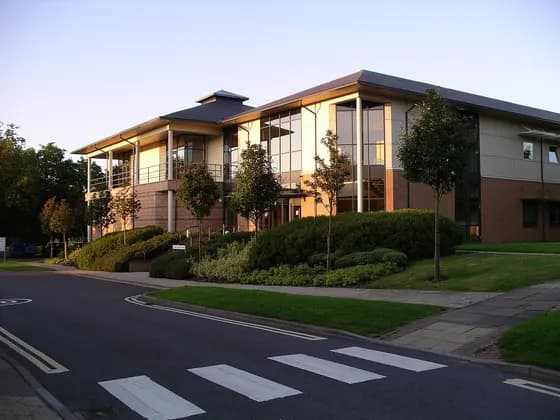


Photo: Mike1024 / Wikimedia Commons · Public domain · cropped
Photo: Snowmanradio · CC BY-SA 3.0 · Photo: DeFacto · CC BY-SA 4.0 · Photo: Lewis Clarke · CC BY-SA 2.0
The Warwick (GEM) medicine course at a glance (2027 entry)
Warwick's medicine course is built only for people who already hold a degree, which is why it is known as graduate-entry medicine, or GEM. It runs for four years at Warwick Medical School, on the University of Warwick campus in Coventry. It leads to the MB ChB, short for Bachelor of Medicine and Bachelor of Surgery. The UCAS code is A101 and each year group has 203 students.
Your classmates come from science, arts and humanities degrees, and some join from earlier careers. Because medicine is squeezed into four years, the first year is short and fast: 26 weeks covering the scientific basis of medicine. After that the year gets much longer, and more of your time is spent in hospitals and GP surgeries.
Teaching is built around case-based learning (CBL). In a small group you work through realistic patient cases linked to your lectures, supported by clinical skills, anatomy and practical sessions. CBL runs through all four years, not just the first.
Patients appear early. You meet people living with illness or disability from your first week, and by the end of Year 1 you will have spent time on hospital wards and in the community. Anatomy is taught with plastinated specimens, which are real human tissue preserved with plastic, in a clinical anatomy and skills building that opened in 2023.
Later years take you out across Coventry, Warwickshire and Redditch. You rotate through eight six-week specialist placements, do a research project, take an elective of up to six weeks and complete an assistantship, working in a clinical team under supervision. Finals pair the national knowledge test with a clinical exam that includes long cases with real patients.
| Degree | MB ChB (Bachelor of Medicine and Bachelor of Surgery) |
|---|---|
| Course length | 4 years full time, for graduates only |
| UCAS code | A101 |
| Year group | 203 students |
| Main base | University of Warwick, Coventry; Gibbet Hill campus for most of Year 1 |
| Teaching style | Case-based learning in groups of 9 to 10, with a facilitator |
| Anatomy | Plastinated prosections and cross-sections from von Hagens' Plastinarium, Germany |
| First patient contact | First week of Year 1 |
| Placement area | Coventry, Nuneaton, Rugby, Warwick and Redditch; GP practices within about 40 miles |
| Elective | Five to six weeks in Year 4, in the UK or abroad |
What makes Warwick (GEM) medicine different
A course designed only for graduates
Everyone on the course already has a degree, and Warwick takes arts and humanities graduates as well as scientists. Year 1 teaches the science from its foundations in mixed CBL groups, so you learn alongside classmates with very different training. There is also peer teaching run by and for students without a biology background.
Anatomy from plastinated prosections
A prosection is a body part that an expert has already dissected to show its structures. Warwick's are plastinated, meaning the water and fat have been replaced with plastic so the tissue does not decay. They come from Gunther von Hagens' Plastinarium in Germany and are used in the Clinical Education Hub, near the medical school's Gibbet Hill campus.
A virtual GP patient you follow for four years
In Year 1 you meet Clinton Jones, a virtual patient created by the medical school. You come back to him many times: his symptoms, test results, treatment, a discharge summary and follow-up appointments. The story ends with his death, and during your assistantship you use it to learn about death certificates. It mirrors how a GP cares for one person over years.
Four GP surgeries, ending with your own clinics
Between Years 2 and 4 you work in four different GP surgeries. You move from consultations that a GP watches to running independent surgeries in a six-week specialist GP placement. The General Medical Council (GMC), which regulates doctors and medical schools, features Warwick's GP placements as a case study on its website, with student feedback from 2023.
Finals that include long cases on real patients
Finals are your Medical Licensing Assessment (MLA): the national knowledge test plus Warwick's own clinical exams, an OSCE and an OSLER. UK medical students must now pass the MLA as part of their degree. An OSCE (Objective Structured Clinical Examination) is a circuit of short timed stations. An OSLER (Objective Structured Long Examination Record) gives you six 45-minute cases with real patients in partner hospitals.
How Warwick (GEM) teaches medicine
Case-based learning (CBL) sits at the centre of all four years. Warwick likens it to problem-based learning (PBL), in which a small group works through a patient case and decides for itself what it needs to learn. Each CBL case is invented but realistic, built on a common or important condition and linked to that week's lectures. The aim is to build clinical reasoning, the way a doctor thinks through a problem, as well as knowledge.
The students lead each session. A facilitator sits with the group but does not teach: this tutor helps you work well together and prompts the group only when it needs it. On a ward, doctors try to narrow a case down to a diagnosis quickly. CBL does the opposite, using the case as a framework to explore each topic widely and in depth.
In Year 1 most teaching is on campus: lectures, CBL sessions, clinical and communication skills, anatomy and practical workshops. Your CBL group has around 9 or 10 students, although Warwick's course information page puts it at 8 to 10. It mixes science, non-science and clinical backgrounds and stays the same all year. Other small-group sessions range from 8 to 15 students, depending on the activity.
Year 2 is a planned shift from the classroom to the ward. An academic block of advanced cases, group work, self-study and focused lectures eases the move. In Core Clinical Education, most of your time is spent in clinical settings, attached to groups of consultants from many specialties.
By Years 3 and 4 you direct much of your own learning, working closely with clinical teams and patients. As the course goes on you take on more shift work, extended hours and on-call duties, where you are available outside normal hours to help with patients who need urgent care. Throughout, you keep an e-portfolio, an online record of your progress and reflections, much like the one you will use as a junior doctor.
The ways you will learn
| Case-based learning (CBL) | Student-led sessions in your CBL group, with a facilitator who guides but does not lecture. Each session works through an invented but realistic case tied to the current block. In Year 2 the cases cover disease affecting several body systems at once. |
|---|---|
| Lectures | Whole-year teaching on the topics the cases draw on. In Year 2 these become focused plenary sessions that support the case work. |
| Clinical and communication skills | Practical sessions where you learn to take a history, which means asking a patient about their symptoms and background, and to examine them. You start on campus and move on to supervised bedside teaching in the NHS partner hospitals. |
| Patient of the week | In each Year 1 block you are introduced to someone who lives with a medical condition or disability and hear what that is like from them. It adds the patient's and carer's view to the science you are learning. |
| Simulation | Practice in realistic settings before and alongside the real thing, including the mock ward in the Clinical Education Hub. In weekly GP tutorials later in the course you practise difficult conversations with simulated patients, people trained to play a patient. |
A typical week on the Warwick (GEM) course
Expect a full week. In Year 1 you have about 35 hours of timetabled teaching a week. Warwick's admissions FAQ says this runs for 30 weeks, although the module catalogue lists the Year 1 module as 26 weeks long. From Year 2 your week follows your clinical placement and is shaped like a doctor's working week.
Warwick's 2022/23 prospectus gave an example Year 1 week. Treat it as a guide to the pattern rather than a current timetable. Monday combined a face-to-face CBL session, lectures, group work and workshops.
Tuesday was flexible: time to work through online teaching, a community day with patient visits, or more lectures and group work. Wednesday was set aside as Wellbeing Wednesday, apart from one Wednesday in Term 1 used for clinical skills training at a hospital trust.
On Thursday the year split into four groups, which took turns at CBL and at clinical skills, clinical anatomy and imaging teaching. Friday brought more clinical skills, anatomy and imaging sessions, with half the groups in the morning and half in the afternoon.
The 2026/27 module catalogue shows the overall balance. It plans 1,200 hours of study for Year 1. Of these, 505 hours are self-directed study, 150 are case-based learning and 49 are on placement. The rest is lectures, seminars and practical classes.
How anatomy is taught at Warwick (GEM)
Warwick teaches anatomy with plastinated prosections and cross-sections from Gunther von Hagens' Plastinarium in Germany. A cross-section is a thin slice through the body, which shows how organs sit next to each other. Anatomy starts in Year 1, taught alongside clinical skills and imaging.
Warwick's video on clinical anatomy and imaging describes several formats that build on each other. Lectures set the scene, and you use them to prepare for a Friday session with real human specimens. Small-group teaching puts you close to the anatomy staff, so you can ask questions and get things wrong without pressure. There is also a Monday medical imaging session, and drawing activities help pull it all together.
Plastination starts with an embalmed body that has been dissected. The water and fat in the tissue are replaced first with acetone, a solvent, and then with liquid plastic that is hardened. The result does not decompose. Warwick notes that preparing one whole-body plastinate takes 1,000 to 1,500 hours of work.
You study the specimens in the Clinical Education Hub, a clinical anatomy and skills building at the Beehive, a university site near the Gibbet Hill campus. It is licensed by the Human Tissue Authority (HTA), which regulates places that store and use human tissue. The university gears this anatomy teaching to clinical practice and procedures, including point-of-care ultrasound: a quick scan done at the bedside to help with diagnosis.
When you first meet patients at Warwick (GEM)
You meet patients from your first week. In each Year 1 block there is a patient of the week, and you meet patients in community settings to see healthcare from their side. You also begin supervised bedside learning in the NHS partner hospitals, practising history taking and examination.
By the end of Year 1 you will have spent time on hospital wards and on community placements across the region. In Year 2 clinical work takes over. Placements take you to acute hospitals, GP surgeries, mental health services and community care. You join ward rounds, outpatient clinics and multidisciplinary team meetings, where doctors, nurses and other professionals plan a patient's care together.
Year by year at Warwick (GEM)
- Year 1 (Phase 1)
The science of medicine, taught through cases
Year 1 lasts 26 weeks and is taught mainly on campus, at Gibbet Hill and the nearby Clinical Education Hub. After a welcome week come five five-week blocks, each on a body system or theme. Independent study takes up a large share of your week.
- Term 1: Welcome Week, then Health, Metabolism and Homeostasis, then Blood, Lungs and Heart.
- Term 2: Brain and Behaviour, then Locomotion. Term 3: Reproduction and Child Health.
- Anatomy with plastinated specimens, a patient of the week in each block and your first meeting with Clinton Jones, the virtual GP patient.
- End-of-year exams: an OSCE and a written exam of two 120-minute online papers over two days. Each counts for 35 per cent; meeting the engagement criteria makes up the other 30.
- Year 2 (Phase 2)
From the classroom to the clinic
Year 2 runs for 43 weeks and moves you steadily into clinical settings. It has three parts: an academic block, Core Clinical Education and your first student-selected component. By the end you should be able to carry out a clinical assessment of a patient.
- Academic block: disease that affects several body systems and the links between GP and hospital care, through advanced cases. You start applying a problem-solving approach to the history-taking and examination skills you learned in Year 1.
- Core Clinical Education: medicine, surgery (including orthopaedics) and anaesthetics, plus general practice, obstetrics and gynaecology, child health and psychiatry.
- Placement days include operating theatres, out-of-hours work and on-call shifts as well as wards and clinics.
- Weekly general practice sessions, spread across three different practices.
- Your first student-selected component (SSC1), a topic you choose from a list of options.
- End-of-year OSCE and written exam of two 120-minute papers over two days, plus the engagement criteria.
- Year 3 (Phase 3)
Integrated care, research and specialist placements
Year 3 runs for 41 weeks. It opens with Integrated Care, an 11-week block, run alongside your research project, and then you begin rotating through specialist placements. There is no end-of-year written or clinical exam: you progress by meeting the engagement criteria and passing your project.
- Integrated Care mixes campus days with clinical placements in the partner trusts. It follows complex patient journeys, such as people with several conditions or long hospital stays with complications, and the roles of the whole care team.
- Your SSC2 research project, with about 280 hours of supervised project work planned in the module catalogue.
- Five of your eight six-week specialist placements, in an order that varies by student group. That split is from the 2026/27 module catalogue; Warwick's Year Three and Year Four pages say six in Year 3 and two in Year 4.
- The eight are Care of the Medical Patient, Care of the Surgical Patient, Acute Medicine, Psychiatry, Child Health, Musculoskeletal Healthcare, Obstetrics and Gynaecology, and General Practice.
- Practice assessments and written reflections in each specialist placement block, which you must complete to reach finals. The Exams and assessment section explains them.
- Year 4 (Phase 3)
Finals and preparing to be a doctor
Year 4 runs for 38 weeks and prepares you to start work as a Foundation Year 1 (FY1) doctor, the first year of paid work after graduating. It has six blocks: your last three specialist placements, Advanced Clinical Cases, the elective and the assistantship. You also sit finals.
- Your last three specialist placements, completing the set of eight. That is the 2026/27 module catalogue's split; the Year Four page says two.
- Advanced Clinical Cases: time in a range of clinical settings reviewing common and important cases, with flexible time for your own gaps, before finals and the assistantship.
- Finals: the national Applied Knowledge Test and Warwick's clinical exam, an OSCE plus an OSLER. In the 2026/27 module catalogue each carries 30 per cent of Year 4, and meeting the engagement criteria another 30. You must pass every part.
- The national Prescribing Safety Assessment, an exam on prescribing medicines safely.
- The Warwick Prescribing Assessment, Warwick's own in-person written exam of your prescribing skills, worth the last 10 per cent of Year 4.
- An elective of five to six weeks in a setting of your choice.
- The assistantship: you join a clinical team and carry out set duties under supervision, as a bridge into FY1.
How you are assessed at Warwick (GEM)
Formative assessments carry no marks, but they are not optional. You take one at the end of each block. You must complete them, and meet the engagement and attendance requirements, before you are allowed to sit the summative exams, the ones that count. These come at the end of Year 1, the end of Year 2 and in Year 4, each with a written and a clinical part. Year 3 is assessed through the engagement criteria and your research project instead.
Every year you must also meet engagement criteria: evidence of academic and professional development, and at least 80 per cent attendance, which Warwick says the GMC requires. A strong exam cannot make up for missing them, or the other way round, because each part must be passed on its own. Everyone normally gets individual electronic feedback within two working days of summative results, and students below the pass mark are offered face-to-face feedback.
Since 2024-25 a UK medical degree must include a pass in the MLA to count as a primary medical qualification, the qualification a graduate needs to register with the GMC. The MLA has two parts: the Applied Knowledge Test (AKT) and the Clinical and Professional Skills Assessment (CPSA). At Warwick you sit both in Year 4 and must pass both in the same graduation year.
Years 3 and 4 add practice assessments in every specialist placement block, as Warwick described them in its submission for the GMC's 2024 decision. Each block has an online test in the same format as the AKT and a practice OSLER. There is also a mini-CEX, where a senior watches you with a patient and gives feedback, and a case-based discussion, where you talk a senior through a patient you have seen. You also write reflections, and you must complete all of this to reach finals.
The GMC confirmed in 2024 that Warwick's AKT and CPSA meet its rules, and the 2026/27 module catalogue still lists an OSCE and an OSLER as the Year 4 clinical exam. The finer details below come from the GMC's review of what Warwick submitted in late 2022, so some may since have changed. The final degree is unclassified, although the Board of Examiners can award it with honours against its own criteria.
- AKT: the national version, with papers supplied by the Medical Schools Council. It is two computer-based papers of 100 single best answer questions, where you pick the best of several options. Each paper lasts two hours, on consecutive days.
- OSCE: ten stations, each seven minutes with three minutes' reading time, run on campus in one day. In the version the GMC reviewed you needed to pass seven of the ten.
- OSLER: six 45-minute cases with real patients, over two hospital sites on two days in one week. In each you spend 15 minutes taking a history and examining, 15 thinking, and 15 presenting to two examiners.
- The OSCE and OSLER are about two weeks apart, and failing either means resitting both.
- Warwick Prescribing Assessment: Warwick's own in-person written exam on prescribing, separate from the national Prescribing Safety Assessment. In 2026/27 it carries 10 per cent of Year 4.
- You practise both formats in earlier years. Talks at the start of Year 3 and three months before finals explain them, and an online question-and-answer page is kept updated. The GMC's reviewers named this preparation as effective practice.
- If you fail the OSCE or OSLER you are offered a one-to-one meeting with its lead to plan revision. Because the resit falls in the elective period, you take a directed elective at a partner hospital so you can be supported.
Where you will actually be at Warwick (GEM)
Warwick names five partner hospitals. University Hospitals Coventry and Warwickshire (UHCW) runs two of them: University Hospital at Walsgrave in Coventry and the Hospital of St Cross in Rugby. The others are George Eliot Hospital in Nuneaton, Warwick Hospital and the Alexandra Hospital in Redditch.
From the middle of Year 2 you are placed mainly in acute hospital care in Coventry, Nuneaton, Rugby and Warwick. Acute care is hospital treatment for sudden or serious illness, including emergencies and operations.
About 80 partner GP practices and other community placements lie within roughly 40 miles of the university, reaching the eastern edges of Birmingham, Worcester and Northamptonshire, and some are rural. You are expected to live within a reasonable distance and you arrange your own travel between placements. The NHS Bursary is NHS funding for eligible students from England in Years 2, 3 and 4. If you receive it, you may be able to claim back some extra travel costs.
General practice runs through the course, in four different surgeries. The pattern set out here is how the GMC described it in a case study featuring student feedback from 2023. In Year 2 you visit three practices, once a week for 21 weeks, and lead consultations while the GP watches and gives feedback.
You also spend extended time with patients and carry out a clinical audit, which means checking a practice's care against an agreed standard. The practices range from urban to rural and include areas with many refugees, high deprivation or many elderly patients.
In Year 3 or 4 comes a six-week specialist GP placement, three days a week, where you run independent surgeries. You return to the medical school each week for tutorials and video at least two consultations for feedback. Across your GP placements you may also join minor operations, home visits and community hospital visits, and work with paramedics, physiotherapists and pharmacists.
The main regional hospital, whose Walsgrave building opened in 2006, about seven miles from the medical school. UHCW runs two major hospitals, here and in Rugby, serving over a million people. Its Clinical Sciences Building holds the teaching facilities.
- University Hospital, Walsgrave (University Hospitals Coventry and Warwickshire NHS Trust)
UHCW's second hospital, which Warwick's admissions FAQ lists as a partner hospital. The trust describes it as a hub for planned, non-emergency surgery with six operating theatres. It also has rehabilitation beds for older patients and Rugby's urgent treatment centre.
- Hospital of St Cross, Rugby (University Hospitals Coventry and Warwickshire NHS Trust)
Named as a partner in the 2022/23 prospectus. The trust runs physical and mental health and learning disability services from more than 50 sites, and the Caludon Centre provides adult mental health care.
- Coventry and Warwickshire Partnership NHS Trust
- Caludon Centre, Coventry
A single-site hospital on the edge of Nuneaton, about 12 miles away, offering medical, surgical and maternity care. Its training centre has a lecture theatre, seminar rooms, a library and clinical skills rooms.
- George Eliot Hospital (George Eliot Hospital NHS Trust)
In the northwest of Warwick, about eight miles away. It has a 24-hour emergency department, maternity and special care baby units, intensive and coronary care, and an education centre with a study room and library.
- Warwick Hospital (South Warwickshire University NHS Foundation Trust)
A district general hospital, meaning a local hospital covering the main specialties, about 28 miles away. A Warwick partner since 2003, it also teaches Birmingham students. Each pair of students has a named consultant supervisor and a weekly timetable of ward and clinic teaching, tutorials and simulation.
- Alexandra Hospital (Worcestershire Acute Hospitals NHS Trust)
Spread across Coventry and Warwickshire and the eastern edges of Birmingham, Worcester and Northamptonshire, within roughly 40 miles of the university.
- About 80 partner GP practices
Electives and chosen modules at Warwick (GEM)
A student-selected component (SSC) is a part of the course where you choose the topic. Warwick has two. In Year 2 you pick SSC1 from a list that changes from year to year, each option linked to the core curriculum but letting you go deeper.
Recent SSC1 options include Counselling Skills, Global Health, Clinical Ethics and Law, Infectious Diseases and Tropical Medicine, Simulation in Medical Education, Sleep, Health and Society, and The Digital Doctor. There is also a medical humanities option built around George Eliot's novel Middlemarch.
SSC2 is your Year 3 research project. You choose an area for in-depth enquiry and can build on your SSC1 topic. Lectures and workshops on scientific methods support the project, which counts for 20 per cent of the Year 3 module.
The elective comes in Year 4 and lasts five to six weeks, according to Warwick's admissions FAQ; the Year Four page gives six. It is set up as a project: you study a field of healthcare or human health in more depth. It can be anywhere you choose, in the UK or abroad, and students often go overseas to see medicine in a different country and culture. You pay for the elective yourself, though elective bursaries are available.
Facilities and support at Warwick (GEM)
Where you will learn
The Clinical Education Hub at the Beehive is a £4.2 million clinical anatomy and clinical skills building. It opened to students in October 2023 and was formally launched in June 2024. Besides the anatomy space it has flexible wet labs, which are rooms equipped for handling biological material. It also has a mock hospital ward, clinical rooms and an augmented and virtual reality suite that recreates real situations.
You spend most of Year 1 at Gibbet Hill campus, a short walk from the main campus. On the ground floor of the Medical School Building, the Biomedical Learning Grid gives you group and individual study space, interactive boards and a collection of key reference books.
At UHCW, the Clinical Sciences Building has a 250-seat lecture theatre, linked seminar rooms, a library, a Clinical Simulation Centre and a Clinical Skills Wing. Clinical skills teaching there uses a talking, life-size mannequin called Sim Man. A surgical training centre, opened in 2009, teaches operative techniques on cadaveric material, meaning tissue from people who have died, in realistic operating theatres.
Support while you study
Pastoral support is led by the MB ChB Senior Tutor. Each year group has its own Deputy Senior Tutor, and you can take any personal, professional, health or pastoral problem affecting your studies to them or to your tutor. The team is based in the Student Support Hub in the Medical Teaching Centre.
You have a personal tutor from the start. The 2022/23 prospectus describes meetings in induction week and each term until Phase 2, then a handover during Year 2 to a clinical personal tutor. That tutor is your main contact for the rest of the course and helps you review progress and set learning targets.
Warwick runs a buddy scheme, and students in later years teach those in earlier years. Its peer-support page, last updated in 2022, lists weekly seminars where Year 2 students re-teach Year 1 content and an evening clinical skills group that practises before OSCEs. It also describes a teaching group run by and for students without a biology background. Student societies run anatomy and physiology days for each block.
There are two Disabled Student Champions and a Senior Careers Consultant dedicated to the medical school. Two academic support librarians help with literature searches and referencing. The prospectus also lists undergraduate administrators and consultants linked to medical education in the partner trusts, to support you on placement.
Is the Warwick (GEM) course right for you?
This course may suit you if
- You already have a degree, in any subject, and want a course built only for graduates that qualifies you in four years.
- You learn well by talking cases through in a small group, since CBL runs through all four years and you keep one group for Year 1.
- You want patient contact from your first week, with a patient of the week in each Year 1 block and community visits.
- You are interested in general practice: you work in four GP surgeries and run your own surgeries in the specialist GP placement.
- You like the idea of learning anatomy from ready-dissected, plastic-preserved specimens linked to imaging and ultrasound.
Things to think about
- The pace is fast. Year 1 covers the science of medicine in 26 weeks, then Years 2, 3 and 4 run for 43, 41 and 38 weeks, so breaks are short.
- Without a science background you learn the science at the same speed as classmates who have one, with peer teaching as back-up.
- Placements spread across Coventry, Nuneaton, Rugby, Warwick and Redditch, which is 28 miles away, and GP practices up to about 40 miles out. You arrange your own travel.
- Finals add a long-case exam with real patients to the OSCE, and you must pass both clinical exams at the same sitting.
Warwick (GEM) medicine course — frequently asked questions
Applying to Warwick (GEM)?
How to get into Warwick (GEM)
Entry requirements, UCAT, personal statement and interview, step by step.
Open the guide →Warwick (GEM) UCAT cut-offs and offers
UCAT cut-offs, A-level offers, interview format and decision dates.
See the requirements →Compare Warwick (GEM) with other schools
Put the teaching style, anatomy teaching and placements next to another school.
Open the comparison →Prepare for the Warwick (GEM) interview
Format breakdown, school-specific sample questions and prep tips from tutors who interviewed here.
Read the guide →Where this Warwick (GEM) course guide came from
This guide was written from 27 official sources — University of Warwick's own course pages and programme documents, plus the regulator and NHS placement partners where they publish detail — read on 2026-09-23, then checked claim by claim against those sources.
- MB ChB Course Information, Warwick Medical School
- MB ChB Year One (Phase 1), Warwick Medical School
- MB ChB Year Two (Phase 2), Warwick Medical School
- MB ChB Year Three (Phase 3), Warwick Medical School
- MB ChB Year Four (Phase 3), Warwick Medical School
- MB ChB assessment overview, Warwick Medical School
- Medicine MB ChB (Graduate Entry) course page, 2027 entry, University of Warwick
- Graduate Entry Medicine (MB ChB), Warwick Medical School
- Facilities and partner trusts, Warwick Medical School
- Applying, including frequently asked questions, Warwick Medical School
- Case Based Learning (CBL), Warwick Medical School
- Clinical Anatomy and Imaging at Warwick Medical School, video transcript
- Meet our Student Support Team, Warwick Medical School
- Peer support, Warwick Medical School (last updated 2022)
- MD10X-120 MBChB Phase 1, Warwick Module Catalogue 2026/27
- MD20X-120 MBChB Phase 2, Warwick Module Catalogue 2026/27
- MD30X-120 MBChB Phase 3 (Year 3), Warwick Module Catalogue 2026/27
- MD40X-120 MBChB Phase 3 (Year 4), Warwick Module Catalogue 2026/27
- MB ChB Programme Prospectus 2022/23, University of Warwick
- New Clinical Education Hub opens its doors to students, Warwick Medical School news (2023)
- University of Warwick unveils clinical anatomy and clinical skills facility, press release (June 2024)
- GMC MLA Clinical and Professional Skills Assessment compliance decision: Warwick Medical School (April 2024)
- GMC MLA Applied Knowledge Test compliance decision: Warwick Medical School (June 2024)
- General Practice clinical placements at Warwick Medical School, GMC case study
- Our organisation, University Hospitals Coventry and Warwickshire NHS Trust
- Hospital of St Cross, University Hospitals Coventry and Warwickshire NHS Trust
- Our hospitals, South Warwickshire University NHS Foundation Trust
Courses are restructured between cycles. Anything here that decides your application — an anatomy offer, a placement city, a compulsory intercalated year — should be confirmed against the official page for your entry year.
Applying to Warwick (GEM)?
We have helped hundreds of applicants turn their UCAT, personal statement and interview prep into offers from Warwick (GEM) and other UK medicine schools.