


Personal statements · UK

Personal statements for medicine and dentistry, question by question.

UCAS asks three questions in 4,000 characters, with at least 350 in each answer. Our free guides show what UK medical and dental schools look for in each answer, and when you have a draft, a current medical or dental student records a video talking you through it.

Your course
  • Video feedback within 48 hours
  • Free guides and builder
  • Current medical and dental students

Rated 4.8 on Trustpilot from 55 reviews

Last reviewed 8 November 2026 by Isaac Butler-King, medical student at the University of Glasgow.

Personal statement

UCAS · Medicine · Illustrative example

3,959of 4,000 characters

Question 2 of 3

How have your qualifications and studies helped you to prepare for this course or subject?

My Extended Project asked why a screening test that finds almost every case of a disease can still mislead. Working through breast screening against the UK National Screening Committee's criteria, I learnt to separate how well a test finds disease from how likely a positive result is to be right, and why the second falls so sharply when a disease is rare. The hardest part was the sources: two news reports of the same study had opposite headlines, and only the paper itself showed which was fair.

  1. 1

    Works. Keele scores this answer on skills: 'we are interested in skills you have developed, not topics you have learned about.' Here the skill is judging evidence.

  2. 2

    Works. Going back to the original paper is the habit that matters. Be ready to name the study: an interviewer will ask.

Illustrative example, written by our team for a fictional applicant. Do not reuse its wording: UCAS checks every statement for similarity to others.

See the whole statement marked up
  • Video review£20
  • 1:1 coaching from£45
  • Builder and guidesFree
Get your draft reviewed

From a blank page to a reviewed draft

Read, draft, then get it reviewed. Start wherever you are.
  1. Step 1

    Read your course guide

    What UK medical or dental schools look for in each of the three answers, with a marked example.
  2. Step 2

    Draft in the builder

    Prompts that pull out your own material, one question at a time, with a live count against the 4,000.
  3. Step 3

    Get it reviewed

    A current medical or dental student reads your draft and records a video on what works and what to change.
    Get your draft reviewed

    £20, back within 48 hours

Three questions, one statement

Every applicant answers the same three questions, and one statement goes to all of your choices, so it is about the course, never one university.
  • 4,000 characters in total, spaces included, with at least 350 in each answer.
  • No limit on any one answer. Split the total the way your material needs; the example statement here is drawn to scale.
  • Schools use it differently. A few assess it to decide who to interview, and some leave it out of selection. Below is what 18 medical schools say.

How the three-question format works

The example statement, drawn to scale

Our strong medicine draft, answer by answer, against the UCAS limit.

AnswerCharacters

Why this course?

Why do you want to study this course or subject?

1,221

How your studies prepared you

How have your qualifications and studies helped you to prepare for this course or subject?

802

What else you have done

What else have you done to prepare outside of education, and why are these experiences useful?

1,936

Total, of 4,000

3,959

Does the statement count?

It depends on the school. Of the 18 UK medical schools and programmes below, two say they assess it to decide interviews, one of them on a 2027-entry course that took international applicants only, and five leave it out of selection. The rest read it at some stage: as a screen, for the interview, or before offers.

One statement goes to all your choices, so make sure it would satisfy the school on your list that reads it most closely, without naming any school. The Medical Schools Council says most medical schools do not score it, but commonly use it as a basis for conversation at interview.

UK medical schools, by how they use the statement

From each school's own admissions page, or where a site blocks automated reading, search excerpts of it, read on 8 and 9 November 2026.

Most weightLeast

Assessed at shortlisting

2 schools

It is marked or judged when the school decides who to invite to interview.

Screened or weighed before interview

7 schools

Read before interviews are offered: as a pass or fail check, or alongside grades and the UCAT, without a score.

Read for the interview

3 schools

Interviewers may ask you about what you wrote.

Read after interview

1 school

Not used to decide interviews, but read before offers are made.

Not used in selection

5 schools

Left out of shortlisting and offers, though some schools still check it for copying.

Entry year as each page states it. Not listed: schools we have not checked yet. Rules can change each cycle, so check the page for your own entry year.

† This university’s site blocks automated reading, so this comes from search excerpts of its official page. Check the page itself before you rely on it.

What each medical school says, in fullHow dental schools use it

Marked examples

Strong and weak drafts, marked

For each course, a strong draft and a weak one, marked by our team to show what a reviewer looks for. Switch between them to see what changes, or pick one kind of mark to follow it through.

Personal statement

UCAS · Medicine · Illustrative example

3,959 of 4,000 characters

Spaces count. At least 350 per answer, no maximum for any one.

Reviewer's marks

Question 1 of 3

1,221 charactersover the 350 minimum

Why do you want to study this course or subject?

UCAS's guidance: "This is your opportunity to showcase your passion and knowledge of your chosen subject area and to demonstrate to universities and colleges why it's a good fit for you and your future ambitions."

On the second day of my week at a GP practice, a man came in for his blood test results after months of feeling tired. Every result was normal. I expected the GP to order more tests. Instead she went through what the results ruled out and what they did not, agreed a plan with him, and told him exactly which changes should bring him back sooner. I had thought of doctors as people who know the answer. What I watched was someone making a careful decision without one, and being honest with him about that.

  1. 1

    Works. A small, real moment instead of a line about wanting to help people, and nothing in it could identify the patient.

  2. 2

    Works. Keele says 'accounts of what you have observed will score poorly'. What rescues this one is what you understood: dealing with uncertainty.

That afternoon is also why I chose the limits of medical tests for my Extended Project. The rest of the week showed me how much of a GP's work happens in a team and out of sight: the practice nurse knew the patients she saw for diabetes better than anyone in the building, and the GP spent her lunch hour on results and letters.

  1. 3

    Works. UCAS says admissions staff read the answers as a whole, so a thread like this helps. The project itself waits for question 2.

  2. 4

    Works. Keele credits observation only as evidence that you understand a doctor's role in the team. This is exactly that use.

The part of that team I want is the doctor's: taking an incomplete picture to a decision, explaining it plainly and answering for it. I know it takes years of training, in judgement and communication as much as science; that the job includes nights and weekends; and that some decisions will turn out to be wrong. I have tried to test whether I am suited to that rather than assume it.

  1. 5

    Works. Answers 'why not nursing?' by naming what is particular to the doctor's role, without running nursing down. Expect the question anyway.

  2. 6

    Go deeper. A brave line. Add how doctors live with it, by owning a mistake and learning from it; question 3 already has your example.

Reviewer's verdict

Works
15
Go deeper
2
Style
1
Cut or fix
1

A strong statement, and an honest one. It opens on a real moment, says how that moment changed the applicant's picture of the job, and backs each quality with something that happened, so nothing has to be claimed. Question 3 carries the most weight, as it should for medicine, and every activity in it is current and long-running. Three small fixes before submitting: say exactly what 'help at teatime' means, give the Psychology line one real detail, and say how doctors live with decisions that turn out wrong.

Illustrative example, written by our team for a fictional applicant. Do not reuse its wording: UCAS checks every statement for similarity to others.

Free tools for the first draft

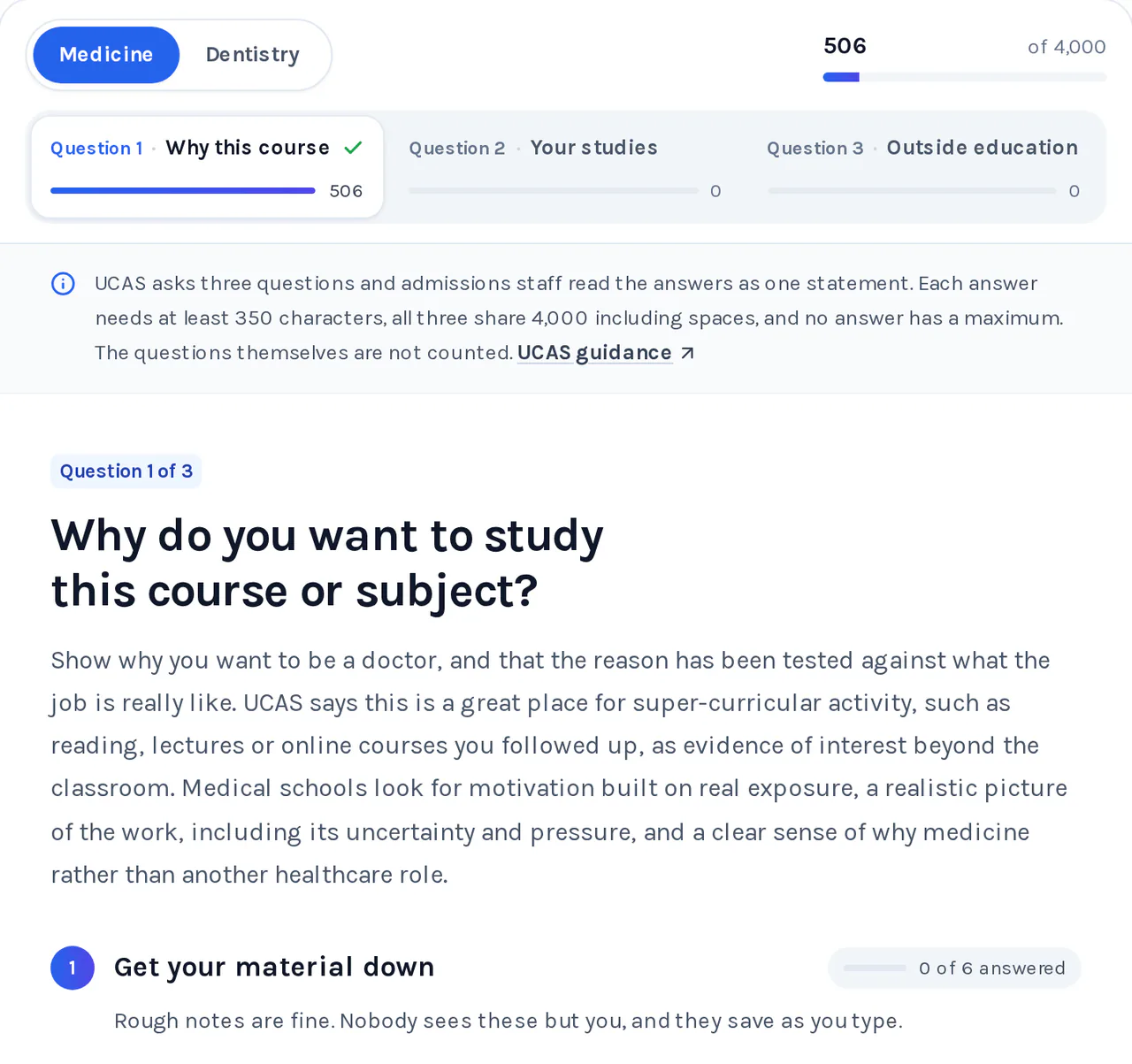
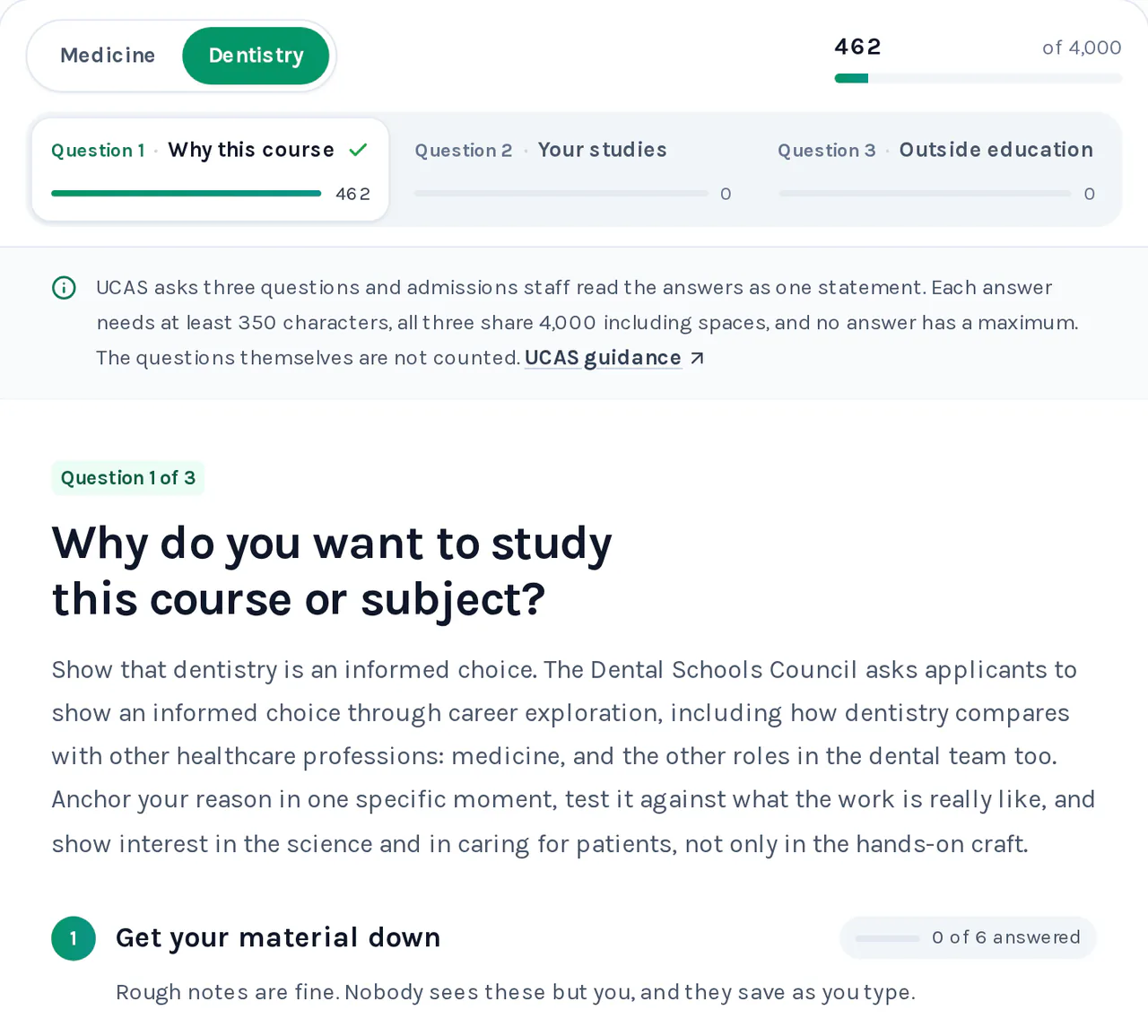
The builder takes you through the three questions one at a time: what schools want from each answer, prompts that pull out your own material, and a live count against the 4,000.
Personal statement builder · UK medicineReal screen
The free personal statement builder for UK medicine: the three UCAS questions as tabs, each with a live character count, the total against 4,000 characters, and question 1, “Why do you want to study this course or subject?”, with what the answer should show and step 1, getting your material down. Question 1 already counts the opening of an illustrative answer.

Open the builder

Check your opening for clichés

Paste the first few sentences of your draft. Phrases a reader has seen a thousand times get marked as you type.

As a reviewer would mark it

Ever since I was young I have been passionate about medicine because I want to help people and make a difference.

4phrases to cut or replace

  • “Ever since I was young”: The opener every reader has seen.
  • “passionate”: Tells the reader instead of showing them.
  • “help people”: So does nursing: name what you saw.
  • “make a difference”: True of any caring career.

Short of experiences to reflect on? Our Virtual Work Experience puts you in clinical scenarios online, which gives you something to reflect on in your third answer.

Statement review

Have your draft reviewed before you submit

Upload your draft and a current medical or dental student reads it and records a video talking you through what works and what to change. One flat fee: £20.

  • A recorded video going through your statementYour reviewer reads your statement and talks you through what works, what to cut and where to go deeper. Videos typically run 10 to 30 minutes.
  • Back to you within 48 hoursWe email you a link and the video appears in your account. It is kept for 7 days, so download it if you want to keep it.
  1. 1Upload your draft
  2. 2A current student records a video on it
  3. 3Watch it in your account

Reviewed by a current medical or dental student. Name a first choice on the form and we will try to match you with a reviewer who studies there.

Some of the students who help with statements

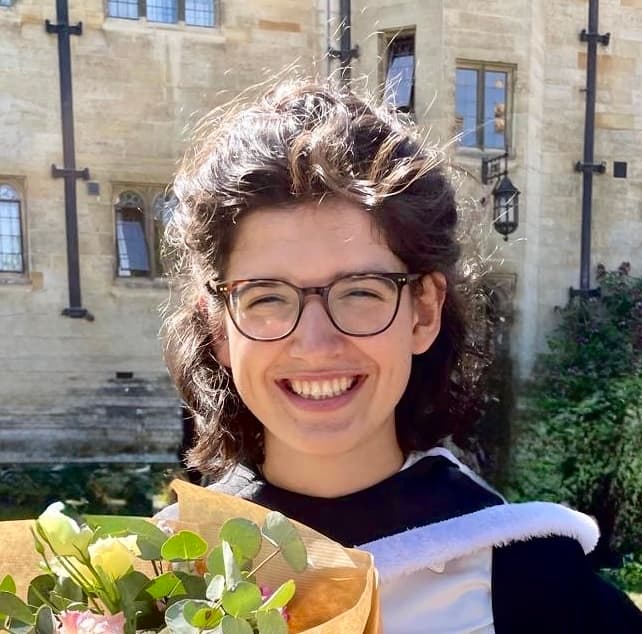
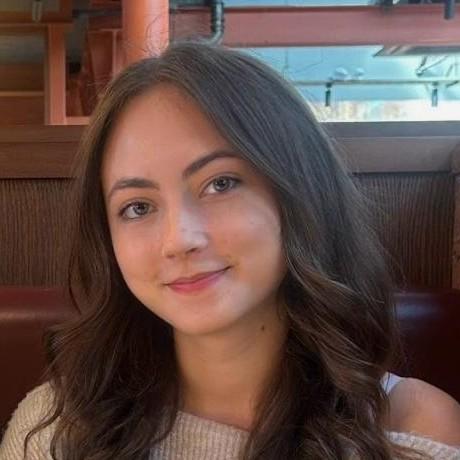
Current medical and dental students at UK universities, who wrote one that worked.

Meet the team
Video review

Send your statement

£20flat fee

1:1 coaching

Write it with a tutor beside you

Live sessions with a current medical or dental student, on your own draft. Pick how much help you want; every package is one to one.

  • Single Session

    Work on your statement in one focused 1:1 session

    £45

    What's included

    • 1 × 60-minute 1:1 coaching session
    • Live, line-by-line feedback on your draft
    • Covers all three UCAS questions (Q1–Q3) and structure
    • A clear action plan to finish your statement
  • Recommended

    Three Sessions

    End-to-end coaching from first draft to polished

    £125£135

    What's included

    • 3 × 60-minute 1:1 coaching sessions
    • Work through all three UCAS questions (Q1–Q3)
    • Revisions reviewed between sessions
    • Matched with a current medical or dental student tutor
  • Unlimited

    Unlimited sessions until you're ready to submit

    £300

    What's included

    • Unlimited 1:1 coaching sessions until your statement is ready to submit
    • Strategic university choices: we help you pick where to apply
    • Priority tutor matching
    • Ongoing revisions and email support throughout
  • Secure checkout with Stripe
  • Choose your session times straight after booking
  • One to one with a current medical or dental student

Questions about personal statements

It is three answers sharing one 4,000-character total, spaces included. UCAS asks: Why do you want to study this course or subject? How have your qualifications and studies helped you to prepare for this course or subject? What else have you done to prepare outside of education, and why are these experiences useful? Each answer needs at least 350 characters, no answer has its own maximum, and UCAS's guidance for advisers says medicine leans more heavily on the third question.

Want a second pair of eyes on your draft?

Upload your draft and a current medical or dental student reads it and records a video talking you through what works and what to change, back within 48 hours.