
University of Alabama School of Dentistry Interview
Format, Questions & Prep Tips
University of Alabama School of Dentistry dentistry interviews for 2027 entry are a traditional interview, held October 2026 through March 2027. Published figures: Annual DMD class size ~83; Tuition (est.) ~USD 30,000–35,000 (in-state) / USD 55,000–65,000 (out-of-state).
- Institution
- University of Alabama School of Dentistry
- Interview (2027 entry)
- October through March
- Decisions (2027 entry)
- Rolling; most decisions issued within 4–8 weeks of interview

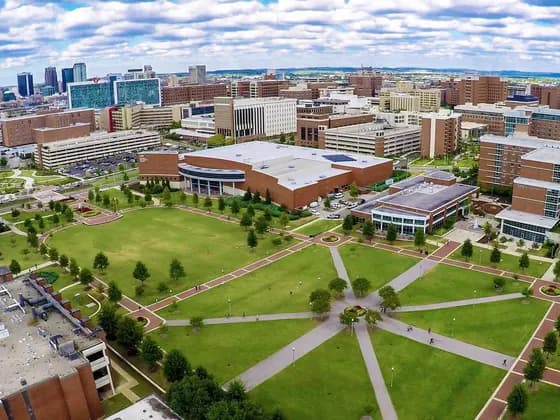
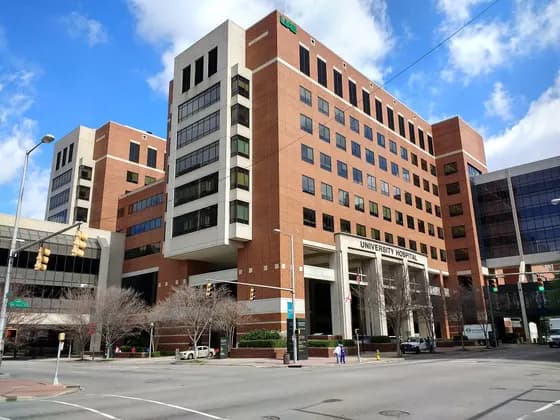

Photo: Mx. Granger · CC0 · cropped
Photo: University of Alabama at Birmingham · Public domain · Photo: Mx. Granger · CC0 · Photo: Tony Webster from Minneapolis, Minnesota, United States · CC BY-SA 2.0
How to get into University of Alabama School of Dentistry (DMD) dentistry
Step-by-step: entry requirements, admission tests, personal statement, interview format and the key deadlines.
Open the guide →University of Alabama School of Dentistry (DMD) entry requirements
Admission profile, interview format, decision dates and what makes University of Alabama School of Dentistry (DMD) different.
See the profile →The University of Alabama School of Dentistry (DMD) dentistry interview
University of Alabama School of Dentistry uses a traditional interview format — one-on-one or small panel faculty interviews at its Birmingham campus on the UAB Health Sciences campus. As Alabama’s only dental school, UAB Dentistry carries a clear public mission to train dentists for Alabama communities, particularly rural and underserved areas.
Applications are via ADEA AADSAS. The DAT is required. Alabama residents hold a significant advantage — the school’s class is typically majority in-state.
Interviewers place strong emphasis on manual dexterity evidence, dental shadowing, and genuine commitment to serving Alabama communities. Understanding the oral-systemic health connection — how oral health affects systemic conditions such as diabetes and cardiovascular disease — is a core discussion area.
University of Alabama School of Dentistry (DMD) interview at a glance (2027 entry)
| Annual DMD class size | ~83 |
|---|---|
| Interview format | Traditional — faculty one-on-one or small panel |
| DAT required | Yes — via ADEA AADSAS |
| Tuition (est.) | ~USD 30,000–35,000 (in-state) / USD 55,000–65,000 (out-of-state) |
| Application system | ADEA AADSAS primary + UAB secondary |
| Interview window | October–March |
Interview format
- Traditional one-on-one or small panel faculty interview; approximately 30–45 minutes.
- No MMI format.
- Campus tour and facilities visit included on interview day.
- Rolling decisions; expect 4–8 weeks post-interview.
Sample interview questions
Why dentistry rather than medicine, and what specific aspects of dental care do you find most compelling?
Be specific: think about the manual craft, the blend of science and artistry, longitudinal patient relationships, or preventive health. Avoid generic answers — connect your answer to real experiences.
As Alabama's only dental school, UAB has a mission to serve Alabama communities. How does that mission align with your goals?
Demonstrate awareness of Alabama's dental access challenges — rural counties, underserved populations. This is especially important for out-of-state applicants who need to explain their connection to Alabama.
Describe your dental shadowing experiences. What procedures or patient interactions had the most impact on your decision to pursue dentistry?
Be specific about procedures observed and what you learned. Interviewers want to see that you truly understand what a dentist's daily work involves.
A patient refuses a recommended extraction for a tooth that is causing systemic health complications. How do you handle this?
Demonstrates patient autonomy, the oral-systemic health connection, communication skills, and ADA ethics. Acknowledge the patient's right to refuse while exploring barriers (cost, fear, access) and providing thorough informed consent.
How have you developed and demonstrated manual dexterity, and how will that prepare you for clinical dental training?
Any experience counts:
- art
- crafts
- woodworking
- instrument repair
- laboratory work
Be specific about what skills transferred. Dental simulation lab training tests hand-eye coordination early.
Tell us about a time you worked with an underserved or vulnerable population. What did you learn?
Connect to UAB's rural and underserved mission. Free clinic volunteering, community health outreach, rural dentistry exposure are all relevant.
Can you explain the relationship between periodontal disease and systemic health conditions such as diabetes or cardiovascular disease?
Demonstrates scientific preparation. Know the bidirectional relationship: periodontal inflammation can worsen glycaemic control; bacteria from oral infections can contribute to endocarditis and atherosclerosis.
What challenges do you see in dental care access in the United States, and how might dentists help address them?
What they are listening for:
- Know basic dental workforce distribution issues
- Medicaid dental benefit gaps
- rural dental deserts
- community health center dental programs
What makes you a competitive candidate for UAB Dentistry specifically, rather than another dental school?
For in-state applicants: ties to Alabama, community service, understanding of state health needs. For out-of-state: be honest about what drew you to UAB specifically beyond just applying broadly.
How familiar are you with the ADA Principles of Ethics and Code of Professional Conduct, and how might they guide a difficult clinical decision?
Know the five ADA principles: patient autonomy, nonmaleficence, beneficence, justice, veracity. Give a concrete scenario showing how you would apply them.
A patient in the UAB student clinic becomes visibly anxious as you prepare to give a local anesthetic injection, gripping the chair and asking you to stop. Walk us through how you manage the moment.
Pause, acknowledge the fear, explain each step (tell-show-do), offer control and breaks, consider topical and slow technique. Show patient-centered chairside manner, not just clinical steps.
Suppose you are shown county-level data showing rural Alabama children have far higher untreated-decay rates than urban children. How would you investigate the drivers before proposing a fix?
Look at fluoridation, dentist-to-population ratios, Medicaid participation, transport, and caregiver health literacy. Demonstrate that you reason from data toward UAB's rural-access mission rather than guessing.
How would you explain the link between gum disease and poorly controlled diabetes to a patient with limited health literacy, so they actually change their home care?
What they are listening for:
- Plain language
- a concrete cause-and-effect picture
- small achievable steps
- teach-back
The oral-systemic link should be made usable, not lectured.
Dental training is long, expensive, and pressured. Tell us about a setback in your academic or work life and what it changed about how you operate.
UAB values resilience and self-awareness. Give a genuine setback, the reflection, and the durable change — not a humblebrag.
You suspect a fellow student is cutting corners on infection-control protocol to finish requirements faster. What do you do?
Patient safety and professional integrity over peer loyalty: address it directly or escalate appropriately, referencing the seriousness of cross-contamination. Show you act rather than look away.
Practise the University of Alabama School of Dentistry (DMD) interview
Rehearse the real format before the day — on demand with our AI interviewers, or live with a tutor.
Sit a mock with photoreal AI interviewers — any time
A timed MMI or panel interview on video — American & international voices — with interviewers who listen, react and press with follow-ups. Rubric-scored feedback and a replay the moment you finish.






Live mocks with a tutor who’s been in the room
A full University of Alabama School of Dentistry (DMD)-style mock with a medic or dentist tutor — honest scoring against real marking criteria, a station-by-station debrief and a written action plan.
Book a mock interviewHow to prepare for the University of Alabama School of Dentistry (DMD) interview
Common pitfalls to avoid
University of Alabama School of Dentistry (DMD) interview — frequently asked questions
Sources & official admissions information
Ready to nail your University of Alabama School of Dentistry (DMD) interview?
Book a mock interview with a tutor who knows the US interview formats, orpractice unlimited stations from our interview question bank.