
University of Iowa College of Dentistry Interview
Format, Questions & Prep Tips
University of Iowa College of Dentistry dentistry interviews for 2027 entry are a traditional interview, held October 2026 through February 2027. Published figures: Annual DDS class size ~80; Tuition (2026–27) ~USD 61,300 (in-state) / USD 86,500 (out-of-state).
- Institution
- University of Iowa College of Dentistry
- Interview (2027 entry)
- October through February
- Decisions (2027 entry)
- Regular decisions by late March

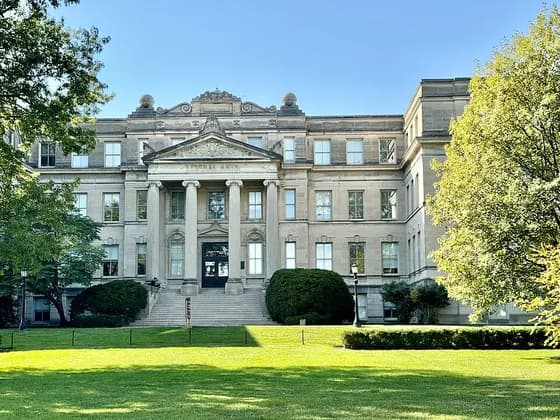
Photo: Tony Webster · CC BY 2.0 · cropped
Photo: w_lemay · CC BY-SA 2.0 · Photo: Андрей Романенко · CC BY-SA 4.0 · Photo: Tony Webster from Minneapolis, Minnesota, United States · CC BY-SA 2.0
How to get into University of Iowa College of Dentistry (DDS) dentistry
Step-by-step: entry requirements, admission tests, personal statement, interview format and the key deadlines.
Open the guide →University of Iowa College of Dentistry (DDS) entry requirements
Admission profile, interview format, decision dates and what makes University of Iowa College of Dentistry (DDS) different.
See the profile →The University of Iowa College of Dentistry (DDS) dentistry interview
University of Iowa College of Dentistry uses a traditional interview format with two sessions (faculty and student) at its Iowa City campus. Iowa Dentistry is a flagship public dental school with one of the highest clinical volumes in the Midwest and a strong mission to serve rural Iowa communities.
Iowa Dentistry has a strong dental public health program and has been a leader in community water fluoridation education since the Iowa Fluoride Study. Interviewers probe knowledge of fluoridation history and the evidence base for preventive dentistry.
The school's clinical training program includes rotations in rural Iowa communities — a training model that prepares students for the realities of rural practice and the public health challenges of agricultural health.
University of Iowa College of Dentistry (DDS) interview at a glance (2027 entry)
| Annual DDS class size | ~80 |
|---|---|
| Interview format | Traditional — faculty + student sessions |
| DAT required | Yes — via ADEA AADSAS |
| Tuition (2026–27) | ~USD 61,300 (in-state) / USD 86,500 (out-of-state) |
| Application system | ADEA AADSAS primary + Iowa secondary |
| Interview window | October–February |
Interview format
- Two sessions: faculty and student.
- No MMI.
- Rural community rotation component.
Sample interview questions
Why dentistry rather than medicine or another health profession?
Iowa wants applicants committed to dentistry on its own terms. Speak to the procedural craft, the blend of art and science, the autonomy of practice, and the long-term patient relationships. Avoid presenting dentistry as a fallback from medicine.
Iowa has a long history in community water fluoridation research, including the Iowa Fluoride Study. How do you think about preventive dentistry and fluoridation amid current political debates?
The evidence base for water fluoridation is overwhelming and Iowa is historically invested in it. Show you can distinguish scientific consensus from political controversy, and that you understand fluoridation as one of the most cost-effective public-health measures in dentistry.
Rural Iowa has significant dental access challenges. If you practice in Iowa, how do you envision serving communities that lack dental care?
Discuss the broader procedural scope rural dentists often need, community accountability, the health of agricultural communities, and the satisfaction of being a trusted local provider. Iowa's rural rotation model is built around exactly this, so show genuine interest.
Dentistry demands fine-motor precision. How have you developed and tested your manual dexterity?
Give concrete evidence — art, an instrument, model-building, or lab and craft work — and reflect on how it improved with deliberate practice. Connect it to the steadiness, hand-eye coordination, and patience chairside procedures require.
A patient tells you they oppose fluoride and refuse fluoride treatment for their children. How do you respond?
Respect autonomy while giving honest, evidence-based information without condescension. Discuss the strength of the fluoride evidence, alternatives, and continuing to provide care. The goal is informed decision-making and a maintained relationship, not a confrontation.
In a small rural town, you are the only dentist. A patient who is also a personal friend asks you to treat them. How do you manage the boundary?
Discuss the realities of rural practice where avoiding all dual relationships is impossible, the importance of maintaining professional standards, clear documentation, and referral when objectivity is compromised. Show practical ethical judgment, not idealized rules.
A patient cannot afford the recommended treatment and asks for a cheaper option you consider clinically inferior. How do you handle this?
Respect autonomy and financial reality while being honest about trade-offs. Discuss informed consent, offering a range of acceptable options, and avoiding both paternalism and substandard care. In rural and lower-income settings affordability is a constant factor.
You suspect an elderly rural patient is being financially or physically neglected by a caregiver who controls their appointments. What is your responsibility?
Discuss your duty to the patient's welfare, distinguishing access barriers from neglect, documentation, and reporting suspected vulnerable-adult abuse to the appropriate authorities. Balance sensitivity toward the family with the patient's safety.
How would you build trust with an anxious patient who is afraid of dental treatment?
Acknowledge the fear without minimizing it, use plain language, the tell-show-do approach, and a patient-controlled stop signal. Move at the patient's pace. In rural communities where you may be the only provider, trust is essential to keeping patients in care.
Describe a meaningful clinical or community experience and what it taught you about serving rural or underserved populations.
Go deep on one experience and reflect on access barriers, the realities of rural life, and your own assumptions. Iowa values genuine interest in rural and public-health dentistry over a long activity list.
What is the evidence base for community water fluoridation, and why is it considered a public-health success?
Discuss the caries-prevention effect across populations, cost-effectiveness, and the equity benefit of reaching people regardless of income or access. Reference the type of longitudinal evidence Iowa's own fluoride research has contributed without needing exact figures.
Why are prevention and regular recall so central to dentistry, particularly in rural communities?
Most dental disease is preventable or best managed early, yet rural patients may travel far and present late. Discuss prevention, sealants and fluoride, and the public-health logic of catching disease before it becomes complex and costly.
What is the connection between oral health and systemic health?
Cover the periodontal-systemic links — diabetes, cardiovascular disease, adverse pregnancy outcomes — and the dentist's screening and detection role. Show you see the mouth as integral to whole-body health, relevant for rural patients with limited access to other care.
A rural patient has driven two hours for an appointment and is frustrated that the recommended treatment will require a second visit. Explain and reassure them. (Hypothetical scenario.)
Acknowledge the burden of travel, explain honestly why staged treatment is necessary, and explore ways to minimize return trips. Empathy for rural patients' practical realities is part of good communication, not an afterthought.
A parent refuses fluoride varnish for their child, citing something they read online. Address their concerns. (Hypothetical scenario.)
What they are listening for:
- Stay calm and non-judgmental
- explore the specific worry
- share clear evidence
- respect their role while advocating for the child
Check understanding and keep the door open — confrontation drives families away from care.
If decay rates in one rural Iowa county were noticeably higher than neighboring counties, what factors would you investigate before drawing conclusions?
Consider water fluoridation status, distance to the nearest dentist, dietary patterns, insurance coverage, and water source (well versus municipal). Show you would seek structural causes rather than blame individual behavior.
Practise the University of Iowa College of Dentistry (DDS) interview
Rehearse the real format before the day — on demand with our AI interviewers, or live with a tutor.
Sit a mock with photoreal AI interviewers — any time
A timed MMI or panel interview on video — American & international voices — with interviewers who listen, react and press with follow-ups. Rubric-scored feedback and a replay the moment you finish.






Live mocks with a tutor who’s been in the room
A full University of Iowa College of Dentistry (DDS)-style mock with a medic or dentist tutor — honest scoring against real marking criteria, a station-by-station debrief and a written action plan.
Book a mock interviewHow to prepare for the University of Iowa College of Dentistry (DDS) interview
Common pitfalls to avoid
University of Iowa College of Dentistry (DDS) interview — frequently asked questions
Sources & official admissions information
Ready to nail your University of Iowa College of Dentistry (DDS) interview?
Book a mock interview with a tutor who knows the US interview formats, orpractice unlimited stations from our interview question bank.