
University of Louisville School of Dentistry Interview
Format, Questions & Prep Tips
University of Louisville School of Dentistry dentistry interviews for 2027 entry are a traditional interview, held October 2026 through February 2027. Published figures: Annual DMD class size ~120; Tuition (2025–26) ~USD 25,000 (in-state) / USD 52,000 (out-of-state) (estimate).
- Institution
- University of Louisville School of Dentistry
- Interview (2027 entry)
- October through February
- Decisions (2027 entry)
- Rolling decisions; out-of-state-friendly (majority non-resident); waitlist through spring
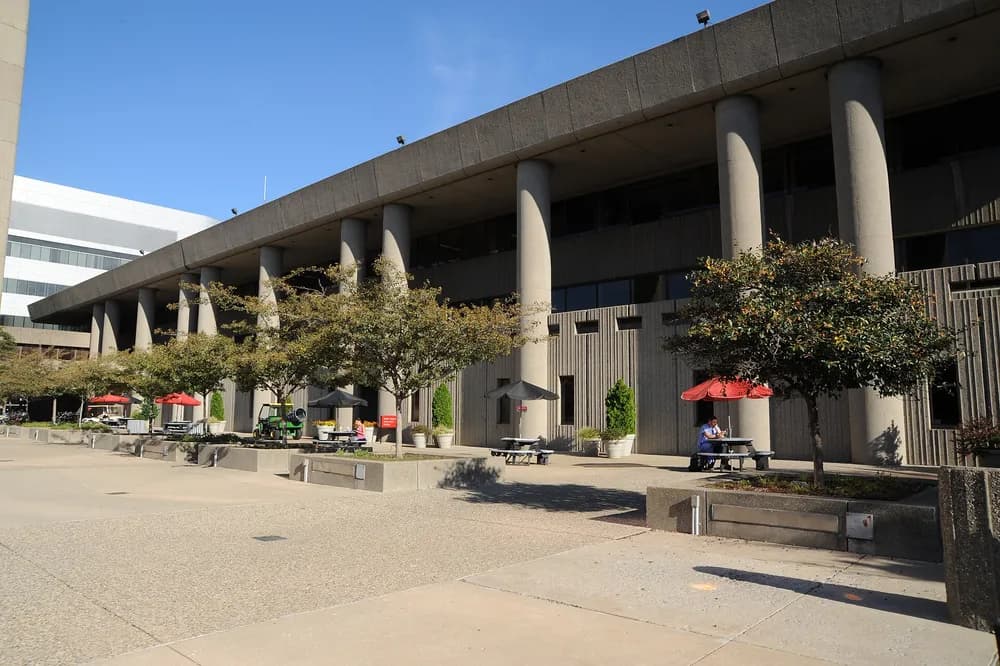
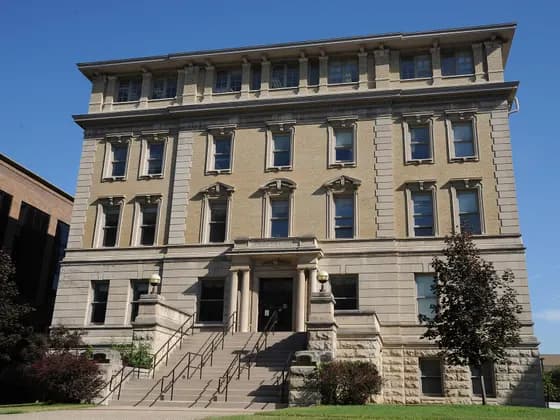

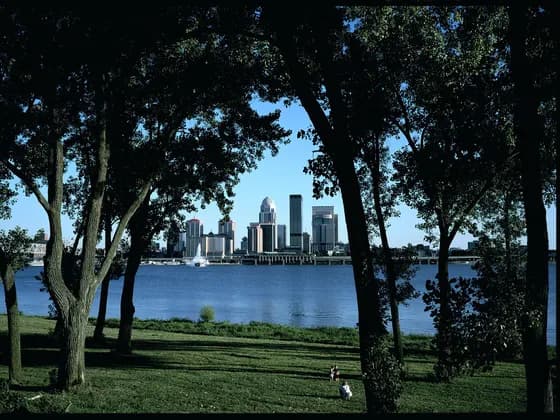
Photo: Photos by S. Harrison University of Louisville · Public domain · cropped
Photo: Photos by S. Harrison University of Louisville · Public domain · Photo: Chris Light · CC BY-SA 4.0 · Photo: William Alden from Louisville, Kentucky, USA · CC BY-SA 2.0
How to get into University of Louisville School of Dentistry (DMD) dentistry
Step-by-step: entry requirements, admission tests, personal statement, interview format and the key deadlines.
Open the guide →University of Louisville School of Dentistry (DMD) entry requirements
Admission profile, interview format, decision dates and what makes University of Louisville School of Dentistry (DMD) different.
See the profile →The University of Louisville School of Dentistry (DMD) dentistry interview
University of Louisville School of Dentistry uses a traditional one-on-one interview format at its Louisville Health Sciences Campus. UofL Dental co-locates with UofL Health — interprofessional education with medical, nursing, and pharmacy students is embedded in the program.
UofL Dental serves both urban Louisville and rural Kentucky populations. Interviewers probe awareness of Kentucky’s oral health disparities and commitment to serving underserved communities in both urban and Appalachian settings.
All applications via ADEA AADSAS; DAT required. Out-of-state-heavy — a typical class is majority non-resident (~75%+; a recent D1 class was 91 of 120 out-of-state).
University of Louisville School of Dentistry (DMD) interview at a glance (2027 entry)
| Annual DMD class size | ~120 |
|---|---|
| Interview format | Traditional — one-on-one faculty sessions |
| DAT required | Yes — via ADEA AADSAS |
| Tuition (2025–26) | ~USD 25,000 (in-state) / USD 52,000 (out-of-state) (estimate) |
| Application system | ADEA AADSAS primary + UofL secondary |
| Interview window | October–February |
Interview format
- One or two one-on-one faculty sessions; ~30–45 minutes each.
- Clinic tour and program overview included.
- No MMI.
Sample interview questions
UofL Dental is in Louisville — Kentucky's largest city — but trains dentists who will practice across the state, including rural areas. How do you reconcile urban training with rural practice needs?
Urban training provides high-volume, diverse case exposure. Rural rotation sites and community clinics bridge the gap. Training in a city teaches adaptable clinical skills applicable anywhere.
Louisville has a significant uninsured adult population and limited access to dental care for low-income residents. How does a dental school contribute to urban oral health access?
What they are listening for:
- Dental school clinics as safety-net providers
- sliding-scale fees
- community outreach programs
- student service-learning
UofL's community dental clinics in Louisville.
A patient asks you to perform a procedure that you believe is unnecessary for their clinical condition. How do you handle this?
ADA ethics: non-maleficence and patient autonomy in tension. Clinical explanation, documentation, informed refusal of treatment. The dentist's obligation not to perform unnecessary procedures.
A patient presents with generalized severe periodontal disease. On history-taking, you discover they have uncontrolled hypertension. What is the significance of this, and how does it affect your treatment plan?
Periodontal-cardiovascular connection; hypertension and oral health drug interactions (calcium channel blocker-induced gingival hyperplasia); defer elective treatment until blood pressure controlled; physician referral.
What manual dexterity activities demonstrate your readiness for the technical demands of dentistry?
What they are listening for:
- Specific
- concrete activity — art
- model building
- surgery observation
- dental assisting
Connect directly to restorative precision or surgical technique.
UofL has medical, nursing, pharmacy, and dental students on one campus. Describe a clinical scenario where interprofessional collaboration between dentist and pharmacist would benefit a patient.
Drug interactions affecting dental treatment — bisphosphonates and MRONJ risk, anticoagulants and bleeding, antidepressants and xerostomia. The pharmacist as a medication reconciliation partner.
Why UofL School of Dentistry — what draws you to this program specifically?
What they are listening for:
- UofL Health interprofessional campus
- Louisville urban patient diversity
- community rotation program
- specialty training breadth
Show genuine program research.
What type of practice do you envision after completing your DMD at UofL?
Specific and genuine. General practice, community health, rural Kentucky, or specialization — all are valid. Connect your answer to UofL's dual urban/rural training environment.
Within Louisville, untreated dental disease is concentrated in specific west-end and lower-income neighborhoods even though dental providers exist citywide. How would you interpret a map showing providers in one area and disease burden in another?
Provider presence is not the same as access — insurance, hours, transport, trust, and Medicaid acceptance create mismatches. Discuss the dental school clinic's safety-net role. Avoid asserting specific figures you cannot support.
A patient who traveled from rural Kentucky to your Louisville clinic needs follow-up care that would mean repeated long trips. How do you build a realistic plan?
What they are listening for:
- Consolidate treatment where safe
- coordinate with a closer provider or community clinic for follow-up
- consider teledentistry monitoring
Bridging UofL's urban training with rural patients' realities is the core tension here.
A supervising dentist asks you to upsell elective cosmetic treatment to a patient who came in for a basic restorative problem. You feel uneasy. How do you handle it?
Patient-centered care and informed consent over revenue. Present options neutrally, do not pressure, document the patient's actual chief complaint. Respectfully push back on the supervisor while keeping the patient's interest central.
A pharmacist colleague on the UofL Health campus flags that your patient's new bisphosphonate raises MRONJ concerns before a planned extraction. How do you fold that into your conversation with the patient?
Explain MRONJ risk in plain language, discuss timing and alternatives, document the shared decision. Demonstrates interprofessional input changing a clinical plan and clear patient communication.
UofL trains in an urban setting but serves both urban Louisville and rural Kentucky. Which of those populations do you see yourself serving, and how has your experience shaped that?
Be specific and honest about urban vs. rural draw, tying it to real exposure. Acknowledge UofL's dual environment as preparation either way. Avoid a non-committal 'both/anywhere' answer with no reasoning.
A diabetic patient with severe periodontal disease is not improving despite good in-office treatment. How would you investigate why, and what would you change?
What they are listening for:
- Reassess glycaemic control with their physician
- home care and adherence
- smoking
- disease severity; consider host modulation and tighter recall
Demonstrates systems thinking about the oral-systemic feedback loop, not just mechanical scaling.
A patient who found their own diagnosis online insists on a treatment you do not think is appropriate. How do you handle the appointment?
Respect the patient's research, explain your evidence-based reasoning, explore what worried them, and document the shared decision. Patient autonomy and trust without simply acceding to an inappropriate demand.
Practise the University of Louisville School of Dentistry (DMD) interview
Rehearse the real format before the day — on demand with our AI interviewers, or live with a tutor.
Sit a mock with photoreal AI interviewers — any time
A timed MMI or panel interview on video — American & international voices — with interviewers who listen, react and press with follow-ups. Rubric-scored feedback and a replay the moment you finish.






Live mocks with a tutor who’s been in the room
A full University of Louisville School of Dentistry (DMD)-style mock with a medic or dentist tutor — honest scoring against real marking criteria, a station-by-station debrief and a written action plan.
Book a mock interviewHow to prepare for the University of Louisville School of Dentistry (DMD) interview
Common pitfalls to avoid
University of Louisville School of Dentistry (DMD) interview — frequently asked questions
Sources & official admissions information
Ready to nail your University of Louisville School of Dentistry (DMD) interview?
Book a mock interview with a tutor who knows the US interview formats, orpractice unlimited stations from our interview question bank.