
LSU Health School of Dentistry Interview
Format, Questions & Prep Tips
LSU Health School of Dentistry dentistry interviews for 2027 entry are a traditional interview, held October 2026 through February 2027. Published figures: Annual DDS class size ~65–75; Tuition (2025–26) ~USD 22,000 (in-state) / USD 50,000 (out-of-state) (estimate).
- Institution
- Louisiana State University Health Science Center School of Dentistry
- Interview (2027 entry)
- October through February
- Decisions (2027 entry)
- Rolling decisions; strong Louisiana resident preference; waitlist through spring

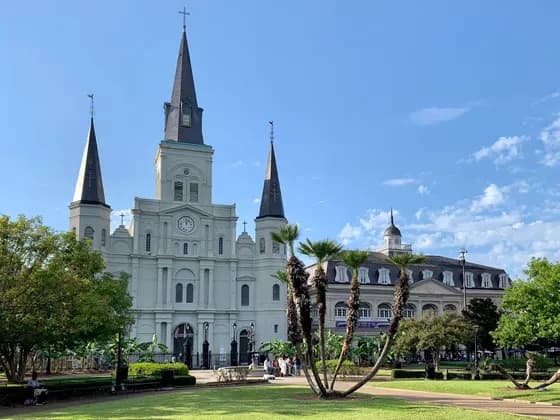

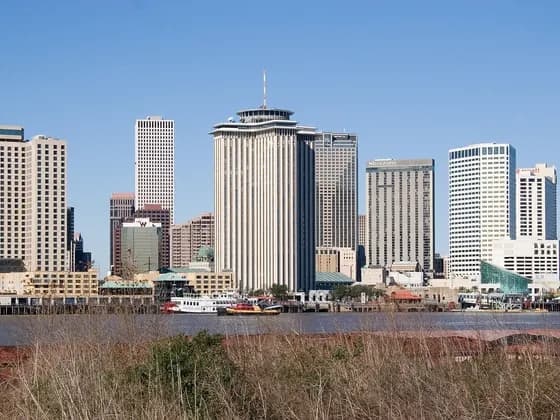
Photo: Spatms · CC BY-SA 4.0 · cropped
Photo: APK · CC BY-SA 4.0 · Photo: Infrogmation of New Orleans · CC BY-SA 3.0 · Photo: KimonBerlin · CC BY-SA 2.0
How to get into LSU Health School of Dentistry (DDS) dentistry
Step-by-step: entry requirements, admission tests, personal statement, interview format and the key deadlines.
Open the guide →LSU Health School of Dentistry (DDS) entry requirements
Admission profile, interview format, decision dates and what makes LSU Health School of Dentistry (DDS) different.
See the profile →The LSU Health School of Dentistry (DDS) dentistry interview
LSU Health School of Dentistry uses a traditional one-on-one interview format at its New Orleans campus. LSU Dental is the only dental school in Louisiana and part of LSU Health Science Center New Orleans, co-located with LSU Health Medical School and University Medical Center New Orleans.
New Orleans’ culturally diverse, historically underserved patient population shapes the entire program. Interviewers probe cultural competence, awareness of Louisiana’s oral health challenges, and genuine interest in serving this community.
All applications via ADEA AADSAS; DAT required. Strong Louisiana resident preference (~85–90% of each class).
LSU Health School of Dentistry (DDS) interview at a glance (2027 entry)
| Annual DDS class size | ~65–75 |
|---|---|
| Interview format | Traditional — one-on-one faculty sessions |
| DAT required | Yes — via ADEA AADSAS |
| Tuition (2025–26) | ~USD 22,000 (in-state) / USD 50,000 (out-of-state) (estimate) |
| Application system | ADEA AADSAS primary + LSU Health secondary |
| Interview window | October–February |
Interview format
- One or two one-on-one faculty sessions; ~30–45 minutes each.
- UMCNO campus and dental clinic tour included.
- No MMI.
Sample interview questions
Louisiana has one of the highest rates of uninsured adults in the United States. How does this shape oral health access, and what role does LSU Dental's clinic play?
Louisiana Medicaid adult dental coverage gaps; dental school clinic as safety-net provider; community dental programs. New Orleans' post-Katrina healthcare recovery context.
New Orleans is one of the most culturally diverse cities in the US — Creole, Cajun, Vietnamese, Haitian, and many other communities. How do you approach providing dental care to patients from backgrounds very different from your own?
Cultural humility, professional interpreter services, non-judgmental communication, learning about health beliefs that may affect dental care acceptance. Language diversity in clinical practice.
Why LSU Dental — and why train in New Orleans specifically?
What they are listening for:
- Patient diversity
- clinical volume
- LSUHSC interprofessional campus
- Louisiana ties (if applicable)
- commitment to serving the state's underserved population
Not generic.
A patient refuses treatment for their child's severe dental caries, citing religious or personal beliefs. How do you respond ethically?
Parental rights vs. child welfare; ADA ethics and state reporting obligations for dental neglect; documentation; working with the patient rather than against them; social services referral when necessary.
Louisiana has very high rates of obesity and Type 2 diabetes. How does diabetes affect oral health, and how do you manage a diabetic patient in your dental practice?
What they are listening for:
- Impaired healing
- increased infection risk
- periodontal-diabetes bidirectional relationship
- blood glucose monitoring
- physician coordination
- modified post-op instructions
Describe your manual dexterity activities and how they translate to the precision required in dentistry.
Specific activity with clinical parallel — composite polishing, suturing technique, crown preparation margins, or endodontic file placement.
LSU Health Medical School is on the same campus. How would you take advantage of the interprofessional health education environment at LSUHSC?
What they are listening for:
- Shared patient cases
- Grand Rounds attendance
- referral relationship with medical residents
- oral manifestations of systemic disease learning
- medication reconciliation
After graduating from LSU Dental, what do you envision for your practice — location, patient population, and setting?
Louisiana ties are valued. General practice, community health, or specialization — all valid, but show you have thought about how your training will benefit Louisiana communities.
Louisiana ranks among the worst states for adult oral health and uninsured rates, yet New Orleans also has pockets of strong access. How would you reconcile a poor statewide figure with that local variation?
State averages hide intra-state disparities driven by income, insurance, and geography. Discuss LSU's clinic as a safety net and the rural-urban divide. Hedge specific rankings rather than overstating them.
A Vietnamese-speaking elderly patient attends with an adult child translating, but the child appears to be editing what the patient says. How do you ensure you have the patient's own informed consent?
Family translators can filter or override the patient's voice. Use a professional interpreter for consent, address the patient directly, confirm understanding with teach-back. Patient autonomy in New Orleans's multilingual context.
In a post-disaster scenario reminiscent of Katrina, your clinic has limited supplies and more patients in pain than you can treat in a day. How do you decide who is seen?
Triage by clinical urgency (infection, airway, uncontrolled pain) over arrival order or relationship; communicate transparently; document. Justice in resource allocation — resonant in New Orleans's disaster-recovery history.
How would you present at an LSUHSC interprofessional case conference about a patient whose uncontrolled diabetes is complicating their periodontal treatment?
Structured, concise case summary; the bidirectional periodontal-diabetes link; a clear ask of the medical team; shared follow-up plan. Shows the co-located medical school as functioning collaboration.
LSU is the only dental school in Louisiana, training in a city with a uniquely complex history. Beyond residency, what specifically draws you to this program and this patient population?
Genuine engagement with New Orleans's culture, resilience, and oral-health needs; specific curriculum or community features. Avoid 'it's in-state' or generic diversity language without substance.
Louisiana has very high rates of obesity-related disease. Explain how a patient's poorly controlled hypertension would change how you administer local anesthetic and plan oral surgery.
What they are listening for:
- Epinephrine considerations and dose limits
- blood-pressure thresholds for deferring elective surgery
- stress reduction
- physician coordination
Also note calcium-channel-blocker gingival overgrowth. Specific oral-systemic reasoning for LSU's population.
A patient who lost everything in a recent flood needs extensive work but is overwhelmed and says they 'can't even think about teeth right now.' How do you respond?
Meet them where they are: address only the urgent problem, connect to social and financial resources, keep the door open, and avoid piling on a full plan. Trauma-aware care, resonant in New Orleans's disaster context.
Practise the LSU Health School of Dentistry (DDS) interview
Rehearse the real format before the day — on demand with our AI interviewers, or live with a tutor.
Sit a mock with photoreal AI interviewers — any time
A timed MMI or panel interview on video — American & international voices — with interviewers who listen, react and press with follow-ups. Rubric-scored feedback and a replay the moment you finish.






Live mocks with a tutor who’s been in the room
A full LSU Health School of Dentistry (DDS)-style mock with a medic or dentist tutor — honest scoring against real marking criteria, a station-by-station debrief and a written action plan.
Book a mock interviewHow to prepare for the LSU Health School of Dentistry (DDS) interview
Common pitfalls to avoid
LSU Health School of Dentistry (DDS) interview — frequently asked questions
Sources & official admissions information
Ready to nail your LSU Health School of Dentistry (DDS) interview?
Book a mock interview with a tutor who knows the US interview formats, orpractice unlimited stations from our interview question bank.