
Lyon College School of Dental Medicine Interview
Format, Questions & Prep Tips
Lyon College School of Dental Medicine dentistry interviews for 2027 entry are a traditional interview. Published figures: Annual DMD class size 80 (2025 inaugural class).
- Institution
- Lyon College School of Dental Medicine
- Interview (2027 entry)
- Rolling — verify with Lyon admissions for current cycle dates
- Decisions (2027 entry)
- Rolling admissions
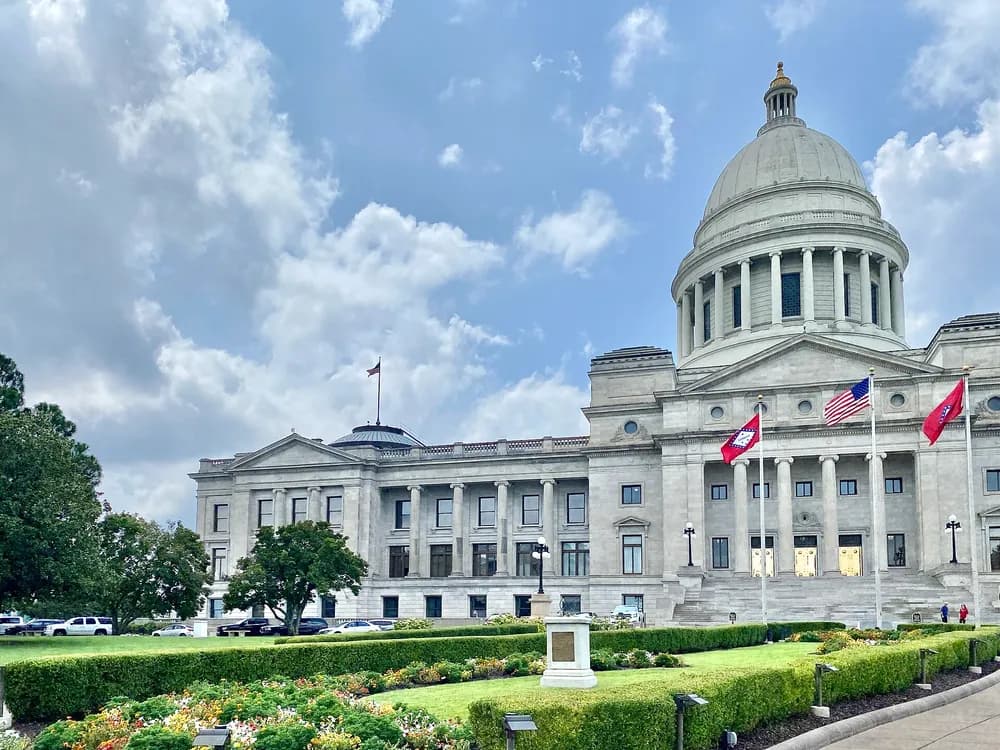
Photo: w_lemay · CC BY-SA 2.0 · cropped
Photo: Kenneth C. Zirkel · CC BY-SA 4.0 · Photo: L. Allen Brewer · CC BY 2.0 · Photo: Fetchcomms · CC BY-SA 3.0
How to get into Lyon College School of Dental Medicine (DMD) dentistry
Step-by-step: entry requirements, admission tests, personal statement, interview format and the key deadlines.
Open the guide →Lyon College School of Dental Medicine (DMD) entry requirements
Admission profile, interview format, decision dates and what makes Lyon College School of Dental Medicine (DMD) different.
See the profile →The Lyon College School of Dental Medicine (DMD) dentistry interview
Lyon College School of Dental Medicine is the newest accredited dental school in the United States, welcoming its inaugural class in 2025 at Lyon College in Little Rock, Arkansas. As a founding program, its interview format is still evolving — expect traditional faculty interviews assessing motivation, rural health commitment, and fit with the school’s pioneering mission.
Applications are via ADEA AADSAS. The DAT is required.
Lyon Dental was established specifically to address the acute dental workforce shortage in rural Arkansas. Interviewers are looking for applicants who genuinely want to serve rural and underserved communities — not simply those who need a dental school admission. Being part of a founding cohort is both an opportunity and a responsibility.
Lyon College School of Dental Medicine (DMD) interview at a glance (2027 entry)
| Annual DMD class size | 80 (2025 inaugural class) |
|---|---|
| Interview format | Traditional — faculty one-on-one or panel |
| DAT required | Yes — via ADEA AADSAS |
| Location | Little Rock, AR (Riverdale/Riverfront Plaza) |
| Application system | ADEA AADSAS primary + Lyon secondary |
| Interview window | Rolling — verify current cycle |
Interview format
- Traditional faculty interview; approximately 30–45 minutes.
- Format is evolving as a new program — verify details with admissions office.
- Campus visit provides opportunity to see the new dental facilities.
- Rolling decisions expected.
Sample interview questions
Lyon Dental was created specifically to address Arkansas's dental workforce shortage. Why does that mission resonate with you?
This question is close to a litmus test. If you don't have a genuine answer tied to rural health experience or a personal connection to Arkansas, this may not be the right fit. Be authentic.
What specific aspects of being part of a founding cohort at a new dental school appeal to you, and what challenges do you anticipate?
Demonstrates maturity and realistic awareness. Acknowledge the genuine challenges of early program development (evolving curriculum, infrastructure building) while articulating why you see this as an opportunity.
Rural populations in Arkansas face high rates of diabetes and cardiovascular disease. How does oral health connect to these conditions, and what can a dentist do?
Know the bidirectional periodontal-systemic relationship. Discuss how dentists in community settings can identify at-risk patients, counsel on oral-systemic health, and refer to primary care providers.
How have you developed fine motor precision, and how will that prepare you for dental simulation and clinical training?
Any relevant experience:
- crafts
- technical work
- art
- instrument repair
- laboratory work
Connect directly to dental tasks.
In a rural dental practice, you may be the only dentist serving a large geographic area. What ethical responsibilities does that raise?
Think about duty to serve, limits of competence, when to refer versus manage locally, and the tension between patient access needs and scope of practice.
What do you know about dental access in rural Arkansas specifically?
Arkansas consistently ranks among the states with the highest dental care access barriers — limited Medicaid dental coverage, rural dental deserts, and high rates of untreated tooth decay. Know the Arkansas-specific context.
Describe a time you served in a rural, underserved, or resource-constrained setting. What did it teach you about healthcare delivery?
Be specific and reflective. Lyon interviewers are building a cohort with genuine community health orientation, not just dental school aspirants.
How would you handle a situation where a patient's dental needs significantly exceed what you are trained to provide in your current clinical stage?
Demonstrates scope of practice awareness, patient safety, and referral competency. In rural settings, referral logistics are complex — acknowledge the tension between access and appropriate care.
Where do you see yourself practicing five to ten years after completing your DMD at Lyon?
Be honest. If you plan to practice in rural Arkansas or Arkansas communities, say so specifically. If you want to pursue a specialty, be clear about your reasoning.
What did your dental shadowing experiences reveal about the realities of rural or underserved dental practice?
If you have rural dental exposure, this is the moment to share it in detail. If your shadowing was exclusively private practice, reflect on how it differed from what you expect at Lyon.
On a rural Arkansas rotation you are the only dental provider that day. A patient with a painful abscess needs care that exceeds your stage of training, and the nearest specialist is two hours away. How do you handle the visit?
What they are listening for:
- Manage pain and infection within your competence
- arrange appropriate referral
- communicate honestly about timelines
- address the access barrier
Show scope-of-practice judgment in a genuinely isolated setting.
Arkansas ranks near the bottom nationally on several oral-health access measures. If you were handed county data to decide where to place a new mobile dental unit, what factors would you weigh?
What they are listening for:
- Untreated-decay rates
- distance to nearest dentist
- Medicaid participation
- population size
- road access
Demonstrate data-driven prioritization tied to Lyon's rural-workforce mission.
How would you explain to a rural patient, who is wary of 'a brand-new school', why you chose to train at Lyon and why they can trust your care?
What they are listening for:
- Honest framing of supervision
- faculty mentorship
- your commitment to the community
Turning the 'new program' concern into a strength tests both communication and self-belief.
Founding cohorts face uncertainty — evolving curriculum, no track record, problems to solve as you go. Tell us about a time you thrived in an ambiguous or unstructured situation.
Adaptability, initiative, and tolerance for ambiguity are essential for a founding class. Give a real example and connect it to the realities of a 2025-launched program.
A rural patient cannot afford the ideal treatment and asks you to do a cheaper, shorter-lived option you would not normally recommend. How do you respond?
Respect autonomy and access reality while ensuring informed consent about trade-offs; avoid a one-size paternalistic answer. Reflects the justice and beneficence tension common in rural Arkansas practice.
Practise the Lyon College School of Dental Medicine (DMD) interview
Rehearse the real format before the day — on demand with our AI interviewers, or live with a tutor.
Sit a mock with photoreal AI interviewers — any time
A timed MMI or panel interview on video — American & international voices — with interviewers who listen, react and press with follow-ups. Rubric-scored feedback and a replay the moment you finish.






Live mocks with a tutor who’s been in the room
A full Lyon College School of Dental Medicine (DMD)-style mock with a medic or dentist tutor — honest scoring against real marking criteria, a station-by-station debrief and a written action plan.
Book a mock interviewHow to prepare for the Lyon College School of Dental Medicine (DMD) interview
Common pitfalls to avoid
Lyon College School of Dental Medicine (DMD) interview — frequently asked questions
Sources & official admissions information
Ready to nail your Lyon College School of Dental Medicine (DMD) interview?
Book a mock interview with a tutor who knows the US interview formats, orpractice unlimited stations from our interview question bank.