
Midwestern University College of Dental Medicine Arizona Interview
Format, Questions & Prep Tips
Midwestern University College of Dental Medicine Arizona dentistry interviews for 2027 entry are a traditional interview, held October 2026 through March 2027. Published figures: Annual DMD class size ~130.
- Institution
- Midwestern University College of Dental Medicine Arizona
- Interview (2027 entry)
- October through March
- Decisions (2027 entry)
- Rolling; decisions typically within 4–8 weeks of interview

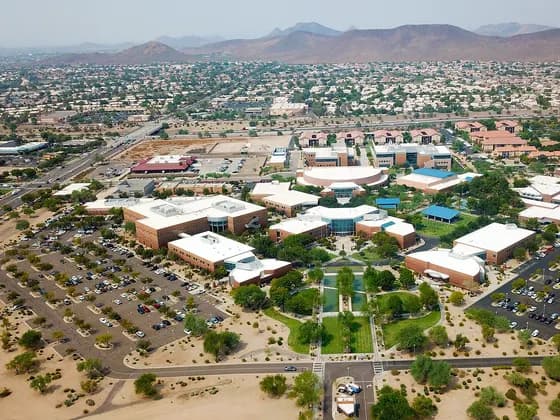
Photo: Mbatmwu · CC BY-SA 4.0 · cropped
Photo: Mbatmwu · CC BY-SA 4.0 · Photo: Tony the Marine ( talk ) · CC BY-SA 3.0 · Photo: Tony the Marine · CC BY-SA 3.0
How to get into Midwestern University College of Dental Medicine Arizona (DMD) dentistry
Step-by-step: entry requirements, admission tests, personal statement, interview format and the key deadlines.
Open the guide →Midwestern University College of Dental Medicine Arizona (DMD) entry requirements
Admission profile, interview format, decision dates and what makes Midwestern University College of Dental Medicine Arizona (DMD) different.
See the profile →The Midwestern University College of Dental Medicine Arizona (DMD) dentistry interview
Midwestern University College of Dental Medicine Arizona uses a traditional interview format — one-on-one or panel faculty interviews at its Glendale campus in the Phoenix metro. MWU Glendale is part of a large multi-program health sciences campus with osteopathic medicine, pharmacy, PA studies, and other health professions.
Applications are via ADEA AADSAS. The DAT is required. No in-state preference — MWU is a private institution.
With one of the larger DMD class sizes in Arizona, MWU AZ reviews a broad applicant pool. Interviews reward clear motivation, genuine dental experience, manual dexterity evidence, and an appreciation for interprofessional healthcare education.
Midwestern University College of Dental Medicine Arizona (DMD) interview at a glance (2027 entry)
| Annual DMD class size | ~130 |
|---|---|
| Interview format | Traditional — faculty one-on-one or panel |
| DAT required | Yes — via ADEA AADSAS |
| Location | Glendale, AZ (Phoenix metro) |
| Application system | ADEA AADSAS primary + MWU secondary |
| Interview window | October–March |
Interview format
- Traditional one-on-one or small panel faculty interview; approximately 30–45 minutes.
- No MMI format.
- Campus tour including dental clinic and simulation lab.
- Rolling decisions after interview.
Sample interview questions
What experiences led you to choose dentistry, and why are you drawn to MWU specifically?
Interviewers want to hear authentic motivation backed by real dental experiences. For MWU specifically, the interprofessional education angle and the large clinical volume of the Phoenix metro are genuine draw factors.
Can you give us a concrete example of a task that required significant precision and fine motor skill?
Any relevant experience:
- sculpture
- technical drawing
- instrument repair
- carving
- laboratory work
Connect the skills to what you expect in dental simulation training.
MWU trains dentists alongside osteopathic physicians, pharmacists, and PAs on the same campus. How do you envision collaborating with these other healthcare providers as a dentist?
Think about shared patient cases, medication interactions (pharmacist collaboration), oral complications of systemic disease, and coordinated care for complex patients.
How does periodontal disease interact with systemic health conditions, and how should dentists address this in patient care?
Know the bidirectional relationship between periodontal disease and diabetes and cardiovascular disease. Discuss how dentists can identify and refer patients with undiagnosed systemic conditions and co-manage with physicians.
A patient comes to you wanting an expensive cosmetic treatment that you believe is not clinically necessary. How do you handle this?
Demonstrates patient autonomy, informed consent, and beneficence. Acknowledge the patient's right to seek elective cosmetic treatment while ensuring they understand the clinical picture and alternatives.
What do you know about dental workforce distribution challenges in the western United States?
Know that rural Arizona, Nevada, and inland California have significant dental deserts. Medicaid dental benefit limitations and geographic maldistribution of dentists are key issues.
What did you observe during your dental shadowing that surprised you or changed your understanding of what dentistry involves?
Interviewers want evidence of genuine clinical curiosity. Be specific about procedures observed and patient interactions — not just "I shadowed a dentist for 40 hours."
How would you approach a situation where a colleague appeared to be providing substandard care to patients?
Demonstrates professional accountability and ADA ethics (veracity, beneficence, patient protection). Know the reporting obligations within dental practice and the role of state dental boards.
Where do you see yourself practicing after completing your DMD, and what type of practice setting appeals to you?
Be genuine about career direction — general practice, specialty, academic dentistry, community health. Demonstrate that you have thought about your trajectory, not just getting into dental school.
Tell us about a meaningful service experience and what it taught you about healthcare delivery.
Connect service experience to values relevant to dentistry — access to care, patient communication, cultural humility, public health awareness.
A patient in clinic is frustrated after a long wait and tells you bluntly that the last dentist 'rushed' them and they do not trust students. How do you open the appointment?
Acknowledge the frustration, do not get defensive, set expectations about the student-clinic process and supervision, and rebuild trust through listening. Show composure and rapport recovery.
You see survey data suggesting patients at the MWU clinic report high satisfaction but also high rates of missed follow-up appointments. How do you reconcile those two findings?
Satisfaction and adherence measure different things; explore cost, scheduling, transport, and survey bias. Demonstrate you can hold seemingly contradictory data without jumping to a conclusion.
A pharmacy student on your interprofessional team flags that a patient's blood thinner needs managing before an extraction. How would you explain the revised plan to the anxious patient in plain terms?
Translate the interprofessional decision into reassuring, jargon-free language; explain why the short delay protects them. MWU's shared campus makes this collaboration realistic.
MWU draws a broad applicant pool and some treat it as a backup. Convince us this is a genuine first choice — what specifically about MWU fits how you want to train?
Specificity defeats the 'safety school' perception: interprofessional model, Phoenix-metro clinical volume, simulation facilities. Authentic, concrete reasons matter more than flattery.
A patient strongly requests cosmetic veneers on healthy teeth that you believe are unnecessary and slightly risky. How do you handle the request?
Balance autonomy and informed consent against nonmaleficence: explain risks and alternatives clearly, document, and respect an informed choice. Show you neither simply refuse nor simply comply.
Practise the Midwestern University College of Dental Medicine Arizona (DMD) interview
Rehearse the real format before the day — on demand with our AI interviewers, or live with a tutor.
Sit a mock with photoreal AI interviewers — any time
A timed MMI or panel interview on video — American & international voices — with interviewers who listen, react and press with follow-ups. Rubric-scored feedback and a replay the moment you finish.






Live mocks with a tutor who’s been in the room
A full Midwestern University College of Dental Medicine Arizona (DMD)-style mock with a medic or dentist tutor — honest scoring against real marking criteria, a station-by-station debrief and a written action plan.
Book a mock interviewHow to prepare for the Midwestern University College of Dental Medicine Arizona (DMD) interview
Common pitfalls to avoid
Midwestern University College of Dental Medicine Arizona (DMD) interview — frequently asked questions
Sources & official admissions information
Ready to nail your Midwestern University College of Dental Medicine Arizona (DMD) interview?
Book a mock interview with a tutor who knows the US interview formats, orpractice unlimited stations from our interview question bank.