
Midwestern University College of Dental Medicine Illinois Interview
Format, Questions & Prep Tips
Midwestern University College of Dental Medicine Illinois dentistry interviews for 2027 entry are a traditional interview, held October 2026 through February 2027. Published figures: Annual DMD class size ~140; Tuition (2025–26) ~USD 65,000–70,000/year (estimate).
- Institution
- Midwestern University College of Dental Medicine Illinois
- Interview (2027 entry)
- October through February
- Decisions (2027 entry)
- Rolling decisions; waitlist through spring

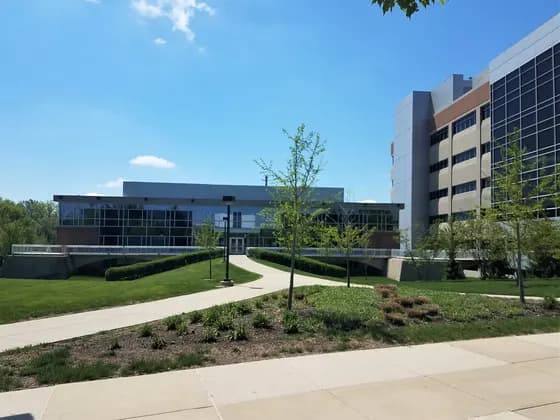

Photo: Mbatmwu · CC BY-SA 4.0 · cropped
Photo: Rytyho usa · CC BY-SA 4.0 · Photo: SimLibrarian · CC0 · Photo: David Jakes from Naperville, USA · CC BY 2.0
How to get into Midwestern University College of Dental Medicine Illinois (DMD) dentistry
Step-by-step: entry requirements, admission tests, personal statement, interview format and the key deadlines.
Open the guide →Midwestern University College of Dental Medicine Illinois (DMD) entry requirements
Admission profile, interview format, decision dates and what makes Midwestern University College of Dental Medicine Illinois (DMD) different.
See the profile →The Midwestern University College of Dental Medicine Illinois (DMD) dentistry interview
Midwestern University College of Dental Medicine Illinois uses a traditional one-on-one interview format at its Downers Grove campus in the Chicago suburbs. MWU is a multidisciplinary health sciences university — dental students share the campus with osteopathic medical, pharmacy, optometry, podiatry, and physical therapy students.
MWU’s interprofessional health education model is a defining program feature. Interviewers probe genuine understanding of the oral-systemic link and how dentists collaborate with physicians, pharmacists, and other clinicians.
All applications via ADEA AADSAS; DAT required. No in-state preference (private institution).
Midwestern University College of Dental Medicine Illinois (DMD) interview at a glance (2027 entry)
| Annual DMD class size | ~140 |
|---|---|
| Interview format | Traditional — one-on-one faculty session |
| DAT required | Yes — via ADEA AADSAS |
| Tuition (2025–26) | ~USD 65,000–70,000/year (estimate) |
| Application system | ADEA AADSAS primary + MWU secondary |
| Interview window | October–February |
Interview format
- Single one-on-one faculty session; ~30–45 minutes.
- Campus tour of MWU health sciences campus included.
- No MMI.
Sample interview questions
MWU has medical, pharmacy, optometry, and podiatry students all on one campus. How does training alongside these other health professionals benefit your dental education?
What they are listening for:
- Interprofessional collaboration in shared patient cases
- medication interactions affecting dental care
- systemic disease recognition
- referral relationships
Specific examples beat generic claims.
A patient with poorly controlled Type 2 diabetes comes in for a periodontal appointment. How does their systemic condition affect your dental management plan?
Bidirectional periodontal-diabetes relationship: hyperglycaemia worsens periodontal disease and vice versa. Blood glucose monitoring, antibiotic prophylaxis considerations, healing expectations, physician coordination.
Why dentistry — and why at a multidisciplinary health sciences institution specifically?
Oral-systemic connection as a reason for choosing a health-sciences campus; interest in collaborative care models; the value of understanding other health disciplines.
You discover a patient has been misusing opioid analgesics you previously prescribed for post-surgical pain. How do you respond?
ADA ethics and CDC guidelines on opioid prescribing. Patient safety and substance use disorder as a medical issue. Non-judgmental conversation, referral to addiction services, reporting obligations where applicable.
Describe your manual dexterity background and how it prepares you for the technical demands of dentistry.
Concrete examples:
- art
- crafts
- laboratory work
- surgical shadowing
- dental assisting
Connect to precision in composite placement, root canal instrumentation, surgical extraction.
What oral health needs do you see in suburban Chicago communities that a school like MWU should address?
What they are listening for:
- Uninsured working families
- immigrant communities with cultural and linguistic barriers
- elderly patients with fixed incomes
The suburban Chicago context has both affluent and underserved areas.
Do you see yourself in general practice, a specialty, or public health dentistry? How did your shadowing shape this?
Specific and honest. If specialty: which one and what drew you to it. If general practice: what aspect of comprehensive care appeals. Avoid vague "I want to help people" framing.
What specifically about MWU's Illinois campus and program would shape you into the dentist you want to become?
What they are listening for:
- Interprofessional campus
- evidence-based curriculum
- suburban Chicago patient diversity
- specific faculty research interests
Show genuine program research.
A patient on multiple cardiac medications is referred to you by a campus pharmacy student who flagged a possible interaction with your planned local anesthetic and a post-op NSAID. How do you handle the consultation?
Treat the flag seriously, verify the medication list, adjust anesthetic/analgesic choices, and document the interprofessional input. Demonstrates the MWU interprofessional model functioning in a concrete clinical decision.
You read that adults in some suburban Chicago immigrant communities have far higher untreated-decay rates than the affluent suburbs only a few miles away. How do you make sense of two such different figures in the same metro area?
What they are listening for:
- Access
- insurance
- language
- trust drive intra-metro disparities more than geography alone
Discuss the heterogeneity of 'suburban' and where a school clinic adds value. Avoid overstating any specific number.
Your clinic is running behind and a supervising faculty member suggests skipping the full medical-history update for an established patient to save time. You are uncomfortable. What do you do?
Patient safety and standard of care over throughput. Respectfully raise the risk (new meds, new conditions), do the essential update, escalate only if a real safety issue persists. Professionalism toward a supervisor without abandoning the standard.
How would you explain to a pharmacy or medical student — outside dentistry — why a routine dental visit matters for a patient with poorly controlled diabetes?
Translate the oral-systemic link for a non-dental clinician: periodontal inflammation and glycaemic control, infection risk, the dentist as a touchpoint for chronic-disease patients. Tests genuine interprofessional fluency, not jargon.
MWU is a private program with substantial tuition and no in-state preference. How have you weighed the cost against the interprofessional experience you are drawn to?
Show financial literacy alongside genuine interest: cost of attendance, loan burden, repayment pathways, and why the IPE model is worth it to you specifically. Avoid dismissing cost as irrelevant.
A patient on warfarin needs a surgical extraction. Walk me through how you would plan the procedure and what interprofessional input you would seek.
Check INR, weigh continuing vs. modifying anticoagulation with the prescriber rather than stopping unilaterally, use local hemostatic measures, plan post-op review. A specific bleeding-risk case the MWU interprofessional model makes credible.
During a shared clinic case, a medical student gives you a recommendation that you think falls outside their understanding of dentistry. How do you handle the disagreement in front of the patient?
Stay collegial, avoid undermining a colleague in front of the patient, take the discussion offline, and resolve with evidence. Interprofessional teamwork includes managing respectful disagreement — exactly what MWU's model tests.
Practise the Midwestern University College of Dental Medicine Illinois (DMD) interview
Rehearse the real format before the day — on demand with our AI interviewers, or live with a tutor.
Sit a mock with photoreal AI interviewers — any time
A timed MMI or panel interview on video — American & international voices — with interviewers who listen, react and press with follow-ups. Rubric-scored feedback and a replay the moment you finish.






Live mocks with a tutor who’s been in the room
A full Midwestern University College of Dental Medicine Illinois (DMD)-style mock with a medic or dentist tutor — honest scoring against real marking criteria, a station-by-station debrief and a written action plan.
Book a mock interviewHow to prepare for the Midwestern University College of Dental Medicine Illinois (DMD) interview
Common pitfalls to avoid
Midwestern University College of Dental Medicine Illinois (DMD) interview — frequently asked questions
Sources & official admissions information
Ready to nail your Midwestern University College of Dental Medicine Illinois (DMD) interview?
Book a mock interview with a tutor who knows the US interview formats, orpractice unlimited stations from our interview question bank.