
UIC College of Dentistry Interview
Format, Questions & Prep Tips
UIC College of Dentistry dentistry interviews for 2027 entry are a traditional interview, held October 2026 through February 2027. Published figures: Annual DMD class size ~75; Tuition (2025–26) ~USD 30,000 (in-state) / USD 55,000 (out-of-state).
- Institution
- UIC College of Dentistry
- Interview (2027 entry)
- October through February
- Decisions (2027 entry)
- Regular decisions by late March

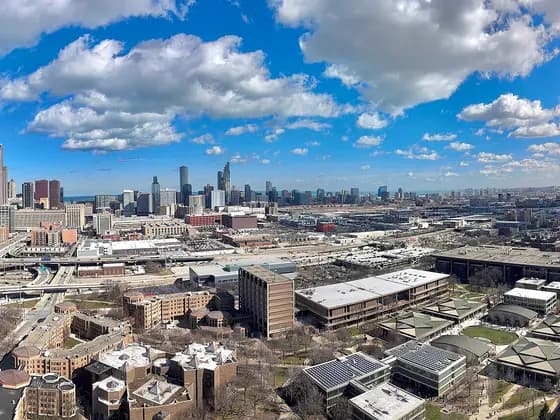
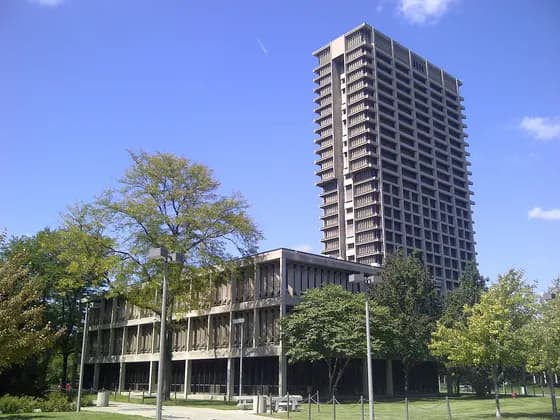
Photo: Teresa Grau Ros from Barcelona · CC BY-SA 2.0 · cropped
Photo: Wiknown77 · CC0 · Photo: Bert Kaufmann from Roermond, Netherlands · CC BY 2.0 · Photo: artistmac · CC BY-SA 2.0
How to get into UIC College of Dentistry (DMD) dentistry
Step-by-step: entry requirements, admission tests, personal statement, interview format and the key deadlines.
Open the guide →UIC College of Dentistry (DMD) entry requirements
Admission profile, interview format, decision dates and what makes UIC College of Dentistry (DMD) different.
See the profile →The UIC College of Dentistry (DMD) dentistry interview
University of Illinois Chicago College of Dentistry (UIC COD) uses a traditional interview format with two sessions (faculty and student) at its Chicago campus. UIC is a major public research university and the dental school has a strong commitment to serving Chicago's diverse and underserved communities — the Near West Side and Little Village neighborhoods are part of the clinical training footprint.
UIC COD has a strong oral health equity research program and trains significant numbers of dentists from underrepresented minority backgrounds. The school is committed to increasing the diversity of the dental workforce in Illinois.
UIC's clinical training program includes rotations at FQHCs and community health centers across Chicago, giving students exposure to the social complexity of urban primary dental care.
UIC College of Dentistry (DMD) interview at a glance (2027 entry)
| Annual DMD class size | ~75 |
|---|---|
| Interview format | Traditional — faculty + student sessions |
| DAT required | Yes — via ADEA AADSAS |
| Tuition (2025–26) | ~USD 30,000 (in-state) / USD 55,000 (out-of-state) |
| Application system | ADEA AADSAS primary + UIC secondary |
| Interview window | October–February |
Interview format
- Two sessions: faculty and student.
- No MMI.
- Community rotation at FQHCs.
Sample interview questions
Why dentistry rather than medicine or another health profession?
UIC wants applicants committed to dentistry specifically. Speak to the procedural craft, the blend of art and science, the autonomy of practice, and the lasting patient relationships. Avoid framing dentistry as a fallback from medicine.
UIC Dentistry is committed to increasing the diversity of the Illinois dental workforce. How does your background connect to that mission?
Under post-SCOTUS holistic review, first-generation status, geographic diversity, socioeconomic background, language skills, and a demonstrated service commitment are all relevant. Speak authentically about your own path and how it ties to UIC's mission to serve underserved Chicago communities.
Dentistry demands fine-motor precision. How have you developed and tested your manual dexterity?
Give concrete evidence — art, an instrument, model-building, or lab and craft work — and reflect on improvement with deliberate practice. Connect it to the steadiness, hand-eye coordination, and patience chairside dentistry requires.
Why UIC College of Dentistry specifically?
Reference its public research-university setting, the oral health equity research program, FQHC and community health center rotations across Chicago, and its commitment to a diverse workforce. Show alignment with a public-mission, community-rooted training environment.
Chicago's South and West Side communities have some of the highest rates of untreated dental disease in the US. What does UIC's proximity to these communities mean for how you think about your training?
Discuss structural racism, disinvestment, and dental deserts. UIC trains dentists who rotate in these communities, so show you understand the structural context and see clinical training as connected to addressing disparities.
A patient at a community clinic needs extensive work, but the clinic's resources and the patient's coverage are limited. How should a dentist approach this?
Engage with justice, triage, and honest communication about what is feasible. Discuss prioritizing urgent and preventive care, navigating coverage and assistance, and advocating within the system. Show you can reason about resource limits without abandoning the patient.
You notice a colleague at an FQHC consistently spends less time and effort on Medicaid patients than on privately insured ones. Is this acceptable?
Justice and non-discrimination argue against it. Discuss the access consequences, the duty to provide equal standards of care regardless of payer, and how you would raise the concern. UIC's mission makes equitable care a core value.
A patient with capacity refuses a needed extraction, wanting to 'save the tooth' against your advice. How do you handle the autonomy-versus-beneficence tension?
Respect the patient's right to decide while ensuring they understand the risks and alternatives. Discuss documentation, exploring their concerns, and continuing to offer care. Autonomy is respected, but you must give honest information and avoid enabling harm.
How would you build trust with a patient from a community that has experienced disinvestment and may be wary of healthcare institutions?
Acknowledge that mistrust may be well-founded, listen without judgment, communicate transparently, and go at the patient's pace. In communities affected by structural neglect, trust is earned over time and is the foundation of effective care.
Describe a meaningful clinical or community experience and what it taught you about serving underserved urban populations.
Go deep on one experience and reflect on access barriers, social determinants of oral health, and your own assumptions. UIC values genuine commitment to community service over a long activity list.
What are dental deserts, and how do they affect oral health outcomes?
Discuss how a shortage of providers willing to accept Medicaid or practice in low-income areas leaves communities without access, leading to late presentation, emergency-room reliance for dental pain, and worse outcomes. Connect this to UIC's FQHC-based training model.
What is the connection between oral health and systemic health?
Cover the periodontal-systemic links — diabetes, cardiovascular disease, adverse pregnancy outcomes — and the dentist's screening and detection role. Show you see the mouth as part of whole-body health, especially for patients with limited access to other care.
Why are prevention and regular recall so central to dentistry, especially in underserved communities?
Most dental disease is preventable or best managed early, yet underserved patients often present late. Discuss prevention, sealants and fluoride, and the public-health and cost logic of catching disease before it becomes complex and costly.
A patient at a community clinic is upset that they have to return for a second visit because there was not time to finish today. Explain and reassure them. (Hypothetical scenario.)
Acknowledge their frustration and the practical burden of returning, explain honestly why staged care is necessary, and help with scheduling or transport options. Empathy for patients juggling work and family pressures is part of good communication.
A parent brings a child with significant decay and feels ashamed, fearing judgment. Reassure them and agree a plan. (Hypothetical scenario.)
Lead with empathy, not blame. Acknowledge barriers, prioritize urgent care, discuss prevention and any assistance available, and frame it as a partnership. Judgmental tones drive vulnerable families away from care.
If untreated decay rates were far higher on Chicago's South and West Sides than in wealthier neighborhoods, what factors would you examine before concluding why?
Consider provider availability and dental deserts, Medicaid acceptance, insurance coverage, fluoridation, dietary and economic factors, and historical disinvestment. Show you would look for structural causes rather than attribute disparities to individual behavior.
Practise the UIC College of Dentistry (DMD) interview
Rehearse the real format before the day — on demand with our AI interviewers, or live with a tutor.
Sit a mock with photoreal AI interviewers — any time
A timed MMI or panel interview on video — American & international voices — with interviewers who listen, react and press with follow-ups. Rubric-scored feedback and a replay the moment you finish.






Live mocks with a tutor who’s been in the room
A full UIC College of Dentistry (DMD)-style mock with a medic or dentist tutor — honest scoring against real marking criteria, a station-by-station debrief and a written action plan.
Book a mock interviewHow to prepare for the UIC College of Dentistry (DMD) interview
Common pitfalls to avoid
UIC College of Dentistry (DMD) interview — frequently asked questions
Sources & official admissions information
Ready to nail your UIC College of Dentistry (DMD) interview?
Book a mock interview with a tutor who knows the US interview formats, orpractice unlimited stations from our interview question bank.