The Bulk-Billing Crisis
GP bulk-billing rates have dropped from over 88% to below 78% in some cohorts. Why is this happening, and what are the consequences for patients?
Likely follow-up · How did the MBS indexation freeze contribute to this trend?
2027 Entry Requirements & Interview Format
UNSW Sydney (UNSW) in Sydney, NSW runs a school-leaver medicine program for 2027 entry. Admission tests listed: UCAT-ANZ and ISAT. Published hurdles: ATAR — minimum eligibility ATAR 96.00 without EAS adjustment (General and international). UNSW holds a panel interview. Decisions for 2027 entry: January 2027-February 2027 (UAC offer rounds).

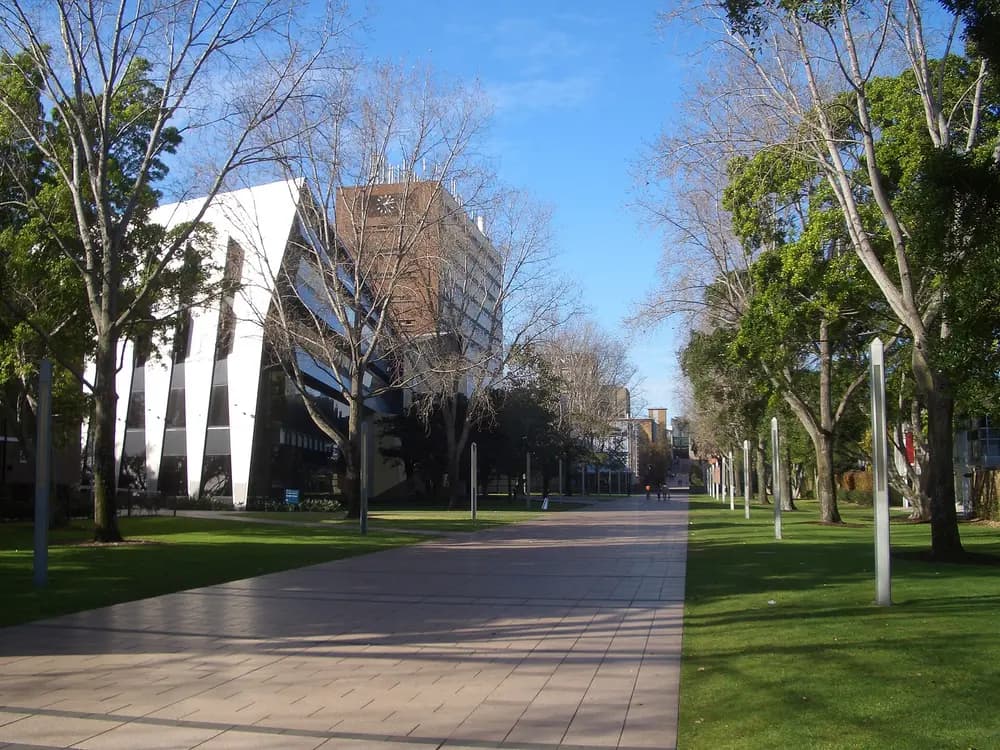
Photo: J Bar · CC BY-SA 3.0 · cropped
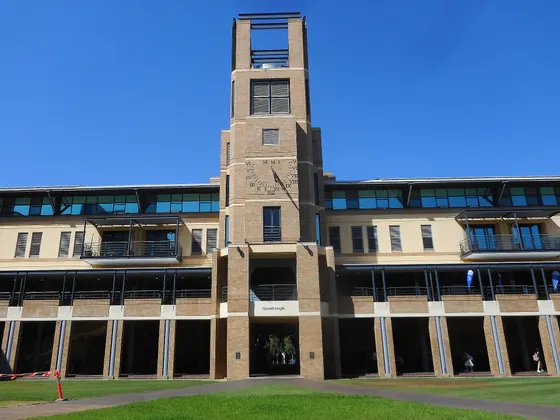
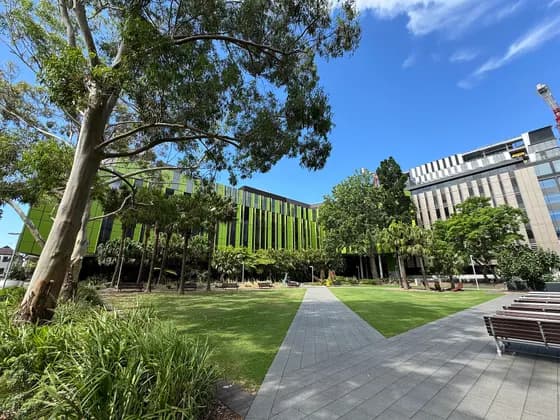
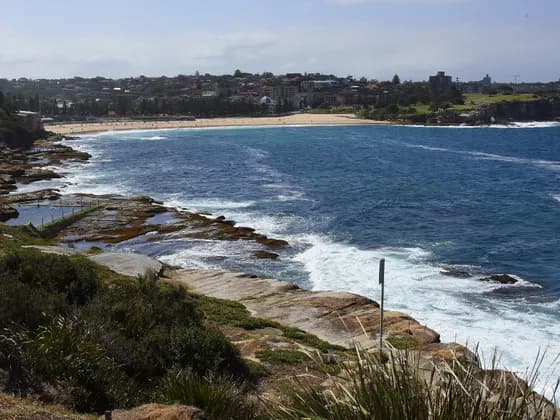
Photo: Sardaka · CC BY-SA 4.0 · Photo: FlyingKoala · CC BY 4.0 · Photo: Sardaka · CC BY-SA 4.0
Current medical students at Australian universities are filming their guides right now: what the course and teaching are really like, the city they live in, the social side, and whether they'd pick it again.
Coming soonNot on sale yet — we'll open these up as soon as the first Australian videos land.
Filming now
Step-by-step: entry requirements, admission-test prep, personal statement, interview format and the key deadlines.
Open the guide →Format breakdown, school-specific sample questions, FAQs and prep tips from tutors who interviewed here.
Read the guide →Integrated + Case-based learning, 6 years (direct entry), placements in Sydney, rural New South Wales and north-eastern Victoria.
See the course →UNSW Medicine is a 6-year direct-entry Bachelor of Medical Studies / Doctor of Medicine (BMed MD) with two foundation years, a clinical third year, a compulsory research year (Independent Learning Project or Medicine Honours) and two final clinical years, taught across four metropolitan clinical campuses - Randwick, St Vincent's Healthcare, St George & Sutherland and South West Sydney - and five rural campuses, with end-to-end pathways at Port Macquarie and Wagga Wagga.
UNSW runs a 6-year direct-entry Bachelor of Medical Studies / Doctor of Medicine (BMed MD): two foundation years, a clinical third year, a dedicated research fourth year (Independent Learning Project or Medicine Honours) and two final clinical years.
Four schemes sit alongside general entry - the Rural Entry Admission Pathway (ATAR 91.00, UCAT ANZ 40th percentile, end-to-end study at Port Macquarie or Wagga Wagga), the Gateway Entry Scheme for low-SES applicants (~20 offers), the Lateral Entry Scheme from the UNSW BMedSc (up to 10 offers) and the Indigenous Entry Scheme via Nura Gili.
Interview shortlisting uses selection rank and UCAT ANZ total score only; the final rank then adds a structured two-interviewer interview score. UNSW states it does not disclose the ranking algorithm and does not average the three components.
Integrated curriculum. 6-year Bachelor of Medical Studies / Doctor of Medicine, 288 units of credit, taught in three vertically integrated phases. Phase 1 (years 1-2): scenario-based basic medical sciences, clinical skills, ethics and socio-cultural aspects of health.
Phase 2: year 3 is clinical placement three days a week; year 4 is a research year - the Independent Learning Project or the Medicine Honours Program - plus 12 UOC of general education from outside Medicine & Health.
Phase 3 (years 5-6): ten eight-week, largely hospital-based courses covering Medicine, Surgery, Psychiatry, Primary Care, Obstetrics & Gynaecology, Children's Health and Emergency/Selective.
UNSW is strong in these research areas:
Format: Structured interview with two interviewers (not an MMI)
UNSW does not run an MMI. Selected applicants attend a single structured interview with two interviewers - academic staff, medical practitioners or community representatives, balanced where possible by gender and clinician/non-clinician. Questions probe behaviours, thoughts and attitudes in response to scenarios, and the pair classify each applicant as highly suitable, suitable, maybe suitable or not suitable.
All domestic interviews are face-to-face: Kensington campus for General, Gateway and Lateral Entry, and the nearest Rural Clinical Campus (Wagga Wagga, Port Macquarie, Coffs Harbour or Albury) for the Rural Entry Admission Pathway. International applicants are interviewed via Zoom by a panel of two. Your Medicine Application Form is shared with your interviewers beforehand.
UNSW does not publish the interview length or the number of questions, and rescheduling is not permitted once an interview is booked.
The AMC's February 2024 UNSW accreditation report records a government-set quota of 198 domestic commencing students and a Faculty-agreed quota of 100 international students, with about 90% of the commencing cohort school leavers; UNSW has not published an updated figure since. UNSW does not publish a current-cycle CSP/BMP/international split; 28.5% of Commonwealth Supported Places are Bonded Medical Program places.
UNSW Sydney was founded in 1961 and is based in Sydney.
Programmes offered:
These are real recordings of the interviewers you would meet, from a panel of 19 photoreal faces. Speak your answers out loud, get pressed with follow-ups, and receive rubric-scored feedback about two minutes after you finish, with a replay of your answers.
Try the AI interviewer| Entry pathway | Undergraduate (school-leaver) entry |
|---|---|
| ATAR | Minimum eligibility ATAR 96.00 without EAS adjustment (General and international) |
| UCAT-ANZ | UNSW publishes a hard minimum: UCAT ANZ 50th percentile or above for General, Gateway, Lateral and international entry, and 40th percentile or above for the Rural Entry Admission Pathway |
| Interview format | Panel interview |
| Decisions (2027 entry) | January 2027-February 2027 (UAC offer rounds) |
| Admission overview | Minimum eligibility ATAR 96.00 without EAS adjustment (91.00 for the Rural Entry Admission Pathway and the Gateway Entry Scheme) plus a UCAT ANZ result at or above the 50th percentile (40th for rural); these are hurdles, not competitive marks. English Standard assumed knowledge only - no maths, chemistry or biology prerequisite. Selection concludes with a structured interview with two interviewers. |
|---|---|
| ATAR | Minimum eligibility ATAR 96.00 without EAS adjustment (General and international); 91.00 without adjustment for the Rural Entry Admission Pathway and the Gateway Entry Scheme. For 2026 entry UNSW published a lowest ATAR to which an offer was made of 99.75 (local General), 94.25 (Gateway, via a Gateway Early Conditional Offer) and 91.05 (Rural) - defined as the lowest ATAR before adjustment factors, not a threshold. UNSW publishes no interview-shortlist ATAR. It does publish a whole-programme ATAR Profile (highest, median and lowest ATAR and Selection Rank), but that is a past-intake cohort profile spanning all entry schemes and is not an entry cut-off. |
| Contextual ATAR | Medicine is explicitly excluded from HSC Plus, and the Medicine ATAR minimums must be met without EAS/adjustment points. Contextual access runs through separate schemes instead: the Rural Entry Admission Pathway (ATAR 91.00, UCAT ANZ 40th percentile) and the Gateway Entry Scheme for applicants at a Gateway school and/or living in a low-SEIFA (IEO) area (ATAR 91.00, UCAT ANZ 50th percentile, approximately 20 offers a year). |
| UCAT-ANZ | UNSW publishes a hard minimum: UCAT ANZ 50th percentile or above for General, Gateway, Lateral and international entry, and 40th percentile or above for the Rural Entry Admission Pathway. It publishes no competitive cut-off. On the current /2700 three-subtest scale the official UCAT ANZ 2026 sitting (used for 2027 entry) had a median total cognitive score of 1,950 and a 9th decile of 2,340, so on the national distribution the 50th-percentile gate maps to roughly 1,950 for that sitting - our derivation, not a UNSW figure, and it moves with each cohort. Interview shortlisting uses selection rank and UCAT ANZ total cognitive score only; Situational Judgement is reported as a separate scaled score (300-900) and is not part of the cognitive total. |
| Place types | Government-set quota of 198 domestic commencing places plus a Faculty-agreed 100 international places (AMC accreditation report, February 2024 - no more recent published figure). 28.5% of Commonwealth Supported Places are allocated as Bonded Medical Program places, filled from the ranking after unbonded places are exhausted; New Zealand citizens, Indigenous Entry Scheme and Gateway Entry Scheme entrants are not offered bonded places. UNSW does not publish an offer-level CSP/BMP/international breakdown. |
| Indigenous pathway | Indigenous Entry Scheme, applied for through Nura Gili alongside the UAC application. Applicants do not sit UCAT ANZ and ATAR is not considered; selection rests on proof of Aboriginal and/or Torres Strait Islander heritage, evidence of academic capability, communication and interpersonal skills, and commitment to Indigenous health, assessed via the three-week residential Pre-Medicine & Health Program. No quota is published - the AMC 2024 accreditation report notes roughly 10 Indigenous students enrol each year. Entrants may be allocated to Kensington, Port Macquarie or Wagga Wagga and are not offered bonded places. |
| Bonded / rural | The Rural Entry Admission Pathway (REAP) lowers the minimum to ATAR 91.00 without adjustment and UCAT ANZ 40th percentile for applicants who lived in an MMM 2-7 area for five consecutive or ten cumulative years between ages 5 and 18. UNSW states that all applicants meeting the rurality eligibility are offered an interview because academic results are not assessed until later in the year, though its FAQ adds that the UCAT ANZ cut-off must also be met. Offer-holders are allocated to Port Macquarie or Wagga Wagga (a small group to Kensington). The AMC 2024 accreditation report records a separate rural quota of at least 28% of UNSW's yearly domestic intake. Separately, the Australian Government requires 28.5% of Commonwealth Supported Places to be Bonded Medical Program places; UNSW fills unbonded places from the top of the ranking first, then bonded, with no separate application. Bonded places are not available to New Zealand citizens and are not offered to Indigenous or Gateway entrants. |
| Specialities offered | Global Health, Indigenous Health, Infectious Disease, Rural Medicine, Health Equity |
Working towards the UCAT score UNSW expects? Build a week-by-week plan from your test date — free for the first two weeks.
| Format | Structured interview with two interviewers (not an MMI) |
|---|---|
| Interview window (2027 entry) | November 2026 (Rural Entry Admission Pathway), mid-December 2026 (Lateral Entry, one interview day), and December 2026-January 2027 (General and Gateway), with a final mid-January 2027 round for NZ applicants with late results |
| Decision date (2027 entry) | January 2027-February 2027 (UAC offer rounds) |
| Post-interview chances | Not published by UNSW. For scale only: UNSW offers approximately 350 General Entry interview places a year, plus about 60 Gateway and 30 Lateral, against the domestic commencing quota of 198 recorded by the AMC in 2024 - shared across all entry schemes. |
UNSW does not run an MMI - you face one structured interview with two interviewers who score your behaviours, thoughts and attitudes in scenario questions and then grade you highly suitable, suitable, maybe suitable or not suitable. Practise sustained, developed answers that survive follow-up probing from both interviewers rather than five-minute station sprints. Your Medicine Application Form goes to the interviewers beforehand, so know every line of it. And remember UNSW does not average its three criteria - a strong interview will not compensate for a weak UCAT ANZ or selection rank.
Two questions our tutors flagged as a strong fit for UNSW’s interview style. Try answering them out loud, then open Prometheus for the model answers and follow-up tips.
GP bulk-billing rates have dropped from over 88% to below 78% in some cohorts. Why is this happening, and what are the consequences for patients?
Likely follow-up · How did the MBS indexation freeze contribute to this trend?
Aboriginal and Torres Strait Islander Australians have a life expectancy approximately 8 years shorter than non-Indigenous Australians. What is driving the gap, and is it closing?
Likely follow-up · What proportion of the gap is explained by chronic disease?
We've helped students into UNSW and other Australian medicine schools — get tailored support for each stage of the application.
Hit the UCAT-ANZ cut-off for UNSW with one-to-one tutoring from top scorers.
Learn morePractise the Panel interview format with students who interviewed at UNSW.
Learn moreGet your personal statement reviewed by successful applicants.
Learn moreUNSW Sydney's official course page could not be reached when we last tried to re-check these figures, so treat them as indicative for 2027 entry and confirm them with the school.
We've helped students turn their UCAT, personal statement and interview prep into offers from UNSW and other Australian medicine schools.
Necessary cookies keep the site working; analytics and marketing cookies run only if you allow them. Privacy