
The Glasgow Dentistry course
What you actually study, and where you will be
Glasgow's BDS is a 5-year course with a spiral, integrated curriculum, with patient treatment from Year 2 and placements in Glasgow and west, central and south-west Scotland (2027 entry). Patient management starts in year 2, first extractions and radiographs in year 3, and year 5 is split between the dental hospital and outreach centres in the Public Dental Service.
- Degree
- BDS
- Length
- 5 years
- Teaching
- Spiral + Integrated
- First patients
- Year 2
- UCAS code
- A200

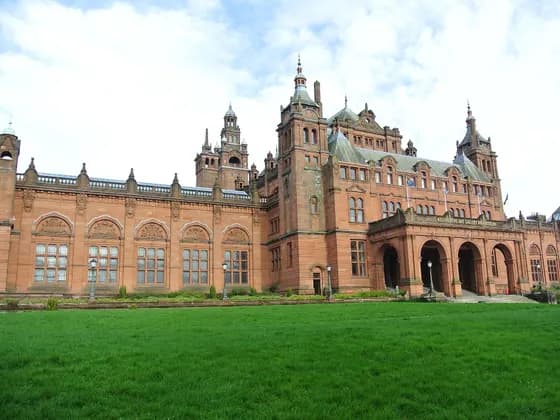


Photo: Clem_nat · CC BY-SA 4.0 · cropped
Photo: Suicasmo · CC BY-SA 4.0 · Photo: WeeHolly · CC BY-SA 4.0 · Photo: Pacifier · CC BY-SA 4.0
The Glasgow dentistry course at a glance (2027 entry)
Dentistry at the University of Glasgow is a five-year degree that leads to the BDS, the Bachelor of Dental Surgery. The General Dental Council (GDC), which regulates dentists across the UK, recognises the degree, so when you graduate you can apply to register and work as a dentist. Around 80 students start each year, and the dental school teaches about 400 undergraduates across the five years. The dental hospital and school was established in 1879.
Your main clinical base is Glasgow Dental Hospital and School on Sauchiehall Street in the city centre. The building is an NHS hospital within NHS Greater Glasgow and Clyde as well as a teaching school, so patient clinics, student clinical training and teaching share one site. The course page also lists the university's main Gilmorehill campus as a place of study. In later years you also work in outreach clinics, which are NHS dental clinics away from the hospital, in towns such as Paisley, Kilmarnock and Dumfries.
Glasgow calls its course a semi-integrated spiral curriculum. In practice, the same topics come back every year at greater depth, and the science is tied more and more closely to the patients you treat. Teaching runs on three themes: biomedical and applied medical science, clinical dental science, and patient management and health promotion. Each year is a single 120-credit course, and you must pass every part of it before you move up.
Patient contact builds in clear steps. In year 1 you watch teaching clinics. In year 2 you practise treatments in a simulated clinic and assist on real ones, then pass a practical gateway exam before taking on patients of your own towards the end of the year. By year 5 you spend half your time in NHS outreach clinics, treating more patients with less direct input from your supervisors.
The GDC inspected the course in February 2026 and recommended that it remains sufficient for graduates to register as dentists. In 2023 the GDC published its Safe Practitioner Framework, an updated list of what every new dental professional must know and be able to do. Glasgow reviewed and remapped its course to that framework for 2025, and the updated course is the one you would start.
| Degree | BDS (Bachelor of Dental Surgery) |
|---|---|
| UCAS code | A200 |
| Course length | 5 years full time, starting in September |
| Intake | About 80 students a year |
| Main clinical base | Glasgow Dental Hospital and School, Sauchiehall Street, city centre |
| Curriculum | Semi-integrated spiral curriculum, remapped to the GDC's Safe Practitioner Framework |
| First patient contact | Watching clinics in year 1; your own patients from late year 2 |
| Anatomy | Head and neck anatomy course in year 3, with anatomy lab sessions |
| Outreach | Seven centres in six health boards; half of year 5 |
| Elective | Year 3 project, finished after exams, in Glasgow or abroad |
| Intercalation | Optional one-year BSc (DentSci) after at least three years |
What makes Glasgow dentistry different
Half of final year in NHS outreach clinics
In year 5 you spend half your time at outreach centres run by the Public Dental Service, the part of NHS dentistry that Scotland's health boards run directly. GDC inspectors in 2026 agreed that the breadth of clinical experience across the hospital and outreach is a strength, and noted that final-year students complete notably high numbers of procedures.
A strict skills gate before your first patients
In year 2 you must pass every area of the Pre-Clinical Skills Assessment (PCSA), a practical skills exam, before you treat patients. You get further chances in May and August, but three unsuccessful attempts lead to exclusion from the course.
Clinical progress tracked continuously, not just at exams
Your clinical work is logged in LiftUpp, a digital record of your procedures, the feedback you receive and your professional behaviour. A review panel follows this record through each year, alongside your exams. GDC inspectors in 2026 commended the way behaviour is tracked.
An elective project you plan yourself
During year 3 you work with a supervisor on an elective project, then finish and present it in time set aside after your year 3 exams. Options include an audit, an educational comparison, joining a research project, or a healthcare project in a remote or low-income country. The university says many students travel abroad and it helps with the organisation.
Seven outreach centres, from Dumfries to Campbeltown
The GDC's 2026 report counts seven outreach centres across six health boards, in towns including Dumfries, Kilmarnock and Campbeltown. In Dumfries, final-year students train in a purpose-built centre with its own training wing, run by NHS Dumfries and Galloway.
How Glasgow teaches dentistry
Glasgow uses a variety of teaching methods rather than one single approach. Its 2026 open day slides put weight on student-centred learning, self-reflection and professionalism alongside formal teaching and assessment. Moodle, the university's online learning platform, is part of how you learn, and your session-by-session timetable sits in a Student Learning Toolkit on Moodle and MyCampus once you are enrolled.
The spiral design shapes all five years. The GDC sets the outcomes every dental graduate must reach, and Glasgow teaches many of them a step at a time, returning to them at a higher level in later years. Two strands run through every year rather than sitting in one module: wellbeing, and cultural competence, which means giving good care to patients from all backgrounds.
The balance of your time shifts sharply as you progress. Year 1 is mostly lectures and practical classes. Practical skills teaching peaks in year 2, when you prepare for clinical work. From year 3 clinical placement takes a growing share of the timetable, and by year 5 there are only a handful of lectures.
The ways you will learn
| Lectures | Large-group teaching of the science and theory behind dentistry, from anatomy, physiology and microbiology in year 1 to oral medicine and orthodontics in year 4. Lectures are heaviest in the first three years and almost disappear in final year. |
|---|---|
| Practical classes and simulated clinic | Hands-on sessions where you learn techniques before using them on patients. In year 2, for example, you learn to treat tooth decay in a simulated clinical setting. Phantom heads, which are mannequin heads fitted with artificial teeth and jaws, are available in every clinic, including the outreach centres, for practising a procedure or getting targeted extra training. |
| Tutorials and case-based learning | Small-group teaching where you discuss topics and work through problems. From year 2, case-based learning gives you realistic patient scenarios to solve, linking basic science with ethics and clinical decision-making. |
| Communication practice | Year 1 includes simulated scenarios focused on communication skills, so you rehearse conversations with patients before you meet them on clinic. Later, simulated patients are also used to teach consent and how to handle ethical dilemmas. |
| Supervised clinics | Clinical sessions at the dental hospital and, later, in outreach centres. You observe in year 1, assist in year 2 and then treat your own patients. Sessions begin with a safety huddle, a short team safety check, and tutors check your work as you go. |
| Clinical teaching blocks | Short, focused blocks of teaching that prepare you for new clinical tasks before you do them on patients. Local anaesthesia symposia, which cover numbing teeth and gums safely, are one example. |
A typical week on the Glasgow course
Glasgow publishes how many timetabled hours each year contains, which gives a good sense of how your weeks are filled. Every year carries 120 credits, counted as 1,200 hours of learning in total. Whatever is not timetabled is your own study, preparation and revision around your classes and clinics.
The years are also different lengths. The GDC's 2026 report lists 22 weeks for year 1, 35 for year 2, 42 each for years 3 and 4, and 37 for year 5. The middle years are therefore long, with much shorter breaks than year 1.
Early weeks are built around lectures and labs. Later weeks are mostly clinics, and from year 4 most of your timetabled hours are clinical placement.
- Year 1: 321 timetabled hours, made up of 161 hours of lectures, 119 of practical classes and workshops, 23 of tutorials and 18 on clinical placement.
- Year 2: 536 hours, including 234 of practical classes, 183 of lectures, 60 of tutorials, 54 on placement and 5 of seminars.
- Year 3: 584 hours, including 215 of lectures, 200 on placement, 144 of practical classes and 25 of tutorials.
- Year 4: 755 hours, including 598 of placement and community fieldwork, 84 of lectures, 37 of practical classes and 30 of tutorials.
- Year 5: 632 hours, of which 586 are on placement, 40 are tutorials and just 6 are lectures.
How anatomy is taught at Glasgow
Anatomy starts in year 1, where you learn the structure and workings of the normal human body alongside physiology, in a clinical context. A university project, described in a January 2025 teaching news item, made short videos to support year 1 clinical teaching. One covers the surface anatomy of the head and neck, meaning the landmarks you see and feel when examining a patient's face and neck from the outside.
The main head and neck anatomy course comes in year 3 and aims to give you in-depth, practical knowledge of the region you will work on. It includes anatomy lab sessions. The same 2025 news item mentions a larynx (voice box) dissection in year 3, and the project made short videos that link the year 3 anatomy labs to clinical practice.
When you start treating patients at Glasgow
You start going into clinics in year 1, but to observe rather than treat. You watch undergraduate teaching clinics, learn the basics of infection control, hygiene and safety, and meet the wider dental team.
Year 2 brings a big jump in practical work. You learn to treat tooth decay in a simulated clinic, observe and assist on real clinics, and have inductions on patient safety, infection control and consent. You must pass the PCSA before moving into patient care. Towards the end of year 2 you take over the care of your own patients.
In year 3 your own patient care increases sharply. You carry out your first extraction, take your first radiographs (dental x-rays) and treat children on paediatric outreach placements. In year 4 you plan and deliver treatment across all the general areas of dentistry, including harder cases such as dental emergencies and redoing root canal treatments.
Qualified clinicians supervise you throughout. They are responsible for the patient's care and step in when needed. In final year you are still fully supervised, but your supervisors step back gradually as your skill and confidence grow.
The patients you treat at the dental hospital are members of the public who come for free treatment by students, supervised by a qualified dentist. Demand is high: the school has stopped taking new patients who need dentures because so many people are waiting for that treatment.
Year by year at Glasgow
- Year 1
Foundations and first clinics
Year 1 is the shortest year, at 22 weeks. It gives you the scientific basis for dentistry and introduces the dental clinic and the dental team. You also start a strand on wellbeing and cultural competence, which covers looking after yourself, other people and the planet.
- Biomedical sciences including anatomy, physiology and microbiology, taught as the basis for understanding the normal body in a clinical context
- Introductory clinical medicine, patient management and health promotion, and the social science behind how people experience health and illness
- Observing undergraduate teaching clinics, with training in infection control, hygiene and safety
- Simulated scenarios to practise communicating with patients
- A mentoring programme and a reflective portfolio with four formal reflections
- Exams in April and May: written papers (60%), an oral assessment or presentation (10%) and a practical skills assessment (30%)
- Year 2
The clinical basis of dentistry
Year 2 introduces the core clinical subjects: operative dentistry (repairing teeth damaged by decay), prosthodontics (replacing missing teeth) and periodontics (gum health). Practical skills teaching increases sharply. By the end of the year you begin treating your own patients.
- Treating tooth decay in a simulated clinical setting before working on patients
- Observing and assisting on clinics, with a focus on risk management, professionalism and talking with real patients
- Case-based learning with realistic patient scenarios that combine science, ethics and clinical decisions
- Further biomedical and clinical medical sciences, applied directly to clinical situations
- The Pre-Clinical Skills Assessment (PCSA), which you must pass to move into patient care
- Written exams (70%) and practical skills assessments (30%); the GDC notes that year 2 exams include an Objective Structured Clinical Examination (OSCE), a circuit of short, timed stations
- Year 3
Treating patients across dentistry
Year 3 lasts 42 weeks, and your own patient care increases sharply. You broaden your restorative skills and take on new procedures such as extractions and x-rays. The year ends with an elective project that you plan during the year and present after your exams.
- Wider restorative dentistry, plus your first extraction and your first radiographs (dental x-rays)
- Outreach placements in paediatric dentistry, treating children
- An in-depth head and neck anatomy course, with anatomy lab sessions
- The science of disease and pathology, and how medical conditions affect dental care
- Giving patients advice on smoking and alcohol, and first preparation for providing sedation (medicines that help anxious patients relax)
- An elective project with a supervisor, finished and presented in time set aside after exams
- Written exams (70%) and practical skills assessment (30%)
- Year 4
Complex care and specialist areas
Year 4 is another 42-week year, spent working in the dental school and in the community. You plan and provide treatment in each of the general areas of dentistry and take on patients with more complex needs. The course documents describe year 4 as assessed to finals level, covering the full set of GDC outcomes.
- Harder cases, such as dental emergencies, redoing root canal treatments and indirect restorations like crowns, which are made outside the mouth and then fitted
- Teaching in oral medicine (diseases of the mouth and its lining), sedation and orthodontics (straightening teeth)
- Reflecting on your cases through the portfolio system, with close monitoring of leadership, teamwork and professionalism
- Evidence-based treatment plans that weigh up social, medical and dental factors, plus the legal side of dental practice
- Written exams (50%) and practical skills assessment (50%)
- Year 5
Outreach and preparing for practice
In the final year you spend half your time at the dental school and half on outreach placements, and there are only a few lectures. You see a higher flow of patients, still fully supervised but with less direct input, as you get ready to work as a dentist.
- Sessions in each core unit: restorative dentistry (crown and bridge), minor oral surgery, endodontics (root canal treatment), paediatric dentistry, periodontics, and two units of consultant clinics, meaning clinics run by specialist consultants
- Outreach placements in NHS Public Dental Service clinics
- Close monitoring of your professionalism and of the legal, ethical and interprofessional side of your work
- Assessment is entirely practical; the GDC report lists the OSCE, satisfactory attendance, completing the Mentorship Programme and satisfactory clinical performance in LiftUpp among the things you must pass
- After graduating, the established route into NHS general dental practice in Scotland is dental vocational training: 12 months of supervised, paid work in an approved training practice, with tutorials and study days. Completing it satisfactorily makes you eligible to work as an NHS general dentist in Scotland.
How you are assessed at Glasgow
Each year is assessed as a whole, with the main exams in April and May. You must pass every summative component, meaning every piece that counts formally, at grade D or above, and passing the year is the entry requirement for the next one. Written papers carry 60 to 70% of the marks in years 1 to 3 and half in year 4. Year 5 is assessed entirely through practical skills.
The GDC lists the formats used across the course: written exams, oral presentations, OSCEs, structured oral exams on clinical reasoning, simulated clinical assessments and clinical snapshot assessments. Snapshot assessments are short, recorded checks of your work on clinic that confirm what your longer-term record shows. Pass marks for written exams, OSCEs and case presentations are set with two methods. In modified Angoff, experts judge how a just-passing student would do on each question. In borderline regression, examiners' overall ratings of real candidates are used to work out the pass mark.
The Pre-Clinical Skills Assessment (PCSA) in year 2 covers periodontal instrumentation (cleaning around teeth and gums), preparing and filling a cavity, splinting injured teeth and parts of oral surgery. You must pass every area. Passing first time exempts you from part of the May professional exams. If you do not pass, you are assessed again in May. If you are still unsuccessful, you get targeted training before a final resit in August. Three unsuccessful attempts lead to exclusion, after which a progress committee decides whether you may repeat the year.
From year 2, your practical work is also followed continuously in LiftUpp. It records your procedures, the feedback you receive and your professional behaviour, which is rated against 34 descriptors covering clinical, interpersonal, professional and self-management behaviours. A Longitudinal Clinical Development Panel (LCDP) reviews this record at least three times a year, looking at your competence, your range of experience and how you engage with mentoring. It then passes recommendations to a pre-board scrutiny panel and the board of examiners.
Your reflective portfolio does not count towards your marks, but it matters. You write four formal reflections in year 1 and three a year after that, and from year 3 the portfolio is used alongside LiftUpp as evidence in the clinical development process. The panel also checks your experience against a recommended list for restorative dentistry, oral surgery and paediatric dentistry.
The university's 2026-27 rules for clinical degrees add three more points. You must attend 100% of every part of the course. Persistent absence can be treated as a fitness to practise matter, meaning a concern about whether you meet the standards expected of a future dentist, and can lead to exclusion. If you fail a year and are allowed to repeat it, you retake every assessment in it, including any you passed. The BDS can be awarded with Honours or with Commendation, based on your first-attempt results across the course.
Where you will actually be at Glasgow
Glasgow Dental Hospital and School is the course's main clinical base. The course page also lists the university's Gilmorehill campus as a place of study. Outreach placements then take you into clinics run by the Public Dental Service, the part of NHS dentistry that Scotland's health boards run directly.
Outreach starts in year 3 with placements in paediatric dentistry, and year 4 includes work in the community. In year 5 you spend half your time on outreach, allocated to one residential and one non-residential centre. The GDC's 2026 report counts seven outreach centres across six health boards. The school's 2026 open day slides name Dumfries, Campbeltown, Coatbridge, Vale of Leven, Paisley and Kilmarnock.
The school told the GDC that each outreach centre is funded for one dental nurse for every two students, under an agreement between NHS Education for Scotland, the local health board and the university. The GDC found that nurse support varied at times and asked the school to make it more consistent. Phantom heads are available at the centres, and the school says outreach patients give written consent at the start of treatment to being treated by supervised students.
NHS Dumfries and Galloway says Glasgow's fifth-year students train at a purpose-built training centre in the Dental Centre in Dumfries, which has a dedicated training wing. It describes its outreach programme as a bridge from dental school to practice, copying the experience of a primary care dental practice as closely as it can. It also says students on placement there receive free accommodation.
The GDC's 2026 inspection found some inconsistency between centres in how students are supervised and how consent is recorded. This followed three cases between 2024 and December 2025 in which the wrong tooth was extracted, two of them at the same outreach centre. The school says it has sent an updated extraction protocol to all centres and that written consent will be taken for extractions. It also says refresher training will be a standing item at inductions and education days.
Student feedback to the GDC also mentioned outreach clinics running unevenly, patient availability and shortages of dental nurses. The inspectors saw examples of changes the school had made in response, and noted that earlier problems with cancelled and reduced clinics were being actively addressed.
The course's main clinical base. It is an NHS Greater Glasgow and Clyde hospital and also houses the area's Emergency Dental Treatment Centre.
- Glasgow Dental Hospital and School, 378 Sauchiehall Street
A final-year outreach centre, purpose-built for training, with a dedicated training wing. NHS Dumfries and Galloway says students on placement get free accommodation.
- Dental Centre, Dumfries (NHS Dumfries and Galloway)
Outreach locations named in the school's 2026 open day slides. The GDC counts seven centres in total, across six health boards.
- Campbeltown
- Coatbridge
- Kilmarnock
- Paisley
- Vale of Leven
Electives and chosen modules at Glasgow
The elective is a required period of study in year 3. You choose a topic to explore in more depth and work on it through the year with a supervisor, who helps you plan it. Time is set aside after your year 3 exams to finish the project, which you present as a poster.
You can base your elective in Glasgow or elsewhere. The university says many students use it to travel abroad, and it offers organisational support. The school describes the elective as a chance for personal and professional development. The options the school lists are:
- An audit project, which checks how care is delivered against an agreed standard
- An educational comparison
- Joining an ongoing research project, using either quantitative (numbers-based) or qualitative (interview- or observation-based) methods
- A healthcare project in a remote or low-income country
Intercalation at Glasgow
Intercalating means taking a year out of the BDS to complete a separate one-year honours degree, then returning to dentistry. At Glasgow it is optional and open to students with a strong enough academic record. You can apply after at least three years of the BDS, for a BSc (DentSci), the Bachelor of Science in Dental Science.
Intercalated programmes run in the College of Medical, Veterinary and Life Sciences or the College of Arts and Humanities, grouped as clinical medical, life sciences and arts and humanities degrees. A central part of the year is joining a research project and learning research methods alongside working researchers.
Numbers on each programme are limited, so you may not get your first choice, and the school advises having alternatives in mind. Dental students start by contacting the Dental School's administrative office.
Facilities and support at Glasgow
Where you will learn
Glasgow Dental Hospital and School holds the clinics where you treat patients as well as the rooms for student clinical training, teaching and research. Practical techniques are first learned in a simulated clinical setting, and phantom heads are available in all clinics so you can rehearse a procedure or get extra practice at any stage.
Much of the course runs through digital systems. Course materials and your timetable sit on Moodle and MyCampus. Your clinical record lives in LiftUpp, where staff record feedback and can place alerts about your performance, professional concerns or clinical incidents, including alerts shared with outreach centres.
Support while you study
Mentoring is built into the course. A Mentoring Programme runs your reflective portfolio from year 1, and completing the Mentorship Programme is one of the requirements for passing year 5. The GDC's 2026 inspectors noted a strong and effective culture of pastoral and wellbeing support for students.
Wellbeing is taught, not just offered. The course covers ways to manage the pressures of workload, uncertainty and setbacks, such as reflection, debriefing, peer support and asking for help. It also teaches you to recognise when your own wellbeing is starting to affect your work, and what to do about it.
If something goes wrong on clinic, the school told the GDC that students involved in an incident are offered academic, clinical or pastoral support within 10 days of it being logged. Students are also encouraged to write a reflection on what happened. Students who are behind on their clinical experience have support meetings and targeted training to help them catch up.
You can raise issues through staff-student liaison meetings with class representatives, and outreach placements have their own student feedback surveys.
Is the Glasgow course right for you?
This course may suit you if
- You want to be based in a working NHS dental hospital in the centre of a large city.
- You want to spend half of your final year treating patients in NHS community clinics.
- You would like your clinical progress judged on a continuous record, through LiftUpp and regular panel reviews, as well as on exams.
- You want time in year 3 to design your own project, possibly abroad.
Things to think about
- Years 3 and 4 each last 42 weeks, so holidays are short in the middle of the course.
- Final year includes a residential outreach placement, so expect to live away from Glasgow for part of it.
- You must pass every component each year, and three failed attempts at the PCSA lead to exclusion, after which a committee decides whether you may repeat the year.
- The GDC's 2026 inspection found outreach centres did not all follow the same supervision and consent routines. The school says it has updated its extraction protocol, but your experience may vary by centre.
- Detailed head and neck anatomy is concentrated in year 3 rather than at the start of the course.
- You must attend 100% of every part of the course. Time off has to be agreed in advance, and persistent absence can lead to exclusion.
Glasgow dentistry course — frequently asked questions
Applying to Glasgow?
How to get into Glasgow
Entry requirements, UCAT, personal statement and interview, step by step.
Open the guide →Glasgow UCAT cut-offs and offers
UCAT cut-offs, A-level offers, interview format and decision dates.
See the requirements →Compare Glasgow with other schools
Put the teaching style, anatomy teaching and placements next to another school.
Open the comparison →Prepare for the Glasgow interview
Format breakdown, school-specific sample questions and prep tips from tutors who interviewed here.
Read the guide →Where this Glasgow course guide came from
This guide was written from 22 official sources — University of Glasgow Dental School's own course pages and programme documents, plus the regulator and NHS placement partners where they publish detail — read on 2026-09-24, then checked claim by claim against those sources.
- Dentistry BDS, University of Glasgow undergraduate course page (2027 entry)
- Bachelor of Dental Surgery open day presentation, June 2026, Glasgow Dental School
- Course Catalogue: BDS1 (DENT1002), academic session 2026-27
- Course Catalogue: BDS2 (DENT2002), academic session 2026-27
- Course Catalogue: BDS3 (DENT3002), academic session 2026-27
- Course Catalogue: BDS4 (DENT4002), academic session 2026-27
- Course Catalogue: BDS5 (DENT5004), academic session 2026-27
- BDS1 course specification (DENT1002), 2026-27
- BDS2 course specification (DENT2002), 2026-27
- BDS3 course specification (DENT3002), 2026-27
- BDS4 course specification (DENT4002), 2026-27
- BDS5 course specification (DENT5004), 2026-27
- General Dental Council education quality assurance inspection report: University of Glasgow BDS (inspected 11 February 2026)
- Glasgow Dental Hospital and School, NHS Greater Glasgow and Clyde
- Dental services and dental student outreach, NHS Dumfries and Galloway
- Free dental treatment by dental students, Glasgow Dental School
- About us, Glasgow Dental Hospital and School
- Intercalated degrees, School of Medicine, Dentistry and Nursing, University of Glasgow
- Dental orientation videos project: anatomy teaching for BDS1 and BDS3, University of Glasgow learning and teaching news (January 2025)
- University of Glasgow Regulations for Clinical Undergraduate Awards (UG-Clin), 2026-27
- Dental vocational (foundation) training, NHS Education for Scotland
- Dental Vocational Training Applicant Handbook, 2026-2027 intake, NHS Education for Scotland
Courses are restructured between cycles. Anything here that decides your application — an anatomy offer, a placement city, a compulsory intercalated year — should be confirmed against the official page for your entry year.
Applying to Glasgow?
We have helped hundreds of applicants turn their UCAT, personal statement and interview prep into offers from Glasgow and other UK dentistry schools.