
Barts and The London (Queen Mary) Medicine Interview
Format, Questions & Prep Tips
Barts and The London medicine interviews for 2027 entry are a panel interview, held January–February (2027 entry). Published figures: A100 Home applications (2026 entry) 1,732; A100 Home interviews (2026 entry) 1,294; A100 Home offers (2026 entry) 991 for 311 places.
- Institution
- Queen Mary University of London
- Interview (2027 entry)
- January–February (2027 entry)
- Decisions (2027 entry)
- March, once all interviews are complete


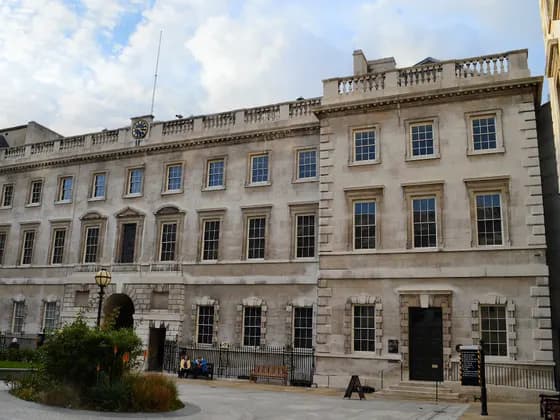

Photo: Paul the Archivist / Wikimedia Commons · CC BY-SA 4.0 · cropped
Photo: Chris Heaton · CC BY-SA 2.0 · Photo: AndyScott · CC0 · Photo: Matt Brown · CC BY 2.0
Still deciding where to apply? Hear it from a student who's there
Barts and The London (Queen Mary University of London) Medical School uses a distinctive online panel interview. Queen Mary describes its interviews as lasting 20 to 30 minutes and combining questions on an article sent to you to read beforehand with general competency-based questions.
Queen Mary does not publish how far ahead the article arrives, so start reading as soon as it lands. The article-based format tests your ability to read critically, form opinions, and articulate them under structured questioning.
For A100 the panel typically comprises two members of senior academic or clinical staff and sometimes a lay selector. Barts assesses motivation and the reality of a career in medicine; initiative, resilience and maturity; teamwork; organisation and problem solving; contribution to university life; and communication skills. For 2027 entry, interviews take place between January and February, and decisions are communicated in March once all interviews have been completed.
Barts and The London (Queen Mary) interview key facts (2027 entry)
| A100 Home applications (2026 entry) | 1,732 |
|---|---|
| A100 Home interviews (2026 entry) | 1,294 |
| A100 Home offers (2026 entry) | 991 for 311 places |
| Format | Online panel, 20–30 min, with a pre-read article |
Interview Format
- Online panel interview lasting 20–30 minutes
- Questions on an article sent to you to read before the interview
- Plus general competency-based questions
- Panel (A100): typically two senior academic or clinical staff, sometimes a lay selector
- Assesses: motivation and reality of medicine, initiative, resilience and maturity, teamwork, organisation and problem solving, contribution to university life, communication
- Interviews held January–February; decisions communicated in March once all interviews are complete
Sample Interview Questions
Why medicine, and why Barts specifically?
Reference Barts' East London clinical placements, the diverse multi-ethnic patient population, the Royal London Hospital teaching environment, and the integrated curriculum.
(Article-based) Tell me about the article we sent you. What was the main argument?
Show you read it thoroughly. Summarise the argument concisely. Be ready to discuss specifics, not just headlines. Don't fake familiarity.
(Article-based) What perspective do you think the article missed?
Engage with what wasn't there. Counter-arguments, alternative interpretations, missing voices (patients, junior staff, specific demographics). Show critical reading.
(Article-based) Do you agree with the article's conclusion? Why or why not?
Take a position with reasoning. Acknowledge the strengths of the opposing view. Avoid fence-sitting — Barts wants reasoned opinions.
(Article-based) How does the article relate to current NHS challenges?
Connect specific points in the article to specific NHS issues (workforce, access, funding, ethics). Concrete connections.
Tell me about an experience when you had to demonstrate teamwork skills.
STAR framework. Focus on what you contributed and what you learned about collaboration.
What experiences led you to choose medicine specifically over related careers?
Genuine reasons + clear thinking about what attracts you to the medical role specifically (diagnostic responsibility, long-term patient relationships).
A patient asks you to share information with their employer. What do you do?
Confidentiality is paramount. Explore why — could there be coercion involved? Don't share without explicit informed consent.
Describe a time you demonstrated resilience.
Genuine setback with reflection on what you did and what you learned. Barts explicitly assesses resilience.
How do you organise yourself when juggling multiple priorities?
Concrete strategies — calendar, prioritisation, asking for help. Barts explicitly assesses organisation.
Should the NHS prioritise patients from underrepresented communities for certain treatments?
Engage with equity arguments. Reference health inequalities particularly relevant in Barts' East London catchment. Acknowledge the implementation complexities.
What aspect of Barts' curriculum most attracts you?
Specifics: the integrated 5-year MBBS, the early clinical contact, the breadth of placements across diverse East London communities, the Whitechapel and Royal London clinical environments.
(Possibly in Part 2) A patient is upset that their consultation has been cut short. (Actor present.)
Acknowledge the inconvenience. Don't over-apologise. Listen to their specific concern. Offer concrete next steps.
What concerns you about a career in medicine?
Honest concerns + management strategies. Workload, burnout, emotional toll. Show informed self-awareness.
Practise the Barts and The London (Queen Mary) interview
Rehearse the real format before the day — on demand with our AI interviewers, or live with a tutor.
Sit a mock with photoreal AI interviewers — any time
A timed MMI or panel interview on video — British & international voices — with interviewers who listen, react and press with follow-ups. Rubric-scored feedback and a replay the moment you finish.






Live mocks with a tutor who’s been in the room
A full Barts and The London (Queen Mary)-style mock with a medic or dentist tutor — honest scoring against real marking criteria, a station-by-station debrief and a written action plan.
Book a mock interviewHow to Prepare
READ the article in advance — it is sent before your interview, so use every day you have.
Have a 1-min summary, 3-min discussion of strengths, 3-min discussion of weaknesses ready for the article.
Identify perspectives the article missed — Barts probes critical reading.
Form an opinion on the article's conclusion with reasoning — don't fence-sit.
Research Barts' East London context — the multi-ethnic, multi-lingual patient population is central.
Practise online interview etiquette: camera angle, lighting, eye contact at the lens, neutral background.
Invited to interview at Barts and The London (Queen Mary)? Say your first answer out loud today with the free two-minute warm-up drill, then sit a timed mock set up for Barts and The London (Queen Mary).
Common Pitfalls
Frequently Asked Questions
Related guides
Free, evidence-based guides from current UK medical and dental students.
Free Interview Resources
Worked-through MMI stations, ethics scenarios, and panel questions.
Read guideNHS Core Values Guide
The 6 NHS values examiners listen for in every interview answer.
Read guideMedical School Rankings
See interview format (MMI vs panel) for each UK medical school.
Read guideUCAS 2026 Personal Statement
The new three-question format your interviewer will reference.
Read guideContextual Offers for Medicine
Every UK medical school's widening-access scheme in one place.
Read guideSources & official admissions information
We cross-check every interview guide against the school’s own admissions guidance and the UK regulators.
- Queen Mary FMD — MBBS (A100) selection criteria — 2027 places, UCAT 4th decile + SJT 1–3, online interview Jan–Feb, panel make-up, decisions in March, PS unscored.
- Queen Mary FMD — Admissions statistics for Medicine & Dentistry — A100 Home 2026: 1,732 applications, 1,294 interviews, 991 offers; Overseas 553/227/76.
- Queen Mary in Malta — Your application journey — 20–30 min interviews with a pre-read article, "same format as the Queen Mary London programme interviews".
- Queen Mary — Contextualised admissions — Medicine: one-grade contextual drop; enhanced AAA + guaranteed interview for access-scheme participants.
- Barts and The London (Queen Mary) — official admissions page — Programme overview, entry requirements, interview format and timeline straight from the school.
- UCAT Consortium — Official UCAT registration, test format, scoring methodology and free practice materials.
- General Medical Council (GMC) — Statutory regulator. Approved medical schools, the registered-doctor register, and fitness-to-practise standards.
- Medical Schools Council — Selecting-for-excellence guidance, MMI principles, and an A–Z of UK medical schools.
Ready to nail your Barts and The London (Queen Mary) interview?
Book a mock interview with a current medical student who recently went through the same process, or practise on demand with the AI interviewer.