
Brighton & Sussex (BSMS) Medicine Interview
Format, Questions & Prep Tips
Brighton & Sussex medicine interviews for 2027 entry are multiple mini interviews (MMI), held December 2026 – February 2027. Published figures: Contextual interviews BSMS aims for 30% of interviews; Places (2027 entry) 197 UK + 10 international.
- Institution
- Brighton and Sussex Medical School
- Interview (2027 entry)
- December 2026 – February 2027
- Decisions (2027 entry)
- Offers made January – April 2027

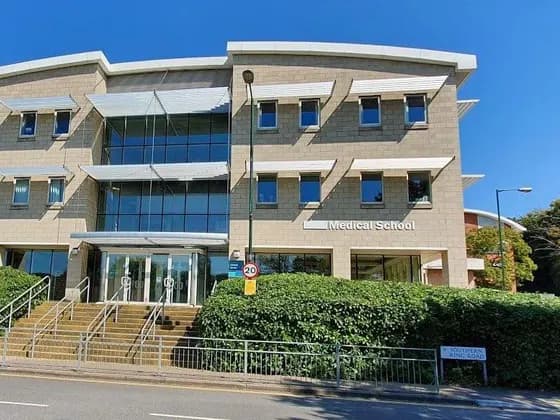
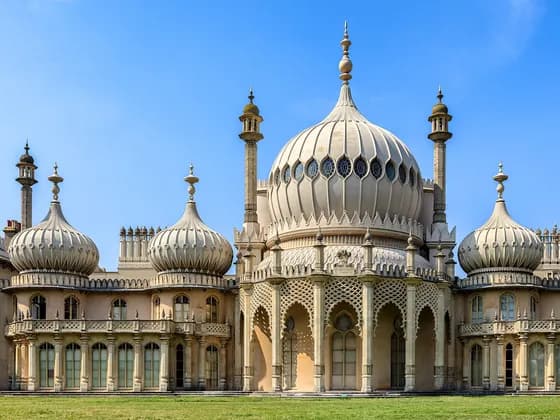
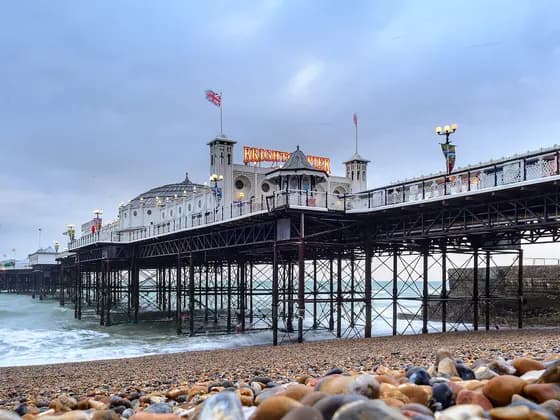
Photo: Hassocks5489 / Wikimedia Commons · CC0 · cropped
Photo: I-am-lucifer360 · CC BY-SA 4.0 · Photo: Qmin · CC BY-SA 3.0 · Photo: Arild Vågen · CC BY-SA 4.0
Still deciding where to apply? Hear it from a student who's there
Brighton and Sussex Medical School (BSMS) is a joint medical school run by the University of Sussex and the University of Brighton, with clinical placements across the wider Sussex region. For 2027 entry, BSMS selects through Multiple Mini Interviews (MMIs) held from December 2026 to February 2027 — you choose in person (early December or early January) or via Zoom (late January or early February) — with a strong widening-participation ethos and a focus on producing doctors who will serve diverse coastal and inland communities.
Stations span the standard MMI themes: motivation, ethics, communication, teamwork and reflection on work experience. BSMS additionally probes awareness of health inequalities, the social determinants of health, and the ability to thrive in a joint-university teaching model that splits time between Brighton and Sussex campuses.
UCAT is used to select candidates for interview, and BSMS aims to offer 30% of interviews to applicants with contextual data flags, who are ranked separately. BSMS expects 197 places for new UK entrants and 10 for international entrants in September 2027, and has a longstanding commitment to widening access — the BMBS Foundation Year and contextual offer schemes are integral to the school's identity.
Brighton & Sussex (BSMS) interview key facts (2027 entry)
| Contextual interviews | BSMS aims for 30% of interviews |
|---|---|
| Places (2027 entry) | 197 UK + 10 international |
| Format | MMI — in person or via Zoom (your choice, UK applicants) |
Interview Format
- Multiple Mini Interviews (MMIs), December 2026 – February 2027
- UK applicants choose in person (early December or early January) or Zoom (late January or early February); international applicants interview in person unless mitigating circumstances allow Zoom
- Photo ID clearly showing your name in English is required at the start, or you will not be interviewed
- Strong widening-participation ethos throughout the process
- UCAT used to select for interview; personal statements are not used at any point
- Health-inequalities awareness recurring theme
- Joint Sussex/Brighton degree — fit with the dual-campus model probed
Sample Interview Questions
Why medicine, and why BSMS?
Reference the joint Sussex/Brighton model, the spiral curriculum, the early clinical contact, the diverse Sussex patient population, and BSMS's widening-participation ethos. Avoid generic "I like Brighton" answers.
BSMS is a joint medical school across two universities. How will you adapt to that structure?
Reflect on the practical implications — splitting time between campuses, integrating with two student bodies, accessing resources from both institutions. Show you have thought about it as a feature, not a bug.
How would you explain a new diagnosis of Type 2 diabetes to a patient who is anxious?
Acknowledge anxiety. Use plain language. Avoid scary statistics. Discuss what they can do (diet, exercise, monitoring) rather than just what could go wrong. Check understanding.
A patient with capacity refuses life-saving treatment. What do you do?
Autonomy is paramount once capacity is established. Provide clear information. Explore reasons. Document. Involve the wider team. Don't coerce. Reference GMC Good Medical Practice.
Sussex has some of the highest health inequalities in the South East — both deprived coastal areas and affluent inland areas. What can a doctor do about it?
Discuss the social determinants of health. Mention prevention, advocacy, outreach, working in underserved areas, and the broader role of doctors in public health. BSMS values applicants who see medicine systemically.
(Possible station) A patient is upset that they have been waiting for 2 hours in A&E. Speak to them.
Acknowledge and apologise briefly. Listen to the specific concern (pain, anxiety, missed work, childcare). Offer a realistic update. Don't blame the system or colleagues.
Tell me about a time you worked with someone you found difficult.
STAR framework. Focus on managing the relationship productively. Reflect on what you learned about collaboration, not on who was right.
What concerns you most about a career in medicine?
Workload, burnout, emotional weight, the NHS workforce crisis. Show informed self-awareness and coping strategies. Don't pretend medicine is uniformly positive.
Should the NHS prioritise patients from underserved communities for certain treatments?
Engage with equity arguments. Discuss the difference between equality and equity. Reference BSMS's catchment area context. Acknowledge implementation complexities.
Describe a meaningful experience that shaped your decision to study medicine.
Pick one moment to go deep on. Reflect on what shifted in your thinking, not just what you observed. Avoid clichés about "wanting to help people".
(Possible station) Here is a chart showing life expectancy by ward across Sussex. What does it show, and what are the implications?
Describe what you see before interpreting. Note correlations with deprivation. Discuss the role of medicine, public health and structural change. Avoid sweeping generalisations.
A friend asks you to give them medical advice over text. What do you do?
Decline informal clinical advice. You're not qualified, you can't examine them, and informal advice undermines safe practice. Encourage them to see a GP. Reference GMC guidance on professional boundaries.
Tell me about a time you received critical feedback. How did you respond?
Genuine example. Focus on how you processed the feedback and what you changed. BSMS values reflective practice.
What attracts you to BSMS's widening-participation ethos?
Be authentic. Reflect on your own context, or on why you value access to medicine being broader. Discuss BMBS Foundation Year and contextual offers as part of the wider commitment.
Why are early clinical placements valuable in medical training?
Early patient contact builds communication confidence, contextualises science teaching, and helps applicants test whether medicine is really for them. Reference BSMS's spiral curriculum.
Practise the Brighton & Sussex (BSMS) interview
Rehearse the real format before the day — on demand with our AI interviewers, or live with a tutor.
Sit a mock with photoreal AI interviewers — any time
A timed MMI or panel interview on video — British & international voices — with interviewers who listen, react and press with follow-ups. Rubric-scored feedback and a replay the moment you finish.


Live mocks with a tutor who’s been in the room
A full Brighton & Sussex (BSMS)-style mock with a medic or dentist tutor — honest scoring against real marking criteria, a station-by-station debrief and a written action plan.
Book a mock interviewHow to Prepare
Research BSMS's joint-university model and the spiral curriculum — both come up at interview.
Read about Sussex health inequalities — the coastal/inland divide is a recurring theme.
Research BSMS's widening-participation routes (BMBS Foundation Year, contextual offers) — they're central to the school's identity.
Practise short, structured MMI answers under a timer so you can pace yourself on the day.
Read GMC Good Medical Practice — BSMS anchors ethical reasoning against it.
Prepare reflection on at least two distinct experiences (clinical + non-clinical).
Have a strong "why BSMS" answer that engages with the joint Sussex/Brighton model specifically.
Invited to interview at Brighton & Sussex (BSMS)? Say your first answer out loud today with the free two-minute warm-up drill, then sit a timed mock set up for Brighton & Sussex (BSMS).
Common Pitfalls
Frequently Asked Questions
Related guides
Free, evidence-based guides from current UK medical and dental students.
Free Interview Resources
Worked-through MMI stations, ethics scenarios, and panel questions.
Read guideNHS Core Values Guide
The 6 NHS values examiners listen for in every interview answer.
Read guideMedical School Rankings
See interview format (MMI vs panel) for each UK medical school.
Read guideUCAS 2026 Personal Statement
The new three-question format your interviewer will reference.
Read guideContextual Offers for Medicine
Every UK medical school's widening-access scheme in one place.
Read guideSources & official admissions information
We cross-check every interview guide against the school’s own admissions guidance and the UK regulators.
- Brighton and Sussex Medical School — Admissions process — 2027 entry: 197 UK + 10 international places; MMIs December 2026–February 2027 in person or via Zoom; offers January–April.
- Brighton & Sussex (BSMS) — official admissions page — Programme overview, entry requirements, interview format and timeline straight from the school.
- UCAT Consortium — Official UCAT registration, test format, scoring methodology and free practice materials.
- General Medical Council (GMC) — Statutory regulator. Approved medical schools, the registered-doctor register, and fitness-to-practise standards.
- Medical Schools Council — Selecting-for-excellence guidance, MMI principles, and an A–Z of UK medical schools.
Ready to nail your Brighton & Sussex (BSMS) interview?
Book a mock interview with a current medical student who recently went through the same process, or practise on demand with the AI interviewer.