
Brunel Medical School Medicine Interview
Format, Questions & Prep Tips
Brunel Medical School medicine interviews for 2027 entry are multiple mini interviews (MMI). Published figures: Interview format Asynchronous virtual MMI — 6 recorded stations, ~40–45 minutes; Per station 2 minutes reading + 5 minutes to respond; Completion window ~5 days, any time, via Shortlister.
- Institution
- Brunel University London
- Interview (2027 entry)
- December – March in waves (July round if required); the 2026-entry cycle ran December 2025 – July 2026
- Decisions (2027 entry)
- After each interview wave, via the Admissions Committee — roughly 2–5 weeks later in the latest published timeline (2024 entry)



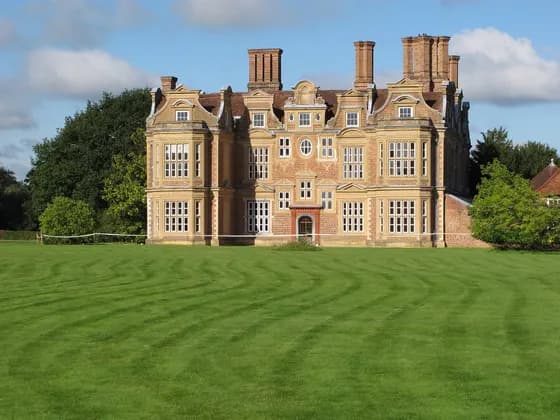
Photo: Matt Brown · CC BY 2.0 · cropped
Photo: DiscoA340 · CC BY-SA 4.0 · Photo: Des Blenkinsopp · CC BY-SA 2.0 · Photo: David Hawgood · CC BY-SA 2.0
Still deciding where to apply? Hear it from a student who's there
Brunel Medical School interviews nobody live: selection runs through an **asynchronous virtual MMI** (vMMI) on the Shortlister platform. Six stations, two minutes to read each scenario and five to record your answer, around 40–45 minutes in total — completed in your own time within a five-day window, then marked by trained assessors against attributes drawn from Good Medical Practice. You get a practice area with automated feedback before the real thing, and one shot: candidates who have previously sat a Brunel vMMI are not normally considered again in later cycles.
The route to that interview is numbers-driven. Home applicants who clear the academic screen (AAA including Chemistry or Biology plus a second science; graduates can use GAMSAT instead of UCAT) are ranked by test score, with the cut-off set fresh each year by cohort performance — Brunel publishes no threshold, though SJT Band 4 is an automatic rejection. Personal statements and references are screened against set criteria before ranking, and the school warns that AI-written statements can mean rejection.
Brunel opened to international students in 2022 and to home students in September 2024 with 50 government-funded places. It is a new school under annual GMC review — first cohort graduating around 2027, with Buckingham as contingency awarding body — and teaches by team-based learning in teams of six, with placements across Hillingdon and a wide west-London and Thames Valley trust network.
Brunel Medical School interview key facts (2027 entry)
| Interview format | Asynchronous virtual MMI — 6 recorded stations, ~40–45 minutes |
|---|---|
| Per station | 2 minutes reading + 5 minutes to respond |
| Completion window | ~5 days, any time, via Shortlister |
| Home places | 50 (first home cohort September 2024) |
| Selection test | UCAT (or GAMSAT for graduates) — no published cut-off |
| SJT rule | Band 4 not accepted |
| Re-interview | Not normally permitted in later cycles |
Interview Format
- Six online stations, completed asynchronously — you record responses in your own time within roughly five days of invitation
- Two minutes to read each scenario, five minutes to complete the task; around 40–45 minutes end to end
- Recordings are marked by trained assessors from the medical school and wider medical community — university staff, doctors, allied health professionals, lay members
- Each station assesses a different attribute aligned with Good Medical Practice; no academic quizzing
- Candidates are ranked by total vMMI score — no per-station pass requirement — and the offer cut-off is agreed by the Admissions Committee based on cohort performance
- Historically scored 1–5 per station (sum of six), with red-flag notices for unprofessional responses and scenarios changed daily
- A practice area with automated feedback is provided with your invitation
- Interviews run in waves (December, February, March, plus July if needed) with offers ranked after each wave and a waiting list in between
Sample Interview Questions
Why do you want to be a doctor? You have five minutes from now.
The recorded format is unforgiving of ramble: plan a 90-second core answer with evidence, then use remaining time to deepen, not repeat. Brunel says explicitly it is not asking academic questions — it is watching how you respond to scenarios and how you think.
What attracts you to a team-based learning curriculum rather than lectures?
Brunel's classroom teaching is TBL in fixed teams of six. Reflect on how you actually learn in groups, with an example — and be honest about the discipline TBL demands (preparation before class, accountability to your team).
A friend asks you to share your recorded interview questions with them before their own vMMI window closes. What do you do?
A scenario tailor-made for an asynchronous format (Brunel changes scenarios daily and red-flags unprofessional conduct). Integrity, fairness to other candidates, and what probity means before you even enter medical school.
A patient tells you they haven't been taking the medication their consultant believes is working. What issues arise?
Good Medical Practice anchors every station: honesty, patient autonomy, safe escalation, and the communication failure underneath. Structure the tensions rather than rushing to a fix.
(Recorded scenario) Speak to the camera as if reassuring an anxious patient who is about to have a blood test and is scared of needles.
With no actor responding, you must carry both warmth and pacing alone. Acknowledge the fear, normalise it, explain what will happen simply, offer practical coping steps — and keep your tone doing half the work.
Describe a time you had to deliver an unpopular message to a group.
STAR with reflection, delivered to a lens. Brunel's assessors include lay members and patients — plain English scores better than polished management-speak.
(Possible station) A graph shows two GP practices with very different antibiotic prescribing rates. What might explain the difference, and does it matter?
Describe, hypothesise (population, case mix, prescribing culture, access), and connect to stewardship. Thinking aloud in an ordered way is exactly what a recorded station rewards.
Should medical schools reject applicants whose personal statements were written by AI?
Brunel's own policy says indications of AI use may mean rejection — engage with authenticity, fairness, coaching inequalities, and where legitimate help ends. A reasoned position, not outrage in either direction.
Tell us about a time you worked with someone whose background was very different from yours.
Brunel's west-London placement network — Hillingdon, West London, CNWL, London North West — serves one of the most diverse patient populations in the country. Concrete story, genuine reflection, no platitudes.
You will spend year 1 with regular GP placements. What do you hope to learn in primary care that a hospital cannot teach you?
Continuity, undifferentiated symptoms, social context, prevention. Brunel places students in general practice from year 1 through the Hillingdon GP confederation — showing you know that lands the "done the reading" signal.
Is it fair that your interview is marked from a recording rather than a conversation?
Standardisation and flexibility versus rapport and follow-ups — and the mitigations Brunel uses: trained assessors, bias and EDI training, red-flag review, decile feedback for unsuccessful candidates. Balanced, self-aware answers suit a school that clearly thinks about selection design.
Why does the NHS care about the MLA, and what does it mean for you?
Brunel's curriculum is built to prepare students for the Medical Licensing Assessment. Know what the MLA is, when it lands in your course, and why a national standard exists — especially at a newer school.
What does joining a medical school before its first cohort has graduated mean for you?
The honest version: annual GMC review until the first cohort graduates (~2027), a Buckingham contingency protecting the qualification, small-cohort attention, and the chance to shape a young school's culture. Informed optimism beats either anxiety or denial.
Explain to an 80-year-old patient how to use a blood-pressure monitor at home.
Slow down, chunk the steps, check understanding without condescension. Practise this genre aloud to a camera — it is harder without a face responding to you.
Your team-based learning group keeps letting one member coast. The group mark is suffering. What do you do?
TBL in teams of six makes this Brunel's daily reality. Address behaviour early and kindly, use the team's own ground rules, escalate to facilitators only when peer routes fail.
Practise the Brunel Medical School interview
Rehearse the real format before the day — on demand with our AI interviewers, or live with a tutor.
Sit a mock with photoreal AI interviewers — any time
A timed MMI or panel interview on video — British & international voices — with interviewers who listen, react and press with follow-ups. Rubric-scored feedback and a replay the moment you finish.






Live mocks with a tutor who’s been in the room
A full Brunel Medical School-style mock with a medic or dentist tutor — honest scoring against real marking criteria, a station-by-station debrief and a written action plan.
Book a mock interviewHow to Prepare
Use Brunel's own practice area the moment your invitation arrives — it gives automated feedback on the actual Shortlister recording format before your real attempt.
Rehearse the exact rhythm: two minutes reading, five minutes talking to a webcam, six times over. Record yourself and watch it back for pace, warmth and dead air.
Treat it as one attempt for life — Brunel does not normally re-interview previous vMMI candidates in later cycles, so do not sit it casually "for practice".
Pick your moment within the five-day window: quiet room, tested tech, and a time of day when you have energy — flexibility is an advantage if you actually use it.
Ground your scenario answers in Good Medical Practice themes (honesty, patient safety, respect, working with colleagues) — that is the stated blueprint for every station.
Maximise the UCAT (or GAMSAT as a graduate): shortlisting is a pure ranking after the academic and statement screens, with the bar reset by each year's cohort.
Write your personal statement yourself and keep it under Brunel's 1,000-word guidance — the school screens statements against set criteria and warns AI-written statements may be rejected.
Check the contextual-admissions criteria early: eligible applicants who succeed at vMMI can receive a lower contextualised offer.
Invited to interview at Brunel Medical School? Say your first answer out loud today with the free two-minute warm-up drill, then sit a timed mock set up for Brunel Medical School.
Common Pitfalls
Frequently Asked Questions
Related guides
Free, evidence-based guides from current UK medical and dental students.
Free Interview Resources
Worked-through MMI stations, ethics scenarios, and panel questions.
Read guideNHS Core Values Guide
The 6 NHS values examiners listen for in every interview answer.
Read guideMedical School Rankings
See interview format (MMI vs panel) for each UK medical school.
Read guideUCAS 2026 Personal Statement
The new three-question format your interviewer will reference.
Read guideContextual Offers for Medicine
Every UK medical school's widening-access scheme in one place.
Read guideSources & official admissions information
We cross-check every interview guide against the school’s own admissions guidance and the UK regulators.
- Brunel University of London — What to expect from the vMMI — Asynchronous vMMI Dec 2025–Jul 2026; six stations, 2 min read + 5 min task; five-day window; ~40 min; practice area.
- Brunel University of London — Medicine MBBS — Sept 2027 applications open; UCAT/GAMSAT ranking, no set cut-off, SJT Band 4 not accepted; vMMI ranking and waiting list.
- Brunel University of London — Medicine FAQs — Shortlister platform, ~45 minutes, GMC review with first cohort graduating 2027, Buckingham contingency partner.
- Brunel Medical School — MBBS Admissions Policy 2024/25 — Historic scoring (1–5 per station), red flags, daily scenarios, no re-interview, and wave decision dates (2–5 weeks).
- UCAT Consortium — Official UCAT registration, test format, scoring methodology and free practice materials.
- General Medical Council (GMC) — Statutory regulator. Approved medical schools, the registered-doctor register, and fitness-to-practise standards.
- Medical Schools Council — Selecting-for-excellence guidance, MMI principles, and an A–Z of UK medical schools.
Ready to nail your Brunel Medical School interview?
Book a mock interview with a current medical student who recently went through the same process, or practise on demand with the AI interviewer.