
The Brunel Medical School Medicine course
What you actually study, and where you will be
Brunel Medical School's MBBS is a 5-year course taught through team-based learning, with patient contact from Year 1 and placements in Greater London and south east England (2027 entry). Built around team-based learning in purpose-built classrooms, with real patients in general practice from year 1 and anatomy taught on plastinated specimens alongside ultrasound.
- Degree
- MBBS
- Length
- 5 years
- Teaching
- Team-based learning
- Clinical contact
- Year 1
- UCAS code
- A100

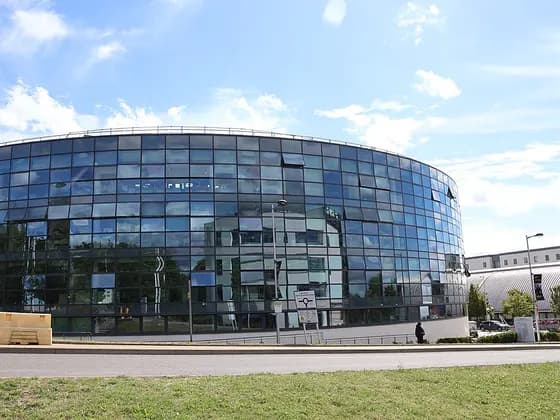
Photo: Matt Brown · CC BY 2.0 · cropped
Photo: DiscoA340 · CC BY-SA 4.0 · Photo: Des Blenkinsopp · CC BY-SA 2.0 · Photo: David Hawgood · CC BY-SA 2.0
The Brunel Medical School medicine course at a glance (2027 entry)
Brunel Medical School teaches a five-year MBBS, the Bachelor of Medicine, Bachelor of Surgery, on Brunel University of London's campus in Uxbridge, west London. The school is based in the Quad North building, with its team-based learning studio close by. It is a young school: its first students, all self-funded international students, started in September 2022, and UK students were first admitted in September 2024.
Because the school is new, the General Medical Council (GMC), which regulates doctors and approves UK medical degrees, is still reviewing it. The GMC follows a new school's first year group all the way from registration to graduation, checking the course year by year. Brunel stays on the GMC's list of new schools under review until that process ends with final approval to award the MBBS.
The main classroom method is team-based learning (TBL). You prepare on your own, then solve clinical problems with the same team of six students for a whole academic year.
Patients appear from your first term. In Years 1 and 2 you go back to the same local general practice, or GP surgery, every two weeks. From Year 3 you spend most of each year on placement in hospitals, mental health services and GP practices across Greater London and the South East. In Years 3 and 4 you return to campus for teaching every six weeks.
| Degree | MBBS (Bachelor of Medicine, Bachelor of Surgery) |
|---|---|
| Course length | 5 years, full time |
| UCAS code | A100 |
| Main campus | Quad North building, Uxbridge campus, west London |
| Teaching style | Team-based learning in a fixed team of six |
| Anatomy | Plastinated human specimens, imaging and hand-held ultrasound |
| First patient contact | First term of Year 1, at a local GP practice |
| Placement area | Greater London and South East England, from Hillingdon to Reading |
| Elective | Seven weeks in Year 5, in the UK or abroad |
| GMC status | New school still under GMC review; first students started 2022 |
What makes Brunel Medical School medicine different
Team-based learning in a fixed team of six
Most classroom teaching uses TBL, and your team of six stays together for the whole academic year. Sessions run in a TBL Studio with round team tables and a digital system that shows teachers where the class needs help. In 2025, students told the GMC that TBL helped them learn and brought UK and international classmates together.
The same GP practice every two weeks from term one
Throughout Years 1 and 2 you are attached to one local general practice and go back every two weeks, talking with patients under supervision. You also learn alongside nurses, physiotherapists and physician associates, health professionals trained to work under a doctor's supervision.
Anatomy from plastinated specimens and ultrasound
Anatomy is taught in the Clinical Anatomy Suite using plastinated whole-body and organ specimens, which are real donated human tissue preserved with plastic. You study them alongside X-ray, CT and MRI images, and you use hand-held ultrasound scanners on volunteers to see anatomy working in a living body.
Communication practice in 18 video-equipped rooms
Within your first few weeks of Year 1 you practise consultations with simulated patients, trained actors who play patients. The Communication Skills Centre has 18 consultation rooms that can video-record you. Some sessions in the same rooms involve real patients, supervised by clinical teachers.
Placements from Hillingdon to Watford and Reading
From Year 3 you rotate through hospitals, mental health and community services and GP practices across west London, Hertfordshire, Berkshire and Surrey. Most partners are National Health Service (NHS) trusts, the organisations that each run a group of local hospitals or health services. They range from Hillingdon Hospital near campus and Harefield, a specialist heart and lung hospital, to Watford General and trusts based in Frimley and Reading.
A House and a House Tutor for the whole course
On arrival you join one of five Houses, named after figures such as Alexander Fleming and Cicely Saunders, and stay in it until you finish. Your House Tutor acts as a learning coach, meeting you individually and in groups to review your development and set personal goals. House Tutors work with the school's own Student Support and Wellbeing team.
How Brunel Medical School teaches medicine
The course runs in three phases. Phase 1 covers Years 1 and 2, and Brunel calls it Foundations of Medicine: you build the science of the body one system at a time, alongside clinical skills, communication and regular GP visits. Phase 2, Integrated Clinical Care, covers Years 3 and 4 and is mostly clinical placements. Phase 3, Preparation for clinical practice, is Year 5 and gets you ready for your first job as a doctor.
Three strands run through all five years: professional knowledge, professional skills, and professional values and behaviours. Put simply, they cover what a doctor needs to know, what a doctor needs to be able to do and how a doctor should behave. Attendance at every timetabled session is compulsory throughout.
In Phase 1 the science and the practice run side by side. Body-system topics are mixed with teaching on ethics, professionalism, psychology, digital health and population health, which is the study of health across whole communities rather than one patient at a time. Anatomy practicals are linked to the topics you are working on in TBL.
Technology is a thread through the course. You use the school's digital platforms on a laptop or phone for your timetable, online resources, virtual microscopy (studying tissue slides on screen), feedback and workplace assessments. You also study digital health itself, such as how doctors choose and interpret diagnostic tests that use artificial intelligence. A laptop is compulsory for all five years; a tablet on its own is not enough.
The balance shifts in Year 3. You spend most of each year on placement, learning from clinician educators, who are doctors from different specialties with a teaching role for Brunel students. The school stresses that you are not there only to watch: you apply your knowledge to the care of patients, under supervision.
The ways you will learn
| Team-based learning (TBL) | You complete preparation online before class. In the session you first answer questions on your own, including single best answer (SBA) questions, where you pick the one best option from a list. Then your team of six solves clinical problems together, and teams explain their ideas to the whole class. Experienced TBL facilitators run the session with doctors and other health professionals who are experts in the topic. |
|---|---|
| Communication skills groups | Small groups practise consultations with simulated patients, starting in the first weeks of Year 1. You learn to listen, ask the right questions, show empathy and work across language and cultural barriers. The tutor and the actor can give you feedback straight away. |
| Clinical skills and simulated wards | In two clinical skills laboratories you learn practical tasks such as measuring vital signs, taking blood, inserting a cannula (a thin tube into a vein), suturing and basic life support. Manikins, virtual reality and augmented reality are part of the training. Two simulated hospital wards are used for small-group teaching of clinical examination. |
| Anatomy practicals | Hands-on sessions in the Clinical Anatomy Suite using plastinated specimens, anatomical models, radiological images and ultrasound. Teaching is led by staff with clinical or anatomical backgrounds and focuses on how anatomy is used when caring for patients. |
| GP sessions | Sessions at your GP practice through Years 1 and 2. Patient contact is face to face at first; some later sessions may include telephone or video consultations. |
How anatomy is taught at Brunel Medical School
Anatomy, the study of the body's structure, runs through the first two years and follows the body systems you study in those years. It is taught in the Clinical Anatomy Suite in Quad North. The suite has ten tables, each with its own large wall-mounted screen, display cabinets of anatomical models, and a table designed for wheelchair users.
The main specimens are plastinated. They are human bodies and organs, donated for teaching, that professionals have dissected to show particular structures and then preserved with plastic, so they are dry and durable enough to handle and study closely. They range from whole bodies to single organ systems. You study them in teams, guided by teachers with scientific or clinical backgrounds.
Imaging is built into the practicals. Radiologists, doctors who specialise in medical images, guide you through X-ray, CT, MRI and ultrasound images of the structures you are studying. You also use hand-held ultrasound scanners on volunteers, so you see anatomy and how it works in a living person, not only on a specimen.
When you first meet patients at Brunel Medical School
You meet patients in your first term. Communication skills training with actors starts in the first weeks of Year 1, so you have practised before you see real patients. In 2025, Year 1 students told the GMC that a session with GP educators had prepared them for what to expect. The GMC noted this was especially helpful for international students new to how UK general practice works.
In Years 1 and 2 you are in the same practice every two weeks. You learn about the UK healthcare system, see how the practice team works together, build your consultation skills and contribute to community health projects. Longitudinal case studies, in which you follow patients over time, include home visits in pairs, supervised by clinical educators. Year 1 students told the GMC they had spoken with patients before these visits and introduced themselves alongside the patient's GP.
From Year 3 contact becomes intensive. You rotate through hospital wards and clinics, community mental health services and primary care, taking part in patients' care under supervision. In Year 5 you complete assistantships, placements in which you work alongside junior doctors and help with their duties under supervision.
Year by year at Brunel Medical School
- Year 1
Foundations: body systems and first patients
Year 1 introduces the science behind health and disease, working through the body one system at a time. Alongside it you learn clinical and communication skills, ethics and professionalism, and start regular visits to a GP practice from the first term.
- Body systems covered: the heart and circulation, breathing from molecules to organs, hormones and their control, the kidneys and excretion, and limbs, joints and movement.
- Modules: Introduction to Medical Sciences 1; Psychology, Sociology and Lifestyle Medicine; Health Systems, Technologies and Population Health; and Professionalism, Ethics and Law.
- Clinical Practice and Community Care, which combines clinical skills, clinical communication, clinical placements and medical humanities, the use of arts and humanities to understand the experience of illness.
- Communication sessions with simulated patients from the first weeks of the year, and anatomy practicals in the Clinical Anatomy Suite.
- GP sessions every two weeks in the same practice, with home visits in pairs as part of longitudinal case studies.
- Year 2
Disease, drugs and diagnosis
Year 2 completes the body systems and puts more weight on disease, infection, drugs and diagnosis. GP placements continue, you learn about population health, and the year ends with your first Student Selected Component (SSC), a project on a topic you choose.
- Body systems covered: digestion and absorption, the nervous system and mental health, and reproduction and ageing.
- New modules: Pharmacology; Introduction to Medical Sciences 2; Nutrition, Digestion and Absorption; Neuroscience, Special Senses & Behaviour; and Reproduction, Growth & Ageing.
- Continuing modules: Professionalism, Ethics and Law; Psychology, Sociology and Lifestyle Medicine; Health Systems, Technologies and Population Health; and Clinical Practice and Community Care.
- The SSC is a dedicated scholarly project, such as laboratory research, a project to improve how healthcare is delivered, or community engagement work.
- Further clinical skills, digital health, ethics and professionalism teaching.
- Year 3
Into hospitals and mental health services
Phase 2 begins. You spend most of the year on clinical placements, rotating through hospitals, community mental health services and primary care, and come back to campus for teaching every six weeks. The aim is to use your knowledge and skills with real patients.
- Hospital placements at the school's partner NHS trusts.
- Community mental health placements.
- Continuing placements in primary care.
- Regular feedback on your knowledge, skills and professionalism from clinical and academic teams.
- Further student selected components, which continue into Year 4.
- Year 4
Specialist rotations
Clinical rotations move into more specialist areas. You learn to manage a patient's care as a whole and keep building on feedback from the clinicians you work with every day, getting ready for the final year. Campus teaching every six weeks continues.
- Paediatrics, the care of babies, children and young people.
- Obstetrics and gynaecology, covering pregnancy, childbirth and women's reproductive health.
- Dermatology (skin), ENT (ear, nose and throat) and ophthalmology (eyes).
- Further primary care and other specialty placements.
- Year 5
Becoming a junior doctor
Phase 3 is the move from student to junior doctor. You do further placements, sit your final exams, then spend the rest of the year in assistantships and an elective. Brunel's first year group, who started in 2022, reach this stage in 2026/27.
- Placements in medicine, surgery, primary care and emergency medicine.
- Final MBBS exams, which include the UK Medical Licensing Assessment (MLA), the licensing standard every UK medical student must pass before working as a doctor.
- At least two assistantship placements, preparing you to work as a Foundation Year 1 (FY1) doctor, the first year of paid training in the NHS after graduation.
- A seven-week elective after finals: five weeks of clinical placement and two weeks of holiday.
- Formal teaching on safe prescribing and on the professional behaviour expected of a doctor.
How you are assessed at Brunel Medical School
Brunel uses programmatic assessment. You are assessed regularly through the year in several different formats, and the results build up a picture of your progress. Academic coaching and regular feedback help you see where you stand and what to work on.
The formats are coursework submitted online, individual SBA tests during TBL sessions, invigilated in-person exams, anatomy spot tests and Objective Structured Clinical Examinations (OSCEs). In a spot test you identify labelled structures on specimens or images. In an OSCE you move round a series of timed stations, each testing a skill such as examining a patient, taking a history or explaining something to an actor.
Your progress is also recorded in an e-portfolio, an online record of your placements, feedback and reflections, held on the assessment platform described in the GMC's 2025 report. The platform holds supervised learning events, where a clinician observes you with a patient and gives feedback. It also holds direct observation of procedural skills, where a clinician watches you do a practical task such as taking blood and rates it, plus written reflections and end-of-block sign-offs.
Every UK medical student must pass the MLA to join the medical register with a licence to practise, and at Brunel it forms part of the Year 5 final exams. It has two parts. The Applied Knowledge Test (AKT) checks how well you apply medical knowledge. The Clinical and Professional Skills Assessment (CPSA) is a practical exam run by each medical school in the final or penultimate year, for example as an OSCE.
When the GMC visited in February 2025 it found AKT preparation was going well. The school told the GMC its assessments are mapped to the AKT's content, so students meet AKT-style testing six times before the real exam. Students said progress testing was helping them prepare. Progress tests are regular exams covering the whole course, used to track how your knowledge grows.
The GMC added that Brunel should keep working with the regulator to make sure its AKT and CPSA meet the MLA requirements, and the school was due to send more evidence in September 2025. When this guide was checked in September 2026, the GMC had not yet published a decision on whether Brunel's MLA exams meet its requirements.
Where you will actually be at Brunel Medical School
Clinical placements take place in hospitals, general practices and community health services across Greater London and the South East of England. The partner trusts stretch from the borough around campus to Watford in Hertfordshire, Frimley in Surrey and the Reading area of Berkshire.
In Years 1 and 2 you are attached to one local GP practice. From Year 3 to Year 5 you spend most of each year on placement, rotating between partner organisations, and the school uses a digital platform to allocate placements. Each partner trust has a Director of Undergraduate Education, appointed by Brunel, who looks after Brunel students on site.
Several partner hospitals also teach students from other medical schools, so you may meet students from Oxford, Imperial, UCL, St George's or Southampton on the wards. Hillingdon Hospital, for example, was already training Imperial College London students before Brunel's arrived.
Brunel describes a campus lifestyle with little commuting except when you are on placement. Travel to placements is listed among the course costs you pay yourself, so budget for it, especially for trusts further from Uxbridge.
Hillingdon Hospital, very close to campus, is the borough's only acute hospital, meaning it treats sudden and serious illness and injury, and it has an emergency department. Brunel students are placed there in Years 3 to 5. Harefield is a specialist heart and lung hospital that, with Royal Brompton in Chelsea, belongs to Guy's and St Thomas' NHS Foundation Trust.
- Hillingdon Hospital
- Harefield Hospital
- Hillingdon Primary Care Confederation, 43 GP practices
London North West serves Brent, Harrow and Ealing and includes St Mark's, a specialist hospital for bowel disease. Central and North West London and West London are mental health and community trusts; West London covers Ealing, Hammersmith & Fulham and Hounslow, and Central and North West London also provides prison healthcare.
- London North West University Healthcare NHS Trust
- Central and North West London NHS Foundation Trust
- West London NHS Trust
Watford General is the trust's main teaching site for medical students. The trust provides acute care for around half a million people in west Hertfordshire.
- Watford General Hospital, West Hertfordshire Teaching Hospitals NHS Trust
Frimley Health runs Frimley Park Hospital near Camberley, Heatherwood in Ascot and Wexham Park near Slough, and military medical staff work alongside NHS staff at Frimley Park. Royal Berkshire provides acute care for Reading, Wokingham and West Berkshire, plus specialist cancer, dialysis and eye surgery services.
- Frimley Health NHS Foundation Trust
- Royal Berkshire NHS Foundation Trust
Electives and chosen modules at Brunel Medical School
Student Selected Components are the parts of the course where you choose the topic. The first is the scholarly project at the end of Year 2, which could be a laboratory science project, a project to improve how healthcare is delivered, or a community engagement project. The GMC's 2025 report shows SSCs continuing in Years 3 and 4.
The school also lists laboratory research, quality improvement projects in general practice and hospitals, and learning to teach your fellow students among the opportunities in the curriculum. Quality improvement projects test small changes that aim to make care safer or work better.
The elective comes in Year 5, after your final exams. It lasts seven weeks: five weeks on a clinical placement and two weeks of holiday. You can go abroad or stay in the UK, and going overseas is not required.
You pay for the elective yourself, including travel, accommodation, insurance and vaccinations. An overseas elective is only allowed if you pass your final exams at the first attempt. Students who have to resit finals usually get a shorter elective, and it must be in the UK. The school checks safety arrangements, and some countries, such as the USA, may not be possible.
Facilities and support at Brunel Medical School
Where you will learn
Brunel Medical School is based in Quad North, in the middle of the Uxbridge campus near the main student amenities, and the building's second floor has been refurbished for teaching. The TBL Studio is in a building close by.
You can book the clinical skills facility and the simulated wards to practise outside timetabled sessions, and staff are available in the skills facility during weekday working hours. Videos of specific skills are available for preparation and revision.
- Clinical Anatomy Suite, for anatomy practicals with specimens, models, scans and ultrasound.
- Two clinical skills laboratories for skills such as infection control, blood glucose checks, taking blood, injections, examining eyes and ears, and basic life support.
- Communication Skills Centre: 18 video-equipped consultation rooms for sessions with simulated and real patients.
- Two simulated hospital wards for small-group teaching of clinical examination.
- TBL Studio: a room designed for team-based learning, with round team tables, sound and display equipment and TBL software.
- A student social space with a kitchen, games and a lounge, plus the Student Support Office.
Support while you study
The medical school has its own Student Support and Wellbeing team, based in Quad North, as your first point of contact. It links you to Brunel's university-wide services, such as counselling and study skills, and adds support specific to the MBBS, including help with clinical placements, careers advice and support for international students.
Every student belongs to a House for the whole course, with a House Tutor who acts as a learning coach through a structured series of individual and group meetings. There is also a peer mentor scheme, and first-year students can join Brunel Buddy, the university's peer support scheme for new students.
The school recruits international as well as UK students, and the support reflects that. The Brunel Language Centre offers free academic English help and English classes focused on health-sector vocabulary.
Careers advisers help whether you plan to join the UK Foundation Programme, the two years of paid training after graduation, or return to your home country. They also give guidance on the US and Canadian licensing exams, the United States Medical Licensing Examination (USMLE) and the Medical Council of Canada Qualifying Examination (MCCQE), including which revision resources to use. Brunel says access to the exams themselves will open when its first year group graduates.
When the GMC visited in February 2025, students praised the support team, and Year 1 students mentioned a wellbeing room where a team member is available. The GMC also heard the team was stretched by staff leaving during a university restructure. In August 2025 the school said the reorganisation had been implemented and would be kept under review.
Is the Brunel Medical School course right for you?
This course may suit you if
- You learn best by talking problems through with others, because team-based learning in a fixed team of six is the centre of classroom teaching.
- You want to meet patients early: GP sessions start in your first term and continue every two weeks through Years 1 and 2.
- You like visual, hands-on anatomy that combines plastinated specimens with scans and hand-held ultrasound.
- You want to live and study on a campus in west London, in a year group that mixes UK and international students.
- You are interested in digital health, which is taught as a subject in its own right as well as used to deliver the course.
Things to think about
- Brunel is still under GMC review. Its first students started in 2022, so no year group had completed the five-year course when this guide was checked.
- After its February 2025 visit the GMC set Brunel five formal requirements. They covered staff workload, health and vaccination checks before placements, joined-up digital systems, a working fitness to practise process and recruiting staff to build Years 4 and 5.
- Fitness to practise is the procedure for concerns about a student's conduct or health, and the GMC found open cases had been delayed. The school reported progress on all five requirements in August 2025.
- The GMC planned another visit in 2026, but no report from it had been published by September 2026, so the 2025 report is still its latest published view.
- Attendance at every timetabled session is compulsory, and TBL depends on you doing the preparation before each session.
- From Year 3 you may be placed at trusts as far away as Watford, Frimley or Reading, and travel to placements is a cost you cover yourself.
- An overseas elective is self-funded and only open to students who pass their final exams at the first attempt.
Brunel Medical School medicine course — frequently asked questions
Applying to Brunel Medical School?
How to get into Brunel Medical School
Entry requirements, UCAT, personal statement and interview, step by step.
Open the guide →Brunel Medical School UCAT cut-offs and offers
UCAT cut-offs, A-level offers, interview format and decision dates.
See the requirements →Compare Brunel Medical School with other schools
Put the teaching style, anatomy teaching and placements next to another school.
Open the comparison →Prepare for the Brunel Medical School interview
Format breakdown, school-specific sample questions and prep tips from tutors who interviewed here.
Read the guide →Where this Brunel Medical School course guide came from
This guide was written from 16 official sources — Brunel University London's own course pages and programme documents, plus the regulator and NHS placement partners where they publish detail — read on 2026-09-23, then checked claim by claim against those sources.
- Brunel University of London: Medicine MBBS course page
- Brunel Medical School: MBBS course structure diagram (phases and strands)
- Brunel Medical School: learning and teaching, TBL and anatomy
- Brunel Medical School: clinical placements and partner trusts
- Brunel Medical School: facilities in Quad North
- Brunel Medical School: student electives
- Brunel Medical School: student support, wellbeing and the House system
- Brunel Medical School: why study medicine at Brunel
- Brunel Medical School: school home page and GMC review statement
- Brunel news, October 2023: places for UK students from September 2024
- Brunel Medical School frequently asked questions, 2025/26 entry (revised September 2025)
- GMC quality assurance report for Brunel Medical School, academic year 2024-2025 (visit February 2025)
- Brunel Medical School response to the GMC 2024-2025 report (August 2025)
- GMC: new schools and programmes under review
- GMC: MLA compliance reports, medical schools A to L
- GMC: requirements for the MLA Clinical and Professional Skills Assessment
Courses are restructured between cycles. Anything here that decides your application — an anatomy offer, a placement city, a compulsory intercalated year — should be confirmed against the official page for your entry year.
Applying to Brunel Medical School?
We have helped hundreds of applicants turn their UCAT, personal statement and interview prep into offers from Brunel Medical School and other UK medicine schools.