
Chester Medical School (GEM) Medicine Interview
Format, Questions & Prep Tips
Chester Medical School medicine interviews for 2027 entry are multiple mini interviews (MMI). Published figures: Interview format Six MMIs (~1.5 hours), two assessors per station; Course 4-year graduate-entry MBChB (first intake 2024).
- Institution
- University of Chester Medical School
- Interview (2027 entry)
- Not published (details sent on shortlisting)
- Decisions (2027 entry)
- Not published

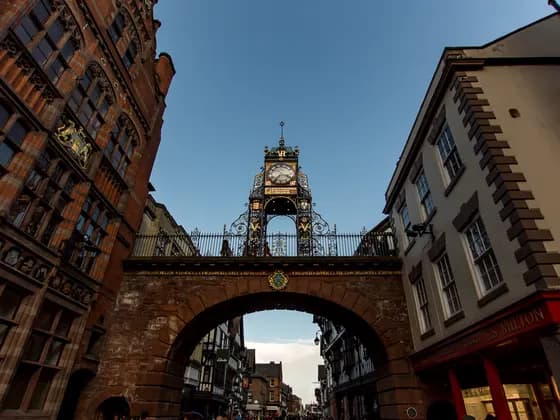


Photo: secretlondon123 · CC BY-SA 2.0 · cropped
Photo: Brian Deegan · CC BY-SA 2.0 · Photo: Stephen Rogerson · CC BY-SA 2.0 · Photo: Alex Liivet from Chester, United Kingdom · CC0
Still deciding where to apply? Hear it from a student who's there
The University of Chester Medical School runs an accelerated four-year, graduate-entry MBChB open to graduates of any discipline, with a 2024 commencement date agreed with the GMC. Selection is via six Multiple Mini Interviews (MMIs) lasting about an hour and a half in total, with two trained assessors scoring each station. Chester does not publish interview dates or whether interviews are online or in person — details come on shortlisting.
Chester sits on the English–Welsh border with clinical placements in the community, general practices and NHS hospitals throughout Cheshire, Shropshire and North Wales — including the Countess of Chester Hospital, Warrington and Halton, Mid Cheshire Hospitals and Betsi Cadwaladr University Health Board.
The MMI probes the school’s identity directly: a newer institution committed to producing doctors who serve its region. Station content changes each year, but every station is designed to assess against the GMC’s Good Medical Practice, with a clear focus on regional commitment and the realities of training in a smaller school with rapidly developing infrastructure.
Chester Medical School (GEM) interview key facts (2027 entry)
| Interview format | Six MMIs (~1.5 hours), two assessors per station |
|---|---|
| Selection test | UCAT, GAMSAT or MCAT minimum threshold |
| Course | 4-year graduate-entry MBChB (first intake 2024) |
Interview Format
- Six Multiple Mini Interviews lasting about one and a half hours in total
- Station content changes each year; all stations assess against GMC Good Medical Practice
- Two trained assessors per station, drawn from medical professionals, academics, current students and lay people
- Shortlisting needs a 2:1 degree (or 2:2 plus a Master's), 70 hours of healthcare work experience and a UCAT, GAMSAT or MCAT score above the threshold
- Placements across Cheshire, Shropshire and North Wales
- Interview arrangements are sent on shortlisting — mode and dates are not published
Sample Interview Questions
Why Chester for medicine?
Reference the graduate-entry, case-based curriculum, the Cheshire, Shropshire and North Wales placement network, the school's newer identity and the integrated curriculum. Avoid generic city-centre answers.
What attracts you to training in a newer medical school?
Closer faculty contact, fresh curriculum design, peer support — balanced against the realities of an evolving institution.
Cheshire has both very wealthy and very deprived areas. What ethical issues does this create for healthcare?
Engage with health inequality, access, and the responsibility of regional NHS commissioning.
Describe a time you communicated effectively in a stressful situation.
Concrete example. Show what you did, why it worked, and what you reflected on afterwards.
A peer tells you they are concerned about another student's wellbeing. (Actor present.)
Listen carefully, take it seriously, signpost wellbeing services, offer practical support without breaching confidence.
Here is a graph showing GP access across Cheshire wards. What does it suggest?
Describe the distribution, comment on the gap, acknowledge confounders such as population age and rurality.
A patient asks why they are being seen by a medical student rather than a doctor. How do you respond?
Explain your role, confirm a doctor will review, reassure on confidentiality, offer them the option to decline.
What do you know about the Countess of Chester NHS Foundation Trust?
Show you have done genuine reading. The trust has been in the news recently — be prepared for sensitive discussion.
Tell us about a time you adapted your communication for someone with limited health literacy.
Specific example with reflection. Chester placements include diverse demographics.
Explain to a patient that they need to start taking a medication every day for the rest of their life. (Actor present.)
Empathy, plain language, address concerns about long-term medication, agree concrete follow-up.
Should newer medical schools be subject to additional GMC scrutiny?
Engage with patient safety, the need to establish standards, and the support new schools also receive.
Why is integrated, system-based teaching well-suited to medical training?
Combines basic and clinical science, mirrors clinical reasoning, prepares for early clinical contact.
Describe a time you received feedback that surprised you.
Real example with reflection on what changed in your behaviour.
Where do you see yourself working after qualifying?
Realistic answer. Chester values graduates who consider staying in the North West but does not punish honesty.
Practise the Chester Medical School (GEM) interview
Rehearse the real format before the day — on demand with our AI interviewers, or live with a tutor.
Sit a mock with photoreal AI interviewers — any time
A timed MMI or panel interview on video — British & international voices — with interviewers who listen, react and press with follow-ups. Rubric-scored feedback and a replay the moment you finish.






Live mocks with a tutor who’s been in the room
A full Chester Medical School (GEM)-style mock with a medic or dentist tutor — honest scoring against real marking criteria, a station-by-station debrief and a written action plan.
Book a mock interviewHow to Prepare
Read the latest Chester MBChB curriculum overview and note the integrated design.
Research the health context of Cheshire, Shropshire and North Wales — wealth gap, GP access, ageing demographic.
Understand the Countess of Chester NHS Foundation Trust's scale and current context.
Practise MMI under timed conditions with reset between stations.
Prepare specific examples for resilience, teamwork and communication.
Visit Chester or attend a virtual open day so motivation feels grounded.
Be ready to defend "why Chester" with specifics, not generalities.
Invited to interview at Chester Medical School (GEM)? Say your first answer out loud today with the free two-minute warm-up drill, then sit a timed mock set up for Chester Medical School (GEM).
Common Pitfalls
Frequently Asked Questions
Related guides
Free, evidence-based guides from current UK medical and dental students.
Free Interview Resources
Worked-through MMI stations, ethics scenarios, and panel questions.
Read guideNHS Core Values Guide
The 6 NHS values examiners listen for in every interview answer.
Read guideMedical School Rankings
See interview format (MMI vs panel) for each UK medical school.
Read guideUCAS 2026 Personal Statement
The new three-question format your interviewer will reference.
Read guideContextual Offers for Medicine
Every UK medical school's widening-access scheme in one place.
Read guideSources & official admissions information
We cross-check every interview guide against the school’s own admissions guidance and the UK regulators.
- University of Chester — Graduate Entry Medicine MBChB course page — 4-year graduate-entry MBChB; six MMIs, ~1.5 hours, two assessors per station; GMC approval stages; Warwick contingency
- University of Chester — Graduate Entry Medicine — UCAT, GAMSAT or MCAT threshold; placements across Cheshire, Shropshire and North Wales
- University of Chester — Applying for Graduate Entry Medicine (international) — No place offered without an MMI; details given on shortlisting
- UCAT Consortium — Official UCAT registration, test format, scoring methodology and free practice materials.
- General Medical Council (GMC) — Statutory regulator. Approved medical schools, the registered-doctor register, and fitness-to-practise standards.
- Medical Schools Council — Selecting-for-excellence guidance, MMI principles, and an A–Z of UK medical schools.
Ready to nail your Chester Medical School (GEM) interview?
Book a mock interview with a current medical student who recently went through the same process, or practise on demand with the AI interviewer.