
Lincoln Medical School Medicine Interview
Format, Questions & Prep Tips
Lincoln Medical School medicine interviews for 2027 entry are multiple mini interviews (MMI). Published figures: MBChB places (2026 entry) 80 (+20 Gateway Year); Interview format MMI — 7 stations, in person, scored out of 70; First cohort 2019.
- Institution
- University of Lincoln
- Interview (2027 entry)
- Not yet published for 2027 entry — check Lincoln's course page
- Decisions (2027 entry)
- After all interviews are completed


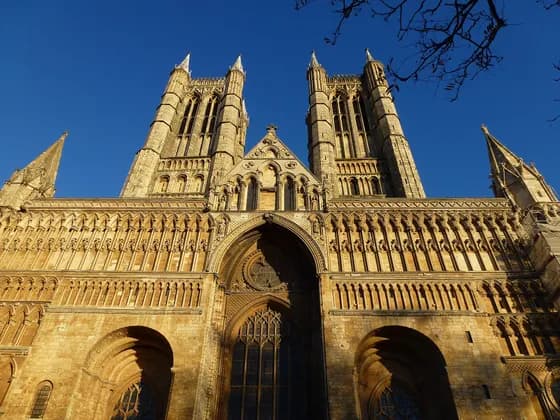
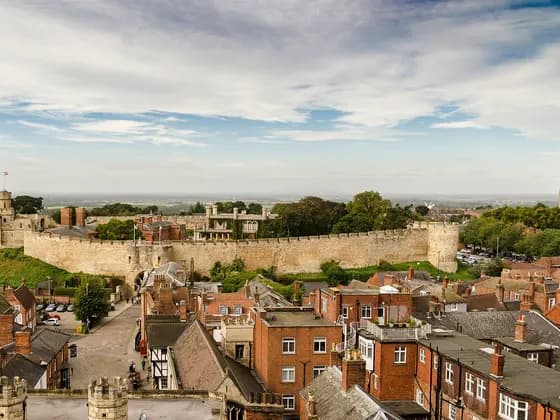
Photo: Chris Goddard · CC BY 3.0 · cropped
Photo: David Hallam-Jones · CC BY-SA 2.0 · Photo: Richard Humphrey · CC BY-SA 2.0 · Photo: Julian P Guffogg · CC BY-SA 2.0
Still deciding where to apply? Hear it from a student who's there
The University of Lincoln Medical School now runs its own MBChB, independently of the University of Nottingham from 2026-27 (subject to General Medical Council approval), with students based in Lincoln and on placement across Lincolnshire. Selection is via a 7-station multiple mini-interview held in person on the Brayford Campus, with a total interview score out of 70.
Lincoln admitted its first cohort in 2019 and uses a community-and-rural-focused curriculum that takes students into smaller district general hospitals and GP practices much earlier than most schools. Students who started up to 2025 are registered with Nottingham for its BMBS, but new entrants join Lincoln's own MBChB; as with every new medical school, the University of Nottingham acts as contingency school while the GMC completes accreditation.
The MMI is designed to identify applicants who can thrive in less metropolitan, dispersed clinical environments. Stations probe communication, ethics, motivation for Lincolnshire specifically, and the ability to handle the practical realities of rural medicine — long distances, smaller teams and broader scope of practice.
Lincoln Medical School interview key facts (2027 entry)
| MBChB places (2026 entry) | 80 (+20 Gateway Year) |
|---|---|
| Interview format | MMI — 7 stations, in person, scored out of 70 |
| Selection test | UCAT (shortlisting) |
| First cohort | 2019 |
Interview Format
- MMI format with 7 stations in rotation, in person on the Brayford Campus
- Each station scored across several domains — total interview score out of 70
- Offer ranking: interview score (70) plus halved Combined Academic Score (30) = 100
- Stations cover motivation, ethics, communication, role-play and data
- Shortlisting on Combined Academic Score (GCSEs, UCAT, SJT, contextual) out of 60; SJT Band 4 rejected
- MBChB awarded by the University of Lincoln, subject to GMC approval (Nottingham is contingency school)
- Clinical placements across Lincolnshire — Lincoln County, Boston Pilgrim, Grantham
- Strong emphasis on rural, community and GP-based learning from year one
Sample Interview Questions
Why have you applied to Lincoln rather than a larger, more established medical school?
Reference Lincoln's own new MBChB, the rural placement model and the focus on smaller-cohort teaching. Avoid implying Lincoln is your "backup".
What attracts you to studying medicine in Lincolnshire specifically?
Discuss the breadth of presentations in district general hospitals, the chance to build long-term relationships with patients in smaller communities and the opportunity to see GP-led care.
Tell me about a time you communicated effectively with someone from a very different background to you.
Use a concrete example. Lincolnshire serves a diverse rural and coastal population — show you can flex your communication style.
A patient in a remote Lincolnshire village refuses to travel to Lincoln County Hospital for a scan they urgently need. How do you approach this?
Explore the reasons (transport, anxiety, caring responsibilities), respect autonomy, and discuss practical NHS solutions like patient transport or community diagnostics.
Should rural patients receive more NHS funding per head than urban patients?
Engage with both sides — economies of scale vs equity of access. Reference real challenges in coastal Lincolnshire (workforce, ageing population).
You are a peer mentor. A first-year student tells you they are struggling with the move to Lincoln and feel isolated. (Actor present.)
Listen actively, normalise their feelings, signpost concrete support (personal tutor, wellbeing service) and offer to follow up.
Here is a graph showing GP appointment availability across rural and urban England. What does it suggest, and what limitations does it have?
Describe trends first, then interpret. Acknowledge confounders — population age, deprivation, GP-to-patient ratios.
Describe a time when you worked with a small, close-knit team. What did you learn?
Lincoln cohorts are small. Show you can both lead and follow in tight teams.
How do you think being part of a newer medical school will shape your training?
Acknowledge both the upsides (small cohort, fresh curriculum, supportive faculty) and the realities (smaller alumni network, evolving teaching).
A junior doctor in a rural hospital realises they are the most senior person on the ward overnight. They are unsure about a clinical decision. What should they do?
Patient safety first — escalate via on-call consultant, never act outside competence. Discuss how rural rotas amplify this pressure.
Why is early community placement valuable for medical students?
Reference longitudinal patient contact, exposure to chronic-disease management, and understanding the wider determinants of health.
You need to explain to an elderly patient that the GP practice is moving 15 miles away. The patient does not drive. (Actor present.)
Acknowledge the impact, listen to specific concerns, signpost practical alternatives (community transport, telephone consultations, district nurse).
What concerns you most about practising medicine in a rural setting?
Honesty plus mitigation — workforce shortages, professional isolation, breadth of presentation. Show you have thought about it.
Tell us about a recent NHS news story that interested you.
Pick something current and specific. Briefly summarise, then give your view with reasoning.
Practise the Lincoln Medical School interview
Rehearse the real format before the day — on demand with our AI interviewers, or live with a tutor.
Sit a mock with photoreal AI interviewers — any time
A timed MMI or panel interview on video — British & international voices — with interviewers who listen, react and press with follow-ups. Rubric-scored feedback and a replay the moment you finish.






Live mocks with a tutor who’s been in the room
A full Lincoln Medical School-style mock with a medic or dentist tutor — honest scoring against real marking criteria, a station-by-station debrief and a written action plan.
Book a mock interviewHow to Prepare
Read the latest Lincoln Medical School curriculum guide — note the integrated, case-based design and rural focus.
Understand Lincoln's move to its own MBChB and the GMC accreditation process for new medical schools.
Research Lincolnshire health inequalities — coastal deprivation, ageing demographic, GP workforce gaps.
Practise a 7-station MMI circuit under timed conditions with reset between stations.
Prepare specific examples for teamwork, leadership, resilience and communication.
Be ready to defend "why Lincoln" without sounding like you copied a prospectus.
Practise role-play stations with an actor or partner — focus on listening, not performing.
Invited to interview at Lincoln Medical School? Say your first answer out loud today with the free two-minute warm-up drill, then sit a timed mock set up for Lincoln Medical School.
Common Pitfalls
Frequently Asked Questions
Related guides
Free, evidence-based guides from current UK medical and dental students.
Free Interview Resources
Worked-through MMI stations, ethics scenarios, and panel questions.
Read guideNHS Core Values Guide
The 6 NHS values examiners listen for in every interview answer.
Read guideMedical School Rankings
See interview format (MMI vs panel) for each UK medical school.
Read guideUCAS 2026 Personal Statement
The new three-question format your interviewer will reference.
Read guideContextual Offers for Medicine
Every UK medical school's widening-access scheme in one place.
Read guideSources & official admissions information
We cross-check every interview guide against the school’s own admissions guidance and the UK regulators.
- University of Lincoln — Medicine MBChB — Lincoln-awarded MBChB (subject to GMC approval); in-person MMIs on campus; SJT Band 4 rejected; AAA/AAB offers.
- Lincoln Medical School — Interviews and Selection Guide — 7-station in-person MMI on Brayford Campus scored out of 70; selection scoring out of 60; offers after all interviews.
- Lincoln Medical School — Independence Project — Independent of Nottingham from 2026-27; first students September 2019; 80 MBChB places for 2026 entry.
- UCAT Consortium — Official UCAT registration, test format, scoring methodology and free practice materials.
- General Medical Council (GMC) — Statutory regulator. Approved medical schools, the registered-doctor register, and fitness-to-practise standards.
- Medical Schools Council — Selecting-for-excellence guidance, MMI principles, and an A–Z of UK medical schools.
Ready to nail your Lincoln Medical School interview?
Book a mock interview with a current medical student who recently went through the same process, or practise on demand with the AI interviewer.