
Nottingham Medicine Interview
Format, Questions & Prep Tips
Nottingham medicine interviews for 2027 entry are multiple mini interviews (MMI), held 15 December 2026 – 29 January 2027. Published figures: Home applicants meeting entry criteria 1,874–2,100 (recent years); Home applicants interviewed 823–1,219 (recent years); Home offers / places 267–642 offers for about 200 places.
- Institution
- University of Nottingham
- Interview (2027 entry)
- 15 December 2026 – 29 January 2027
- Decisions (2027 entry)
- Typically during March

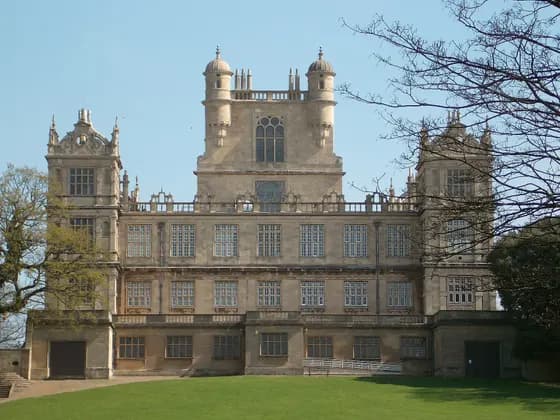


Photo: Clem Rutter, Rochester, Kent (www.clemrutter.net) · CC BY-SA 3.0 · cropped
Photo: Acabashi · CC BY-SA 4.0 · Photo: JimmyGuano · CC BY-SA 4.0 · Photo: Smashman · Public domain
Still deciding where to apply? Hear it from a student who's there
Nottingham Medical School uses a six-scenario MMI format lasting up to one hour. For 2027 entry, Home fee status applicants are likely to be interviewed in person, and International fee status applicants online via Microsoft Teams.
The six scenarios include at least one role play, so expect to interact with someone playing a part as well as answering questions. Nottingham makes offers based on your interview performance alone — GCSEs and UCAT only get you to the interview.
Nottingham assesses your personal qualities — communication and listening, your understanding of professional issues like teamwork, respect for patients and allied professionals — rather than scientific knowledge. The interview is values-driven throughout. For 2027 entry, A100 interviews are scheduled between 15 December 2026 and 29 January 2027, with offers typically made during March.
Nottingham interview key facts (2027 entry)
| Home applicants meeting entry criteria | 1,874–2,100 (recent years) |
|---|---|
| Home applicants interviewed | 823–1,219 (recent years) |
| Home offers / places | 267–642 offers for about 200 places |
| MMI structure | Six scenarios, up to one hour |
| Format | In person (Home) / Microsoft Teams (International) |
Interview Format
- Multiple Mini Interview (MMI) with six scenarios
- The interview lasts up to one hour
- Home fee status: likely in person; International fee status: likely online via Microsoft Teams
- A100 interviews scheduled 15 December 2026 – 29 January 2027 (2027 entry)
- At least one role-play scenario
- Assesses communication and listening, understanding of professional issues such as teamwork, and respect for patients and allied professions
- Offers made on interview performance alone; personal statement and reference reviewed after interview, not scored
Sample Interview Questions
Why do you want to study medicine at Nottingham?
Reference Nottingham’s 5-year BMBS structure, the early clinical contact in Phase 1, the strong PBL elements, and the breadth of placements across the East Midlands.
What did you do today to prepare for this interview? (Possible ice-breaker)
Use an opening question like this to settle your nerves and find your conversational tone. Be genuine.
A patient is upset that they were referred to a different specialist than they expected. (Role play.)
Acknowledge their feelings. Ask what they understand and what they’re worried about. Explain the referral logic. Offer next steps.
Someone argues that, to reduce waiting lists, the NHS should prioritise younger patients. Discuss.
Engage in genuine dialogue — don’t just monologue. Acknowledge the QALY-based reasoning. Push back on age-based rationing. Listen to their counter-arguments.
A teenager asks for contraception without parental knowledge. What do you do?
Gillick competence assessment. If competent, confidentiality applies. Encourage but don’t force parental involvement.
A patient refuses a blood transfusion that would save their life on religious grounds. What’s your role?
Respect autonomy. Ensure they’re fully informed. Document. Look for therapeutic alternatives (e.g. cell salvage). Don’t override their decision.
Tell me about a time you demonstrated empathy in a difficult situation.
STAR framework. Distinguish empathy (feeling with) from sympathy (feeling for). Concrete example, real reflection.
Describe how you would explain a complex idea to someone with no background in the subject.
Pick a real example from your studies. Avoid jargon. Use vivid analogy. Check understanding mid-explanation.
What do you understand about the realities of being a doctor?
Long hours, emotional weight, multi-disciplinary teamwork, lifelong learning, uncertainty. Show informed awareness from your work experience.
Should doctors prioritise patients based on whether their condition is self-inflicted?
Justice pillar argues no. Engage with both sides — healthcare-system pragmatism vs equity. Reference how the NHS currently handles this.
A friend confides they’ve been experimenting with drugs and asks you not to tell anyone. (Possible role play.)
Validate their disclosure. Don’t promise absolute confidentiality. Suggest support routes. Be honest about what you’d do if you were worried about their safety.
Tell me about a time you received feedback that was hard to hear.
Genuine example. Focus on your reflection and what you changed. Self-awareness scores higher than polished narrative.
Why now, rather than after a gap year?
Honest answer about timing. If you have a gap year planned, articulate why it fits your path. If not, articulate why you’re ready now.
A patient asks you to bend the rules on their medication for them. What do you do?
Honesty and probity (GMC). Explore why they’re asking. Suggest legitimate alternatives. Don’t bend the rules even for sympathetic reasons.
Practise the Nottingham interview
Rehearse the real format before the day — on demand with our AI interviewers, or live with a tutor.
Sit a mock with photoreal AI interviewers — any time
A timed MMI or panel interview on video — British & international voices — with interviewers who listen, react and press with follow-ups. Rubric-scored feedback and a replay the moment you finish.






Live mocks with a tutor who’s been in the room
A full Nottingham-style mock with a medic or dentist tutor — honest scoring against real marking criteria, a station-by-station debrief and a written action plan.
Book a mock interviewHow to Prepare
Practise role-play with a peer playing the patient or relative — at least one of the six scenarios is a role play — and practise discussing ethics and clinical scenarios as a two-way dialogue.
Drill six MMI scenarios back to back within an hour so your pacing holds up to the last one.
Use the first scenario to settle your nerves and find your conversational tone.
Read GMC “Achieving Good Medical Practice” — Nottingham’s values rubric maps onto it.
Read recent NHS news so any topical discussion has substantive material.
If you are an international applicant, practise interview etiquette on Microsoft Teams specifically; Home applicants should rehearse the in-person rhythm.
Research Nottingham’s 5-year BMBS and the East Midlands placement network so “why Nottingham” is specific.
Invited to interview at Nottingham? Say your first answer out loud today with the free two-minute warm-up drill, then sit a timed mock set up for Nottingham.
Common Pitfalls
Frequently Asked Questions
Related guides
Free, evidence-based guides from current UK medical and dental students.
Free Interview Resources
Worked-through MMI stations, ethics scenarios, and panel questions.
Read guideNHS Core Values Guide
The 6 NHS values examiners listen for in every interview answer.
Read guideMedical School Rankings
See interview format (MMI vs panel) for each UK medical school.
Read guideUCAS 2026 Personal Statement
The new three-question format your interviewer will reference.
Read guideContextual Offers for Medicine
Every UK medical school's widening-access scheme in one place.
Read guideSources & official admissions information
We cross-check every interview guide against the school’s own admissions guidance and the UK regulators.
- University of Nottingham School of Medicine — Undergraduate selection process — 2027 entry: six scenarios incl. at least one role play, up to one hour; Home in person, International on Teams; 15 Dec 2026–29 Jan 2027.
- University of Nottingham School of Medicine — Applying to Medicine — Offers typically during March; A100 applicant, interview, offer and place ranges over recent years.
- University of Nottingham — Medicine BMBS (2027 entry) — Contextual offers AAB/ABB; SJT Band 4 not considered; interview mode by fee status.
- Nottingham — official admissions page — Programme overview, entry requirements, interview format and timeline straight from the school.
- UCAT Consortium — Official UCAT registration, test format, scoring methodology and free practice materials.
- General Medical Council (GMC) — Statutory regulator. Approved medical schools, the registered-doctor register, and fitness-to-practise standards.
- Medical Schools Council — Selecting-for-excellence guidance, MMI principles, and an A–Z of UK medical schools.
Ready to nail your Nottingham interview?
Book a mock interview with a current medical student who recently went through the same process, or practise on demand with the AI interviewer.