
Peninsula (Plymouth) Medicine Interview
Format, Questions & Prep Tips
Peninsula medicine interviews for 2027 entry are multiple mini interviews (MMI), held Typically December 2026 – February 2027 (online). Published figures: Interview / offer rate ~60% of applicants interviewed, ~25% offered; UCAT cut-off (2025 entry) Home 2600 · International 2670 · WP/AAB 2540.
- Institution
- University of Plymouth
- Interview (2027 entry)
- Typically December – February (online)
- Decisions (2027 entry)
- Not published — offers follow MMI ranking

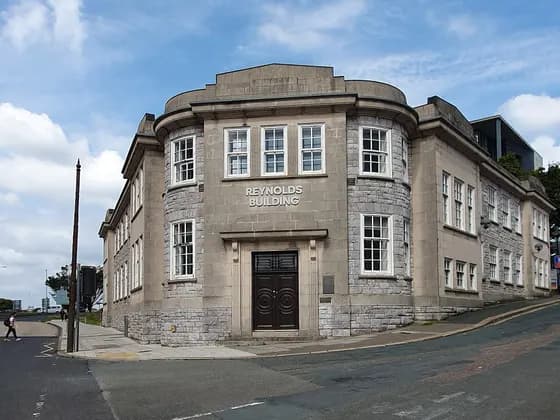


Photo: N Chadwick · CC BY-SA 2.0 · cropped
Photo: Mutney · CC BY 4.0 · Photo: Herbythyme · CC BY-SA 4.0 · Photo: Lauren · CC BY-SA 2.0
Still deciding where to apply? Hear it from a student who's there
University of Plymouth Medical School (formerly part of the Peninsula partnership with Exeter) selects through Multiple Mini Interviews (MMIs), typically held between December and February, and says it is committed to online interviews for the current admission cycle. You choose your interview date through an online booking system. Plymouth typically invites around 60% of applicants to interview and offers places to about 25%.
Plymouth's curriculum is built around patient-centred care and substantial early clinical exposure across the South West, including placements at Derriford Hospital and community settings in Devon and Cornwall. Stations probe motivation for medicine, communication and empathy, ethical reasoning, and your awareness of the realities of practising in a region with significant rural and coastal communities.
Shortlisting uses academic qualifications and UCAT (or GAMSAT as an alternative to A-levels) — personal statements and work experience are not considered. After interview, candidates are ranked on their MMI score and the top performers receive offers, so a high UCAT does not save a weak interview.
Peninsula (Plymouth) interview key facts (2027 entry)
| Interview / offer rate | ~60% of applicants interviewed, ~25% offered |
|---|---|
| UCAT cut-off (2025 entry) | Home 2600 · International 2670 · WP/AAB 2540 |
| Format | MMI, online for the current cycle |
| Shortlisting | Academics + UCAT (or GAMSAT); no personal statement |
Interview Format
- Multiple Mini Interviews (MMIs); interview date chosen through an online booking system
- Online for the current admission cycle
- Stations probe motivation, communication, ethics, role-play and reflection
- Strong patient-centred care emphasis throughout
- South West regional focus — Devon, Cornwall and rural placements
- After interview, candidates are ranked on MMI score and the top performers are offered places
Sample Interview Questions
Why Plymouth specifically?
Reference patient-centred curriculum, Derriford clinical placements, the South West regional focus, and early clinical contact. Avoid generic "good reputation" answers.
What attracts you to working in the South West?
Honest engagement with rural, coastal and ageing populations. Show you understand the workforce challenges and the appeal of community medicine.
Explain how a vaccine works to a hesitant parent.
Empathy first — acknowledge their concern. Simple, jargon-free language. Check understanding. Avoid lecturing or dismissing.
An elderly patient with dementia is refusing medication. What considerations apply?
Capacity assessment, best-interest decisions under the MCA 2005, involvement of family and lasting power of attorney, exploration of why they refuse.
A peer tells you they are struggling with their mental health and asks you not to tell anyone.
Listen without rushing. Validate. Encourage professional support. Be honest that you may need to escalate if there is imminent risk — do not promise total secrecy.
Here is data on cancer survival rates by deprivation quintile. What do you notice?
Describe before interpreting. Identify the gradient. Discuss possible causes (later presentation, access barriers, comorbidities) without overclaiming.
Tell me about a time you worked with someone you found difficult.
Specific example. Show emotional intelligence, willingness to reflect, and a constructive outcome.
Should NHS resources be redirected toward prevention rather than treatment?
Acknowledge the tension — long-term gains vs immediate need. Reference public health, behaviour change challenges and political realities.
What does patient-centred care actually mean to you?
Move past the slogan. Show you understand shared decision-making, respecting preferences, holistic assessment, and continuity.
You need to apologise to a patient who waited two hours past their appointment time.
Apologise sincerely without over-explaining. Acknowledge the inconvenience. Offer to make the rest of the consultation count.
Tell me about a recent development in medicine that you find exciting.
Specific example with depth. Why it matters, who benefits, what limitations remain. Avoid hype.
How would you cope with a patient dying in your care?
Honest acknowledgement of impact. Reference debriefing, team support, professional resilience. Avoid bravado or detachment.
A wealthy patient offers to pay you privately for faster NHS treatment. How do you respond?
Clear refusal. NHS treatment is allocated by need. Explore the underlying concern; suggest legitimate routes (private referral, second opinion).
Describe a time you taught or coached someone.
Concrete example. Focus on adapting your approach to the learner.
What did your work experience teach you that surprised you?
Specific moment of insight. Avoid the "I confirmed I want to be a doctor" cliché — assessors hear it dozens of times a day.
Practise the Peninsula (Plymouth) interview
Rehearse the real format before the day — on demand with our AI interviewers, or live with a tutor.
Sit a mock with photoreal AI interviewers — any time
A timed MMI or panel interview on video — British & international voices — with interviewers who listen, react and press with follow-ups. Rubric-scored feedback and a replay the moment you finish.






Live mocks with a tutor who’s been in the room
A full Peninsula (Plymouth)-style mock with a medic or dentist tutor — honest scoring against real marking criteria, a station-by-station debrief and a written action plan.
Book a mock interviewHow to Prepare
Practise timed MMI rehearsals on camera — Plymouth's interviews are online for the current cycle.
Research Plymouth's patient-centred curriculum and the South West placement footprint.
Read up on health inequalities in coastal and rural England — Plymouth assessors care about this.
Refresh MCA 2005 capacity, consent, confidentiality and end-of-life ethics.
Practise role-plays with feedback, including over video call.
Have a clear, honest "why Plymouth" that goes beyond geography and weather.
Reflect on work experience for moments of insight, not just exposure.
Invited to interview at Peninsula (Plymouth)? Say your first answer out loud today with the free two-minute warm-up drill, then sit a timed mock set up for Peninsula (Plymouth).
Common Pitfalls
Frequently Asked Questions
Related guides
Free, evidence-based guides from current UK medical and dental students.
Free Interview Resources
Worked-through MMI stations, ethics scenarios, and panel questions.
Read guideNHS Core Values Guide
The 6 NHS values examiners listen for in every interview answer.
Read guideMedical School Rankings
See interview format (MMI vs panel) for each UK medical school.
Read guideUCAS 2026 Personal Statement
The new three-question format your interviewer will reference.
Read guideContextual Offers for Medicine
Every UK medical school's widening-access scheme in one place.
Read guideSources & official admissions information
We cross-check every interview guide against the school’s own admissions guidance and the UK regulators.
- University of Plymouth (Peninsula Medical School) — BMBS Medicine — Online MMIs December–February; shortlisting on academics + UCAT (no personal statement); offers on MMI rank; UCAT cut-offs by year.
- UCAT Consortium — Official UCAT registration, test format, scoring methodology and free practice materials.
- General Medical Council (GMC) — Statutory regulator. Approved medical schools, the registered-doctor register, and fitness-to-practise standards.
- Medical Schools Council — Selecting-for-excellence guidance, MMI principles, and an A–Z of UK medical schools.
Ready to nail your Peninsula (Plymouth) interview?
Book a mock interview with a current medical student who recently went through the same process, or practise on demand with the AI interviewer.